production
/viewbook/list/all/?page=5132
/
/static/
None
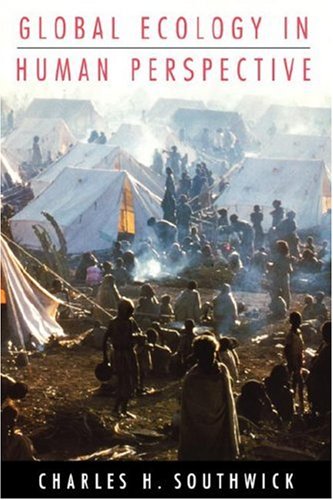
Global Ecology in Human Perspective
Authors:
Charles H. Southwick
Publisher:
Oxford University Press, USA
Publication Date:
Not available
ISBN:
0195098676
Written by a well-known ecologist with more than forty years of scientific field work on six continents, this book deals with the ecology of planet... earth, focusing on the condition of the global environment and the quality of human life. The author describes the scope and meaning of global ecology and gives a brief review of ecological principles relevant to global concerns. The work concentrates on how we as humans affect global ecosystems and how these changes impact our health, behavior, economics, and politics. Specific sections address the ecological components of planet earth, the biosphere, ecosystem ecology, worldwide environmental trends, and the state of human populations. Other chapters deal with competition and conflict, the ecology of war, an agenda for survival, sustainability, and future prospects. Accessible to undergraduates, students in adult and professional education, and general readers, this unique work gives a broader definition of our environment than conventional ecology books, emphasizing economic and social dimensions of the global environment. It covers diverse viewpoints, including good news and favorable trends regarding the future, and helps readers think about current ecological problems and those we will face in the future. It discusses how to relate facts and beliefs, how to assess outcomes, and, finally, how me might view and treat the one world in which we live.
Global Economic History: A Very Short Introduction
Authors:
Robert C. Allen
Publisher:
Oxford University Press
Publication Date:
Not available
ISBN:
0199596654
Why are some countries rich and others poor? In 1500, global income differences were small, but disparities have grown dramatically since Columbus... reached America. In this Very Short Introduction, Robert C. Allen shows how the interplay of geography, globalization, technological change, and economic policy has determined the wealth and poverty of nations. Allen shows how the industrial revolution was Britain's path-breaking response to the challenge of globalization. Western Europe and North America joined Britain to form a club of rich nations, pursuing four polices--creating a national market by abolishing internal tariffs and investing in transportation, erecting an external tariff to protect their fledgling industries from British competition, creating banks to stabilize the currency and mobilize domestic savings for investment, and promoting mass education to prepare people for industrial work. Together these countries pioneered new technologies that have made them ever richer. A few countries--Japan, Soviet Russia, South Korea, Taiwan, and perhaps China--have caught up with the West through creative responses to the technological challenge and with Big Push industrialization that has achieved rapid growth through coordinated investment.
Global Economic Issues and Policies
Authors:
Joseph P. Daniels
Publisher:
Routledge
Publication Date:
Not available
ISBN:
0415573467
This introduction to all aspects of international economics, business and finance is the clearest guide available to the economics of the world we live... in. Written in a highly engaging style, packed full of up to the minute, real world case studies and pitched at introductory level, the book does an expert job of drawing students in and will leave them equipped with a comprehensive toolkit and methods and essential facts.

GLOBAL ECONOMICS CUSTOM
Authors:
Not Available
Publisher:
Not available
Publication Date:
Not available
ISBN:
Not available
GLOBAL ECONOMICS CUSTOM PACKAGE
Authors:
Not Available
Publisher:
Not available
Publication Date:
Not available
ISBN:
Not available
Global Economic Watch GEC Resource Center Printed Access Card
Authors:
Global Economics Crisis Resource Center
Publisher:
South-Western College Pub
Publication Date:
Not available
ISBN:
1439040753
The current global economic crisis leaves more and more questions unanswered every day and presents "one of the most teachable moments of the century."... South-Western delivers the solution. The Global Economic Crisis Resource Center is an online one-stop shopping location that provides educators with current news, journal articles, videos, podcasts, PowerPoint slides, test questions, and much more.
GLOBAL ECONOMY AND BUSINESS (CUSTOM)
Authors:
Not Available
Publisher:
Not available
Publication Date:
Not available
ISBN:
Not available
Global Economy, Global Justice: Theoretical and Policy Alternatives...
Authors:
George DeMartino
Publisher:
Routledge
Publication Date:
Not available
ISBN:
0415224012
This text presents a devastating critique of the currently fashionable idea of globalisation. Using comprehensive and non-technical language this book... looks at the world's cultural and value diversity, and questions whether it is possible to impose a global policy, given these differences. Topics covered include:* theories of distribution and welfare* what leads to a good economic outcome?* Egalitarian theories of welfarism* global neoliberalism and the free market culture.
GLOBAL ECONOMY TODAY
Authors:
Not Available
Publisher:
Not available
Publication Date:
Not available
ISBN:
Not available
Global Education: Using Technology to Bring the World to Your Students
Authors:
Laurence Peters
Publisher:
Not available
Publication Date:
Not available
ISBN:
1564842584
Eleventh grade students in Bangladesh exchange video interviews with 10th-grade students in Georgia. High schoolers in Illinois learn Japanese, Hebrew,... Latin, Spanish, French, and German using online discussions with counterparts from many different countries. Students from around the world research endangered animal species from their areas and publish their findings to a shared website. Connecting globally through advances in Internet technology, including Web 2.0 tools, can now be a reality for any student in any classroom. As our local communities reflect more of the world's diversity, students need to be prepared to communicate with and relate to individuals from different countries and cultures. Integrating global education into standards-based lessons allows students to connect personally with their peers across geographical boundaries, expand their knowledge and awareness of the world, and increase their interest and curiosity in what they are learning. Global Education is a guide to get you started. It provides an introduction to global networks such as iEarn, Global Schoolhouse, and ePals; an overview of Web 2.0 tools that support global learning, such as wikis, blogs, and podcasts; and hundreds of Web resources. No matter the grade level or subject area, Global Education's numerous examples, case studies, and lesson plans will provide you with ideas and inspiration for bringing your students the world. Features: * A sampling of global education projects from around the world * A glossary and lists of hundreds of global education resources * Historical perspectives on global education The International Society for Technology in Education (ISTE) is the trusted source for professional development, knowledge generation, advocacy and leadership for innovation. ISTE is the premier membership association for educators and education leaders engaged in improving teaching and learning by advancing the effective use of technology in PK-12 and teacher education. Home of the National Educational Technology Standards (NETS), the Center for Applied Research in Educational Technology (CARET), and ISTE's annual conference (formerly known as the National Educational Computing Conference, or NECC), ISTE represents more than 100,000 professionals worldwide. We support our members with information, networking opportunities, and guidance as they face the challenge of transforming education. Some of the areas in which we publish are: -Web. 2.0 in the classroom-RSS, podcasts, and more -National Educational Technology Standards (NETS) -Professional development for educators and administrators -Integrating technology into the classroom and curriculum -Safe practices for the Internet and technology -Educational technology for parents
Global Electronic Commerce: Theory and Case Studies
Authors:
J Christopher Westland
Publisher:
The MIT Press
Publication Date:
Not available
ISBN:
0262232057
Over the past two decades, businesses in virtually every sector of the world economy have benefited from the technologies of electronic commerce--the... automation of commercial transactions using computer and communications technologies. Electronic commerce has spurred far-reaching changes in business, on multiple fronts, using many technologies. This book provides a deep, practical understanding of these technologies and their use in e-commerce. Unlike other books on e-commerce, it does not concentrate solely on the Internet. Instead, it suggests that the Internet is only a bridge technology--attractive because of its low cost and global reach, but unattractive because of its slow speed and poor user interface.Each of the twelve chapters contains an overview of a current theory or practice followed by one or more business case studies. A combination of academic theory and case studies provides a comprehensive picture of how businesspeople use computers to revolutionize the selling and delivery of their products and services.
Global E-Litism: Digital Technology, Social Inequality, and...
Authors:
Gili S. Drori
Publisher:
Worth Publishers
Publication Date:
Not available
ISBN:
0716756730
There is no question that technological advances in the early twenty-first century have ushered in a new kind of freedom that makes products and ideas... available to groups of people all over the world. Nevertheless, there is a large gap between those who have access to information and communication technologies, such as the Internet, and those who do not. In Global E-Litism, Gili S. Drori expertly explores this global digital divide and simultaneously examines the cultural and political processes contributing to the growing technological disparity between developed and developing countries and the worldwide implications of these processes.
Global Energy Security and American Hegemony (Themes in Global...
Authors:
Doug Stokes
Publisher:
The Johns Hopkins University Press
Publication Date:
Not available
ISBN:
0801894972
This analysis of the United States and energy security examines the close relationship between US military supremacy in oil-rich regions and America's... maintenance of global power. Energy security generally evokes thoughts of American intervention in the Middle East to protect US interests in that region's oil-rich fields. Doug Stokes and Sam Raphael move beyond that framework to consider US actions in Latin America, Central Asia, and Africa. Drawing on State and Defense Department records and other primary sources and previous scholarship, they show how US foreign policy since World War II has sought to maintain a global energy security regime that supports the nation's allies while maintaining American hegemony. Stokes and Raphael explain how US intervention in energy-rich states insulates and stabilizes those nations' transnationally oriented actors and political economies and why American oil diversification strategy strengthens the country's position against rivals in the global capitalist system. They argue that counterinsurgency aid and other types of coercive US statecraft protect the recipient states from an array of potentially revolutionary armed and unarmed internal social forces, thereby securing the energy supplies of nations deemed strategically important to the United States or its allies. Clear and accessible, this cutting-edge contemporary policy analysis will engage scholars of US foreign policy and international relations as well as policymakers grappling with the importance of energy security in today's world.

Global Energy Shifts: Fostering Sustainability in a Turbulent Age
Authors:
Bruce Podobnik
Publisher:
Temple University Press
Publication Date:
Not available
ISBN:
1592132944
In the year 1900, the industrial world was almost entirely reliant on coal for its commercial energy. Only 50 years later, a new system - based on oil... - had spread across the entire globe. By the end of the twentieth century, yet another system - based on natural gas - was achieving world-wide diffusion. Global Energy Shifts explores the societal forces that led to the expansion of these energy systems and demonstrates that the convergence of specific geopolitical, commercial, and social conditions can generate rapid and far-reaching transformations in the energy foundations of our world. In an important concluding chapter, Podobnik describes opportunities for fostering a similarly rapid shift toward renewable energy systems in the twenty-first century drawing on lessons from world history.
Global Entrepreneurship
Authors:
Shawn Carraher
Publisher:
Kendall Hunt Publishing
Publication Date:
Not available
ISBN:
0757562116
 '





