production
/viewbook/list/all/?page=5147
/
/static/
None

Globalization, Wealth, and Power in the Twenty-first Century
Authors:
William R. Nester
Publisher:
Palgrave Macmillan
Publication Date:
Not available
ISBN:
023010701X
We live in a world increasingly shaped by the forces of globalization or interdependence as all the world's countries and individuals, in varying... degrees and ways, are drawn into an ever more complex economic, political, technological, ethical, communications, transportation, and cultural web. Ever denser interdependence at once increases the array of international conflicts and reduces the threat or use of violence, known as geopolitics, in resolving them. In those nonviolent conflicts, known as geoeconomics, states and other international and transnational groups assert their interests by wielding an appropriate array of nonviolent sources of power. Disputes over trade, intellectual property, economic development, multinational corporations, industrial policy, and the environment are among the most prominent geoeconomic conflicts. Globalization, Wealth, and Power in the Twenty-first Century offers an in-depth exploration of all dimensions of the subject, including a chapter each on the creation and assertion of geoeconomic power; globalization and identity; foreign policy making and the assertion of national interests; strategies for economic development; international law and organizations; the rivalries among the economic superpowers; the internal and international forces which explain why most countries remain mired in poverty; the conflicts between the poor on the rich countries; and the global environmental crises threatening the future of humanity.
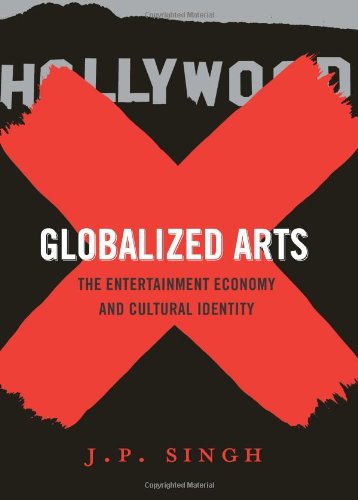
Globalized Arts: The Entertainment Economy and Cultural Identity
Authors:
J. P. Singh
Publisher:
Columbia University Press
Publication Date:
Not available
ISBN:
023114718X
Our interactive world can take a creative product, such as a Hollywood film, Bollywood song, or Latin American telenovela, and transform it into a... source of cultural anxiety. What does this artwork say about the artist or the world she works in? How will these artworks evolve in the global market? Film, music, television, and the performing arts enter the same networks of exchange as other industries, and the anxiety they produce informs a fascinating area of study for art, culture, and global politics.Focusing on the confrontation between global politics and symbolic creative expression, J. P. Singh shows how, by integrating themselves into international markets, entertainment industries give rise to far-reaching cultural anxieties and politics. With examples from Hollywood, Bollywood, French grand opera, Latin American television, West African music, postcolonial literature, and even the Thai sex trade, Singh cites not only the attempt to address cultural discomfort but also the effort to deny entertainment acts as cultural. He connects creative expression to clashes between national identities, and he details the effect of cultural policies, such as institutional patronage and economic incentives, on the making and incorporation of art into the global market. Ultimately, Singh shows how these issues affect the debates on cultural trade being waged by the World Trade Organization, UNESCO, and the developing world.

Globalized Islam: The Search for a New Ummah
Authors:
Olivier Roy
Publisher:
Columbia University Press
Publication Date:
Not available
ISBN:
0231134991
The spread of Islam around the globe has blurred the connection between a religion, a specific society, and a territory. One-third of the world's... Muslims now live as members of a minority. At the heart of this development is, on the one hand, the voluntary settlement of Muslims in Western societies and, on the other, the pervasiveness and influence of Western cultural models and social norms. The revival of Islam among Muslim populations in the last twenty years is often wrongly perceived as a backlash against westernization rather than as one of its consequences. Neofundamentalism has been gaining ground among a rootless Muslim youth -- particularly among the second- and third-generation migrants in the West -- and this phenomenon is feeding new forms of radicalism, ranging from support for Al Qaeda to the outright rejection of integration into Western society.In this brilliant exegesis of the movement of Islam beyond traditional borders and its unwitting westernization, Olivier Roy argues that Islamic revival, or "re-Islamization," results from the efforts of westernized Muslims to assert their identity in a non-Muslim context. A schism has emerged between mainstream Islamist movements in the Muslim world -- including Hamas of Palestine and Hezbollah of Lebanon -- and the uprooted militants who strive to establish an imaginary ummah, or Muslim community, not embedded in any particular society or territory. Roy provides a detailed comparison of these transnational movements, whether peaceful, like Tablighi Jama'at and the Islamic brotherhoods, or violent, like Al Qaeda. He shows how neofundamentalism acknowledges without nostalgia the loss of pristine cultures, constructing instead a universal religious identity that transcends the very notion of culture. Thus contemporary Islamic fundamentalism is not a single-note reaction against westernization but a product and an agent of the complex forces of globalization.

Globalize Liberation: How to Uproot the System and Build a Better...
Authors:
Not Available
Publisher:
City Lights Publishers
Publication Date:
Not available
ISBN:
0872864200
The attacks of 9/11 have renewed a hunger for ideas about how to effect change. The strategies and hard-won victories of dedicated activists from global... justice and community struggles can provide vision and hope, and in this collection of 33 articles and essays, we hear first-hand accounts from North America, Europe and Latin America. In recent years, thousands have flooded the streets to effectively challenge the global economic system. Globalize Liberation aims to deepen, popularize, update and provide concrete practical ideas for this spirit of resistance and innovation.Contributors include: Betita Martínez, Starhawk, Walden Bello, Naomi Klein, Guillermo Gómez-Peña, Midnight Notes Collective, Rage Against the Machine and more.David Solnit is a founder of Art and Revolution, and was a key organizer of the 1998 anti-WTO protests in Seattle.

Globalize This!: The Battle Against the World Trade Organization
Authors:
Kevin Danaher
Publisher:
Common Courage Press
Publication Date:
Not available
ISBN:
1567511961
A powerful argument against the World Trade Organization and the movement toward globalization in general. Contains contributions from some of the... leaders in the movement, including Walden Bello, the Environmental Research Foundation, Deborah James, and Paul Hawken. Softcover.

Globalizing Capital: A History of the International Monetary System...
Authors:
Barry Eichengreen
Publisher:
Princeton University Press
Publication Date:
Not available
ISBN:
0691139377
First published more than a decade ago, Globalizing Capital remains an indispensable part of the economic literature today. Written by renowned... economist Barry Eichengreen, this classic book emphasizes the importance of the international monetary system for understanding the international economy. Brief and lucid, Globalizing Capital is intended not only for economists, but also a general audience of historians, political scientists, professionals in government and business, and anyone with a broad interest in international relations. Eichengreen demonstrates that the international monetary system can be understood and effectively governed only if it is seen as a historical phenomenon extending from the period of the gold standard to today's world of fluctuating prices. This updated edition continues to document the effect of floating exchange rates and contains a new chapter on the Asian financial crisis, the advent of the euro, the future of the dollar, and related topics. Globalizing Capital shows how these and other recent developments can be put in perspective only once their political and historical contexts are understood.

Globalizing Cities: A New Spatial Order (Studies in Urban and...
Authors:
Not Available
Publisher:
Wiley-Blackwell
Publication Date:
Not available
ISBN:
0631212906
This exciting collection of original essays provides students and professionals with an international and comparative examination of changes in global... cities, revealing a growing pattern of social and spatial division or polarization.

Globalizing Education Policy
Authors:
Fazal Rizvi
Publisher:
Routledge
Publication Date:
Not available
ISBN:
0415416272
Rizvi and Lingard's account of the global politics of education is thoughtful, complex and compelling. It is the first really comprehensive discussion... and analysis of global trends in education policy, their effects - structural and individual - and resistance to them. In the enormous body of writing on globalisation this book stands out and will become a basic text in education policy courses around the world. - Stephen J Ball, Karl Mannheim Professor of Sociology of Education, Institute of Education, University of London, UK In what ways have the processes of globalization reshaped the educational policy terrain? How might we analyse education policies located within this new terrain, which is at once local, national, regional and global? In Globalizing Education Policy, the authors explore the key global drivers of policy change in education, and suggest that these do not operate in the same way in all nation-states. They examine the transformative effects of globalization on the discursive terrain within which educational policies are developed and enacted, arguing that this terrain is increasingly informed by a range of neo-liberal precepts which have fundamentally changed the ways in which we think about educational governance. They also suggest that whilst in some countries these precepts are resisted, to some extent, they have nonetheless become hegemonic, and provide an overview of some critical issues in educational policy to which this hegemonic view of globalization has given rise, including: devolution and decentralization new forms of governance the balance between public and private funding of education access and equity and the education of girls curriculum particularly with respect to the teaching of English language and technology pedagogies and high stakes testing and the global trade in education. These issues are explored within the context of major shifts in global processes and ideological discourses currently being experienced, and negotiated by all countries. The book also provides an approach to education policy analysis in an age of globalization and will be of interest to those studying globalization and education policy across the social sciences.

Globalizing Feminisms, 1789- 1945 (Rewriting Histories)
Authors:
Not Available
Publisher:
Routledge
Publication Date:
Not available
ISBN:
0415778689
This definitive Reader presents a coherent, comprehensive, comparative, and much-needed collective history of women’s activism throughout the... world. Including key pieces on the history of feminism from an international group of scholars, the book charts feminists’ attempts to restore a balance of power between the sexes against a backdrop of huge cultural, social and political transitions across the world. The collection covers the period from the beginning of the French Revolution in 1789 – a turning point that gave rise to practical efforts to embody principles of rights, liberty, and equality on behalf of women as well as men – up until the end of World War II. The chapters reach out well beyond Europe and the Americas to examine the history of feminisms in Japan, India, China, the Middle East and Australasia. This diverse body of material is drawn together through a comprehensive general introduction, and individual section introductions. The chapters are also supported by a global timeline of events, and there is a bibliography of further reading. Contributors include Padma Anagol, Marilyn J. Boxer, Jacqueline R. DeVries, Ellen Carol DuBois, Louise Edwards, Ellen L. Fleischmann, Rochelle Goldberg Ruthchild, Patricia Grimshaw, Inger Hammar, Nancy Hewitt, Francesca Miller, Barbara Molony, Karen Offen, Florence Rochefort, Leila J. Rupp, Sandra Stanley Holton, Anne Summers, Ann Taylor Allen, Angela Woollacott and Susan Zimmermann.

Globalizing Justice: The Ethics of Poverty and Power
Authors:
Richard W. Miller
Publisher:
Oxford University Press, USA
Publication Date:
Not available
ISBN:
0199581991
Combining deep moral argument with extensive factual inquiry, Richard Miller constructs a new account of international justice. Though a critic of... demanding principles of kindness toward the global poor and an advocate of special concern for compatriots, he argues for standards of responsible conduct in transnational relations that create vast unmet obligations. Governments, firms and people in developed countries, above all, the United States, by failing to live up to these responsibilities, take advantage of people in developing countries. Miller's proposed standards of responsible conduct offer answers to such questions as: What must be done to avoid exploitation in transnational manufacturing? What framework for world trade and investment would be fair? What duties do we have to limit global warming? What responsibilities to help meet basic needs arise when foreign powers steer the course of development? What obligations are created by uses of violence to sustain American global power? Globalizing Justice provides new philosophical foundations for political responsibility, a unified agenda of policies for responding to major global problems, a distinctive appraisal of 'the American empire', and realistic strategies for a global social movement that helps to move humanity toward genuine global cooperation."A work of great political urgency. The theoretical position ... is fresh and original ... No other recent book on Miller's subject displays a similar combination of philosophical imagination and deep engagement in the realities of global political and economic life."Charles Beitz, Princeton University, The Idea of Human Rights"Miller breaks a new path. ... a superb example of applied ethics. Its recommendations cannot be ignored by those of us who are critical of American foreign policy, but do not know exactly what alternative to advocate." John Roemer, Yale University

Globalizing Sport: How Organizations, Corporations, Media, and...
Authors:
George H. Sage
Publisher:
Paradigm Publishers
Publication Date:
Not available
ISBN:
1594517584
It is easy to think of sport as fun and games, yet it has become a worldwide industry of major proportions and consequences. Interconnections among... countries, sports organizations, teams, agents, schools and media have brought changes that could hardly be imagined two generations ago. George Sage invites readers into a deeper understanding of the global dynamics of sports not only competitions but of the big businesses of money, media coverage, athletic apparel, and more. He shows how phenomenon such as migration, labor, commerce, and politics affect the athletes and the fans, continually reshaping the business and experience of sports.

Globalizing Sport: National Rivalry and International Community in...
Authors:
Barbara J. Keys
Publisher:
Harvard University Press
Publication Date:
Not available
ISBN:
0674023269
In this impressive book, Barbara Keys offers the first major study of the political and cultural ramifications of international sports competitions in... the decades before World War II. She examines the transformation of events like the Olympic Games and the World Cup from relatively small-scale events to the expensive, celebrity-packed, politically resonant, globally popular entertainment extravaganzas familiar to us today. Focusing on the United States, Nazi Germany, and the Soviet Union, she details how countries of widely varying ideologies were drawn to participate in the emerging global culture. She tells of Hollywood and Coca-Cola jazzing up the 1932 Olympic Games in Los Angeles, of Hitler crowing over the 1936 Berlin games, and of the battle between democracy and dictatorship in the famed boxing matches between Joe Louis and Max Schmeling. Keys also presents one of the best accounts to date of the Soviet relationship to Western sports before the rise of the "big red sports machine." While international sport could be manipulated for nationalist purposes, it was also a vehicle for values--such as individualism and universalism--that subverted nationalist ideologies. The 1930s were thus a decade not just of conflict but of cultural integration, which laid a foundation for the postwar growth of international ties.

Globalizing the Sacred: Religion Across the Americas
Authors:
Manuel A. Vasquez
Publisher:
Rutgers University Press
Publication Date:
Not available
ISBN:
081353285X
"Globalizing the Sacred breaks new ground in our understanding of the transnational role of religion. Based on case studies in the Americas, this book... challenges modernist assumptions about the ways Christians communicate and interact in an increasingly global world. Vasquez and Marquardt demonstrate a sophisticated knowledge of transnational theory as they engage debates related to hybrid identities, the transformative impact of the Internet, and the increasing flow of migrants across national borders." --Donald E. Miller, executive director, Center for Religion and Civic Culture, University of Southern California "A magnificent exploration of the multiple ways local religion shapes and is shaped by its institutional, regional, and global contexts. Locating their analysis at the crossroads between religious studies and emerging literature on globalization, Vasquez and Marquardt masterfully interweave theory and case studies to provide essential insights for understanding religion and social change in the twenty-first century." --Timothy Matovina, director, Cushwa Center for the Study of American Catholicism, University of Notre Dame Drawing on case studies in the United States and Latin America, Manuel A. Vasquez and Marie Friedmann Marquardt explore the evolving roles of religion in the Americas in the face of globalization, transnational migration, the rapid growth of culture industries, the rise of computer mediated technologies, and the crisis of modernity. Combining ethnographic research in local congregations, studies of material culture and sacred space, textual analyses, and approaches to mass and electronic media, the authors challenge dominant paradigms in the sociology of religion. Manuel A. Vasquez is an associate professor of religion at the University of Florida, Gainesville. He is the author of The Brazilian Popular Church and the Crisis of Modernity and is coeditor of Christianity, Social Change, and Globalization in the Americas (Rutgers University Press). Marie Friedmann Marquardt is a Ph.D. candidate in the sociology of religion at Emory University.

Globalizing the Streets: Cross-Cultural Perspectives on Youth,...
Authors:
Not Available
Publisher:
Columbia University Press
Publication Date:
Not available
ISBN:
0231128231
Not since the 1960s have the activities of resistance among lower- and working-class youth caused such anxiety in the international community. Yet today... the dispossessed are responding to the challenges of globalization and its methods of social control. The contributors to this volume examine the struggle for identity and interdependence of these youth, their clashes with law enforcement and criminal codes, their fight for social, political, and cultural capital, and their efforts to achieve recognition and empowerment. Essays adopt the vantage point of those whose struggle for social solidarity, self-respect, and survival in criminalized or marginalized spaces. In doing so, they contextualize and humanize the seemingly senseless actions of these youths, who make visible the class contradictions, social exclusion, and rituals of psychological humiliation that permeate their everyday lives.
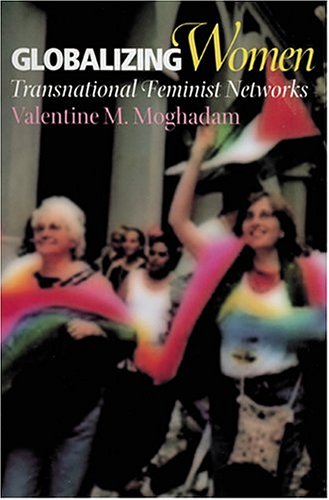
Globalizing Women: Transnational Feminist Networks (Themes in...
Authors:
Valentine M. Moghadam
Publisher:
The Johns Hopkins University Press
Publication Date:
Not available
ISBN:
0801880246
Globalization may offer modern feminism its greatest opportunity and greatest challenge. Allowing communication and information exchange while also... exacerbating economic and social inequalities, globalization has fostered the growth of transnational feminist networks (TFNs). These groups have used the Internet to build coalitions, lobby governments, and advance the goals of feminism. Globalizing Women explains how the negative and positive aspects of globalization have helped to create transnational networks of activists and organizations with common agendas. Sociologist Valentine M. Moghadam discusses six such feminist networks to analyze the organization, objectives, programs, and outcomes of these groups in their effort to improve conditions for women throughout the world. Moghadam also examines how "globalizing women" are responding to and resisting growing inequalities, the exploitation of female labor, and patriarchal fundamentalisms. This book is an important addition to literature exploring feminism as well as to the broader discussion of the impact of transnational social movements and organizations in the globalized world.
 '





