production
/viewbook/list/all/?page=5168
/
/static/
None
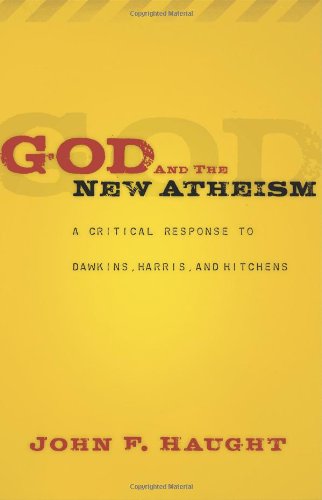
God and the New Atheism: A Critical Response to Dawkins, Harris,...
Authors:
John F. Haught
Publisher:
Westminster John Knox Press
Publication Date:
Not available
ISBN:
066423304X
In God and the New Atheism a world expert on science and theology gives clear, concise, and compelling answers to the charges against religion laid out... in recent bestselling books by Richard Dawkins (The God Delusion), Sam Harris (The End of Faith), and Christopher Hitchens (God Is not Great). For some, these new atheists appear to say extremely well what they believe to be wrong with religion. But, as John Haught shows, the treatment of religion in these books is riddled with logical inconsistencies, shallow misconceptions, and crude generalizations. Can God really be dismissed as a mere delusion? Is faith really the enemy of reason? And does religion really poison everything? God and the New Atheism offers a much-needed antidote to the extremist claims of scientific fundamentalism. This provocative and accessible little book will enable readers to see through the rhetorical fog of this recent phenomenon and come to a clearer understanding of the issues at stake in this crucial debate.
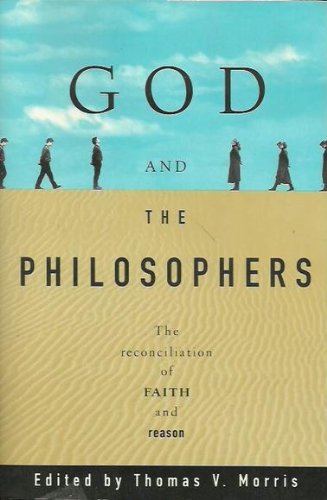
GOD AND THE PHILOSOPHERS, THE RECONCILIATION OF FAITH AND REASON
Authors:
Thomas V (Ed) Morris
Publisher:
Oxford Univ Press
Publication Date:
Not available
ISBN:
0195101197
"I am a philosopher because I am a Christian," writes Brian Leftow. "To many intellectuals, this probably sounds like saying that I am a dog because I... am a cat." Indeed, prejudice against religious belief runs deep in the academy; in particular, many philosophers hold that faith is incompatible with their profession. But Thomas Morris has met that view head-on by asking a distinguished group of philosophers to write about the union of faith and reason in their lives. God and the Philosophers offers a series of highly personal, thoughtful essays by traditionally religious philosophers, revealing the power of belief in their intellectually rigorous lives and work. Figures such as William P. Alston, William J. Wainwright, Marilyn McCord Adams, Peter van Inwagen, and Morris himself, to name a few, speak of their own spiritual journeys, sharing their experiences as philosophically reflective individuals seeking to center themselves on God. We read of conversions from unbelief, struggles with doubts raised by the presence of evil in the world, and changing convictions shaped by constant questioning and communing with God. For example, Brian Leftow describes his acceptance of Christianity, after being raised in a secular Jewish home, and Laura Garcia writes about her conversion to Catholicism from her earlier Protestant stance. Along the way, the writers reveal religious philosophy at work--demonstrating, as Arthur F. Holmes writes, "the motivation to intellectual inquiry that Christian faith brings." Here we see how individuals with extraordinary intellectual training, discipline, and knowledge grapple with personal and existential problems, drawing on their faith as well as their finely honed reason to achieve new understanding. Profoundly honest and deeply thoughtful, these essays reveal how highly educated philosophers--working in the halls of dispassionate analysis--come to grips with their faith in a skeptical world. Together, they make a profound statement on contemporary spirituality, and the quandaries facing today's religious individual.
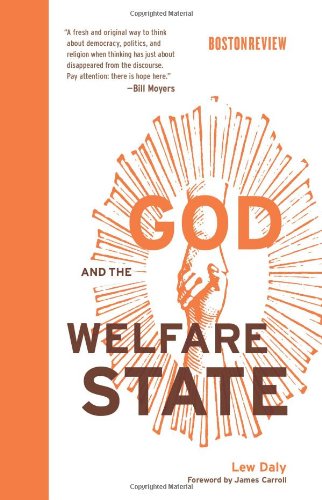
God and the Welfare State
Authors:
Lew Daly
Publisher:
The MIT Press
Publication Date:
Not available
ISBN:
0262042363
When the Bush administration's faith-based initiative was introduced in 2001 as the next stage of the "war on poverty," it provoked a flurry of protest... for violating the church-state divide. Most critics didn't ask whether it could work.God and the Welfare State is the first book to trace the ideas behind George W. Bush's faith-based initiative from their roots in Catholic natural law theory and Dutch Calvinism to an American think tank, the Center for Public Justice. Comparing Bush's plan with the ways the same ideas have played out in Christian Democratic welfare policies in Europe, the author is skeptical that it will be an effective new way to fight poverty. But he takes the animating ideas very seriously, as they go to the heart of the relationship among religion, government, and social welfare.In the end Daly argues that these ideas--which are now entrenched in federal and state politics--are a truly radical departure from American traditions of governance. Although Bush's initiative roughly overlaps with more conventional conservative efforts to strengthen private power in economic life, it promises an unprecedented shift in the balance of power between secular and religious approaches to social problems and suggests a broader template for "faith-based governance," in which the state would have a much more limited role in social policy.
God and the World
Authors:
John B., Jr. Cobb
Publisher:
Wipf & Stock Publishers
Publication Date:
Not available
ISBN:
1579104452
Foreword by Jean Bethke Elshtain This important book is sure to foster informed public discussion about the death penalty by deepening readers'... understanding of how religious beliefs and perspectives shape this contentious issue. Featuring a fair, balanced appraisal of its topic, Religion and the Death Penalty brings thoughtful religious reflection to bear on current challenges facing the capital justice system. One look at the list of contributors reveals the significance of this book. Here are recognized leaders from the academy, government, and public life who also represent a wide range of faith commitments, including Jewish, Christian, and Muslim. Like many people of faith and goodwill, the authors disagree with one another, variously supporting retention, reform, or abolition of capital punishment. As a result, the book presents the most comprehensive and well-rounded religiously oriented discussion of the death penalty available. Contributors: Khaled Abou El Fadl Victor Anderson Jeanne Bishop J. Budziszewski John D. Carlson Mario M. Cuomo E. J. Dionne Jr. Avery Cardinal Dulles, S. J. Eric P. Elshtain Richard W. Garnett Stanley Hauerwas Frank Keating Gilbert Meilaender David Novak Erik C. Owens George H. Ryan Antonin Scalia Paul Simon Glen H. Stassen Michael L. Westmoreland-White Beth Wilkinson
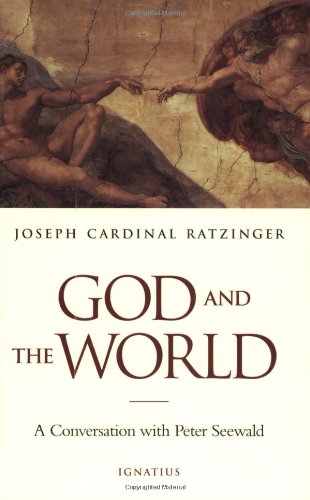
God and the World: A Conversation With Peter Seewald
Authors:
Benedict XVI
Publisher:
Ignatius Pr
Publication Date:
Not available
ISBN:
0898708680
During his years as Prefect of the Congregation for the Doctrine of the Faith, well-known Vatican prelate Joseph Cardinal Ratzinger has given three... in-depth interviews. The first two interviews have become best selling books: The Ratzinger Report and Salt of the Earth. Because of the tremendous reception those books received, the Cardinal agreed to do another interview with journalist Peter Seewald, who had done the very popular Salt of the Earth interview. This third in-depth interview addresses deep questions of faith and the living of that faith in the modern world. The interview took place over three full days spent at the Benedictine Abbey of Monte Cassino in a setting of the silence, prayer, and hospitality of the monks. For this meeting with the highly regarded Churchman, theologian, and author, the seasoned journalist, who had fallen away from the faith but eventually returned to the Church, once again provided a very stimulating, well-prepared series of wide-ranging questions on profound issues. The Cardinal responds with candor, frankness and deep insight, giving answers that are sometimes surprising and always thought provoking.
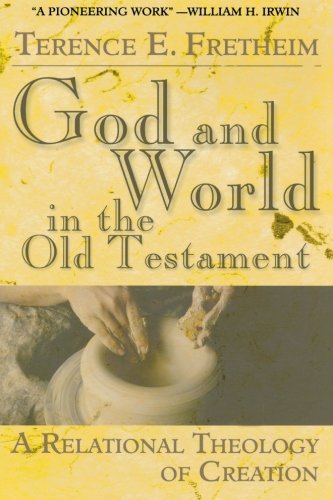
God and World in the Old Testament: A Relational Theology of Creation
Authors:
Terence E. Fretheim
Publisher:
Abingdon Press
Publication Date:
Not available
ISBN:
0687342961
Fretheim presents here the Old Testament view of the Creator God, the created world, and our role in creation. Beginning with "The Beginning," he... demonstrates that creation is open-ended and connected. Then, from every part of the Old Testament, Fretheim explores the fullness and richness of Israel's thought regarding creation: from the dynamic created order to human sin, from judgment and environmental devastation to salvation, redemption, and a new creation.
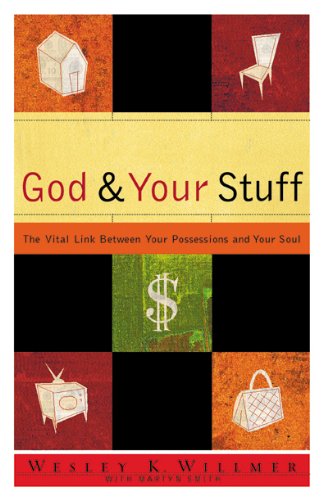
God and Your Stuff: The Vital Link Between Your Possessions and...
Authors:
Wesley K Willmer
Publisher:
NavPress
Publication Date:
Not available
ISBN:
1576832341
Explore the biblical foundation for the crucial connection between our eternal souls and our earthly possessions. Learn how our use of possessions is a... good barometer of our character, and how our giving practices develop our faith and shape us into the stewards God intended us to be.• Includes discussion questions
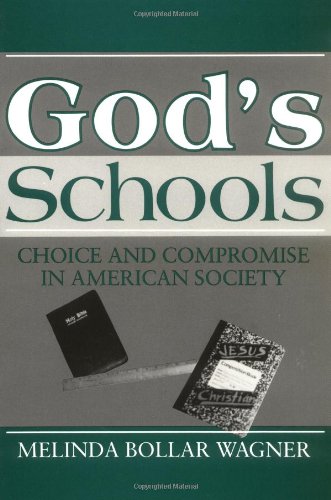
GodÆs Schools: Choice and Compromise in American Society
Authors:
Melinda Bollar Wagner
Publisher:
Rutgers University Press
Publication Date:
Not available
ISBN:
0813516072
"A major contribution to the growing literature on fundamentalism and American life." --Wade Clark Roof, University of California, Santa Barbara ... Many of us assume that Christian day schools foster a strict and conservative environment that is very different from the rest of the United States. Christian educators themselves foster this view when they say that following biblical strictures requires that they not always conform to this world. Melinda Wagner goes beyond this stereotype to portray the way these schools foster American popular culture and "professional education culture" as well as "Christian culture." In her participant observation study of a variety of Christian schools (sponsored by fundamentalist, evangelical, new charismatic, Holiness, and pentacostal Christians), Wagner describes and interprets how such compromises are made. In American culture, children are taught to meet challenges, to compete, and are rewarded for individual achievement. Conservative Christians label this individualism as "secular humanism," and find it antithetical to their view of the self. Instead, these Christians seek a culture of love, compassion, orderliness, noncompetitiveness, and separation from the material trappings of this world. But in reality, Wagner finds that the schools mix Christian values with the values of American culture. She discovers that even in Christian schools students compete fiercely and are recognized for individual achievements. Christian schools incorporate norms and strategies from mainstream American education. Alternative Christian schools are not as alternative as they could be; they are walking the Christian walk the American way. The Christian schools serve as a case study of the process of culture building. Conservative Christians are trying to revitalize their culture. Yet all along the way, they quite consciously compromise. Melinda Bollar Wagner is a professor of anthropology at Radford University.
God as Trinity: Relationality and Temporality in Divine Life
Authors:
Ted Peters
Publisher:
Westminster John Knox Press
Publication Date:
Not available
ISBN:
0664254020
Ted Peters brings Trinitarian theology conversation to a new level by examining the works of Karl Barth, Karl Rahner, Eberhard Jungel, Jurgen Moltmann,... Robert Jenson, Wolfhart Pannenberg, and Catherine Mowry LaCugna. He highlights talk about the becoming of God by process theologians, sexism in Trinitarian language by feminists, and divine and human community by liberation theologians. Peters addresses the relationship of God's eternity to the world's temporality, and claims that thinking of God as Trinity affirms that the word "God" applies to both eternity and temporality.
God at 2000
Authors:
Not Available
Publisher:
Morehouse Publishing
Publication Date:
Not available
ISBN:
081921907X
"How do your personal experiences, your study, and your faith perspective influence the way you, as an individual, see God?" That was the question posed... to these seven renowned authors and scholars. Representing a wide variety of faith perspectives, Karen Armstrong, Diana Eck, Seyyed Hossein Nasr, Joan Chittister, Laurence Kushner, Desmond Tutu, and Marcus Borg explore the ways in which their life experiences have shaped their personal understanding of God.Originally given as lectures at the God at 2000 conference in February 2000, each presentation has been rewritten for a reading audience. Conversation starters, based on the questions asked at the conference itself, are included, making this an excellent resource for small group study. An introduction written by Marcus Borg provides readers with a frame of reference that will help them explore the issues raised in the book, and become clear about their own personal understanding of God.
God at the Center: Meditations on Jewish Spirituality
Authors:
David R. Blumenthal
Publisher:
Jason Aronson, Inc.
Publication Date:
Not available
ISBN:
1568213484
God at War: The Bible & Spiritual Conflict
Authors:
Gregory A. Boyd
Publisher:
IVP Academic
Publication Date:
Not available
ISBN:
0830818855
In this bold and compelling work, Gregory Boyd undertakes to reframe the central issues of Christian theodicy. By Boyd's estimate, theologians still... draw too heavily on Augustine's response to the problem of evil, attributing pain and suffering to the mysterious "good" purposes of God. Accordingly, modern Christians are inclined not to expect evil and so are baffled but resigned when it occurs. New Testament writers, on the other hand, were inclined to expect evil and fight against it. Modern Christians attempt to intellectually understand evil, whereas New Testament writers grappled with overcoming evil. Through a close and sophisticated reading of both Old and New Testaments, Boyd argues that Satan has been in an age-long (but not eternal) battle against God, and that this conflict "is a major dimension of the ultimate canvas against which everything within the biblical narrative, from creation to the eschaton, is to be painted and therefore understood." No less edifying than it is provocative, will reward the careful attention of scholars, pastors, students and educated laypersons alike.
God at Work: The History and Promise of the Faith at Work Movement
Authors:
David W. Miller
Publisher:
Oxford University Press, USA
Publication Date:
Not available
ISBN:
0195314808
What was once taboo - faith at work - is increasingly accepted in corporate America. From secretaries to CEOs, growing numbers of businesspeople today... want to bring their faith to work. Yet they wrestle with how to do this effectively and appropriately in a pluralistic corporate setting. For help they turn not to their clergy, but to their peers and to a burgeoning cottage industry on spirituality at work. They attend conferences and seminars, participate in Bible study and prayer groups, and read books, blogs, and eNewsletters. They see their faith as a resource for ethical guidance and to help find meaning and purpose in their work.In God at Work, David W. Miller looks at how this Faith at Work movement developed and considers its potential value for business and society. Done well, the integration of faith and work has positive implications at the personal level, as well as for corporate ethics and the broader economic sphere. At the same time, increasing expressions of religion and spiritual practices at work also present the threat of divisiveness and discrimination.Drawing on the insights of theological ethics as well as the sociology of religion, Miller analyzes the history of the modern day Faith at Work movement from its roots in the late 19th century to its modern formulation and trajectory. He examines the diversity of its members and modes of expression, and constructs a new framework for understanding, interpreting, and critiquing the movement and its future. Miller concludes that workers and professionals have a deep and lasting desire to live a holistic life, to integrate the claims of their faith with the demands of their work. He documents the surprising abdication of this field by church and theological academy and its embrace, ironically, by the management academy.Offering compelling new evidence of the depth and breadth of spirituality at work, Miller concludes that faith at work is a bona fide social movement and here to stay. He establishes the importance of this movement, identifies the possibilities and problems, and points toward future research questions. God at Work is essential reading for business scholars and leaders, theologians and clergy, and anyone interested in the integration of faith and work.
God at Work: Your Christian Vocation in All of Life (Focal Point)
Authors:
Gene Edward Veith Jr.
Publisher:
Crossway
Publication Date:
Not available
ISBN:
1581344031
When you understand it properly, the doctrine of vocation--"doing everything for God's glory"--is not a platitude or an outdated notion. This principle... that we vaguely apply to our lives and our work is actually the key to Christian ethics, to influencing our culture for Christ, and to infusing our ordinary, everyday lives with the presence of God. For when we realize that the "mundane" activities that consume most of our time are "God's hiding places," our perspective changes. Culture expert Gene Veith unpacks the biblical, Reformation teaching about the doctrine of vocation, emphasizing not what we should specifically do with our time or what careers we are called to, but what God does in and through our callings--even within the home. In each task He has given us--in our workplaces and families, our churches and society--God Himself is at work. Veith guides you to discover God's purpose and calling in those seemingly ordinary areas by providing you with a spiritual framework for thinking about such issues and for acting upon them with a changed perspective.
God Behaving Badly: Is the God of the Old Testament Angry, Sexist...
Authors:
David T. Lamb
Publisher:
IVP Books
Publication Date:
Not available
ISBN:
0830838260
God has a bad reputation. Many think of God as wrathful and angry, smiting people right and left for no apparent reason. The Old Testament in particular... seems at times to portray God as capricious and malevolent, wiping out armies and nations, punishing enemies with extreme prejudice.But wait. The story is more complicated than that. Alongside troubling passages of God's punishment and judgment are pictures of God's love, forgiveness, goodness and slowness to anger. How do we make sense of the seeming contradiction? Can God be trusted or not? David Lamb unpacks the complexity of the Old Testament to explore the character of God. He provides historical and cultural background to shed light on problematic passages and to bring underlying themes to the fore. Without minimizing the sometimes harsh realities of the biblical record, Lamb assembles an overall portrait that gives coherence to our understanding of God in both the Old and New Testaments.
 '





