production
/viewbook/list/all/?page=5175
/
/static/
None

God's Arbiters: Americans and the Philippines, 1898-1902 (Imagining...
Authors:
Susan K. Harris
Publisher:
Oxford University Press, USA
Publication Date:
Not available
ISBN:
0199740100
When the U.S. liberated the Philippines from Spanish rule in 1898, the exploit was hailed at home as a great moral victory, an instance of Uncle Sam... freeing an oppressed country from colonial tyranny. The next move, however, was hotly contested: should the U.S. annex the archipelago? The disputants did agree on one point: that the United States was divinely appointed to bring democracy--and with it, white Protestant culture--to the rest of the world. They were, in the words of U.S. Senator Albert Beveridge, "God's arbiters," a civilizing force with a righteous role to play on the world stage. Mining letters, speeches, textbooks, poems, political cartoons and other sources, Susan K. Harris examines the role of religious rhetoric and racial biases in the battle over annexation. She offers a provocative reading both of the debates' religious framework and of the evolution of Christian national identity within the U.S. The book brings to life the personalities who dominated the discussion, figures like the bellicose Beveridge and the segregationist Senator Benjamin Tillman. It also features voices from outside U.S. geopolitical boundaries that responded to the Americans' venture into global imperialism: among them England's "imperial" poet Rudyard Kipling, Nicaragua's poet/diplomat Rubén Darío, and the Philippines' revolutionary leaders Emilio Aguinaldo and Apolinario Mabini. At the center of this dramatis personae stands Mark Twain, an influential partisan who was, for many, the embodiment of America. Twain had supported the initial intervention but quickly changed his mind, arguing that the U.S. decision to annex the archipelago was a betrayal of the very principles the U.S. claimed to promote. Written with verve and animated by a wide range of archival research, God's Arbiters reveals the roots of current debates over textbook content, evangelical politics, and American exceptionalism-shining light on our own times as it recreates the culture surrounding America's global mission at the turn into the twentieth century.

God's Assassins: State Terrorism in Argentina in the 1970s
Authors:
M. Patricia Marchak
Publisher:
Mcgill Queens Univ Pr
Publication Date:
Not available
ISBN:
0773520139
Between 1976 and 1983 an estimated 30,000 Argentines 'disappeared' under the military junta. Most were imprisoned and tortured before being murdered by... the military. In the two years preceding 1976, another 2,000 were assassinated by paramilitary death squads loosely organised by the Argentine government of Isabel Peron. "God's Assassins" tells the story of state terrorism in Argentina through interviews with participants on all sides of this issue. They include military officers, 'third world' priests, Catholic church officers who supported military objectives and methods, former members of guerrilla movements, survivors of prison camps, journalists, trade unionists, and others who experienced state terrorism in Argentina. Patricia Marchak combines excerpts from these interviews with documents and media reports from the time and her own insightful study of Argentina's history to provide an analysis of the process as well as the causes of state terrorism.The graphic and moving interviews in "God's Assassins" show the complexity of these causes and indicate that there is no simple explanation of the period. Was the head of a major guerrilla movement a double agent? Did the intelligence service actually believe it was engaged in the third world war? Why did the Catholic church turn on its own priests? Through her interviews, Marchak reveals much that will never appear in official documents. Patricia Marchak is a professor in the Department of Anthropology and Sociology at the University of British Columbia. William Marchak is retired after thirty years in the newsprint export sales business to newspaper publishers throughout Latin America, including Argentina.

God's Battalions: The Case for the Crusades
Authors:
Rodney Stark
Publisher:
HarperOne
Publication Date:
Not available
ISBN:
0061582603
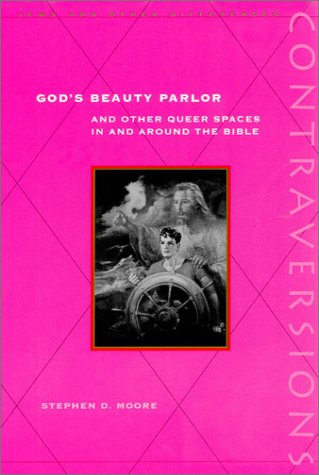
God's Beauty Parlor: And Other Queer Spaces in and Around the Bible
Authors:
Stephen Moore
Publisher:
Stanford University Press
Publication Date:
Not available
ISBN:
0804743320
God's Beauty Parlor opens the Bible to the contested body of critical commentary on sex and sexuality known as queer theory and to masculinity studies.... Through a series of dazzling rereadings staged not only in God's beauty parlor, but also in God's boudoir, locker room, and war room, the author pursues the themes of homoeroticism, masculinity, beauty, and violence through such texts as the Song of Songs, the Gospels, the Letter to the Romans, and the Book of Revelation.He ponders such matters as the curious place of the Song of Songs in the history of sexuality, or how an apparent paean to male-female love became a pretext for literary cross-dressing for legions of male Jewish and Christian commentators; Jesus' face and physique in relation to ideologies of beauty, ranging from the patristic era, when the "earthly" Jesus was regularly represented as ugly, to the contemporary global culture industry, with its trademark equation of looks with worth; the gendered and sexual substratum of Paul's doctrine of salvation embedded in his most influential epistle—not least his gendering of righteousness as masculine and sin as feminine; and the intimate imbrication of masculinity and mass death in Revelation, a book about war making men making war-making men . . . some of whom also happen to be gods.God's Beauty Parlor is an exhilarating attempt to bring some of the most significant currents in contemporary gender studies to bear on a text that, even in the post-Christian West, remains the ultimate cultural icon, cipher, and shibboleth.
God's Big Picture: Tracing the Storyline of the Bible
Authors:
Vaughan Roberts
Publisher:
IVP Books
Publication Date:
Not available
ISBN:
0851112986
Sixty-six books written by forty people over nearly 2,000 years, in two languages and several different genres. A worldwide bestseller published in... countless sizes and bindings, translations and languages. Sworn by in court, fought over by religious people, quoted in arguments. The Bible is clearly no ordinary book. How can you begin to read and understand it as a whole? In this excellent overview, Vaughan Roberts gives you the big picture--showing how the different parts of the Bible fit together under the theme of the kingdom of God. He provides both the encouragement and the tools to help you read the Bible with confidence and understanding. And he points you to the Bible's supreme subject, Jesus Christ, and the salvation God offers through him.

God's Bits of Wood
Authors:
Sembene Ousmane
Publisher:
Longman
Publication Date:
Not available
ISBN:
0435909592
In 1947-48 the workers on the Dakar-Niger railway came out on strike. Sembene Ousmane, in this vivid, timeless novel, evinces all the color, passion,... and tragedy of those formative years in the history of West Africa.
Gods Bits of Wood (African Writers Series)
Authors:
Sembene Ousmane
Publisher:
Heinemann
Publication Date:
Not available
ISBN:
0435908928
God's Breath: Sacred Scriptures of the World -- The Essential Texts...
Authors:
John Miller
Publisher:
Da Capo Press
Publication Date:
Not available
ISBN:
1569246181
For millennia seekers of truth have found God in a handful of sacred texts. Now God's Breath gathers together selections from seven of the world's major... wisdom traditions. The title comes from a Zen saying, "To understand God is to listen. Listen to Jesus and Muhammad and Buddha, but don't get caught up in the names. Listen beyond them; listen to God's breath." Elegantly presented with detailed woodcuts and enlightening introductions by noted scholars, leading thinkers, writers and spiritual teachers including Huston Smith, Karen Armstrong, Reynolds Price, Stephen Mitchell, Marcus Borg, Joseph Campbell, Carl Jung, the Dalai Lama, and others, the selections include excerpts from the Book of Genesis, the Tao Te Ching, the Book of Rumi, the Gospel of John, the Bhagavad Gita, the Qur'an, and the Tibetan Book of the Dead. "A valuable compendium of sacred texts.... This is an essential companion for students of world religions."--Publishers Weekly
God's Century: Resurgent Religion and Global Politics
Authors:
Monica Duffy Toft
Publisher:
W. W. Norton & Company
Publication Date:
Not available
ISBN:
0393069265
A fresh and illuminating perspective on the surge in religion’s political influence across the globe.Is religion a force for good or evil in world... politics? How much influence does it have? Despite predictions of its decline, religion has resurged in political influence across the globe, helped by the very forces that were supposed to bury it: democracy, globalization, and technology. And despite recent claims that religion is exclusively irrational and violent, its political influence is in fact diverse, sometimes promoting civil war and terrorism but at other times fostering democracy, reconciliation, and peace. Looking across the globe, the authors explain what generates these radically divergent behaviors. In a time when the public discussion of religion is overheated, these dynamic young scholars use deeply original analysis and sharp case studies to show us both how and why religion’s influence on global politics is surging. Finally they offer concrete suggestions on how to both confront the challenges and take advantage of the opportunities posed by globally resurgent religion. 10 black-and-white illustrations
God's Century: Resurgent Religion and Global Politics (College...
Authors:
Monica Duffy Toft
Publisher:
W. W. Norton & Company
Publication Date:
Not available
ISBN:
0393932737
A fresh and illuminating perspective on the surge in religion’s political influence across the globe.Is religion a force for good or evil in world... politics? How much influence does it have? Despite predictions of its decline, religion has resurged in political influence across the globe, helped by the very forces that were supposed to bury it: democracy, globalization, and technology. And despite recent claims that religion is exclusively irrational and violent, its political influence is in fact diverse, sometimes promoting civil war and terrorism but at other times fostering democracy, reconciliation, and peace. Looking across the globe, the authors explain what generates these radically divergent behaviors. In a time when the public discussion of religion is overheated, these dynamic young scholars use deeply original analysis and sharp case studies to show us both how and why religion’s influence on global politics is surging. Finally they offer concrete suggestions on how to both confront the challenges and take advantage of the opportunities posed by globally resurgent religion. 10 black-and-white illustrations
God's Chinese Son: The Taiping Heavenly Kingdom of Hong Xiuquan
Authors:
Jonathan D. Spence
Publisher:
W. W. Norton & Company
Publication Date:
Not available
ISBN:
0393315568
"A magnificent tapestry . . . a story that reaches beyond China into our world and time: a story of faith, hope, passion, and a fatal... grandiosity."--Washington Post Book WorldWhether read for its powerful account of the largest uprising in human history, or for its foreshadowing of the terrible convulsions suffered by twentieth-century China, or for the narrative power of a great historian at his best, God's Chinese Son must be read. At the center of this history of China's Taiping rebellion (1845-64) stands Hong Xiuquan, a failed student of Confucian doctrine who ascends to heaven in a dream and meets his heavenly family: God, Mary, and his older brother, Jesus. He returns to earth charged to eradicate the "demon-devils," the alien Manchu rulers of China. His success carries him and his followers to the heavenly capital at Nanjing, where they rule a large part of south China for more than a decade. Their decline and fall, wrought by internal division and the unrelenting military pressures of the Manchus and the Western powers, carry them to a hell on earth. Twenty million Chinese are left dead.

God's Choice: The Total World of a Fundamentalist Christian School
Authors:
Alan Peshkin
Publisher:
University Of Chicago Press
Publication Date:
Not available
ISBN:
0226661997
Is Bethany Baptist Academy God's choice? Ask the fundamentalist Christians who teach there or whose children attend the academy, and their answer will... be a yes as unequivocal as their claim that the Bible is God's inerrant, absolute word. Is this truth or arrogance?In God's Choice, Alan Peshkin offers readers the opportunity to consider this question in depth. Given the outsider's rare chance to observe such a school firsthand, Peshkin spent eighteen months studying Bethany's high school—interviewing students, parents, and educators, living in the home of Bethany Baptist Church members, and participating fully in the church's activities. From this intimate research he has fashioned a rich account of Christian schooling and an informed analysis of a clear alternative to public education.
God's Continent: Christianity, Islam, and Europe's Religious Crisis...
Authors:
Philip Jenkins
Publisher:
Oxford University Press, USA
Publication Date:
Not available
ISBN:
0195384628
Is the Christian church in Europe doomed to collapse under the weight of globalization, Western secularism, and a flood of Muslim immigrants? Is Europe... on the brink of becoming "Eurabia"? Though many pundits are predicting just such a scenario, God's Continent reveals the flaws in these arguments and offers a much more measured assessment of Europe's religious future. While frankly acknowledging current tensions, Philip Jenkins shows, for instance, that the overheated rhetoric about a Muslim-dominated Europe is based on politically convenient myths: that Europe is being imperiled by floods of Muslim immigrants, exploding Muslim birth-rates, and the demise of European Christianity. He points out that by no means are Muslims the only new immigrants in Europe. Christians from Africa, Asia, and Eastern Europe are also pouring into the Western countries, and bringing with them a vibrant and enthusiastic faith that is helping to transform the face of European Christianity. Jenkins agrees that both Christianity and Islam face real difficulties in surviving within Europe's secular culture. But instead of fading away, both have adapted, and are adapting. Yes, the churches are in decline, but there are also clear indications that Christian loyalty and devotion survive, even as institutions crumble. The third book in an acclaimed trilogy that includes The Next Christendom and The New Faces of Christianity, God's Continent offers a realistic and historically grounded appraisal of the future of Christianity in a rapidly changing Europe.
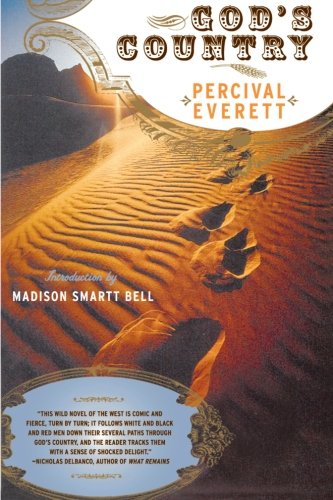
God's Country
Authors:
Percival Everett
Publisher:
Beacon Press
Publication Date:
Not available
ISBN:
0807083631
The unlikely narrator through this tale of misadventures is one Curt Marder: gambler, drinker, cheat, and would-be womanizer. It's 1871, and he's lost... his farm, his wife, and his dog to a band of marauding hooligans. With nothing to live on but a desire to recover what is rightfully his, Marder is forced to enlist the help of the best tracker in the West: a black man named Bubba.

God's Country, Uncle Sam's Land: Faith and Conflict in the American...
Authors:
Todd M. Kerstetter
Publisher:
University of Illinois Press
Publication Date:
Not available
ISBN:
0252075889
While many studies of religion in the West have focused on the region's diversity, freedom, and individualism, Todd M. Kerstetter brings together the... three most glaring exceptions to those rules to explore the boundaries of tolerance as enforced by society and the U.S. government. In sharp contrast to the mythic image of the West as the "Land of the Free," Kerstetter analyzes three tragic episodes that reveal the West as a cultural battleground: the Mormon Utah Expedition and Mountain Meadows Massacre of 1857, the Lakota Ghost Dancers and the Wounded Knee Massacre in South Dakota in 1890, and the Branch Davidians in Waco, Texas in 1993.
 '





