production
/viewbook/list/all/?page=5178
/
/static/
None
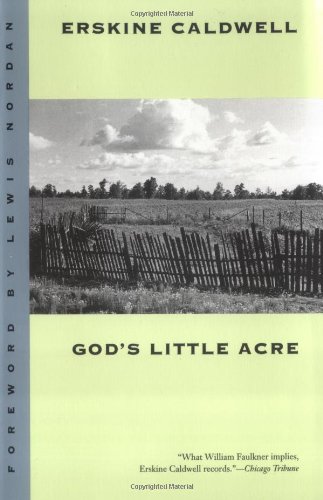
God's Little Acre
Authors:
Erskine Caldwell
Publisher:
Pan
Publication Date:
Not available
ISBN:
0820316636
Like Tobacco Road, this novel chronicles the final decline of a poor white family in rural Georgia. Exhorted by their patriarch Ty Ty, the Waldens ruin... their land by digging it up in search of gold. Complex sexual entanglements and betrayals lead to a murder within the family that completes its dissolution. Juxtaposed against the Waldens' obsessive search is the story of Ty Ty's son-in-law, a cotton mill worker in a nearby town who is killed during a strike.First published in 1933, God's Little Acre was censured by the Georgia Literary Commission, banned in Boston, and once led the all-time best-seller list, with more than ten million copies in print.
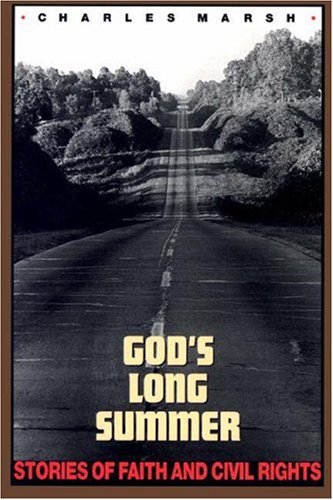
God's Long Summer
Authors:
Charles Marsh
Publisher:
Princeton University Press
Publication Date:
Not available
ISBN:
0691029407
In the summer of 1964, the turmoil of the civil rights movement reached its peak in Mississippi, with activists across the political spectrum claiming... that God was on their side in the struggle over racial justice. This was the summer when violence against blacks increased at an alarming rate and when the murder of three civil rights workers in Mississippi resulted in national media attention. Charles Marsh takes us back to this place and time, when the lives of activists on all sides of the civil rights issue converged and their images of God clashed. He weaves their voices into a gripping narrative: a Ku Klux Klansman, for example, borrows fiery language from the Bible to link attacks on blacks to his "priestly calling"; a middle-aged woman describes how the Gospel inspired her to rally other African Americans to fight peacefully for their dignity; a SNCC worker tells of harrowing encounters with angry white mobs and his pilgrimage toward a new racial spirituality called Black Power. Through these emotionally charged stories, Marsh invites us to consider the civil rights movement anew, in terms of religion as a powerful yet protean force driving social action.The book's central figures are Fannie Lou Hamer, who "worked for Jesus" in civil rights activism; Sam Bowers, the Imperial Wizard of the White Knights of the Ku Klux Klan of Mississippi; William Douglas Hudgins, an influential white Baptist pastor and unofficial theologian of the "closed society"; Ed King, a white Methodist minister and Mississippi native who campaigned to integrate Protestant congregations; and Cleveland Sellers, a SNCC staff member turned black militant.Marsh focuses on the events and religious convictions that led each person into the political upheaval of 1964. He presents an unforgettable American social landscape, one that is by turns shameful and inspiring. In conclusion, Marsh suggests that it may be possible to sift among these narratives and lay the groundwork for a new thinking about racial reconciliation and the beloved community. He maintains that the person who embraces faith's life-affirming energies will leave behind a most powerful legacy of social activism and compassion.
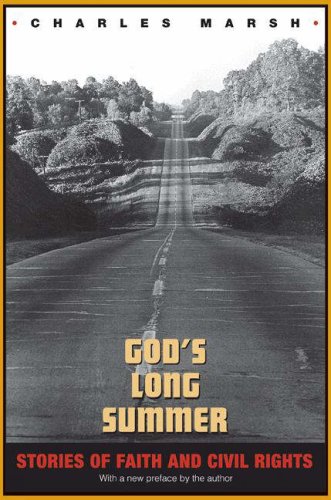
God's Long Summer: Stories of Faith and Civil Rights
Authors:
Charles Marsh
Publisher:
Princeton University Press
Publication Date:
Not available
ISBN:
0691130671
In the summer of 1964, the turmoil of the civil rights movement reached its peak in Mississippi, with activists across the political spectrum claiming... that God was on their side in the struggle over racial justice. This was the summer when violence against blacks increased at an alarming rate and when the murder of three civil rights workers in Mississippi resulted in national media attention. Charles Marsh takes us back to this place and time, when the lives of activists on all sides of the civil rights issue converged and their images of God clashed. He weaves their voices into a gripping narrative: a Ku Klux Klansman, for example, borrows fiery language from the Bible to link attacks on blacks to his "priestly calling"; a middle-aged woman describes how the Gospel inspired her to rally other African Americans to fight peacefully for their dignity; a SNCC worker tells of harrowing encounters with angry white mobs and his pilgrimage toward a new racial spirituality called Black Power. Through these emotionally charged stories, Marsh invites us to consider the civil rights movement anew, in terms of religion as a powerful yet protean force driving social action.The book's central figures are Fannie Lou Hamer, who "worked for Jesus" in civil rights activism; Sam Bowers, the Imperial Wizard of the White Knights of the Ku Klux Klan of Mississippi; William Douglas Hudgins, an influential white Baptist pastor and unofficial theologian of the "closed society"; Ed King, a white Methodist minister and Mississippi native who campaigned to integrate Protestant congregations; and Cleveland Sellers, a SNCC staff member turned black militant.Marsh focuses on the events and religious convictions that led each person into the political upheaval of 1964. He presents an unforgettable American social landscape, one that is by turns shameful and inspiring. In conclusion, Marsh suggests that it may be possible to sift among these narratives and lay the groundwork for a new thinking about racial reconciliation and the beloved community. He maintains that the person who embraces faith's life-affirming energies will leave behind a most powerful legacy of social activism and compassion.
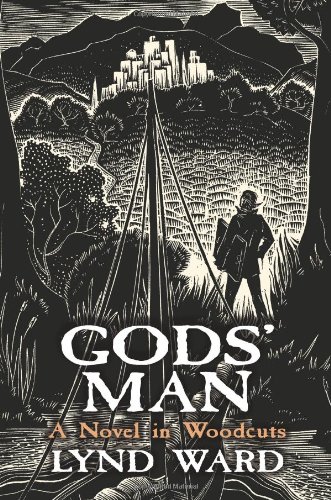
Gods' Man: A Novel in Woodcuts (Dover Fine Art, History of Art)
Authors:
Lynd Ward
Publisher:
Dover Publications
Publication Date:
Not available
ISBN:
0486435008
The major American artist invented the concept of a wordless novel with this evocative, text-free "woodcut" narrative. Autobiographical in nature, the... novel recounts Ward's struggles with his craft and with life in the 1920s. The intricate woodcuts transcend all barriers of language, and fresh details reward the eye with every review. 139 black-and-white illustrations.
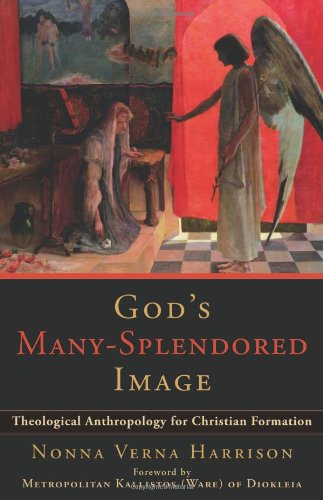
God's Many-Splendored Image: Theological Anthropology for Christian...
Authors:
Nonna Verna Harrison
Publisher:
Baker Academic
Publication Date:
Not available
ISBN:
080103471X
What does it mean to be a human being made in the image of God? This book makes the case that the divine image can be seen in not just one or two... aspects of human identity but in all of them. The author, a specialist in early Christianity, reveals the light that leading theologians of the early church shed on contemporary discussions of what it means to be human. Each chapter explores a different facet of the divine image and likeness and maps out a path that can lead toward wholeness and holiness. This fresh approach to theological anthropology brings Greek patristic theology to students in a readable fashion.
God's Mechanics: How Scientists and Engineers Make Sense of Religion
Authors:
Guy Consolmagno
Publisher:
Jossey-Bass
Publication Date:
Not available
ISBN:
0787994669
In God's Mechanics, Brother Guy tells the stories of those who identify with the scientific mindset—so-called "techies"—while practicing religion. A... full fledged techie himself, he relates some classic philosophical reflections, his interviews with dozens of fellow techies, and his own personal take on his Catholic beliefs to provide, like a set of "worked out sample problems," the hard data on the challenges and joys of embracing a life of faith as a techie. And he also gives a roadmap of the traps that can befall an unwary techie believer.With lively prose and wry humor, Brother Guy shows how he not only believes in God but gives religion an honored place alongside science in his life. This book offers an engaging look at how—and why—scientists and those with technological leanings can hold profound, "unprovable" religious beliefs while working in highly empirical fields. Through his own experience and interviews with other scientists and engineers who profess faith, Brother Guy explores how religious beliefs and practices make sense to those who are deeply rooted in the world of technology.
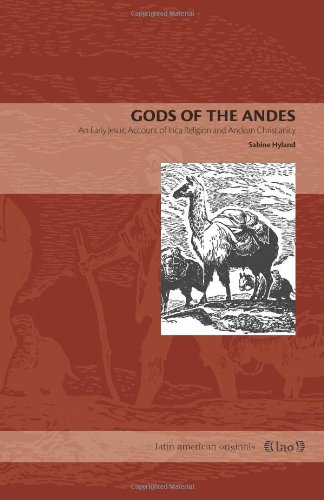
Gods of the Andes: An Early Jesuit Account of Inca Religion and...
Authors:
Sabine Hyland
Publisher:
Penn State Press
Publication Date:
Not available
ISBN:
0271048808
Gods of the Andes provides the first English translation of the earliest lengthy description of Inca religion, An Account of the Ancient Customs of the... Natives of Peru (1594). The Account is part of a Jesuit tradition of ecumenical works on religion that encompasses the more famous writings of Matteo Ricci in China and Roberto de Nobili in India. It includes original descriptions of many different aspects of Inca religion, including human sacrifice, the use of hallucinogens, mummification rituals, the existence of transgendered priests in the ancient Andes, divination rituals based on animal entrails, oracles, burials, and confession. In her introductory chapters, Sabine Hyland presents the controversial life of the ascribed author, Blas Valera, a Jesuit who was ultimately imprisoned and exiled by the Jesuits for his 'heretical' belief that the Incas worshipped the same creator god the Christians did; examines the Account in the light of other colonial writings about the Incas; and outlines what we know about Inca religion through other sources, comparing Valera's version to that of other writers.
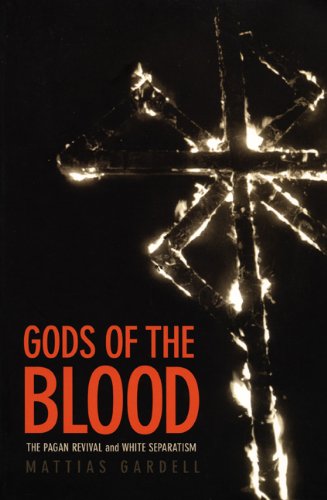
Gods of the Blood: The Pagan Revival and White Separatism
Authors:
Mattias Gardell
Publisher:
Duke University Press Books
Publication Date:
Not available
ISBN:
0822330717
Racist paganism is a thriving but understudied element of the American religious and cultural landscape. Gods of the Blood is the first in-depth survey... of the people, ideologies, and practices that make up this fragmented yet increasingly radical and militant milieu. Over a five-year period during the 1990s Mattias Gardell observed and participated in pagan ceremonies and interviewed pagan activists across the United States. His unprecedented entree into this previously obscure realm is the basis for this firsthand account of the proliferating web of organizations and belief systems combining pre-Christian pagan mythologies with Aryan separatism. Gardell outlines the historical development of the different strands of racist paganism—including Wotanism, Odinism and Darkside Asatrú—and situates them on the spectrum of pagan belief ranging from Wicca and goddess worship to Satanism.Gods of the Blood details the trends that have converged to fuel militant paganism in the United States: anti-government sentiments inflamed by such events as Ruby Ridge and Waco, the rise of the white power music industry (including whitenoise, dark ambient, and hatecore), the extraordinary reach of modern communications technologies, and feelings of economic and cultural marginalization in the face of globalization and increasing racial and ethnic diversity of the American population. Gardell elucidates how racist pagan beliefs are formed out of various combinations of conspiracy theories, anti-Semitism, warrior ideology, populism, beliefs in racial separatism, Klandom, skinhead culture, and tenets of national socialism. He shows how these convictions are further animated by an array of thought selectively derived from thinkers including Nietzche, historian Oswald Spengler, Carl Jung, and racist mystics. Scrupulously attentive to the complexities of racist paganism as it is lived and practiced, Gods of the Blood is a fascinating, disturbing, and important portrait of the virulent undercurrents of certain kinds of violence in America today.
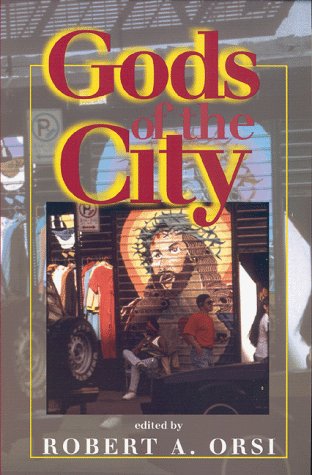
Gods of the City: Religion and the American Urban Landscape...
Authors:
Not Available
Publisher:
Indiana University Press
Publication Date:
Not available
ISBN:
0253212766
"Fascinating insights into modern urban religious practice make Orsi's collection a must-read." —Publishers Weekly"The essays provide insight into the... cultural creativity, reinterpretation of worship and religious ingenuity of city people over the last 50 years." —Library Journal"At last, a major dissection of the great mystery in modern Americanlife—how religion and spirituality prospered amidst industrialization,urbanization, and rampant technological change after 1880!" —Jon Butler, Yale University"Urban religion" strikes many as an oxymoron. How can religion thrive in the alienated, secular, fast-paced, and materialistic world of the modern, Western city? The authors in this collection believe that cities not only can provide the settings for religious expression, but also are material to the experiences which give rise to those religious expressions. In this book, they explore the distinctly urban forms of religious experience and practice that have developed in relation to the spaces, social conditions, and history of American cities.
God So Loved, He Gave: Entering the Movement of Divine Generosity
Authors:
Kelly M. Kapic
Publisher:
Zondervan
Publication Date:
Not available
ISBN:
0310329698
The God who created a good and perfect world, but whose world turned from him, has brought restoration through gift: The Father loved the world and gave... the Son, and the Father and the Son pour out the gift of the Spirit into the hearts of humanity bringing about praise, hope, and new creation. Those who are united to the Son by his Spirit then find they have received the glorious gift of God's coming Kingdom. In other words, the Gospel is shaped by giving: God's generosity buys us out of bondage and brings us into all the blessings of belonging. But the good news is not only that God has made us to be recipients of his grace but also participants in the movement of his divine justice and generosity. Living in God's gifts, Christians discover they are free to give themselves. The cross and resurrection of Christ come to shape and define this new life of faith, hope and generosity---a life that is best lived not in isolation but as a community. Throughout the book special attention is given to the relationship between divine generosity and concern for the poor and oppressed. Kapic and Borger encourage readers to not simply discover the immensity of God's grace, but to enter into the flow of divine generosity as God has invited them to become avenues of his great gifts to the world.
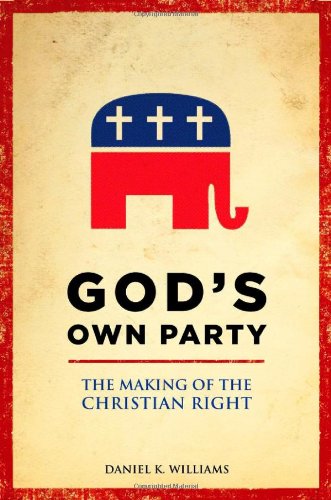
God's Own Party: The Making of the Christian Right
Authors:
Daniel Williams
Publisher:
Oxford University Press, USA
Publication Date:
Not available
ISBN:
0195340841
When the Christian Right burst onto the scene in the late 1970s, many political observers were shocked. But, God's Own Party demonstrates, they... shouldn't have been. The Christian Right goes back much farther than most journalists, political scientists, and historians realize. Relying on extensive archival and primary source research, Daniel K. Williams presents the first comprehensive history of the Christian Right, uncovering how evangelicals came to see the Republican Party as the vehicle through which they could reclaim America as a Christian nation.The conventional wisdom has been that the Christian Right arose in response to Roe v. Wade and the liberal government policies of the 1970s. Williams shows that the movement's roots run much deeper, dating to the 1920s, when fundamentalists launched a campaign to restore the influence of conservative Protestantism on American society. He describes how evangelicals linked this program to a political agenda-resulting in initiatives against evolution and Catholic political power, as well as the national crusade against communism. Williams chronicles Billy Graham's alliance with the Eisenhower White House, Richard Nixon's manipulation of the evangelical vote, and the political activities of Jerry Falwell, Pat Robertson, and others, culminating in the presidency of George W. Bush. Though the Christian Right has frequently been declared dead, Williams shows, it has come back stronger every time. Today, no Republican presidential candidate can hope to win the party's nomination without its support.A fascinating and much-needed account of a key force in American politics, God's Own Party is the only full-scale analysis of the electoral shifts, cultural changes, and political activists at the movement's core-showing how the Christian Right redefined politics as we know it.
God's Own Party: The Making of the Christian Right
Authors:
Daniel K. Williams
Publisher:
Oxford University Press, USA
Publication Date:
Not available
ISBN:
0199929068
When the Christian Right burst onto the scene in the late 1970s, many political observers were shocked. But, as God's Own Party demonstrates, they... shouldn't have been. The Christian Right goes back much farther than most journalists, political scientists, and historians realize. Relying on extensive archival and primary source research, Daniel K. Williams presents the first comprehensive history of the Christian Right, uncovering how evangelicals came to see the Republican Party as the vehicle through which they could reclaim America as a Christian nation. A fascinating and much-needed account of a key force in American politics, God's Own Party is the only full-scale analysis of the electoral shifts, cultural changes, and political activists at the movement's core--showing how the Christian Right redefined politics as we know it.
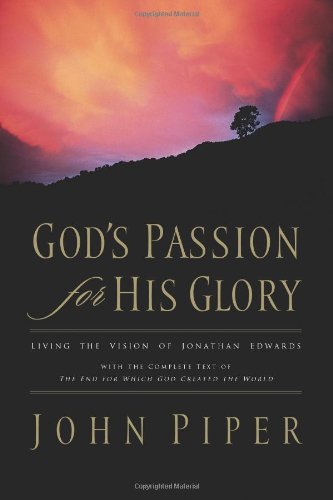
God's Passion for His Glory (Paperback Edition): Living the Vision...
Authors:
John Piper
Publisher:
Crossway
Publication Date:
Not available
ISBN:
1581347456
In his essay The End for Which God Created the World, the great theologian Jonathan Edwards proclaimed that God's ultimate end is the manifestation of... his glory in the highest happiness of his creatures. Pastor John Piper has devoted his years of ministry to exploring the implications of this stunning truth for life and ministry. Understanding that God is most glorified in us when we are most satisfied in him has made all the difference for John Piper-and can transform your life as well. Here Piper passionately demonstrates the relevance of Edwards's ideals for the personal and public lives of Christians today through his own book-length introduction to Edwards's The End for Which God Created the World. This book also contains the complete essay supplemented by almost a hundred of Piper's insightful explanatory notes. The result is a powerful and persuasive presentation of the things that matter most in the Christian life.

God's people subject to civil law
Authors:
J. August Smith
Publisher:
Our Hope Print
Publication Date:
Not available
ISBN:
1111876932

God's Playground: A History of Poland, Vol. 1: The Origins to 1795
Authors:
Norman Davies
Publisher:
Columbia University Press
Publication Date:
Not available
ISBN:
0231128177
The most comprehensive survey of Polish history available in English, God's Playground demonstrates Poland's importance in European history from... medieval times to the present. Abandoning the traditional nationalist approach to Polish history, Norman Davies instead stresses the country's rich multinational heritage and places the development of the Jewish German, Ukrainian, and Lithuanian communities firmly within the Polish context.Davies emphasizes the cultural history of Poland through a presentation of extensive poetical, literary, and documentary texts in English translation. In each volume, chronological chapters of political narrative are interspersed with essays on religious, social, economic, constitutional, philosophical, and diplomatic themes. This new edition has been revised and fully updated with two new chapters to bring the story to the end of the twentieth century.
 '





