production
/viewbook/list/all/?page=5277
/
/static/
None
Greener Products: The Making and Marketing of Sustainable Brands
Authors:
Al Iannuzzi
Publisher:
CRC Press
Publication Date:
Not available
ISBN:
1439854319
As the global demand for natural and organic products continues to grow, making and marketing greener products is becoming an imperative. The old... stereotype of green products’ sub-par performance has been shattered as large multinational corporations prove that you can develop and win in the marketplace with a naturals-based product platform. And the pull for sustainably minded products is not limited to consumer marketing—business-to-business marketing of greener products has also increased due to customer demand from all business sectors. The Case for Greener Products Making a compelling business case for why companies must provide greener, more sustainable products, Greener Products: The Making and Marketing of Sustainable Brands shares best practices for the design and marketing of greener products. The book examines ecosystem and regulatory pressures as well as market pressures from customers—consumers, business customers, and government purchasers—who have created a demand on manufacturers to bring more sustainable brands to market. How Are Greener Products Made? Through case studies of green design from companies such as GE (Ecomagination™), Timberland (Green Index®), Philips, Apple Inc., Seventh Generation, Procter & Gamble, BASF, and others, the author explores initiatives in areas ranging from product design, sustainable sourcing, and packaging to energy efficiency, recycling, and end-of-life management. A contribution from guest author James A. Fava, one of the leading thinkers and practitioners in developing greener products, presents a toolbox of environmental management systems, programs, and tools for the development of greener products. Three Keys to Successful Green Marketing Campaigns Providing the backbone for the author’s analysis of green marketing, a contribution from guest authors Lee Ann Head, Karen Barnes, and Suzanne Shelton of the Shelton Group analyzes market trend data and helps marketers understand their customers and what moves them. The author then looks more closely at drivers for green marketing, outlining three keys for successful green marketing campaigns and using them to evaluate the approaches of several leading companies. He also offers advice on how to avoid "greenwashing," create successful cause-marketing partnerships, and use eco-labels wisely. Throughout the book, the author shares best practices and lessons learned from leaders in the field across various industry sectors. Written by the senior director of product stewardship for Johnson & Johnson, this timely book offers real-world experience, valuable insights, and practical tools for the effective design and marketing of greener products. The Best Days of Green Marketing Are Still AheadSee what Al Iannuzzi has to say about making and marketing greener products in an interview at Greenbiz.com.
Green from the Ground Up: Sustainable, Healthy, and...
Authors:
David Johnston
Publisher:
Taunton
Publication Date:
Not available
ISBN:
156158973X
A thorough, informative, and up-to-date reference on green, sustainable and energy-efficient home construction that clarifies definitions of green and... sustainable and guides builders and architects through the process of new or remodel green construction, including issues of site, landscaping, durability, and energy-efficiency. It starts with clear explanations of the concepts and fundamentals of green, healthy and energy-efficient construction and walks the reader through the entire construction process, injecting expert advice at every decision point. Construction techniques, materials, and products are thoroughly explained, making the often vaguely understood concepts cleanly understandable. The book gives builders and architects the tools to respond to growing requests from homeowners for green and energy-efficient houses, whether new or remodeled. Homeowners can use the book to understand the concepts, process, and options, whether they're doing it themselves or working with a professional.

Green Goes with Everything: Simple Steps to a Healthier Life and a...
Authors:
Sloan Barnett
Publisher:
Atria Books
Publication Date:
Not available
ISBN:
1416578455
Imagine if your best friend gave you vital information that could protect you and your family, and save you money, and help the planet. Imagine if you... were given clear, simple choices, small changes that could have a big impact on your life. And you could still wear leather shoes and deodorant. You'd listen, right? Well, think of Today show contributor Sloan Barnett as that friend. A mother of three, a dedicated consumer advocate, Sloan gives us a fast, simple, down-toearth primer on the ways our homes are making us sick, and what we can all do to transform them into the safe sanctuaries we want and need them to be. Sloan exposes the toxic truth behind the household products we use every day -- from laundry detergent to toothpaste to lipstick. She explains how these and other seemingly benign stuff can harm us and our children. She offers an array of alternatives, and inspires us to see that we're never helpless: Every day, we have the power to make better, smarter, safer choices. Packed with common sense and sass, product picks and practical tips, Green Goes With Everything is for everyone who wants to live a healthier life.
Green Gone Wrong: How Our Economy Is Undermining the Environmental...
Authors:
Heather Rogers
Publisher:
Scribner
Publication Date:
Not available
ISBN:
1416572228
In Green Gone Wrong environmental writer Heather Rogers blasts through the marketing buzz of big corporations and asks a simple question: Do today’s... much-touted "green" products—carbon offsets, organic food, biofuels, and eco-friendly cars and homes—really work? Implicit in efforts to go green is the promise that global warming can be stopped by swapping out dirty goods for "clean" ones. But can earth-friendly products really save the planet? This far-reaching, riveting narrative explores how the most readily available solutions to environmental crisis may be disastrously off the mark. Rogers travels the world tracking how the conversion from a "petro" to a "green" society affects the most fundamental aspects of life—food, shelter, and transportation. Reporting from some of the most remote places on earth, Rogers uncovers shocking results that include massive clear-cutting, destruction of native ecosystems, and grinding poverty. Relying simply on market forces, people with good intentions wanting to just "do something" to help the planet are left feeling confused and powerless.Green Gone Wrong reveals a fuller story, taking the reader into forests, fields, factories, and boardrooms around the world to draw out the unintended consequences, inherent obstacles, and successes of eco-friendly consumption. What do the labels "USDA Certified Organic" and "Fair Trade" really mean on a vast South American export-driven organic farm? A superlow-energy "eco-village" in Germany’s Black Forest demonstrates that green homes dramatically shrink energy use, so why aren’t we using this technology in America? The decisions made in Detroit’s executive suites have kept Americans driving gas-guzzling automobiles for decades, even as U.S. automakers have European models that clock twice the mpg. Why won’t they sell these cars domestically? And what does carbon offsetting really mean when projects can so easily fail? In one case thousands of trees planted in drought-plagued Southern India withered and died, releasing any CO2 they were meant to neutralize. Expertly reported, this gripping exposé pieces together a global picture of what’s happening in the name of today’s environmentalism. Green Gone Wrong speaks to anyone interested in climate change and the future of the natural world, as well as those who want to act but are caught not knowing who, or what, to believe to protect the planet. Rogers casts a sober eye on what’s working and what’s not, fearlessly pushing ahead the debate over how to protect the planet.
Green Gone Wrong: How Our Economy Is Undermining the Environmental...
Authors:
Heather Rogers
Publisher:
Verso
Publication Date:
Not available
ISBN:
1844679012
Argues that environmental problems can't be solved by ethical consumerism.Faced with climate change, many counsel “going green” by buying organic... food or a “clean” car. But can we rely on consumerism as a solution to the very problems it has helped cause? Heather Rogers travels from Paraguay to Indonesia, via the Hudson Valley, Detroit and London, to investigate green capitalism, and argues for solutions that are not mere palliatives or distractions, but ways of engaging with how we live and the kind of world we want to live in.
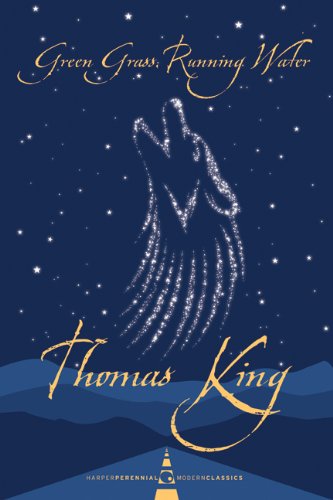
Green Grass Running Water
Authors:
Thomas King
Publisher:
Harper Perennial Canada
Publication Date:
Not available
ISBN:
1554685257
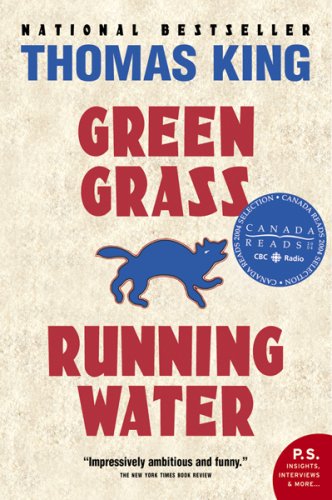
Green Grass Running Water
Authors:
Thomas King
Publisher:
HarperCollins Publishers Canada, Limited
Publication Date:
Not available
ISBN:
0006485138
Written for the general reading public in a lively and accessible style, Dr Price's highly informative discussion will be of interest to anyone who has... wondered about the origins of Christianity.

Green Grass, Running Water
Authors:
Thomas King
Publisher:
Bantam Books
Publication Date:
Not available
ISBN:
0553373684
Strong, Sassy women and hard-luck hardheaded men, all searching for the middle ground between Native American tradition and the modern world, perform an... elaborate dance of approach and avoidance in this magical, rollicking tale by Cherokee author Thomas King. Alberta is a university professor who would like to trade her two boyfriends for a baby but no husband; Lionel is forty and still sells televisions for a patronizing boss; Eli and his log cabin stand in the way of a profitable dam project. These three—and others—are coming to the Blackfoot reservation for the Sun Dance and there they will encounter four Indian elders and their companion, the trickster Coyote—and nothing in the small town of Blossom will be the same again…
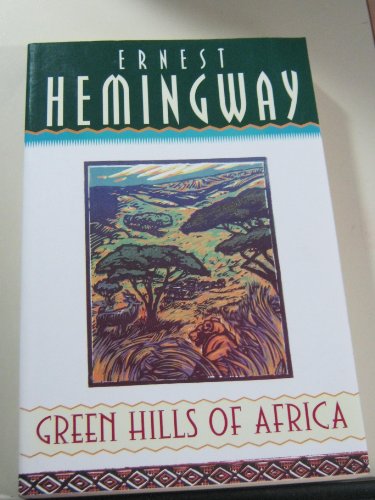
Green hills of Africa
Authors:
Ernest Hemingway
Publisher:
C. Scribner
Publication Date:
Not available
ISBN:
0684801299
"There are some things which cannot be learned quickly, and time, which is all we have, must be paid heavily for their acquiring. They are the very... simplest things, and because it takes a man's life to know them the little new that each man gets from life is very costly and the only heritage he has to leave." -- ERNEST HEMINGWAY In the winter of 1933, Ernest Hemingway and his wife Pauline set out on a two-month safari in the big-game country of East Africa, camping out on the great Serengeti Plain at the foot of magnificent Mount Kilimanjaro. "I had quite a trip," the author told his friend Philip Percival, with characteristic understatement. Green Hills of Africa is Hemingway's account of that expedition, of what it taught him about Africa and himself. Richly evocative of the region's natural beauty, tremendously alive to its character, culture, and customs, and pregnant with a hard-won wisdom gained from the extraordinary situations it describes, it is widely held to be one of the twentieth century's classic travelogues.

Greenhouse Engineering
Authors:
Robert S. Aldrich
Publisher:
Northeast Regional
Publication Date:
Not available
ISBN:
0935817573
Tom Tietenberg has written the ideal book for a policy-oriented course in environmental economics, accessible to both non-majors and majors. He begins... with a brief introduction to the core theory, and then offers a series of self-contained policy chapters that allow professors great flexibility when planning their course. With an overhaul of the applications, a new Debate feature that highlights today’s policy issues, and the latest research integrated throughout, The Fifth Edition represents the most thorough revision in over a decade.
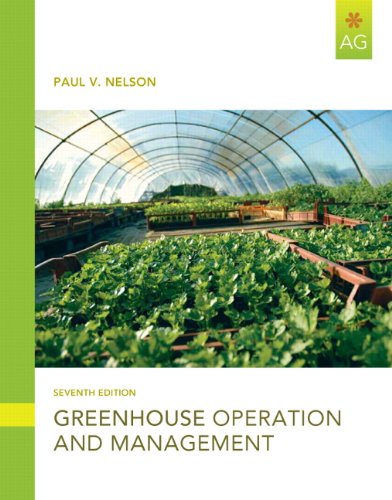
Greenhouse Operation and Management (7th Edition)
Authors:
Paul V. Nelson
Publisher:
Prentice Hall
Publication Date:
Not available
ISBN:
0132439360
Based on the author's life-long practical experiences both in the industry and in research, this best-selling, state-of-the-art guide to the operation... of commercial flower and vegetable greenhouses presents coverage in the order in which decision-making concerns occur for a person entering the greenhouse business. Exceptionally comprehensive –yet accessible– GREENHOUSE OPERATION AND MANAGEMENT, 7/e provides detailed, step-by-step instructions in layman's terms for ALL aspects of the business–from the physical facilities, to the day-to-day operations, to business management and marketing.
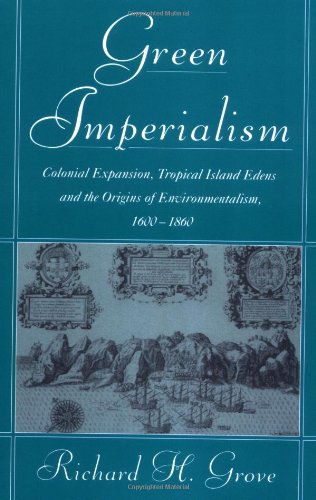
Green Imperialism: Colonial Expansion, Tropical Island Edens and...
Authors:
Richard H. Grove
Publisher:
Cambridge University Press
Publication Date:
Not available
ISBN:
0521565138
Green Imperialism is the first book to document the origins and early history of environmentalism, concentrating especially on its hitherto unexplained... colonial and global aspects. It highlights the significance of Utopian, Physiocratic, and medical thinking in the history of environmentalist ideas. The book shows how the new critique of the colonial impact on the environment depended on the emergence of a coterie of professional scientists, and demonstrates both the importance of the oceanic island "Eden" as a vehicle for new conceptions of nature and the significance of colonial island environments in stimulating conservationist notions.
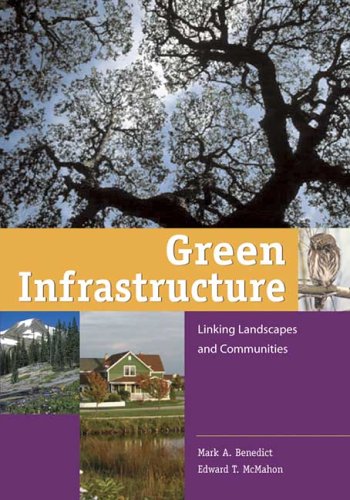
Green Infrastructure: Linking Landscapes and Communities
Authors:
Mark A. Benedict
Publisher:
Island Press
Publication Date:
Not available
ISBN:
1559635584
With illustrative and detailed examples drawn from throughout the country, Green Infrastructure advances smart land conservation: large scale thinking... and integrated action to plan, protect and manage our natural and restored lands. From the individual parcel to the multi-state region, Green Infrastructure helps each of us look at the landscape in relation to the many uses it could serve, for nature and people, and determine which use makes the most sense.In this wide-ranging primer, leading experts in the field provide a detailed how-to for planners, designers, landscape architects, and citizen activists

Greening Aid?: Understanding Environmental Assistance to Developing...
Authors:
Robert L. Hicks
Publisher:
Oxford University Press, USA
Publication Date:
Not available
ISBN:
0199213941
Every year, billions of dollars of environmental aid flow from the rich governments of the North to the poor governments of the South. Why do donors... provide this aid? What do they seek to achieve? How effective is the aid given? And does it always go to the places of greatest environmental need?From the first Earth Summit in Stockholm in 1972 to the G8 Gleneagles meeting in 2005, the issue of the impact of aid on the global environment has been the subject of vigorous protest and debate. How much progress has there been in improving environmental protection and clean-up in the developing world? What explains the patterns of environmental aid spending and distribution - is it designed to address real problems, achieve geopolitical or commercial gains abroad, or buy political mileage at home? And what are the consequences for the estimated 4 million people that die each year from air pollution, unsafe drinking water, and lack of sanitation?All of these questions and many more are addressed in this groundbreaking text, which is based on the authors' work compiling the most comprehensive dataset of foreign aid ever assembled. By evaluating the likely environment impact of over 400,000 development projects by more than 50 donors to over 170 recipient nations between 1970 and 2001, Greening Aid represents a unique, state of the art picture of what is happening in foreign assistance, and its impact on the environment. Greening Aid explains major trends and shifts over the last three decades, ranks donors according to their performance, and offers case studies which compare and contrast donors and types of environmental aid.
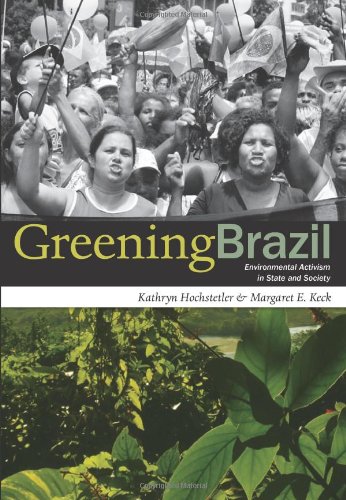
Greening Brazil: Environmental Activism in State and Society
Authors:
Kathryn Hochstetler
Publisher:
Duke University Press Books
Publication Date:
Not available
ISBN:
0822340313
Greening Brazil challenges the claim that environmentalism came to Brazil from abroad. Two political scientists, Kathryn Hochstetler and Margaret E.... Keck, retell the story of environmentalism in Brazil from the inside out, analyzing the extensive efforts within the country to save its natural environment, and the interplay of those efforts with transnational environmentalism. The authors trace Brazil’s complex environmental politics as they have unfolded over time, from their mid-twentieth-century conservationist beginnings to the contemporary development of a distinctive socio-environmentalism meant to address ecological destruction and social injustice simultaneously. Hochstetler and Keck argue that explanations of Brazilian environmentalism—and environmentalism in the global South generally—must take into account the way that domestic political processes shape environmental reform efforts.The authors present a multilevel analysis encompassing institutions and individuals within the government—at national, state, and local levels—as well as the activists, interest groups, and nongovernmental organizations that operate outside formal political channels. They emphasize the importance of networks linking committed actors in the government bureaucracy with activists in civil society. Portraying a gradual process marked by periods of rapid advance, Hochstetler and Keck show how political opportunities have arisen from major political transformations such as the transition to democracy and from critical events, including the well-publicized murders of environmental activists in 1988 and 2004. Rather than view foreign governments and organizations as the instigators of environmental policy change in Brazil, the authors point to their importance at key moments as sources of leverage and support.
 '





