production
/viewbook/list/all/?page=5333
/
/static/
None
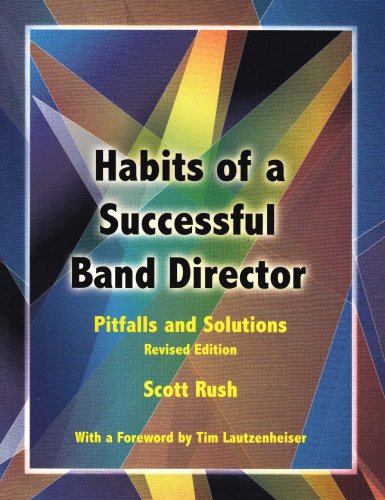
Habits of a Successful Band Director: Pitfalls and Solutions
Authors:
Scott Rush
Publisher:
G I a Pubns
Publication Date:
Not available
ISBN:
1579995705

Habits of Empire: A History of American Expansionism (Vintage)
Authors:
Walter Nugent
Publisher:
Vintage
Publication Date:
Not available
ISBN:
1400078180
Since its founding, the United States' declared principles of liberty and democracy have often clashed with aggressive policies of imperial expansion.... In this sweeping narrative history, acclaimed scholar Walter Nugent explores this fundamental American contradiction by recounting the story of American land acquisition since 1782 and shows how this steady addition of territory instilled in the American people a habit of empire-building. From America's early expansions into Transappalachia and the Louisiana Purchase through later additions of Alaska and island protectorates in the Caribbean and Pacific, Nugent demonstrates that the history of American empire is a tale of shifting motives, as the early desire to annex land for a growing population gave way to securing strategic outposts for America's global economic and military interests. Thorough, enlightening, and well-sourced, this book explains the deep roots of American imperialism as no other has done.
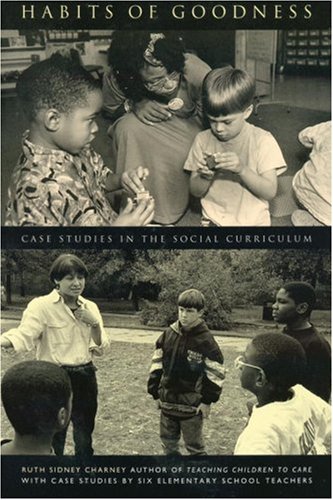
Habits of Goodness: Case Studies in the Social Curriculum
Authors:
Ruth Sidney Charney
Publisher:
Northeast Foundation for Children
Publication Date:
Not available
ISBN:
096186365X
Expanding on her ideas in Teaching Children to Care, Charney invites six elementary school teachers to study problems from their classrooms concerning... the social curriculum. She asks them to share their questions, their struggles and their triumphs over the course of a school year. The teachers come from rural schools and inner city schools, from the early primary grades and the upper level grades.
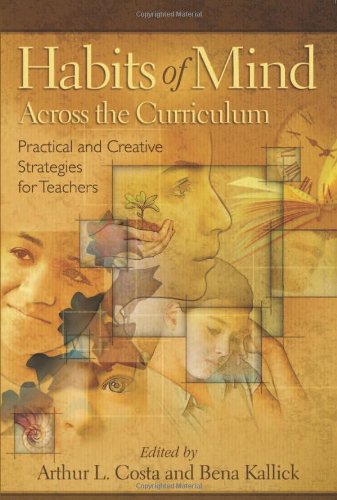
Habits of Mind Across the Curriculum: Practical and Creative...
Authors:
Arthur L. Costa
Publisher:
Association for Supervision & Curriculum Development
Publication Date:
Not available
ISBN:
1416607633
Distinguished educators Arthur L. Costa and Bena Kallick present this collection of stories by educators around the world who have successfully... implemented the habits in their day-to-day teaching in K 12 classrooms. The collective wisdom and experience of these thoughtful practitioners provide readers with insight into the transdisciplinary nature of the 16 Habits of Mind--intelligent behaviors that lead to success in school and the larger world--as well as model lessons and suggestions for weaving the habits into daily instruction in language arts, music, physical education, social studies, math, foreign language, and other content areas. Readers will come to understand that, far from an add-on to the curriculum, the habits are an essential element for helping students at all grade levels successfully deal with the challenges they face in school and beyond.As in all their books on the Habits of Mind, Costa and Kallick have a broad and worthwhile goal in mind. As they say in the concluding chapter of this volume, If we want a future that is much more thoughtful, vastly more cooperative, greatly more compassionate, and a whole lot more loving, then we have to invent it. That future is in our homes, schools, and classrooms today. The Habits of Mind are the tools we all can use to invent our desired vision of the future.

Habits of the Heart: Individualism and Commitment in American Life,...
Authors:
Robert N. Bellah
Publisher:
University of California Press
Publication Date:
Not available
ISBN:
0520254198
First published in 1985, Habits of the Heart continues to be one of the most discussed interpretations of modern American society, a quest for a... democratic community that draws on our diverse civic and religious traditions. In a new preface the authors relate the arguments of the book both to the current realities of American society and to the growing debate about the country's future. With this new edition one of the most influential books of recent times takes on a new immediacy.

Habits of the Heartland: Small-town Life in Modern America
Authors:
Lyn C. Macgregor
Publisher:
Cornell University Press
Publication Date:
Not available
ISBN:
0801476437
"So, how do Americans in a small town make community today? This book argues that there is more than one answer, and that despite the continued... importance of small-town stuff traditionally associated with face-to-face communities, it makes no sense to think that contemporary technological, economic, and cultural shifts have had no impact on the ways Americans practice community life. Instead, I found that different Viroquans took different approaches to making community that reflected different confluences of moral logics-their senses of obligation to themselves, to their families, to Viroqua, and to the world beyond it, and about the importance of exercising personal agency. The biggest surprise was that these ideas about obligation and agency, and specifically about the degree to which it was necessary or good to try to bring one's life into precise conformance with a set of larger goals, turned out to have replaced more traditional markers of social belonging like occupation and ethnicity, in separating Viroquans into social groups."-from Habits of the HeartlandAlthough most Americans no longer live in small towns, images of small-town life, and particularly of the mutual support and neighborliness to be found in such places, remain powerful in our culture. In Habits of the Heartland, Lyn C. Macgregor investigates how the residents of Viroqua, Wisconsin, population 4,355, create a small-town community together. Macgregor lived in Viroqua for nearly two years. During that time she gathered data in public places, attended meetings, volunteered for civic organizations, talked to residents in their workplaces and homes, and worked as a bartender at the local American Legion post.Viroqua has all the outward hallmarks of the idealized American town; the kind of place where local merchants still occupy the shops on Main Street and everyone knows everyone else. On closer examination, one finds that the town contains three largely separate social groups: Alternatives, Main Streeters, and Regulars. These categories are not based on race or ethnic origins. Rather, social distinctions in Viroqua are based ultimately on residents' ideas about what a community is and why it matters.These ideas both reflect and shape their choices as consumers, whether at the grocery store, as parents of school-age children, or in the voting booth. Living with-and listening to-the town's residents taught Macgregor that while traditional ideas about "community," especially as it was connected with living in a small town, still provided an important organizing logic for peoples' lives, there were a variety of ways to understand and create community.

Habitudes Book #1: The Art of Self-Leadership (Habitudes: Images...
Authors:
Tim Elmore
Publisher:
Poet Gardener
Publication Date:
Not available
ISBN:
0979294053
A fresh approach to generational learning, HABITUDES® is a breakthrough way to teach leadership principles to a post-modern student. Today's student is... EPIC: Experiential, Participatory, Image-driven and Connected. Habitudes® enables you to teach leadership groups in an experiential and memorable way: using pictures and exercises. Loaded with thirteen images and accompanying applications, this first book in the series captures the art of self-leadership. Effective leaders must lead themselves before they try to lead anyone else.
Book one illustrates character issues such as discipline, emotional security, integrity checks, self-esteem, relationships, personal growth, and more. Full color photographs throughout the book also make it a keeper for students to use and to teach from after they have gone through it themselves. Many schools are using this book to challenge their entire student body to become leaders and to nurture a thriving leadership culture on their campus and organization. It is ideal for college first-year experience programs, introductory leadership courses, and anyone who is just starting on their leadership journey. The Art of Self-Leadership covers the following topics: Character
Balance
Time Management
Core Values
Mental Toughness
Discipline
Identity & Strengths
Integrity Checks
Commitment
Emotional Security
Personal Networks
Responsibility
Personal Growth
Target Age Range: 16-24 years old
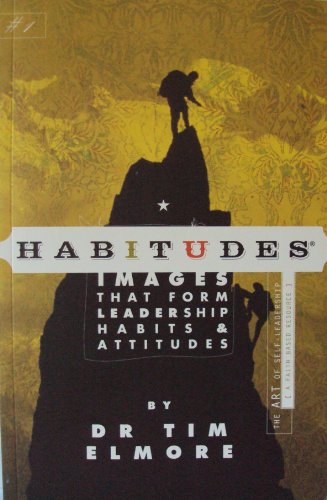
Habitudes: Images That Form Leadership Habits & Attitudes
Authors:
Tim Elmore
Publisher:
Growing Leaders, Inc.
Publication Date:
Not available
ISBN:
1931132054

Habitudes: The Art of Changing Culture - Values-based (Habitudes:...
Authors:
Tim Elmore
Publisher:
Poet Gardner
Publication Date:
Not available
ISBN:
0979294088
A fresh approach to generational learning, HABITUDES® is a breakthrough way to teach leadership principles to a post-modern student. Today's student is... EPIC: Experiential, Participatory, Image-driven and Connected. Habitudes® enables you to teach leadership in groups in an experiential and memorable way: using pictures and exercises. Loaded with thirteen images and accompanying applications, this final book in the series captures the art of changing culture. Effective leaders must leverage leadership skills to positively transform culture.
The fourth and last book in this series covers issues like contagious behavior, leadership styles, price of change, strategy, wise choices and more. Full color photographs throughout the book also make it a keeper for students to use and to teach from after they have gone through it themselves. This book is ideal for staff, advisors and upperclassmen who are ready to positively change their campus...and ultimately the world. The Art of Changing Culture addresses:
Leader Multiplication
Strategy
Modeling
Contagious Behavior
Sticky Communication
Wise Choices
Price of Change
Strength-based Leaders
Transforming Culture
Creating Communities
Big Picture Perspective
Leadership Style
Building a tribe Suggested for youth ages 16-24.
Recommended for staff, advisors and upperclassman. Also available in a Faith-Based Edition for Christian schools and ministries.
Habitudes: The Art of Connecting with Others - Values-based...
Authors:
Tim Elmore
Publisher:
Poet Gardner
Publication Date:
Not available
ISBN:
0979294010
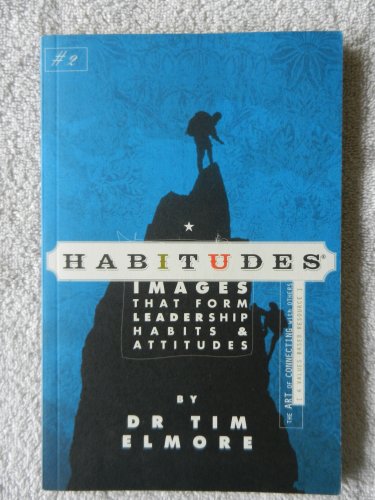
A fresh approach to generational learning, HABITUDES® is a breakthrough way to teach leadership principles to a post-modern student. Today's student is... EPIC: Experiential, Participatory, Image-driven and Connected. Habitudes® enables you to teach leadership in groups in an experiential and memorable way: using pictures and exercises. Loaded with thirteen images and accompanying applications, this second book in the series captures the art of connecting with others. Effective leaders must learn how to connect with others before they lead them.
Book two illustrates character issues such as humility and servanthood, encouraging and building trust, listening and communication, and more. Full color photographs throughout the book also make it a keeper for students to use and to teach from after they have gone through it themselves. The Art of Connecting with Others addresses: Social Initiative
Listening
Connecting Relationally
Humility
Choosing Battles
Encouragement
Confrontation
Credibility
Service
Developing People
Trust
Handling Criticism
Communication
Suggested for youth ages 16-24.
Recommended for youth workers, teachers and college professors. Also available is the Faith-Based Edition of this resource, for Christian schools and ministries.

Habitudes: The Art of Leading Others - Values-based (Habitudes:...
Authors:
Tim Elmore
Publisher:
Poet Gardner
Publication Date:
Not available
ISBN:
0979294029
A fresh approach to generational learning, HABITUDES® is a breakthrough way to teach leadership principles to a post-modern student. Today's student is... EPIC: Experiential, Participatory, Image-driven and Connected. Habitudes® enables you to teach leadership in groups in an experiential and memorable way: using pictures and exercises. Loaded with thirteen images and accompanying applications, this third book in the series captures the art of leading others. Effective leaders must discover how to lead and influence those around them.
Book three covers issues such as leading teams and organizations, focused vision, people skills, strategy, choosing priorities, modeling behavior, team building, initiative, and more. Full color photographs throughout the book also make it a keeper for students to use and to teach from after they have gone through it themselves. The Art of Leading Others addresses: Personal Example
Focus and Vison
Influence
Leading Change
Priorities
Starting Small
Team Building
Planning/li>
Decision Making
Diligence
Attitude and Passion
Initiative
Purpose
Suggested for youth ages 16-24.
Recommended for youth workers, teachers and college professors. Also available is the Faith-Based Edition of this resource, for Christian schools and ministries.

Hablando (bien) se entiende la gente /Speaking Well Makes the World...
Authors:
Asociación Norteamericana de la Lengua Española
Publisher:
Aguilar
Publication Date:
Not available
ISBN:
1603966269
300 capsules clarifying the correct use of the Spanish language. It includes the most common errors made by Spanish speakers in the USA. With a... refreshing and lively tone, and accompanied by illustrations, the North American Academy of the Spanish Language (ANLE) offers us this manual so that the Spanish language can survive without spanglish tarnishing it. The Academy also offers alternatives to those anglicisms. Spanish Description: 300 capsulas aclarando el uso correcto del idioma espanol. Incluye los errores mas comunes que cometen los hispanohablantes en EEUU. Con un tono simpatico y acompanado de ilustraciones, la Academia Norteamericana de la Lengua Espanola (ANLE) nos ofrece un manual para que el espanol sobreviva sin que el spanglish deteriore en EEUU. La ANLE nos da alternativa de uso de esos anglicismos.

Hablando de cine: Conversacion avanzada
Authors:
John Underwood
Publisher:
McGraw-Hill Humanities/Social Sciences/Languages
Publication Date:
Not available
ISBN:
0072535075
This exciting new textbook for the Advanced Conversation course departs from the traditional "topic of the day" approach and instead uses film as a... unifying subject matter. Organized into four thematic units (La traición, El destino, La mujer independiente, and La amistad y la familia), each of which presents three to four films for discussion and analysis, Hablando de cine serves not only as a stimulus for advanced conversation but also as an introduction to the world of Spanish and Latin American film. The result is an engaging content-based approach that highlights the richness of Spanish-language cinema and Hispanic culture.
Hablando En Plata/ Talking in Silver: Modismos Y Metaforas...
Authors:
Maria Prieto
Publisher:
Editorial Edinumen
Publication Date:
Not available
ISBN:
8495986744

Hablando seriamente: Textos y pretextos para conversar y discutir...
Authors:
Rubén Benítez
Publisher:
Prentice Hall
Publication Date:
Not available
ISBN:
0130307572
This advanced Spanish conversation book features a series of essays on a broad range of important, substantive, and interesting contemporary topics,... together with vocabulary notes and explanations. A variety of exercises test readers' comprehension of the essays and encourage them to express a statement of personal opinion or interpretation about the issues raised in, or related, to the essay. Topics progress from the most easy subjects to the most abstract, and include: Costumbres alimenticias en el mundo actual. El dinero, la inflación y el desempleo. El estrés y sus consecuencias. El alcohol y las drogas. La desigualdad social entre los sexos. La destrucción del medio ambiente. Diversidad étnica y discriminación. La presencia hispana en los Estados Unidos. La revolución tecnológica. La influencia de la televisión. Consideraciones sobre la amistad. La búsqueda de la felicidad. For anyone wanting conversational practice in advanced Spanish.
 '





