production
/viewbook/list/all/?page=5338
/
/static/
None

HAITIAN CREOLE-ENGLISH BILINGUAL DICT.
Authors:
Not Available
Publisher:
Not available
Publication Date:
Not available
ISBN:
Not available

Haitian Creole for Health Care: Keryolayisyen Pou Swen Sante
Authors:
Marc Prou
Publisher:
Educa Vision
Publication Date:
Not available
ISBN:
1584324325

Haiti and the United States: National Stereotypes and the Literary...
Authors:
J. Michael Dash
Publisher:
Palgrave Macmillan
Publication Date:
Not available
ISBN:
0312164904
Imaginative literature, argues Michael Dash, does not merely reflect, but actively influences historical events. He demonstrates this by a close... examination of the relations between Haiti and the United States through the imaginative literature of both countries. The West's mythification of Haiti is a strategy used to justify either ostracsim or domination, a process traced here from the nineteenth-century until it emerges with a voyeuristic fierceness in the 1960s. In an effort to resist these stereogypes, Haitian literature becomes a subversive manoeuvre permitting Haitians to 'rewrite' themselves.The United States 'invente' Haiti as a land of savagery and mystery, a source of evil and shame. Weaving together text and historical context, Dash discusses the durability of lthese images which continue to shape official policy and popular attitudes today. For the second edition the final chapter has been expanded to take in recent events, including the US military intervention in 1994, and to show how these have influenced literary expression.

Haitian History: New Perspectives (Rewriting Histories)
Authors:
Not Available
Publisher:
Routledge
Publication Date:
Not available
ISBN:
0415808685
Despite Haiti's proximity to the United States, and its considerable importance to our own history, Haiti barely registered in the historic... consciousness of most Americans until recently. Those who struggled to understand Haiti's suffering in the earthquake of 2010 often spoke of it as the poorest country in the Western hemisphere, but could not explain how it came to be so. In recent years, the amount of scholarship about the island has increased dramatically. Whereas once this scholarship was focused on Haiti’s political or military leaders, now the historiography of Haiti features lively debates and different schools of thought. Even as this body of knowledge has developed, it has been hard for students to grasp its various strands. Haitian History presents the best of the recent articles on Haitian history, by both Haitian and foreign scholars, moving from colonial Saint Domingue to the aftermath of the 2010 earthquake. It will be the go-to one-volume introduction to the field of Haitian history, helping to explain how the promise of the Haitian Revolution dissipated, and presenting the major debates and questions in the field today.

HAITIAN PAINTERS
Authors:
Not Available
Publisher:
Not available
Publication Date:
Not available
ISBN:
Not available

Haitian Revolution Reader
Authors:
David Geggus
Publisher:
Hackett Pub Co
Publication Date:
Not available
ISBN:
0872208656
In addition to selections by, and about, the best-known figures of the Haitian Revolution - including Toussaint L'Ouverture, Napoleon Bonaparte, and... Moreau de St Mery - this collection draws on a variety of previously untranslated eyewitness accounts, letters, and governmental documents to examine the causes of the Revolution and the impact it had on the eighteenth-century Atlantic world. Headnotes introduce each selection, and a general introduction provides historical, cultural, and political context. A map and index are included.

Haitian Vodou Flags (Folk Art and Artists)
Authors:
Patrick Arthur Polk
Publisher:
University Press of Mississippi
Publication Date:
Not available
ISBN:
1617030171
Once little known outside of Haiti, Vodou flags (drapo Vodou), dazzling in color and imagery, have become popular commodities in the international art... market. Works by such notable Haitian artists as Silva Joseph, Antoine Oleyant, and Yves Telemak now grace the walls of museums, art galleries, and private homes throughout the world.The fascinating, colorful collection of drapo Vodou included in this book reveals the importance of Vodou flags in the Haitian culture. Shimmering with sequins and reflected light, they capture the attention of Vodou practitioners and art lovers alike.In showcasing the Vodou flags and the artists who create them, this book also offers a striking revelation of the gods (Iwa) that inhabit the Vodou spirit world.

Haiti, History, and the Gods
Authors:
Joan Dayan
Publisher:
University of California Press
Publication Date:
Not available
ISBN:
0520213688
In Haiti, History, and the Gods, Joan Dayan charts the cultural imagination of Haiti not only by reconstructing the island's history but by highlighting... ambiguities and complexities that have been ignored. She investigates the confrontational space in which Haiti is created and recreated in fiction and fact, text and ritual, discourse and practice. Dayan's ambitious project is a research tour de force that gives human dimensions to this eighteenth-century French colony and provides a template for understanding the Haiti of today.In examining the complex social fabric of French Saint-Domingue, which in 1804 became Haiti, Dayan uncovers a silenced, submerged past. Instead of relying on familiar sources to reconstruct Haitian history, she uses a startling diversity of voices that have previously been unheard. Many of the materials recovered here--overlooked or repressed historical texts, legal documents, religious works, secret memoirs, letters, and literary fictions--have never been translated into English. Others, such as Marie Vieux Chauvet's radical novel of vodou, Fonds des Nègres, are seldom used as historical sources.Dayan also argues provocatively for the consideration of both vodou rituals and narrative fiction as repositories of history. Her scholarship is enriched by the insights she has gleaned from conversations and experiences during her many trips to Haiti over the past twenty years. Taken together, the material presented in Haiti, History, and the Gods not only restores a lost chapter of Haitian history but suggests necessary revisions to the accepted histories of the New World.

Haiti in Focus: A Guide to the People, Politics, and Culture (In...
Authors:
Charles Arthur
Publisher:
Interlink Pub Group Inc
Publication Date:
Not available
ISBN:
1566563593
During two centuries of independence from colonial rule, Haiti has developed into a society quite distinct from those found in the rest of the region.... Hollywood-derived images of black magic and Graham Greene-inspired conceptions of a "nightmare republic" do scant justice to the reality of life for those who make up the third largest population in the Caribbean. How did the slaves of France's most prosperous colony defeat the armies of Napoleon, Spain, and Britain? Why did the U.S. occupation of 1915-34 fail to establish a plantation economy in Haiti? Haiti in Focus is an authoritative and up-to-date guide to this fascinating country. The guide explores the land, history and politics, economy, society and people, culture and environment, and includes tips on where to go and what to see.
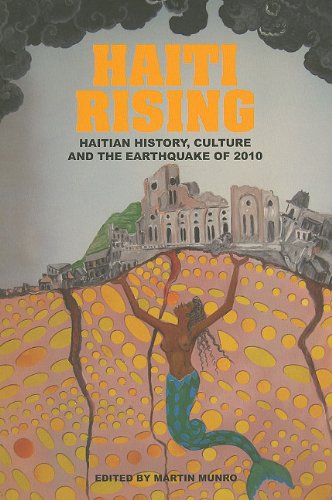
Haiti Rising: Haitian History, Culture and the Earthquake of 2010
Authors:
Not Available
Publisher:
University of the West Indies Press
Publication Date:
Not available
ISBN:
9766402485
The earthquake that struck Haiti on January 12, 2010 thrust the nation into the public consciousness as never before. That terrible event piqued... interest in a remarkable country with a rich history as both the first black republic in the world and the first country to break free of European imperialism in Latin America. "Haiti Rising" brings together more than 20 of the most prominent authorities on Haiti in to provide both a historical and cultural introduction to Haiti and a chance for earthquake survivors to testify to their experiences. Ranging widely across politics, society, history, art and culture, contributors such as Maryse Conde, Yanick Lahens, Evelyne Trouillot, J. Michael Dash and Laurent Dubois illuminate this most extraordinary of countries and the tragedy that befell it in 2010. "Haiti Rising" will stand as a written document of this cataclysmic event in Haitian history and as a monument to the experiences of those who were in Haiti at the time of the earthquake. It is vital reading for anyone who wants to find out more about Haiti, and the prospects for its future. All royalties from the book will be donated to the Haitian Art Relief Fund.

Haiti's Development Through Expatriate Reconnection: Conditions and...
Authors:
Tatiana Wah
Publisher:
Educa Vision Inc.
Publication Date:
Not available
ISBN:
1584321806

Haiti's Predatory Republic: The Unending Transition to Democracy
Authors:
Robert Fatton
Publisher:
Lynne Rienner Pub
Publication Date:
Not available
ISBN:
1588260852
An ALA Notable Book. Julia Alvarez's eagerly awaited second novel is a powerful story of courage, innocence, and political martyrdom in the Hispanic... Caribbean. Based on actual events--the death of three sisters on November 25, 1960--the novel immerses us in an epoch in the life of the Dominican Republic. The "Butterflies," as they were known, lived daringly and dangerously under a regime that imprisoned, tortured, and killed with impunity. "Brimming with warmth and vitality . . . Mesmerizing."--Kirkus Reviews, starred; "Potent and luminous."--Philadelphia Inquirer. A BOOK-OF-THE-MONTH CLUB and QUALITY PAPERBACK BOOK CLUB SELECTION.

Haiti: State Against Nation
Authors:
Michel-Rolph Trouillot
Publisher:
Monthly Review Press
Publication Date:
Not available
ISBN:
0853457565
In the euphoria that followed the departure of Haiti's hated dictator, Jean-Claude Duvalier, most Haitian and foreign analysts treated the regimes of... the two Duvaliers, father and son, as a historical nightmare created by the malevolent minds of the leaders and their supporters. Yet the crisis, economic and political, that faces this small Caribbean nation did not begin with the dictatorship, and is far from being solved, despite its departure from the scene. In this fascinating study, Haitian-born Michel-Rolph Trouillot examines the mechanisms through which the Duvaliers ruthlessly won and then held onto power for twenty-nine years. Trouillot's theoretical discussion focuses on the contradictory nature of the peripheral state, analyzing its relative autonomy as a manifestation of the growing disjuncture between state and nation. He discusses in detail two key characteristics of such regimes: the need for a rhetoric of "national unity" coupled with unbridled violence. At the same time, he traces the current crisis from its roots in the nineteenth-century marginalization of the peasantry through the U.S. occupation from 1915 to 1934 and into the present. He ends with a discussion of the post-Duvalier period, which, far from seeing the restoration of civilian-led democracy, has been a period of increasing violence and economic decline.

Haiti: The Aftershocks of History
Authors:
Laurent Dubois
Publisher:
Metropolitan Books
Publication Date:
Not available
ISBN:
0805093354
A passionate and insightful account by a leading historian of Haiti that traces the sources of the country's devastating present back to its turbulent... and traumatic historyEven before the 2010 earthquake destroyed much of the country, Haiti was known as a benighted place of poverty and corruption. Maligned and misunderstood, the nation has long been blamed by many for its own wretchedness. But as acclaimed historian Laurent Dubois makes clear, Haiti's troubled present can only be understood by examining its complex past. The country's difficulties are inextricably rooted in its founding revolution—the only successful slave revolt in the history of the world; the hostility that this rebellion generated among the colonial powers surrounding the island nation; and the intense struggle within Haiti itself to define its newfound freedom and realize its promise.Dubois vividly depicts the isolation and impoverishment that followed the 1804 uprising. He details how the crushing indemnity imposed by the former French rulers initiated a devastating cycle of debt, while frequent interventions by the United States—including a twenty-year military occupation—further undermined Haiti's independence. At the same time, Dubois shows, the internal debates about what Haiti should do with its hard-won liberty alienated the nation's leaders from the broader population, setting the stage for enduring political conflict. Yet as Dubois demonstrates, the Haitian people have never given up on their struggle for true democracy, creating a powerful culture insistent on autonomy and equality for all.Revealing what lies behind the familiar moniker of "the poorest nation in the Western Hemisphere," this indispensable book illuminates the foundations on which a new Haiti might yet emerge.

Haiti: The Tumultuous History - From Pearl of the Caribbean to...
Authors:
Philippe Girard
Publisher:
Palgrave Macmillan
Publication Date:
Not available
ISBN:
0230106617
Why has Haiti been plagued by so many woes? Why have multiple U.S. efforts to create a stable democracy in Haiti failed so spectacularly? Philippe... Girard answers these and other questions, examining how colonialism and slavery have left a legacy of racial tension, both within Haiti and internationally; Haitians remain deeply suspicious of white foriegners' motives, many of whom doubt Hatians' ability to govern themselves. He also examines how Haiti's current political instability is merely a continuation of political strife that began during the War of Independence (1791-1804). Finally, Girard explores poverty's devastating impact on contemporary Haiti and argues that Haitians--particularly home-grown dictators--bear a big share of the responsibility for their nation's troubles.
 '





