production
/viewbook/list/all/?page=5359
/
/static/
None
Handbook of Employee Selection
Authors:
Not Available
Publisher:
Routledge Academic
Publication Date:
Not available
ISBN:
0805864377
The Handbook of Employee Selection summarizes the state of science and practice in the field of employee selection. Chapters in this book cover issues... associated with measurement such as validity and reliability as well as practical concerns around the development of appropriate selection procedures and implementation of selection programs. Several chapters discuss the measurement of various constructs commonly used as predictors, and other chapters confront criterion measures that are used in test validation. Ethical and legal concerns are dealt with in another set of chapters and highlight the concerns of the employer as well as the test taker and the psychologist responsible for the testing program. Final sections of the book include chapters that focus on testing for certain types of jobs (e.g., blue collar jobs, supervisory jobs) and describe important milestones in the development of selection programs.

Handbook of Energy Audits, Eighth Edition
Authors:
Albert Thumann
Publisher:
CRC Press
Publication Date:
Not available
ISBN:
1439821453
This bestselling handbook is the most comprehensive and practical reference available on energy auditing in buildings and industry. This latest edition... includes revisions throughout covering ASHRAE Level 1 and 2 energy audits, as well as a new chapter on water conservation. Topics include energy assessment and computer software that will guide you in planning and carrying out a thorough and accurate energy audit for any type of facility, including electrical, mechanical, and building systems analysis. Clear, easy-to-follow instructions guide you through accounting procedures, rate of return, and life cycle cost analysis. Also covered is information on understanding your utility bill and using that knowledge to trim your energy costs. Loaded with forms, checklists and handy working aids, this book is must reading for anyone responsible for conducting or overseeing a facility energy audit.

Handbook of Energy Engineering, Sixth Edition
Authors:
Albert Thumann
Publisher:
Fairmont Press
Publication Date:
Not available
ISBN:
1420087681
Covering the latest codes and standards and the Energy Independence and Security Act, this edition includes information on software packages from the... Best Practices Program of the U.S. Department of Energy; and emerging technologies such as oxy-fuel combustion, high efficiency burners, enhanced heat exchangers, and ceramic membranes for heat recovery. This reference will guide you step by step in applying the principles of energy engineering and management to the design of electrical, HVAC, utility, process and building systems for both new design and retrofit projects. Topics covered include how to do an energy analysis of any system; electrical system optimization; state-of-the-art lighting and lighting controls; thermal storage; cogeneration; HVAC and building system optimization; compressed air systems; third party financing and much more. The text is thoroughly illustrated with tables, graphs, diagrams and sample problems.
Handbook of Epictetus (HPC Philosophical Classics Series)
Authors:
Epictetus
Publisher:
Hackett Pub Co
Publication Date:
Not available
ISBN:
0915145693
Handbook of Epictetus also known as Enchiridion written by legendary Greek Stoic philosopher Epictetus is a manual of Stoic ethical advice. Compiled by... Arrian, who was a student of Epictetus, this great classic will surely attract a whole new generation of readers. For many, the Handbook of Epictetus is required reading for various courses and curriculums. And for others who simply enjoy reading timeless pieces of classic literature, this gem by Epictetus is highly recommended.

Handbook of Epigenetics: The New Molecular and Medical Genetics
Authors:
Not Available
Publisher:
Academic Press
Publication Date:
Not available
ISBN:
0123757096
Epigenetics is considered by many to be the "new genetics" because the realization that many biological phenomena are controlled not through gene... mutations, but rather through reversible and heritable epigenetic processes that have opened up new paths for discovery. The biological processes impacted by epigenetics range from tissue/organ regeneration, X-chromosome inactivation, and stem cell differentiation to genomic imprinting and aging. The effects of epigenetics are vast and encompass lower organisms as well as humans. Aberrations of epigenetics influence many diseases involving but not limited to cancer, immune disorders, neurological and metabolic disorders, and imprinting diseases. Clinical intervention is already in place for some of these disorders and many novel epigenetic therapies are on the horizon. This comprehensive collection of reviews written by leaders in the field of epigenetics provides a broad view of this important and evolving topic. From molecular mechanisms and epigenetic technology to discoveries in human disease and clinical epigenetics the nature and applications of the science will be presented for those with interests ranging from the fundamental basis of epigenetics to therapeutic interventions for epigenetic-based disorders. * Contributions by leading international investigators involved in molecular research and clinical and therapeutic applications * Integrates methods and biological topics with basic and clinical discoveries * Includes coverage of new topics in epigenetics such as prions, regulation of long-term memory by epigenetics, metabolic aspects of epigenetics, and epigenetics of neuronal disorders
Handbook of Ethics in Quantitative Methodology (Multivariate...
Authors:
Not Available
Publisher:
Routledge Academic
Publication Date:
Not available
ISBN:
1848728557
This comprehensive Handbook is the first to provide a practical, interdisciplinary review of ethical issues as they relate to quantitative methodology... including how to present evidence for reliability and validity, what comprises an adequate tested population, and what constitutes scientific knowledge for eliminating biases. The book uses an ethical framework that emphasizes the human cost of quantitative decision making to help researchers understand the specific implications of their choices. The order of the Handbook chapters parallels the chronology of the research process: determining the research design and data collection; data analysis; and communicating findings. Each chapter: Explores the ethics of a particular topic Identifies prevailing methodological issues Reviews strategies and approaches for handling such issues and their ethical implications Provides one or more case examples Outlines plausible approaches to the issue including best-practice solutions. Part 1 presents ethical frameworks that cross-cut design, analysis, and modeling in the behavioral sciences. Part 2 focuses on ideas for disseminating ethical training in statistics courses. Part 3 considers the ethical aspects of selecting measurement instruments and sample size planning and explores issues related to high stakes testing, the defensibility of experimental vs. quasi-experimental research designs, and ethics in program evaluation. Decision points that shape a researchers’ approach to data analysis are examined in Part 4 – when and why analysts need to account for how the sample was selected, how to evaluate tradeoffs of hypothesis-testing vs. estimation, and how to handle missing data. Ethical issues that arise when using techniques such as factor analysis or multilevel modeling and when making causal inferences are also explored. The book concludes with ethical aspects of reporting meta-analyses, of cross-disciplinary statistical reform, and of the publication process. This Handbook appeals to researchers and practitioners in psychology, human development, family studies, health, education, sociology, social work, political science, and business/marketing. This book is also a valuable supplement for quantitative methods courses required of all graduate students in these fields.

Handbook of Ethnography
Authors:
Not Available
Publisher:
Sage Publications Ltd
Publication Date:
Not available
ISBN:
1412946069
Ethnography is one of the chief research methods in sociology, anthropology and other cognate disciplines in the social sciences. This Handbook provides... an unparalleled critical guide to its principles and practice. The result is a landmark work in the field which draws on the expertise of an internationally renowned group of interdisciplinary scholars. The Handbook provides readers with a one-stop critical guide to the past, present and future of ethnography. It will quickly establish itself as the ethnographer’s bible.
Handbook of Evidence-Based Practice in Clinical Psychology, Adult...
Authors:
Michel Hersen
Publisher:
Wiley
Publication Date:
Not available
ISBN:
0470335467
Handbook of Evidence-Based Practice in Clinical Psychology, Volume 2 covers the evidence-based practices now identified for treating adults with a wide... range of DSM disorders. Topics include fundamental issues, adult cognitive disorders, substance-related disorders, psychotic, mood, and anxiety disorders, and sexual disorders. Each chapter provides a comprehensive review of the evidence-based practice literature for each disorder and then covers several different treatment types for clinical implementation. Edited by the renowned Peter Sturmey and Michel Hersen and featuring contributions from experts in the field, this reference is ideal for academics, researchers, and libraries.
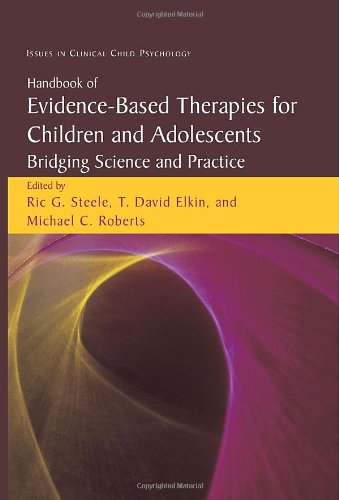
Handbook of Evidence-Based Therapies for Children and Adolescents:...
Authors:
Not Available
Publisher:
Springer
Publication Date:
Not available
ISBN:
0387736905
The comprehensive coverage in this hugely important and timely handbook makes it invaluable to clinical child, school, and counseling psychologists;... clinical social workers; and child psychiatrists. As a textbook for advanced clinical and counseling psychology programs, and a solid reference for the researcher in child/adolescent mental health, its emphasis on flexibility and attention to emerging issues will help readers meet ongoing challenges, as well as advance the field. Its relevance cannot be overstated, as growing numbers of young people have mental health problems requiring intervention, and current policy initiatives identify evidence-based therapies as the most effective and relevant forms of treatment.
Handbook of Evidence-Based Treatment Manuals for Children and...
Authors:
Craig Winston LeCroy
Publisher:
Oxford University Press, USA
Publication Date:
Not available
ISBN:
019517741X
With the advance of evidence-based practice has come the publication of numerous dense volumes reviewing the theoretical and empirical components of... child and adolescent treatment. There are also a variety of detailed treatment manuals that describe the step-by-step procedures to guide ongoing research and practice. The second edition of Craig Winston LeCroy's Handbook of Evidence-Based Child and Adolescent Treatment Manuals is a forceful combination of the two approaches, as he gathers fifteen varied treatment manuals and brief summaries of the research supporting each to ensure that practitioners will truly understand how to implement the treatments they are using. A completely revised and expanded edition of the handbook's first edition, this is an essential guide to some of the best programs for helping children and teens. Each chapter begins with an explanatory section that discusses the theoretical and empirical underpinnings of the programs. The treatment manual follows, leading readers through sessions with specific details about conducting the treatment that have been refined and improved through extensive testing and research. Organized into three sections: the major clinical disorders, social problems confronting children and teens, and preventive interventions the Handbook brings together some of the most esteemed researcher-practitioners in the child and adolescent field. The book presents an impressive variety of innovative treatment programs and techniques including: the SiHLE program (intended to prevent problems confronting children and teens, and preventive interventions the Handbook brings together some of the most esteemed researcher-practitioners in the child and adolescent field. The book presents an impressive variety of innovative treatment programs and techniques including: the SiHLE program (intended to prevent HIV through education and self-esteem building), the Children of Divorce Intervention Program (a therapy for younger children stressing resilience and skill-building), and Strengths Oriented Family Therapy (which reaches out to substance-involved adolescents and their families). The Handbook of Evidence-Based Child and Adolescent Treatment Manuals is an indispensable reference for researchers, graduate students, and practitioners working with children and adolescents in a multitude of settings, from schools and juvenile correction centers to group homes and family service agencies.
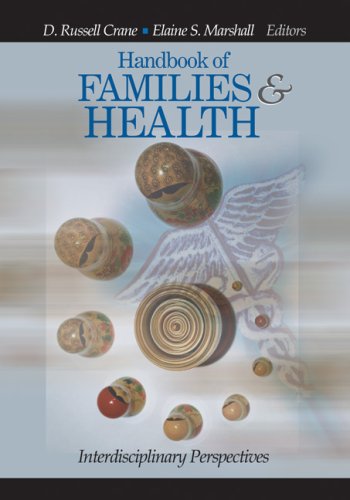
Handbook of Families and Health: Interdisciplinary Perspectives
Authors:
Not Available
Publisher:
Sage Publications, Inc
Publication Date:
Not available
ISBN:
0761930418
Handbook of Families and Health: Interdisciplinary Perspectives presents state-of-the-art summaries of research related to couple, marital, and family... influences on health. Editors D. Russell Crane and Elaine S. Marshall, along with a distinguished group of contributors across various disciplines, bring complementary perspectives to a wide range of families and health issues. A major goal of this Handbook is to highlight common issues, concerns, and goals across diverse fields and the benefits of bringing multiple perspectives to these issues. A significant portion of the book is devoted to interventions to improve family health.
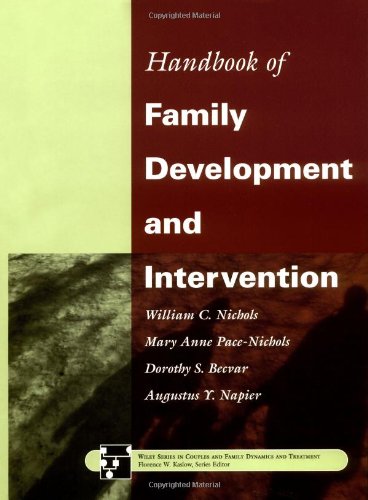
Handbook of Family Development and Intervention
Authors:
Not Available
Publisher:
Wiley
Publication Date:
Not available
ISBN:
0471299677
Like all complex living systems, a family, during its life course, proceeds through predictable stages of development. Yet every family is different,... its uniqueness defined and continually redefined by an open-ended array of structural, biological, and sociocultural variables. And, as with all living things, a family s continued well-being depends upon its ability to adapt to changes arising from both within the family system and without.First postulated in the 1940s, these basic ideas constitute the conceptual core of modern family development theory. From them has blossomed an impressive body of knowledge about family health and illness, without which much of the progress occurring in family therapy over the past half-century would not have been possible.This book does much to promote continued progress in the practical application of family development theory by affording family therapists an unparalleled opportunity to acquaint themselves with the most important trends in family development theory to emerge over the past decade.In it you will find contributions from leading theorists, researchers, and clinicians, arranged so as to provide a systematic treatment of the latest thinking on family development seen from both the systemic viewpoint and that of individual members of the system.Comprehensive in scope, this book explores the patterns, processes, and dynamics inherent in "traditional" families, as well as in important structural variants such as single-parent and gay and lesbian families and families with special needs and problems, including divorce, physical abuse, and disabilities.Since progress in the social sciences is as much about formulating viable new ways of seeing as it is about determining quantifiable facts, the editors offer equal time to an array of influential and sometimes radically conflicting schools of thought, including sociobiology, social psychology, constructionism, multiculturalism, postmodernism, and feminism. Mainstream family therapists will find much in this handbook that they will consider controversial. In some cases readers may even be outraged by the views expressed. Yet, thanks to the high caliber of scholarship, intellect, and professionalism evidenced throughout, none of the ideas advanced in Handbook of Family Development and Intervention can be easily dismissed, and all have something of value to offer the thoughtful, dedicated family therapist.Handbook of Family Development and Intervention is a valuable professional resource for all couples and family therapists. It is also must reading for graduate students in family psychology, family therapy, social work, and counseling."In this magnificent volume, the editors make a major contribution that integrates individual and family development concepts and therapeutic applications by bringing together scholarly yet fresh contributions. The inclusion of various family forms and of families with special needs makes this volume especially relevant to the treatment of contemporary families as we enter the new millennium. This superb Handbook should be mandatory reading and an excellent reference for teachers, researchers, and therapists at all levels of development." Celia J. Falicov, PhD President, 1999 2001 American Family Therapy Academy
Handbook of Family Diversity
Authors:
Not Available
Publisher:
Oxford University Press, USA
Publication Date:
Not available
ISBN:
0195120396
The status of the American family has been the topic of considerable debate in recent years. As demographic changes make our country more multicultural... and as new types of families continue to form and become more common, it is essential for sociologists, social workers, family researchers, and psychologists to understand the full range of diversity in American families. However, to varying extents, African American families, Latino families, Asian American families, poverty-stricken and near-poor families, lesbian and gay families, single-parent families, and stepfamilies have been marginalized from mainstream scholarship. As a result, students taking courses on families are typically not exposed to the experiences of these groups.The Handbook of Family Diversity fills this gap in scholarship by providing a comprehensive discussion of several key dimensions where families differ: race, socioeconomic status, family structure, sexual orientation, and gender. It is designed to inform and broaden the debate among students, family scholars, practitioners, and policymakers as to what constitutes a family and how families should function. Featuring commissioned chapters by prominent scholars from a variety of fields, The Handbook of Family Diversity discusses different types of families from widely varying social and economic backgrounds. These authoritative yet highly readable essays discuss important public policy issues pertaining to family diversity and describe the everyday realities of family interactions--the tensions and dynamics of intimacy, support, control, communication, and conflict. Multiple disciplinary, theoretical, and methodological perspectives are presented throughout the volume, providing evidence that there is no unified or monolithic perspective on families. Emphasizing the most current and cutting edge knowledge on family diversity, The Handbook of Family Diversity sets a new standard for research in this important and vital area of study.
Handbook of Family Literacy
Authors:
Not Available
Publisher:
Routledge
Publication Date:
Not available
ISBN:
0805852409
The emerging field of family literacy, which cuts across early childhood education, early literacy development, parent education, adult education, and... parent-child literacy interactions, has never had a comprehensive volume that pulls together and integrates its many interacting components. That is the mission of this handbook. It provides scholars, students, policymakers, and practitioners (both inside and outside the field) with an invaluable snapshot of its current boundaries and rapidly growing content. With contributions from experts in each of its component fields, it provides an up-to-date picture of existing family literacy programs, of the research and theories that guide these programs, of current issues, and of likely future directions. Key features of this outstanding new book include the following: *Comprehensive--Whereas many books deal with various components of this broad and loosely coupled field, until now there has never been a book that profiles and integrates its overlapping component fields. *Recommendations for Practice--Information essential to the development of curriculum and instructional strategies is integrated throughout the book. Practical guidance is offered in such diverse and intersecting areas as early literacy, the role of literature and storybook reading in literacy learning, adult learning needs and strategies, and professional development. *Cultural and Family Influences--The book examines cultural and family influences on literacy practices and provides effective ways of responding to family diversity, including the needs of bilingual and immigrant participants. *Program Implementation--Program recommendations cover such distinct topics as integrating the curriculum, enriching early childhood classrooms, enhancing parent-child literacy interactions, and coordinating with other agencies. *Assessment--To promote future research and evaluation, attention has been focused on ways of assessing children, adults, the educational setting, and implementation strategies. This book is intended for professionals (directors and staff) and graduate students in the areas of family literacy, early childhood education, child development, parenting, and adult education, as well as researchers and policymakers in child development and family literacy.
Handbook of Family Therapy: The Science and Practice of Working...
Authors:
Not Available
Publisher:
Routledge
Publication Date:
Not available
ISBN:
1583913254
This new Handbook of Family Therapy is the culmination of a decade of achievements within the field of family and couples therapy, emerging from and... celebrating the dynamic evolution of marriage and family theory, practice, and research. The editors have unified the efforts of the profession's major players in bringing the most up-to-date and innovative information to the forefront of both educational and practice settings. They review the major theoretical approaches and break new ground by identifying and describing the current era of evidence-based models and contemporary areas of application. The Handbook of Family Therapy is a comprehensive, progressive, and skillful presentation of the science and practice of family and couples therapy, and a valuable resource for practitioners and students alike.
 '





