production
/viewbook/list/all/?page=5392
/
/static/
None

Hardball : How Politics Is Played Told By One Who Knows The Game
Authors:
Chris Matthews
Publisher:
Simon & Schuster
Publication Date:
Not available
ISBN:
0684845598
Timed to re-release simultaneously with Chris Matthews’s new book Jack Kennedy, which Simon & Schuster will publish this fall, this national... bestseller explores the fascinating, largely unknown, relationship between Nixon and Kennedy and the crucial ways in which it shaped them—and the nation. Hardball is a tough, funny, tell-all revelation of how politics really works. From tales of raw ambition and brutal rivalry to behind-the-scenes stories of famous disagreements, Matthews reveals the truth about master politicians such as JFK, LBJ, and Richard Nixon, while he explains the real meaning of rules such as “Only talk when it improves the silence;” “Positioning is everything;” and “Always concede on principle.” Whether addicted to Washington politics or office politics, readers will enjoy this unprecedented guide to grown-ups’ favorite game—the game of position, power, and survival in the world today.
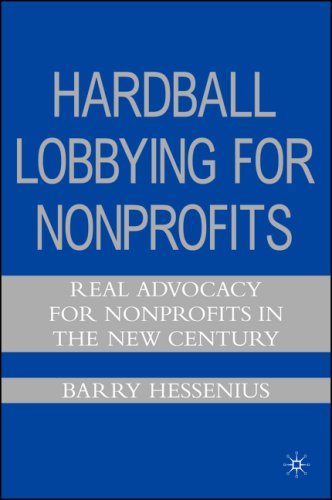
Hardball Lobbying for Nonprofits: Real Advocacy for Nonprofits in...
Authors:
Barry Hessenius
Publisher:
Palgrave Macmillan
Publication Date:
Not available
ISBN:
1403982023
This is a no-holds-barred, comprehensive, real-world guide to building political power and successfully lobbying for nonprofits in the 21st century,... written by an insider who has been in the trenches as both a lobbyist and a government official. Lobbying in America has everything to do with money and elected officials' need for campaign funds. Hardball Lobbying for Nonprofits recognizes this reality, and is both a tutorial for nonprofit organizations on how to effectively advocate and lobby, and a plea for the nonprofit leaders to embrace the lobbying function as part of their job descriptions.
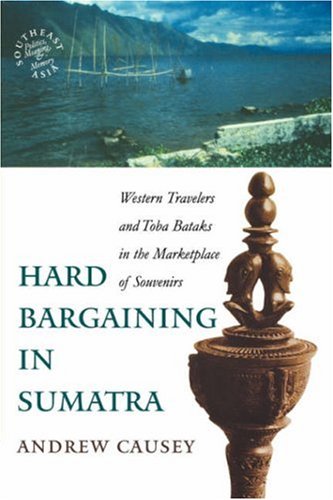
Hard Bargaining in Sumatra: Western Travelers and Toba Bataks in...
Authors:
Andrew Causey
Publisher:
University of Hawaii Press
Publication Date:
Not available
ISBN:
0824827473
Hard Bargaining in Sumatra is an artfully written and penetrating examination of interactions between Western travelers and Toba Batak wood carvers in... the souvenir marketplaces of Samosir Island, North Sumatra. Toba Batak carvings, ranging from simple human figures of wood to elaborately engraved water buffalo horns, are described in tourist guidebooks and by Toba Batak vendors alike as "traditional" and "antique," despite many recent changes and inventions in form. This pathbreaking work investigates how notions of place and self are constructed by the travelers and the Bataks in the context of ethnic tourism. The author proposes that these interactions be understood in light of Louis Marin's concept of utopics, suggesting that tourist venues such as hotels and marketplaces are neutral spaces where both locals and visitors can act out behaviors that would ordinarily be constrained by their respective cultures. The transformation of Toba Batak woodcarving is one result of such marketplace interactions. The Western tourist's desire for traditional art has encouraged Batak carvers to continue to make objects based on forms developed by their animist predecessors, the majority of whom converted to Christianity at the turn of the century. Toba Batak carving style, however, is far from static; artisans create innovative pieces that they frame within the same historically legitimizing narratives used for "traditional" objects. Tourists, seeking proof of their travels in representative icons of place, purchase both innovative and traditional forms, largely unaware of the difference. Rich in ethnographic description and employing a lively narrative style, Hard Bargaining in Sumatra is essential reading for students and scholars with interests in anthropology, cultural studies, globalization and tourism research, art history, and identity studies.
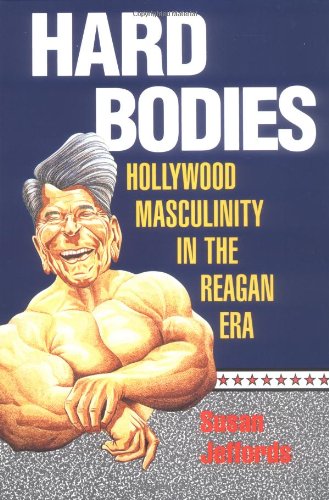
Hard Bodies: Hollywood Masculinity in the Reagan Era
Authors:
Susan Jeffords
Publisher:
Rutgers University Press
Publication Date:
Not available
ISBN:
0813520037
"An important and original book with dazzling insights . . . it challenges some widely held views of both the political and cinematic components of... contemporary America, and it should certainly evoke a goodly share of indignation as well as admiration."--H. Bruce Franklin, author of MIA or Mythmaking in America "Hard Bodies is a real page-turner in which Susan Jeffords reveals how in the 1980s Ronald Reagan, Rambo, and Robocop came together at our own fitness clubs in a way that transformed crucial numbers of movie-going, Nautilus-devoted American white men into anti-Communist presidential voters. This serious book is sure to change how we make sense of Hollywood's gendered maintenance of the Cold War."--Cynthia Enloe, author of The Morning After: Sexual Politics at the End of the Cold War Hard Bodies looks at some of the most popular films of the Reagan era and examines how the characters, themes, and stories presented in them often helped to reinforce and disseminate the policies, programs, and beliefs of the "Reagan Revolution." In particular, because Ronald Reagan was himself most often portrayed in terms that emphasized his strength, toughness, and assertiveness, one of the key images of the Reagan era was that of masculinity itself. But the Reagan era also promoted a concept of the nation as gendered, strong, tough, and assertive, like the President who seemed to epitomize the United States in its confrontation with the "evil" Soviet empire, the Sandinista government, or the drug-trading cartels. Action-adventure films of the 1980s accentuated these qualities, not only as foreign policy methods but also as domestic agendas, putting forward the American "hard body" as the solution to the nation's foreign and domestic failings. Through her illuminating and detailed analyses of both the Reagan presidency and many blockbuster movies, Susan Jeffords provides a scenario within which the successes of the New Right and the Reagan presidency can begin to be understood. Rambo, Lethal Weapon, Die Hard, Robocop, Back to the Future, Star Wars, the Indiana Jones series, Mississippi Burning, Rain Man, Batman, and Unforgiven are among the films she discusses. Susan Jeffords is a professor of English and director of Women's Studies at the University of Washington. She is the author of The Remasculization of America: Gender and the Vietnam War, and co-editor of Seeing Through the Media: The Persian Gulf War (Rutgers University Press).
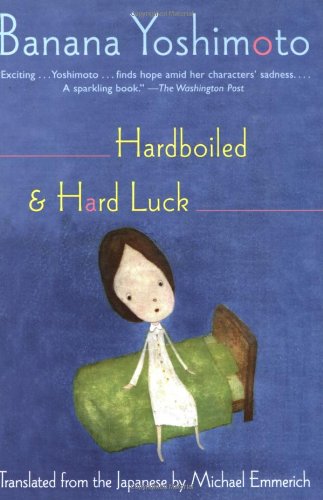
Hardboiled and Hard Luck
Authors:
Banana Yoshimoto
Publisher:
Grove Press
Publication Date:
Not available
ISBN:
0802142621
In cherished novels such as Kitchen and Goodbye Tsugumi, Banana Yoshimoto’s warm, witty, and heartfelt depictions of the lives of young Japanese have... earned her international acclaim and best-seller status. Her insightful, spare vision returns in two novellas possessed by the ghosts of love found and lost. In Hardboiled, the unnamed narrator is hiking in the mountains on an anniversary she has forgotten about, the anniversary of her ex-lover’s death. As she nears her hotelstopping on the way at a hillside shrine and a strange soba shopa sense of haunting falls over her. Perhaps these eerie events will help her make peace with her loss. Hard Luck is about another young woman, whose sister is dying and lies in a coma. Kuni’s fiancé left her after the accident, but his brother Sakai continues to visit, and the two of them gradually grow closer as they make peace with the impending loss of their loved one. Yoshimoto’s voice is clear, assured, and deeply moving, displaying again why she is one of Japan’s, and the world’s, most beloved writers.

Hardboiled and High Heeled: The Woman Detective in Popular Culture
Authors:
Linda Mizejewski
Publisher:
Routledge
Publication Date:
Not available
ISBN:
0415969719
Can a gumshoe wear high heels? In a genre long dominated by men, women are now taking their place-as authors and as characters-alongside hard-boiled... legends like Sam Spade and Mike Hammer. Hardboiled and High Heeled examines the meteoric rise of the female detective in contemporary film, television, and literature. Richly illustrated and written with a fan's love of the genre, Hardboiled and High Heeled is an essential introduction to women in detective fiction, from past to present, from pulp fiction to blockbuster films.

Hardboiled Egg
Authors:
Oscar De Los Santos
Publisher:
Fine Tooth Press L.L.C.
Publication Date:
Not available
ISBN:
0975338838
Take a journey through landscapes where the strange and sinister collide with the poignant and tender - countries of blinding lights and tarnished... (k)nights. Here, magical realism shatters doors marked Ordinary. Hardboiled Egg will satisfy the lover of gritty mysteries, but these short stories also probe dark hidden niches of the human soul. Included in these travels are glimpses of love, sex, spirituality and the supernatural. Disc jockeys and nude bars, medieval werewolves and time travelers, damsels in distress and distressful damsels, ghosts and midnight masses, stop-motion animation, Hollyweird actors, dead rats, lost fathers, and masked Mexican wrestlers: Do you dare bite into this hardboiled egg?
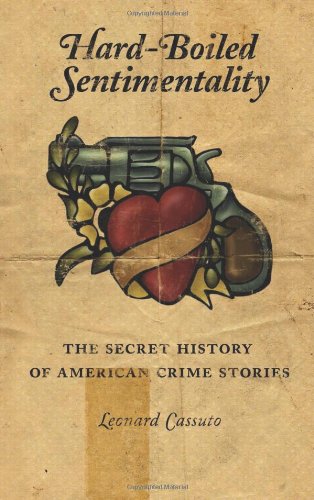
Hard-Boiled Sentimentality: The Secret History of American Crime...
Authors:
Leonard Cassuto
Publisher:
Columbia University Press
Publication Date:
Not available
ISBN:
0231126913
Leonard Cassuto's cultural history links the testosterone-saturated heroes of American crime stories to the sensitive women of the nineteenth-century... sentimental novel. From classics like The Big Sleep and The Talented Mr. Ripley to neglected paperback gems, Cassuto chronicles the dialogue& mdash;centered on the power of sympathy& mdash;between these popular genres and the sweeping social changes of the twentieth century, ending with a surprising connection between today's serial killers and the domestic fictions of long ago.
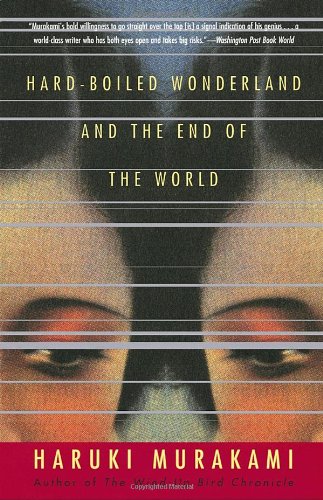
Hard-Boiled Wonderland and the End of the World: A Novel (Vintage...
Authors:
Haruki Murakami
Publisher:
Vintage
Publication Date:
Not available
ISBN:
0679743464
Japan's most widely-read and controversial writer, author of A Wild Sheep Chase, hurtles into the consciousness of the West with this narrative about a... split-brained data processor, a deranged scientist, his shockingly undemure granddaughter, and various thugs, librarians, and subterranean monsters--not to mention Bob Dylan and Lauren Bacall.

Hard Bop: Jazz and Black Music 1955-1965
Authors:
the late David H. Rosenthal
Publisher:
Oxford University Press, USA
Publication Date:
Not available
ISBN:
0195085566
It's nineteen fifty-something, in a dark, cramped, smoke-filled room. Everyone's wearing black. And on-stage a tenor is blowing his heart out, a... searching, jagged saxophone journey played out against a moody, walking bass and the swish of a drummer's brushes. To a great many listeners--from African American aficionados of the period to a whole new group of fans today--this is the very embodiment of jazz. It is also quintessential hard bop. In this, the first thorough study of the subject, jazz expert and enthusiast David H. Rosenthal vividly examines the roots, traditions, explorations and permutations, personalities and recordings of a climactic period in jazz history. Beginning with hard bop's origins as an amalgam of bebop and R&B, Rosenthal narrates the growth of a movement that embraced the heavy beat and bluesy phrasing of such popular artists as Horace Silver and Cannonball Adderley; the stark, astringent, tormented music of saxophonists Jackie McLean and Tina Brooks; the gentler, more lyrical contributions of trumpeter Art Farmer, pianists Hank Jones and Tommy Flanagan, composers Benny Golson and Gigi Gryce; and such consciously experimental and truly one-of-a-kind players and composers as Andrew Hill, Sonny Rollins, John Coltrane, Thelonious Monk, and Charles Mingus. Hard bop welcomed all influences--whether Gospel, the blues, Latin rhythms, or Debussy and Ravel--into its astonishingly creative, hard-swinging orbit. Although its emphasis on expression and downright "badness" over technical virtuosity was unappreciated by critics, hard bop was the music of black neighborhoods and the last jazz movement to attract the most talented young black musicians. Fortunately, records were there to catch it all. The years between 1955 and 1965 are unrivaled in jazz history for the number of milestones on vinyl. Miles Davis's Kind of Blue, Charles Mingus's Mingus Ah Um, Thelonious Monk's Brilliant Corners, Horace Silver's Further Explorations--Rosenthal gives a perceptive cut-by-cut analysis of these and other jazz masterpieces, supplying an essential discography as well. For knowledgeable jazz-lovers and novices alike, Hard Bop is a lively, multi-dimensional, much-needed examination of the artists, the milieus, and above all the sounds of one of America's great musical epochs.

HARD-BOUND SKETCH BOOK 8 1/2 X 11 (ART ALTERNATIVE)
Authors:
Not Available
Publisher:
Not available
Publication Date:
Not available
ISBN:
Not available
Hard Choices
Authors:
Not Available
Publisher:
Rowman & Littlefield Publishers
Publication Date:
Not available
ISBN:
0847690318
Since Somalia, the international community has found itself changing its view of humanitarian intervention. Operations designed to alleviate suffering... and achieve peace sometimes produce damaging results. The United Nations, nongovernmental organizations, military and civilian agencies alike find themselves in the midst of confusion and weakness where what they seek are clarity and stability. Competing needs, rights, and values can obscure even the best international efforts to quell violence and assuage crises of poverty. More attention must be paid to the complexity of issues and moral dilemmas involved. This volume of original essays by international policy leaders, practitioners, and scholars brings together insights into the conflicting moral pressures present in different kinds of interventions ranging from Rwanda and Somalia to Haiti, Cambodia, and Bosnia. From their various cultural and professional perspectives the authors cover issues of human rights, sanctions, arms trade, refugees, HIV, and the media. Together they make the case that, although there are no easy answers, moral reflection and content can improve the quality of decisionmaking and intervention in internal conflicts. Published under the auspices of The International Committee of the Red Cross.
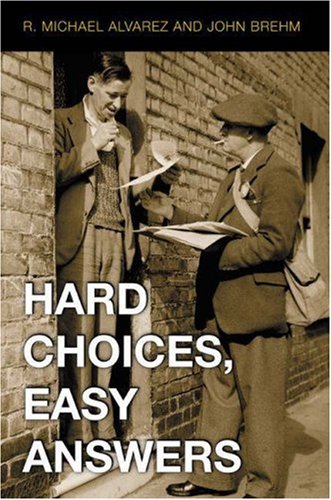
Hard Choices, Easy Answers: Values, Information, and American...
Authors:
R. Michael Alvarez
Publisher:
Princeton University Press
Publication Date:
Not available
ISBN:
069109635X
Those who seek to accurately gauge public opinion must first ask themselves: Why are certain opinions highly volatile while others are relatively fixed?... Why are some surveys affected by question wording or communicative medium (e.g., telephone) while others seem immune? In Hard Choices, Easy Answers, R. Michael Alvarez and John Brehm develop a new theory of response variability that, by reconciling the strengths and weaknesses of the standard approaches, will help pollsters and scholars alike better resolve such perennial problems. Working within the context of U.S. public opinion, they contend that the answers Americans give rest on a variegated structure of political predispositions--diverse but widely shared values, beliefs, expectations, and evaluations.Alvarez and Brehm argue that respondents deploy what they know about politics (often little) to think in terms of what they value and believe. Working with sophisticated statistical models, they offer a unique analysis of not just what a respondent is likely to choose, but also how variable those choices would be under differing circumstances. American public opinion can be characterized in one of three forms of variability, conclude the authors: ambivalence, equivocation, and uncertainty. Respondents are sometimes ambivalent, as in attitudes toward abortion or euthanasia. They are often equivocal, as in views about the scope of government. But most often, they are uncertain, sure of what they value, but unsure how to use those values in political choices.
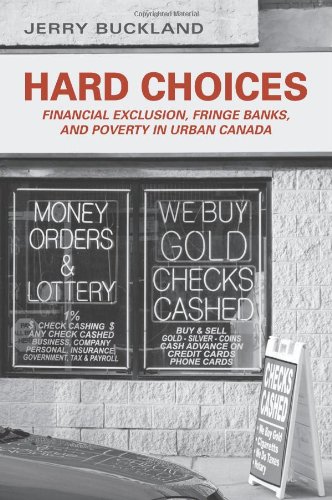
Hard Choices: Financial Exclusion, Fringe Banks, and Poverty in...
Authors:
Jerry Buckland
Publisher:
University of Toronto Press, Scholarly Publishing Division
Publication Date:
Not available
ISBN:
1442612525
When low-income city dwellers lack access to mainstream banking services, many end up turning to ‘fringe banks,’ such as cheque-cashers and... pawnshops, for some or all of their financial transactions. This predicament of ‘financial exclusion’ – faced by those underserved by conventional financial institutions – is comprehensively examined in Jerry Buckland's powerful study, Hard Choices.The first account of the nature and causes of financial exclusion in Canada, Hard Choices thoroughly integrates economic and social data on consumer choice, bank behaviour, and government policy. Buckland demonstrates why the current two-tier system of banking is becoming increasingly dysfunctional, especially in the context of new credit products that aggravate income inequality and stifle local economic growth. Featuring a foreword by esteemed economics scholar John P. Caskey, Hard Choices presents pragmatic policy improvements on both the public and private levels that can promote and build financial inclusion for all.

Hard Choices for Loving People: CPR, Artificial Feeding, Comfort...
Authors:
Hank Dunn
Publisher:
A & A Publishers
Publication Date:
Not available
ISBN:
1928560067
Hard Choices for Loving People: CPR, Artificial Feeding, Comfort Care and the Patient with a Life-Threatening Illness, Fifth Edition is a guide to help... patients and families with end-of-life decisions. Millions of people have been helped and comforted by the common sense and practical advice found in these pages. Hank Dunn draws on his extensive experience as a chaplain in a nursing home, hospice program and hospital. In Hard Choices he shares stories of many of the patients and families he has help guide through this most difficult and important time in their lives. He also has conducted a thorough search of the medical literature citing almost 150 journal articles of research into the topics discussed in the book. In the very first pages the reader is encouraged to first consider the goals of medical care. What is the appropriate medical goal for this patient at this phase of life? Is it to (1) cure, (2) stabilize functioning or to (3) prepare for a comfortable and dignified death? The first chapter deals with CPR, resuscitation attempts. Research has shown that this treatment offers little if any medical benefit to patients who have more that one or two medical problems, who cannot live independently or those who are in the final stages of a terminal disease. Chaplain Dunn is convinced that patients in those conditions or their families choose ineffective resuscitation attempts for emotional and spiritual reasons, not because the treatment offers hope of saving the life. The second chapter addresses the issues surrounding artificial feeding tubes. Receiving nutrition and hydration through a tube helps many patients who have lost the ability to swallow. Some of these patients live otherwise normal lives except for receiving food and water through a tube. But for some people the treatment offers little if any benefit. There is a growing body of research that clearly shows that an artificial feeding tube for an advanced dementia patient (like Alzheimer s) has no medical benefit and can actually harm the patient. Dunn also reviews the evidence supporting the fact that dying without artificial hydration is the compassionate, natural and peaceful way to leave this world. Hospice, respirators, dialysis, antibiotics, hospitalization and pain control are other medical treatments covered in Hard Choices for Loving People. In several places throughout the book special attention is given to making these decisions for children and for people with dementia. The concluding pages of the book address the emotional and spiritual concerns at the end of life. People of any faith or of no faith tradition have found these words helpful. Chaplain Dunn feels the journey at the final stages of life is a journey to letting go and letting be.
 '





