production
/viewbook/list/all/?page=5397
/
/static/
None

Hare Brain, Tortoise Mind: How Intelligence Increases When You...
Authors:
Guy Claxton
Publisher:
Harper Perennial
Publication Date:
Not available
ISBN:
0060955414
In these accelerated times, our decisive and businesslike ways of thinking are unprepared for ambiguity, paradox, and sleeping on it." We assume that... the quick-thinking "hare brain" will beat out the slower Intuition of the "tortoise mind." However, now research in cognitive science is changing this understanding of the human mind. It suggests that patience and confusion--rather than rigor and certainty--are the essential precursors of wisdom.With a compelling argument that the mind works best when we trust our unconscious, or "undermind," psychologist Guy Claxton makes an appeal that we be less analytical and let our creativity have free rein. He also encourages reevaluation of society's obsession with results-oriented thinking and problem-solving under pressure. Packed with Interesting anecdotes, a dozen puzzles to test your reasoning, and the latest related research, Hare Brain, Tortoise Mind is an Illuminating, uplifting, stimulating read that focuses on a new kind of well-being and cognition.

Harem Histories: Envisioning Places and Living Spaces
Authors:
Not Available
Publisher:
Duke University Press Books
Publication Date:
Not available
ISBN:
0822348691
Harem Histories is an interdisciplinary collection of essays exploring the harem as it was imagined, represented, and experienced in Middle Eastern and... North African societies, and by visitors to those societies. One theme that threads through the collection is the intimate interrelatedness of West and East evident in encounters within and around the harem, whether in the elite socializing of precolonial Tunis or the popular historical novels published in Istanbul and Cairo from the late nineteenth century onward. Several of the contributors focus on European culture as a repository of harem representations, but most of them tackle indigenous representations of home spaces and their significance for how the bodies of men and women, and girls and boys, were distributed in social space, from early Islamic Mecca to early-twentieth-century Cairo.ContributorsAsma AfsaruddinOrit BashkinMarilyn BoothNadia Maria El CheikhJulia Clancy-SmithJoan DelPlatoJateen LadNancy MicklewrightYaseen NooraniLeslie Peirceİrvin Cemil SchickA. Holly SchisslerHeghnar Zeitlian Watenpaugh

Harem Years: The Memoirs of an Egyptian Feminist, 1879-1924
Authors:
Huda Shaarawi
Publisher:
The Feminist Press at CUNY
Publication Date:
Not available
ISBN:
0935312706
In this rare first-hand account of the private world of a Cairo harem during the years before Egypt declared independence in 1922, Shaarawi... recalls her childhood and early adult life in the seclusion of an upper-class Egyptian household, including her marriage at age thirteen. Her subsequent separation from her husband gave her time for an extended formal education, as well as an unexpected taste of independence and a critical understanding of the price of confinement. Shaarawi's feminist activism grew along with her involvement in Egypt's nationalist struggle and culminated in 1923 in a daring act of defiance,when she publicly removed her veil in a Cairo railroad station.

HAR HAETZA HARAAH
Authors:
Not Available
Publisher:
Not available
Publication Date:
Not available
ISBN:
Not available
HARIG SPEED & FEED CALCULATOR
Authors:
Not Available
Publisher:
Not available
Publication Date:
Not available
ISBN:
Not available
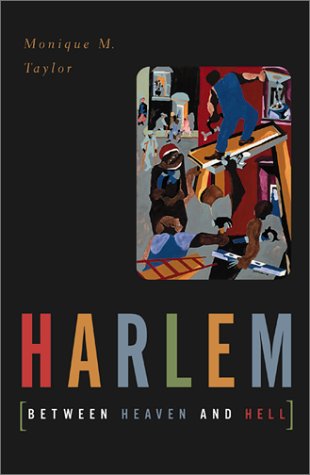
Harlem Between Heaven And Hell
Authors:
Monique M. Taylor
Publisher:
Univ Of Minnesota Press
Publication Date:
Not available
ISBN:
0816640521
Harlem brings to mind a kaleidoscope of images-the jazz clubs and cultural ferment of the 1920s and 1930s, the urban decay of the 1960s and 1970s, and... the revitalization of the past twenty years, with artists, writers, professionals, and even an ex-president moving to a community often seen as the capital of black America. Integral to the ongoing transformation of Harlem has been the return of the African-American middle class to what had become an overwhelmingly poor area. In this lively book, Monique M. Taylor explores the stresses created by this influx, the surprising ways class differences manifest themselves and are managed, and what we can learn from examining a community in which race and class are so closely intertwined. Harlem between Heaven and Hell is told through a look at history, literature, redevelopment strategies, community activism, and extensive interviews with black professionals-married and single, with children and without, long-term residents and recent arrivals. In their voices we hear of the cultural legacy, political commitments, economic considerations, and desire for community that drew them to Harlem. They tell us of the complexities of gentrification and their own role in it: the trepidation and distrust that often greeted their arrival, the challenges of renovating Harlem's historic brownstones in the face of entrenched neighborhood decay, learning and shaping the social mores of the area. Two key questions underlie these accounts: What does it mean when blacks move in alongside blacks of a different social class? How can a neighborhood successfully balance racial and class diversity in the face of rapid change? Taylor places this intraracial class conflict within the context of America's changing race relations, showing how the feelings and issues that have arisen-to oppose, embrace, or participate in gentrification-reveal unsettled questions surrounding race, racism, class, and culture in a changing urban landscape. Through her incisive description of the everyday ways race and class are experienced, she has created a vivid exploration of black middle-class identity in the post-civil rights era. Monique M. Taylor is associate professor of sociology at Occidental College.
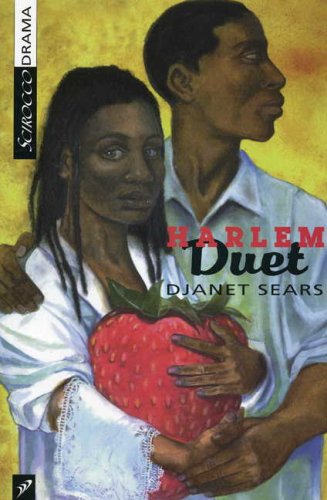
Harlem Duet
Authors:
Djanet Sears
Publisher:
J Gordon Shillingford
Publication Date:
Not available
ISBN:
1896239277
Winner of the Governor General’s Award for Drama. Winner of the Chalmers Play Award. A rhapsodic blues tragedy. Harlem Duet could be the prelude to... Shakepeare’s Othello, and recounts the tale of Othello and his first wife Billie (yes, before Desdemona). Set in contemporary Harlem at the corner of Martin Luther King and Malcolm X boulevards, the play explores the space where race and sex intersect. Harlem Duet is Billie’s story.
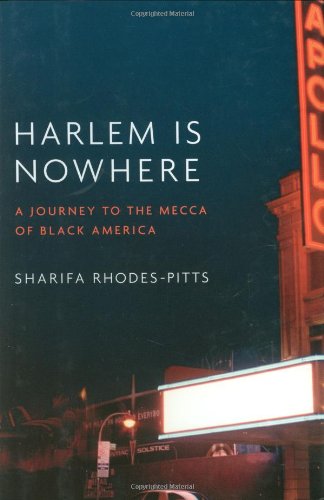
Harlem is Nowhere: A Journey to the Mecca of Black America
Authors:
Sharifa Rhodes-Pitts
Publisher:
Little, Brown and Company
Publication Date:
Not available
ISBN:
031601723X
"No geographic or racial qualification guarantees a writer her subject....Only interest, knowledge, and love will do that--all of which this book... displays in abundance." (Zadie Smith, Harper's) A finalist for the 2011 National Book Critics Circle Award in Autobiography, and a New York Times Notable Book of the Year.For a century Harlem has been celebrated as the capital of black America, a thriving center of cultural achievement and political action. At a crucial moment in Harlem's history, as gentrification encroaches, Sharifa Rhodes-Pitts untangles the myth and meaning of Harlem's legacy. Examining the epic Harlem of official history and the personal Harlem that begins at her front door, Rhodes-Pitts introduces us to a wide variety of characters, past and present. At the heart of their stories, and her own, is the hope carried over many generations, hope that Harlem would be the ground from which blacks fully entered America's democracy.Rhodes-Pitts is a brilliant new voice who, like other significant chroniclers of places-Joan Didion on California, or Jamaica Kincaid on Antigua-captures the very essence of her subject.
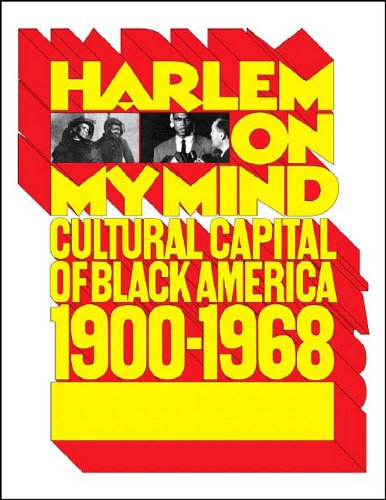
Harlem on My Mind: Cultural Capital of Black America, 1900-1968
Authors:
Not Available
Publisher:
New Press, The
Publication Date:
Not available
ISBN:
1595581588
"Harlem on My Mind provoked outrage in 1969. The issues it raised are no less alive today."—The New York Times, 1995."Remains one of the richest and... most comprehensive records of the history of the African American in the twentieth century."—from the 1995 foreword by Henry Louis Gates Jr.Long before Harlem became one of the trendiest neighborhoods in the red-hot real estate market of Manhattan, it was a metaphor for African American culture at its richest. Allon Schoener's celebrated Harlem on My Mind is the classic record of Harlem life during some of the most exciting and turbulent years of its history, a beautiful—and poignant—reminder of a powerful moment in African America history.Including the work of some of Harlem's most treasured photographers, among them James VanDerZee and Gordon Parks, there are photographs of Harlem's literary lights—Langston Hughes, Countee Cullen, and Richard Wright; its politicians— Marcus Garvey, Malcolm X, and Adam Clayton Powell Jr.; and its musicians—Ethel Waters, Duke Ellington, and Billie Holiday. The book also includes the photographs of the everyday folk who gave life to this legendary community.These extraordinary images are juxtaposed with articles from publications such as the New York Times and the Amsterdam News, which have helped to record the life of one of New York's most memorialized neighborhoods.Originally published in 1969 as the catalogue to the Metropolitan Museum of Art's controversial exhibition of the same name, Harlem on My Mind is as compelling today as it was when first published.
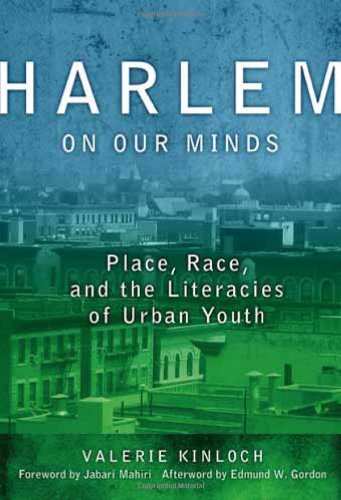
Harlem on Our Minds: Place, Race and the Literacies of Urban Youth...
Authors:
Valerie Kinloch
Publisher:
Teachers College Press
Publication Date:
Not available
ISBN:
0807750239
In her new book, Valerie Kinloch investigates how the lives and literacies of youth in New York City s historic Harlem are affected by public attempts... to gentrify the community. Kinloch draws connections between race, place, and students literate identities through interviews with youth, teachers, longtime black residents, and their new white neighbors. Harlem on Our Minds is a participatory action narrative that brings emerging theories of social ecology to life for the high school English classroom. Vividly drawn lessons show how teachers can engage urban youth in school-based literacy by linking canonical text, particularly of the Harlem renaissance, to current events.
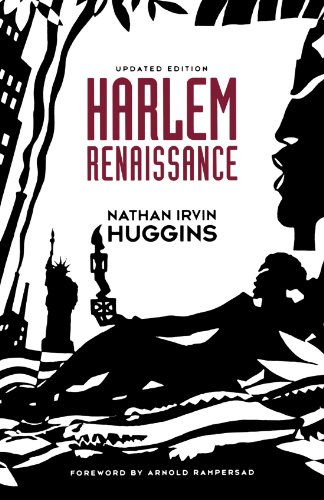
Harlem Renaissance
Authors:
the late Nathan Irvin Huggins
Publisher:
Oxford University Press, USA
Publication Date:
Not available
ISBN:
0195063368
A finalist for the 1972 National Book Award, hailed by The New York Times Book Review as "brilliant" and "provocative," Nathan Huggins' Harlem... Renaissance was a milestone in the study of African-American life and culture. Now this classic history is being reissued, with a new foreword by acclaimed biographer Arnold Rampersad. As Rampersad notes, "Harlem Renaissance remains an indispensable guide to the facts and features, the puzzles and mysteries, of one of the most provocative episodes in African-American and American history." Indeed, Huggins offers a brilliant account of the creative explosion in Harlem during these pivotal years. Blending the fields of history, literature, music, psychology, and folklore, he illuminates the thought and writing of such key figures as Alain Locke, James Weldon Johnson, and W.E.B. DuBois and provides sharp-eyed analyses of the poetry of Claude McKay, Countee Cullen, and Langston Hughes. But the main objective for Huggins, throughout the book, is always to achieve a better understanding of America as a whole. As Huggins himself noted, he didn't want Harlem in the 1920s to be the focus of the book so much as a lens through which readers might see how this one moment in time sheds light on the American character and culture, not just in Harlem but across the nation. He strives throughout to link the work of poets and novelists not only to artists working in other genres and media but also to economic, historical, and cultural forces in the culture at large.This superb reissue of Harlem Renaissance brings to a new generation of readers one of the great works in African-American history and indeed a landmark work in the field of American Studies.
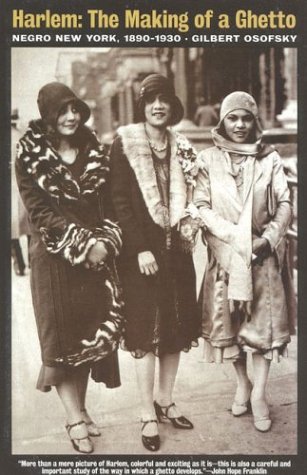
Harlem: The Making of a Ghetto : Negro New York, 1890-1930
Authors:
Gilbert Osofsky
Publisher:
Ivan R. Dee
Publication Date:
Not available
ISBN:
1566631041
A great many books have been written about Harlem, but for social history none has surpassed Gilbert Osofsky's account of how a pleasant, pastoral... upper-middle-class suburb of Manhattan turned into an appalling black slum within forty years. Mr. Osofsky sets his chronicle against the background of pre-Harlem black life in New York City and in the context of the radical changes in race relations in America in the late nineteenth and early twentieth centuries. He traces Harlem's change to the largest segregated neighborhood in the nation and then its fall to a slum. Throughout he neatly balances statistics and humanly revealing details. "A careful and important study.... Osofsky at once takes his place alongside James Weldon Johnson, Claude McKay, and others who have looked at Harlem at close range."—John Hope Franklin. "A pioneering scholarly achievement.... Although the subject engages his compassion, his presentation is rigorously straightforward and unsentimental and therefore all the more valuable as social analysis."—New York Times Book Review
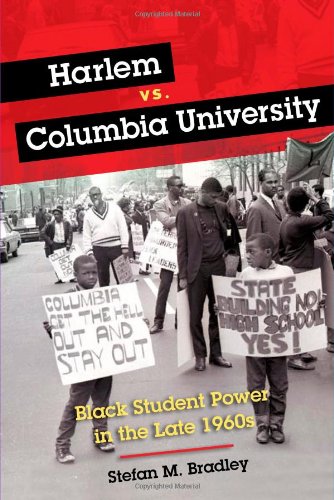
Harlem vs. Columbia University: Black Student Power in the Late 1960s
Authors:
Stefan M. Bradley
Publisher:
University of Illinois Press
Publication Date:
Not available
ISBN:
025203452X
In 1968-69, Columbia University became the site for a collision of American social movements. Black Power, student power, antiwar, New Left, and Civil... Rights movements all clashed with local and state politics when an alliance of black students and residents of Harlem and Morningside Heights openly protested the school's ill-conceived plan to build a large, private gymnasium in the small green park that separates the elite university from Harlem. Railing against the university's expansion policy, protesters occupied administration buildings and met violent opposition from both fellow students and the police. In this dynamic book, Stefan M. Bradley describes the impact of Black Power ideology on the Students' Afro-American Society (SAS) at Columbia. While white students--led by Mark Rudd and Students for a Democratic Society (SDS)--sought to radicalize the student body and restructure the university, black students focused on stopping the construction of the gym in Morningside Park. Through separate, militant action, black students and the black community stood up to the power of an Ivy League institution and stopped it from trampling over its relatively poor and powerless neighbors. Bradley also compares the events at Columbia with similar events at Harvard, Cornell, Yale, and the University of Pennsylvania.
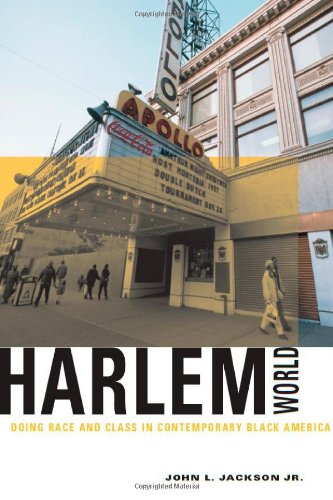
Harlemworld: Doing Race and Class in Contemporary Black America
Authors:
John L. Jackson Jr.
Publisher:
University Of Chicago Press
Publication Date:
Not available
ISBN:
0226389995
Harlem is one of the most famous neighborhoods in the world—a historic symbol of both black cultural achievement and of the rigid boundaries... separating the rich from the poor. But as this book shows us, Harlem is far more culturally and economically diverse than its caricature suggests: through extensive fieldwork and interviews, John L. Jackson reveals a variety of social networks and class stratifications, and explores how African Americans interpret and perform different class identities in their everyday behavior.
HARLEY DAVIDSON (584032)
Authors:
Not Available
Publisher:
Not available
Publication Date:
Not available
ISBN:
Not available
 '





