production
/viewbook/list/all/?page=5472
/
/static/
None
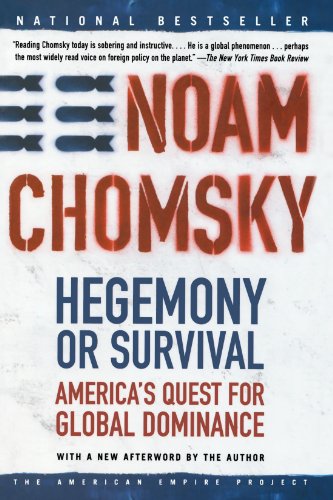
Hegemony or Survival: America's Quest for Global Dominance...
Authors:
Noam Chomsky
Publisher:
Holt Paperbacks
Publication Date:
Not available
ISBN:
0805076883
"Reading Chomsky today is sobering and instructive . . . He is a global phenomenon . . . perhaps the most widely read voice on foreign policy on the... planet." -The New York Times Book ReviewAn immediate national bestseller, Hegemony or Survival demonstrates how, for more than half a century the United States has been pursuing a grand imperial strategy with the aim of staking out the globe. Our leaders have shown themselves willing-as in the Cuban missile crisis-to follow the dream of dominance no matter how high the risks. World-renowned intellectual Noam Chomsky investigates how we came to this perilous moment and why our rulers are willing to jeopardize the future of our species.With the striking logic that is his trademark, Chomsky tracks the U.S. government's aggressive pursuit of "full spectrum dominance" and vividly lays out how the most recent manifestations of the politics of global control-from unilateralism to the dismantling of international agreements to state terrorism-cohere in a drive for hegemony that ultimately threatens our existence. Lucidly written, thoroughly documented, and featuring a new afterword by the author, Hegemony or Survival is a definitive statement from one of today's most influential thinkers.
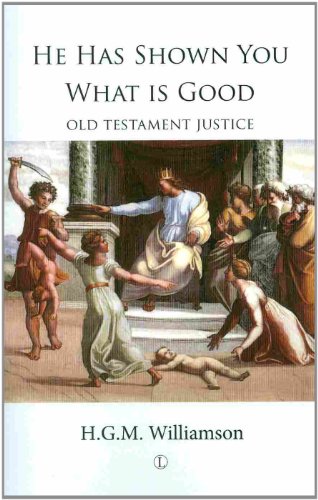
He has Shown you what is Good: Old Testament Justice Then and Now
Authors:
H.G.M. Williamson
Publisher:
Lutterworth Press
Publication Date:
Not available
ISBN:
0718892984
Can the Old Testament provide relevant principles for modern concepts of social justice? Today citing our human rights is used as recourse for anything... and everything. Excessive use has corrupted a defining ideal of mankind. Williamson explores the meaning of Old Testament justice to discover its significance for us today. Concentrating on social justice he unearths the value and relevance of the phrase justice and righteousness. Tracing this phrase and its context within and without the pages of Scripture Williamson elaborates an argument that passes from Abraham to Amos. He expounds a biblical ideal that he argues is not rooted in the legalistic Law of Moses, or necessarily an idealized history, but is a concept that is fluid, constructed in an organic appreciation for natural law. Williamson has written an engaging and highly articulate book that exposes the relevance of the Old Testament as a blueprint for a way of life; a mode of living that developed in accordance with the existence of the ancient Israelite. The ideal maintained a form, as derived from natural law, that was applicable to all creeds and ranks, and therefore is potentially relevant for us today.
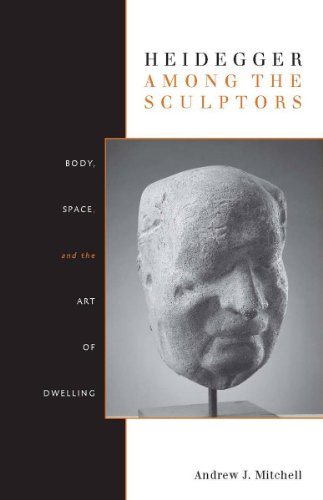
Heidegger Among the Sculptors: Body, Space, and the Art of Dwelling
Authors:
Andrew Mitchell
Publisher:
Stanford University Press
Publication Date:
Not available
ISBN:
0804770239
In the 1950s and 60s, Martin Heidegger turned to sculpture to rethink the relationship between bodies and space and the role of art in our lives. In his... texts on the subject—a catalog contribution for an Ernst Barlach exhibition, a speech at a gallery opening for Bernhard Heiliger, a lecture on bas-relief depictions of Athena, and a collaboration with Eduardo Chillida—he formulates his later aesthetic theory, a thinking of relationality. Against a traditional view of space as an empty container for discrete bodies, these writings understand the body as already beyond itself in a world of relations and conceive of space as a material medium of relational contact. Sculpture shows us how we belong to the world, a world in the midst of a technological process of uprooting and homelessness. Heidegger suggests how we can still find room to dwell therein. Filled with illustrations of works that Heidegger encountered or considered, Heidegger Among the Sculptors makes a singular contribution to the philosophy of sculpture.
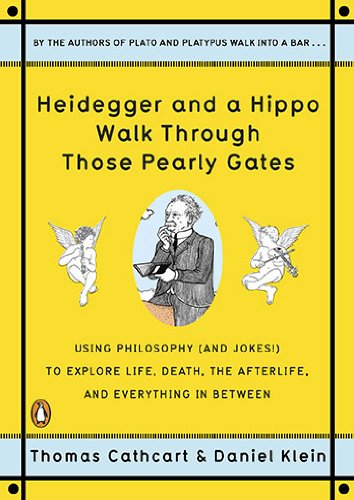
Heidegger and a Hippo Walk Through Those Pearly Gates: Using...
Authors:
Thomas Cathcart
Publisher:
Penguin Books
Publication Date:
Not available
ISBN:
0143118250
Q. Why are there almost as many jokes about death as there are about sex? A. Because they both scare the pants off us. Thomas Cathcart and Daniel... Klein first made a name for themselves with the outrageously funny New York Times bestseller Plato and a Platypus Walk into a Bar. Now they turn their attention to the Big D and share the timeless wisdom of the great philosophers, theologians, psychotherapists, and wiseguys. From angels to zombies and everything in between, Cathcart and Klein offer a fearless and irreverent history of how we approach death, why we embrace life, and whether there really is a hereafter. As hilarious as it is enlightening, Heidegger and a Hippo Walk Through Those Pearly Gates is a must-read for anyone and everyone who ever expects to die.
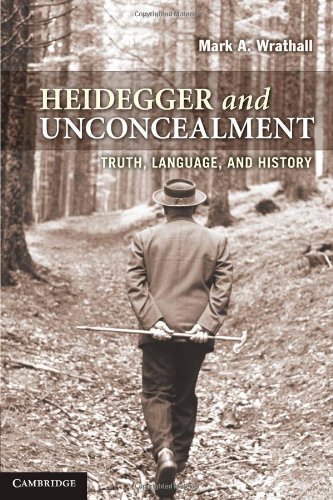
Heidegger and Unconcealment: Truth, Language, and History
Authors:
Mark A. Wrathall
Publisher:
Cambridge University Press
Publication Date:
Not available
ISBN:
0521739128
This book includes ten essays that trace the notion of unconcealment as it develops from Heidegger's early writings to his later work, shaping his... philosophy of truth, language, and history. "Unconcealment" is the idea that what entities are depends on the conditions that allow them to manifest themselves. This concept, central to Heidegger's work, also applies to worlds in a dual sense: first, a condition of entities manifesting themselves is the existence of a world; and second, worlds themselves are disclosed. The unconcealment or disclosure of a world is the most important historical event, and Heidegger believes there have been a number of quite distinct worlds that have emerged and disappeared in history. Heidegger's thought as a whole can profitably be seen as working out the implications of the original understanding of unconcealment.
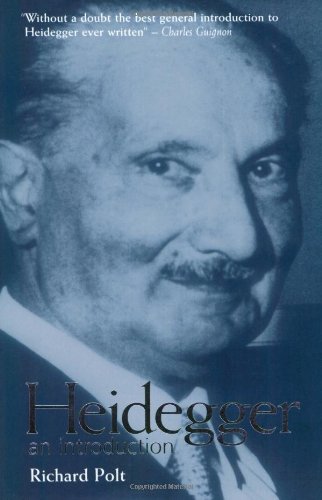
Heidegger: An Introduction
Authors:
Richard Polt
Publisher:
Cornell University Press
Publication Date:
Not available
ISBN:
0801485649
Richard Polt provides a lively and accessible introduction to one of the most influential and intellectually demanding philosophers of the modern era.... Covering the entire range of Heidegger's thought, Polt skillfully communicates the essence of the philosopher, enabling readers, especially those new to his writings, to approach his works with confidence and insight. Polt presents the questions Heidegger grappled with and the positions he adopted, and also analyzes persistent points of difference between competing schools of interpretation. The book begins by exploring Heidegger's central concern, the question of Being, and his way of doing philosophy. After considering his environment, personality, and early thought, it carefully takes readers through his best-known work, Being and Time. Heidegger concludes with highlights of its subject's later thought, providing guidelines for understanding Contributions to Philosophy and other important texts. It gives special attention to the philosopher's political involvement with the Nazis in the 1930s, indicating the strengths and weaknesses of the reactions to his politics, reactions ranging from exculpation to complete condemnation.
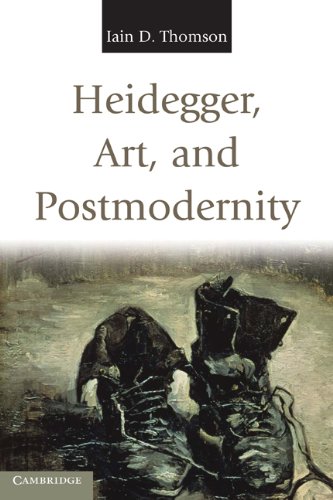
Heidegger, Art, and Postmodernity
Authors:
Iain D. Thomson
Publisher:
Cambridge University Press
Publication Date:
Not available
ISBN:
0521172497
Heidegger, Art, and Postmodernity offers a radical new interpretation of Heidegger's later philosophy, developing his argument that art can help lead... humanity beyond the nihilistic ontotheology of the modern age. Providing pathbreaking readings of Heidegger's "The Origin of the Work of Art" and his notoriously difficult Contributions to Philosophy (From Enowning), this book explains precisely what postmodernity meant for Heidegger, the greatest philosophical critic of modernity, and what it could still mean for us today. Exploring these issues, Iain D. Thomson examines several postmodern works of art, including music, literature, painting, and even comic books, from a post-Heideggerian perspective. Clearly written and accessible, this book will help readers gain a deeper understanding of Heidegger and his relation to postmodern theory, popular culture, and art.
Heidegger: A Very Short Introduction
Authors:
Michael Inwood
Publisher:
Oxford University Press
Publication Date:
Not available
ISBN:
0192854100
Martin Heidegger (1889-1976) is probably the most divisive philosopher of the twentieth century: viewed by some as a charlatan and by others as a leader... and central figure of modern philosophy. Michael Inwood's lucid introduction to Heidegger's thought focuses on his most important work, "Being and Time," and its major themes of existence in the world, inauthenticity, guilt, destiny, truth, and the nature of time. These themes are then reassessed in the light of Heidegger's later work, together with the extent of his philosophical importance and influence. This is an invaluable guide to the complex and voluminous thought of a major twentieth-century existentialist philosopher.About the Series: Combining authority with wit, accessibility, and style, Very Short Introductions offer an introduction to some of life's most interesting topics. Written by experts for the newcomer, they demonstrate the finest contemporary thinking about the central problems and issues in hundreds of key topics, from philosophy to Freud, quantum theory to Islam

Heidegger for Architects (Thinkers for Architects)
Authors:
Adam Sharr
Publisher:
Routledge
Publication Date:
Not available
ISBN:
0415415179
Informing the designs of architects as diverse as Peter Zumthor, Steven Holl, Hans Scharoun and Colin St. John Wilson, the work of Martin Heidegger has... proved of great interest to architects and architectural theorists. The first introduction to Heidegger’s philosophy written specifically for architects and students of architecture introduces key themes in his thinking, which has proved highly influential among architects as well as architectural historians and theorists. This guide familiarizes readers with significant texts and helps to decodes terms as well as providing quick referencing for further reading. This concise introduction is ideal for students of architecture in design studio at all levels; students of architecture pursuing undergraduate and postgraduate courses in architectural theory; academics and interested architectural practitioners. Heidegger for Architects is the second book in the new Thinkers for Architects series.
Heideggerian Marxism (European Horizons)
Authors:
Herbert Marcuse
Publisher:
University of Nebraska Press
Publication Date:
Not available
ISBN:
0803283121
The Frankfurt School philosopher Herbert Marcuse (1898–1979) studied with Martin Heidegger at Freiburg University from 1928 to 1932 and completed a... dissertation on Hegel’s theory of historicity under Heidegger’s supervision. During these years, Marcuse wrote a number of provocative philosophical essays experimenting with the possibilities of Heideggerian Marxism. For a time he believed that Heidegger’s ideas could revitalize Marxism, providing a dimension of experiential concreteness that was sorely lacking in the German Idealist tradition. Ultimately, two events deterred Marcuse from completing this program: the 1932 publication of Marx’s early economic and philosophical manuscripts, and Heidegger’s conversion to Nazism a year later. Heideggerian Marxism offers rich and fascinating testimony concerning the first attempt to fuse Marxism and existentialism. These essays offer invaluable insight concerning Marcuse’s early philosophical evolution. They document one of the century’s most important Marxist philosophers attempting to respond to the “crisis of Marxism”: the failure of the European revolution coupled with the growing repression in the USSR. In response, Marcuse contrived an imaginative and original theoretical synthesis: “existential Marxism.”
Heidegger on Being and Acting: From Principles to Anarchy
Authors:
Schürmann
Publisher:
Indiana University Press
Publication Date:
Not available
ISBN:
0253206022
"... elegant and provocative... Exhibit[s] a subtle mastery of Heidegger's works." —Review of Metaphysics"... splendidly precise study of Heidegger...... to be recommended not only to Heidegger scholars but also to those interested in the question of what philosophical thinking has as its task in the modern technological world." —Religious Studies Review"... indispensable to understanding the later Heidegger." —Choice
Heidegger on Ontotheology: Technology and the Politics of Education
Authors:
Iain Thomson
Publisher:
Cambridge University Press
Publication Date:
Not available
ISBN:
052161659X
Heidegger is now widely recognized as one of the most influential philosophers of the twentieth century, yet much of his later philosophy remains... shrouded in confusion and controversy. Restoring Heidegger's understanding of metaphysics as 'ontotheology' to its rightful place at the center of his later thought, this book explains the depth and significance of his controversial critique of technology, his appalling misadventure with Nazism, his prescient critique of the university, and his important suggestions for the future of higher education. It will be required reading for those seeking to understand the relationship between Heidegger's philosophy and National Socialism as well as the continuing relevance of his work.
Heidegger's 'Being and Time': A Reader's Guide
Authors:
William Blattner
Publisher:
Continuum
Publication Date:
Not available
ISBN:
0826486096
Continuum's Reader's Guides are clear, concise and accessible introductions to classic works of philosophy. Each book explores the major themes,... historical and philosophical context and key passages of a major philosophical text, guiding the reader toward a thorough understanding of often demanding material. Ideal for undergraduate students, the guides provide an essential resource for anyone who needs to get to grips with a philosophical text. Heidegger's Being and Time is one of the most influential and controversial philosophical treatises of the 20th century. It had a profound impact on Sartre and Merleau-Ponty in their further development of phenomenology and existentialism, hugely influenced Gadamer's hermeneutics, and paved the way, partly directly and partly indirectly through Heidegger's later thought, for the emergence of deconstructionism. In addition to being a very important text, it is also a very difficult one. Heidegger presents a number of challenges to the the reader, asking them to abandon many assumptions fundamental to traditional philosophy, such as the mind/body distinction and the concept of substance. The text also introduces a whole host of new concepts and terms and as such is a hugely challenging, yet fascinating, piece of philosophical writing. In Heidegger's 'Being and Time': A Reader's Guide William Blattner explains the philosophical background against which the book was written and provides a clear and concise overview of the key themes and motifs. The book then examines this challenging text in details, guiding the reader to a clear understanding of Heidegger's work as a whole. Finally Blattner explores the reception and influence of the work and offers the student guidance on further reading. This is the ideal companion to study of this most influential and challenging of texts.

Heidegger's Hut
Authors:
Adam Sharr
Publisher:
The MIT Press
Publication Date:
Not available
ISBN:
0262195518
"This is the most thorough architectural 'crit' of a hut ever set down, the justification for which is that the hut was the setting in which Martin... Heidegger wrote phenomenological texts that became touchstones for late-twentieth-century architectural theory."--from the foreword by Simon SadlerBeginning in the summer of 1922, philosopher Martin Heidegger (1889-1976) occupied a small, three-room cabin in the Black Forest Mountains of southern Germany. He called it "die Hütte" ("the hut"). Over the years, Heidegger worked on many of his most famous writings in this cabin, from his early lectures to his last enigmatic texts. He claimed an intellectual and emotional intimacy with the building and its surroundings, and even suggested that the landscape expressed itself through him, almost without agency. In Heidegger's Hut, Adam Sharr explores this intense relationship of thought, place, and person.Heidegger's mountain hut has been an object of fascination for many, including architects interested in his writings about "dwelling" and "place." Sharr's account--the first substantive investigation of the building and Heidegger's life there--reminds us that, in approaching Heidegger's writings, it is important to consider the circumstances in which the philosopher, as he himself said, felt "transported" into the work's "own rhythm." Indeed, Heidegger's apparent abdication of agency and tendency toward romanticism seem especially significant in light of his troubling involvement with the Nazi regime in the early 1930s.Sharr draws on original research, including interviews with Heidegger's relatives, as well as on written accounts of the hut by Heidegger and his visitors. The book's evocative photographs include scenic and architectural views taken by the author and many remarkable images of a septuagenarian Heidegger in the hut taken by the photojournalist Digne Meller-Markovicz.There are many ways to interpret Heidegger's hut--as the site of heroic confrontation between philosopher and existence; as the petit bourgeois escape of a misguided romantic; as a place overshadowed by fascism; or as an entirely unremarkable little building. Heidegger's Hut does not argue for any one reading, but guides readers toward their own possible interpretations of the importance of "die Hütte."
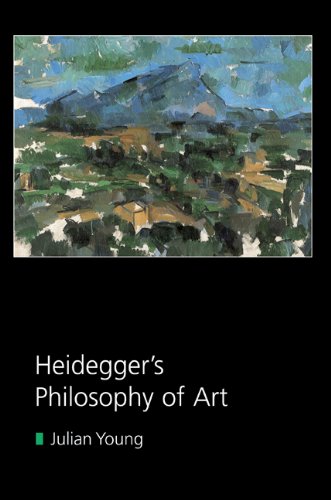
Heidegger's Philosophy of Art
Authors:
Julian Young
Publisher:
Cambridge University Press
Publication Date:
Not available
ISBN:
0521616220
This book, the first comprehensive study in English of Heidegger's philosophy of art, starts in the mid-1930s with Heidegger's discussion of the Greek... temple and his Hegelian declaration that a great artwork gathers together an entire culture in affirmative celebration of its foundational 'truth', and that, by this criterion, art in modernity is 'dead'. His subsequent work on Hölderlin, whom he later identified as the decisive influence on his mature philosophy, led him into a passionate engagement with the art of Rilke, Cézanne, Klee and Zen Buddhism, liberating him not only from the overly restrictive conception of art of the mid-1930s but also from the disastrous politics of the period. Drawing on material hitherto unknown in the anglophone world, Young establishes a new account of Heidegger's philosophy of art and shows that his famous essay 'The Origin of the Work of Art' is its beginning, not its end.
 '





