production
/viewbook/list/all/?page=5479
/
/static/
None

Helping Grieving People - When Tears Are Not Enough: A Handbook for...
Authors:
J. Shep Jeffreys
Publisher:
Routledge
Publication Date:
Not available
ISBN:
0415877016
Helping Grieving People – When Tears Are Not Enough is a handbook for care providers who provide service, support and counseling to those grieving... death, illness, and other losses. This book is also an excellent text for academic courses as well as for staff development training. The author addresses grief as it affects a variety of relationships and discusses different intervention and support strategies, always cognizant of individual and cultural differences in the expression and treatment of grief. Jeffreys has established a practical approach to preparing grief care providers through three basic tracks. The first track: Heart – calls for self-discovery, freeing oneself of accumulated loss in order to focus all attention on the griever. Second track: Head – emphasizes understanding the complex and dynamic phenomena of human grief. Third track: Hands – stresses the caregiver's actual intervention, and speaks to lay and professional levels of skill, as well as the various approaches for healing available. Accompanying these three motifs, the Handbook discusses the social and cultural contexts of grief as applied to various populations of grievers as well as the underlying psychological basis of human grief. Throughout the book, Jeffreys presents the role of the caregiver as an Exquisite Witness to the journey of grief and pain of bereaved family and friends, and also to the path taken by dying persons and their families. The second edition of Helping Grieving People remains true to the approach that has been so well received in the original volume. It includes updated research findings and addresses new information and developments in the field of loss, grief and bereavement.
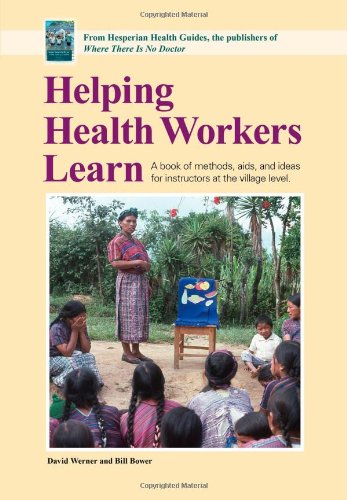
Helping Health Workers Learn: A Book of Methods, Aids, and Ideas...
Authors:
David Werner
Publisher:
The Hesperian Foundation
Publication Date:
Not available
ISBN:
0942364104
Helping Health Workers Learn is an indispensable resource for all health educators. This heavily illustrated book shows how to make health education... engaging and effective, while emphasizing a people-centered approach to care. It also presents strategies for effective community involvement through participatory education. Topics include: activities for mothers and children, tips for using theater, flannel-boards, and other techniques,strategies for producing low-cost teaching aids, and how to build on a community's traditions, experiences, and strengths.

Helping Her Get Free: A Guide for Families and Friends of Abused Women
Authors:
MSSW Susan Brewster
Publisher:
Seal Press
Publication Date:
Not available
ISBN:
1580051677
Seal Press originally published Helping Her Get Free with the title To Be an Anchor in the Storm. The survivor of an abusive relationship herself and a... licensed counselor of abused women for more than a decade, Susan Brewster teaches readers how to recognize the signs of abuse, handle negative feelings, become an effective advocate, deal with the abuser, and more. With a new introduction and updated resource section, this straightforward and compassionate book offers the information needed to help give strength to women who are trying to break free.
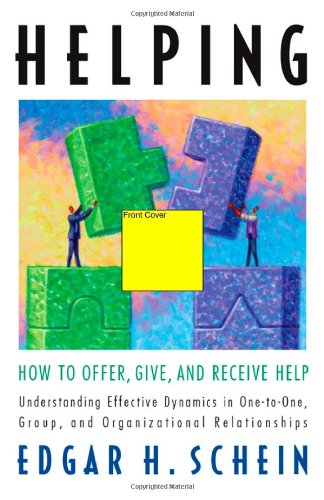
Helping: How to Offer, Give, and Receive Help
Authors:
Edgar H Schein
Publisher:
Berrett-Koehler Publishers
Publication Date:
Not available
ISBN:
157675863X
In this seminal book on helping, corporate culture and organizational development guru Ed Schein analyzes the dynamics of helping relationships,... explains why help is often not helpful, and shows what any would-be-helper must do to insure that help is actually provided.Many words are used for helping -- assisting, aiding, advising, coaching, consulting, counseling, supporting, teaching, and many more -- but they all have common dynamics and processes. Schein exposes and shows how to resolve the inequities and role ambiguities of helping relationships, describes the different roles that helpers can take once the relationship is balanced, and explains how to build a balanced relationship and how to intervene as that relationship develops. In this short but profound book Schein examines the social dynamics that are at play in helping relationships in order to better understand why offers of help are sometimes refused or resented, and how to make help more helpful.

Helping: How to Offer, Give, and Receive Help
Authors:
Edgar H. Schein
Publisher:
Berrett-Koehler Publishers
Publication Date:
Not available
ISBN:
1605098566
Helping is a fundamental human activity, but it can also be a frustrating one. All too often our sincere offers of help are resented, resisted, or... refused—and we often react the same way when people try to help us. In this seminal book on the topic—named one of the top five leadership books of 2009 by strategy+business magazine—Edgar Schein analyzes the social and psychological dynamics common to all types of helping relationships, explains why help is often not helpful, and shows what any would-be helpers must do to ensure that their assistance is both welcomed and genuinely useful. Using examples from many types of relationships—doctors and patients, consultants and clients, husbands and wives—Schein offers specific techniques and illuminating examples that help us determine what type of help to offer and how best to offer it in any situation. These techniques not only apply to all kinds of one-on-one helping in personal and professional relationships, teaching, social work, and medicine but also can be usefully applied to teamwork and to organizational leadership.

Helping in Child Protective Services: A Competency-Based Casework...
Authors:
American Humane Association
Publisher:
Oxford University Press, USA
Publication Date:
Not available
ISBN:
0195161904
This second edition of Helping in Child Protective Services: A Competency-Based Casework Handbook is a comprehensive desk reference that serves as both... a daily guide for workers and a training tool for supervisors and administrators. This invaluable resource provides CPS workers with the knowledge and skills necessary to assist vulnerable families, covering such key issues as assessment, decision making, intervention, child development, medical evaluation, accountability, and the legal framework of culturally responsive practice. This handbook equips CPS professionals and students to follow the casework process from intake through case closure with step-by-step instructions and examples. Chapters cover child development, key developmental milestones, and the importance of intervention; medical evaluation of child abuse and neglect; how to structure interviews and phrase questions to obtain information from families and guide the casework process; and the importance of accountable practice to families, their agencies, and the public. This latest edition of Helping in Child Protective Services compiles the most up-to-date research and practice information to help professionals provide the highest quality and most innovative services to children and families.

Helping Our Children Grow in Faith: How the Church Can Nurture the...
Authors:
Robert J. Keeley
Publisher:
Baker Books
Publication Date:
Not available
ISBN:
0801068290
Children have serious faith questions that require serious answers, answers that adults often find themselves under-prepared to give. But the Christian... community has a responsibility to help its children develop a three-dimensional faith--a faith that affects their heads, their hearts, and their spirits.Helping Our Children Grow in Faith is designed for children's ministry and worship leaders, Sunday school teachers, and pastors--as well as parents--who want to nurture the spiritual development of the children in their lives. It shows how to integrate children into congregational worship, how to teach them the Bible but leave room for the mystery of God, and how to distinguish the difference between faith development and moral development.

Helping People Win at Work: A Business Philosophy Called "Don't...
Authors:
Ken Blanchard
Publisher:
FT Press
Publication Date:
Not available
ISBN:
0137011717
Ken Blanchard’s Leading at a Higher Level techniques are inspiring thousands of leaders to build high-performing organizations that make life better... for everyone. Now, in Helping People Win at Work, Blanchard and WD-40 Company leader Garry Ridge reveal how WD-40 has used Blanchard’s techniques of Partnering for Performance with every employee--achieving levels of engagement and commitment that have fortified the bottom line. Ridge introduces WD-40 Company’s year-round performance review system, explaining its goals, features, and the cultural changes it requires. Next, he shares his leadership point of view: what he expects of people, what they can expect of him, and where his beliefs about leadership and motivation come from. Finally, Blanchard explains why WD-40 Company’s Partnering for Performance system works so well--and how to leverage its high-value techniques in your organization. In this book, you’ll learn how to: · Stop building failure into your mentoring of employees · Set goals using the SMART approach: specific, motivational, attainable, relevant and trackable · Help people move through all four stages of mastery · Create a culture that shares knowledge and encourages nonstop learning “I’m thrilled that the first book in our Leading at a Higher Level series is with Garry Ridge, president of WD-40 Company. For years I’ve been concerned about how people’s performance is evaluated. People are often forced into a normal distribution curve, or even worse, rank ordered. Not only does this not build trust, it also does not hold managers responsible for coaching people and helping them win. The manager’s responsibility is focused on sorting people out. When I was a college professor, I always gave my students the final exam at the beginning of the course and spent the rest of the semester helping them answer the questions so that they could get an A. Life is all about getting As, not some stupid normal distribution curve. Garry Ridge got this, and wow! What a difference it has made in WD-40 Company’s performance.” --Ken Blanchard “When I first heard Ken talk about giving his final exam at the beginning of the course and then teaching students the answers so they could get an A, it blew me away. Why don’t we do that in business? So that’s exactly what I did at WD-40 Company when we set up our ‘Don’t Mark My Paper, Help Me Get an A’ performance management system. Has it made a difference? You’d better believe it. Ever since we began the system, our company’s annual sales have more than tripled, from $100 million to more than $339 million. And we’ve accomplished this feat while making the company a great place to work.” --Garry Ridge
Helping Schoolchildren Cope with Anger, Second Edition: A...
Authors:
Jim Larson PhD
Publisher:
The Guilford Press
Publication Date:
Not available
ISBN:
1606239732
This invaluable guide presents all of the information and clinical tools needed to implement the Anger Coping Program, an empirically supported... intervention for students in grades 3–6. Practitioners are taken step by step through setting up treatment groups, teaching vital skills for reducing aggression and disruptive behavior, and building strong partnerships with teachers and parents. Many practical suggestions are provided for adapting the program to different settings and optimizing student outcomes. In a large-size format with lay-flat binding to facilitate photocopying, the book includes reproducible handouts, forms, and parent letters (in English and Spanish).
Helping Skills and Strategies
Authors:
Thomas M. Skovholt
Publisher:
Love Publishing Co
Publication Date:
Not available
ISBN:
0891083278
Straightforward and student friendly, James S. Nairn's PSYCHOLOGY, Fifth Edition, uses a proven problem-solving approach to help you discover how to... apply psychology to your everyday life. A firm believer that you must understand what a psychological process is for before you can hope to understand how it works, Dr. Nairne presents topics from a "functional" perspective. With this signature approach, chapters begin by focusing on the "why" behind psychological processes before introducing what they are and how they work. Our brains are filled with psychological "tools" that control everything from emotion to memory, and each helps us adapt and solve important everyday problems. Nairne describes these tools in detail, shows you how they're used, and focuses on specific situations in which they are applied. Emphasizing critical thinking and active learning, PSYCHOLOGY, Fifth Edition, provides current, comprehensive, and practical coverage that you can immediately apply to your life..
Helping Skills: Facilitating Exploration, Insight, and Action
Authors:
Clara E. Hill
Publisher:
Amer Psychological Assn
Publication Date:
Not available
ISBN:
1433804514
With this third edition of Helping Skills, respected clinician and researcher Clara Hill has revised and updated her popular textbook, continuing her... comprehensive exploration of empirically supported, basic helping skills for undergraduate and first-year graduate students. Following Hill's well-established three-stage model of helping (Exploration, Insight, and Action), the text presents an integrative approach that is grounded in client-centered, psychoanalytic, and cognitive-behavioral theory. Hill's model recognizes the critical roles of affect, cognition, and behavior in the process of change, filling a void left by textbooks that focus more narrowly on the processes facilitating change. The text includes many student-friendly features and provides in-depth information on: -the theoretical foundation of the three-stage model of helping -the different goals used in each stage (e.g., attending and listening, restatement, challenge, self-disclosure, and feedback) -the general principles of ethical conduct and strategies for resolving ethical dilemmas -numerous practice exercises, labs, and Web forms that illustrate (and help evaluate) the complex interaction between client and helper -how students can intervene most effectively from moment to moment, based on their intentions and the client's reactions New material for this edition includes: -a revised approach to the three-stage model, emphasizing goals and tasks of the stages and the ability to traverse among the stages in a helper-client relationship -more attention to multicultural issues -and better delineation of steps of the Action stage for four discrete tasks (relaxation, behavioral change, behavioral rehearsal, and decision-making) With her accessible yet instructive style, Hill instills enthusiasm for the process of learning to help others. She also encourages students' personal and professional growth with questions that challenge them to think about and discuss the process of becoming helpers and their reasons for doing so. The Instructor and Student Resource Guide Web site has also been updated to offer students and instructors helpful resources. The instructor area of the site is restricted to instructors only and includes sample multiple-choice questions, short-answer essay questions, and syllabi. Students may download practice exercises, labs, and evaluation forms specified in the text.
Helping Skills for Human Service Workers: Building Relationships...
Authors:
Kenneth France
Publisher:
Charles C Thomas Pub Ltd
Publication Date:
Not available
ISBN:
0398076316
What is terrorism? How is it different from other kinds of political violence? Why exactly is it wrong? Why is war often thought capable of being... justified? On what grounds should we judge when the use of violence is morally acceptable? It is often thought that using violence to uphold and enforce the rule of law can be justified, that violence used in self-defense is acceptable, and that some liberation movements can be excused for using violence--but that terrorism is always wrong. How persuasive are these arguments, and on what bases should we judge them?How Terrorism is Wrong collects articles by Virginia Held along with much new material. It offers a moral assessment of various forms of political violence, with terrorism the focus of much of the discussion. Here and throughout, Held examines possible causes discussed, including the connection between terrorism and humiliation. Held also considers military intervention, conventional war, intervention to protect human rights, violence to prevent political change, and the status and requirements of international law. She looks at the cases of Rwanda, Kosovo, Iraq, and the Israeli/Palestinian conflict. Finally, she explores questions of who has legitimate authority to engage in justifiable uses of violence, whether groups can be responsible for ethnic violence, and how the media should cover terrorism.Held discusses appropriate ways of engaging in moral evaluation and improving our moral recommendations concerning the uses of violence. Just war theory has been developed for violence between the military forces of conflicting states, but much contemporary political violence is not of this kind. Held considers the guidance offered by such traditional moral theories as Kantian ethics and utilitarianism, and also examines what the newer approach of the ethics of care can contribute to our evaluations of violence. Care is obviously antithetical to violence since violence destroys what care takes pains to build; but the ethics of care recognizes that violence is not likely to disappear from human affairs, and can offer realistic understandings of how best to reduce it.
Helping Skills for Social Work Direct Practice
Authors:
Jacqueline Corcoran
Publisher:
Oxford University Press, USA
Publication Date:
Not available
ISBN:
0199734836
Direct practice foundation courses in social work prepare students for every step of the problem-solving process, yet too often emphasize the what and... the why of practice at the expense of the how. This practical, easy-to-use, and hands-on guide bridges this gap by illustrating the helping skills that practitioners can actually use to influence people's lives in positive ways. Integrating two major helping models--motivational interviewing and solution-focused therapy--it equips students with the techniques and skills necessary for activating client strengths throughout the problem-solving process. Helping Skills for Social Work Direct Practice presents a wealth of sample dialogue, exercises, tips, and do's and don'ts, all designed to encourage learning by doing. This workbook helps make the links between theory and practice with these unique features:- Chapters logically organized by phases of the problem-solving process- Case demonstrations involving a variety of roles, including case manager, crisis intervention counselor, medical social worker, and school social worker- Practice exercises that prompt students to apply and generalize skills to different practice settings and client problems- Exhibits and reflection questions facilitate integration between classroom learning and the internship experience- An online instructor's manual (www.oup.com/us/helpingskills) with detailed answers to discussion questionsFrom the first meeting with clients, to assessment, goal-setting, evaluation, and the ethics that guide the process throughout, this is the nuts-and-bolts guide to helping clients using a strengths-based perspective.
Helping Students Learn in a Learner-Centered Environment: A Guide...
Authors:
Terry Doyle
Publisher:
Stylus Publishing
Publication Date:
Not available
ISBN:
1579222226
Before entering higher education, most students’ learning experiences have been traditional and teacher-centered. Their teachers have typically... controlled their learning, with students having had little say about what and how to learn. For many students, encountering a learner-centered environment will be new, possibly unsettling, and may even engender resistance and hostility.Taking as his starting point students’ attitudes toward, and unfamiliarity with, learner-centered classrooms, Terry Doyle explains that motivating students to engage with this practice first of all requires explaining its underlying rationale, and then providing guidance on how to learn in this environment. This book is about how to help students acquire the new skills and knowledge they need to take on unfamiliar roles and responsibilities. It is informed by the author’s extensive experience in managing learner-centered classes, and by his consultation work with faculty.The first four chapters focus on the importance of imparting to students the evidence and underlying philosophy that is driving higher education to move from a teacher-centered to a learner-centered practice, and what this means for students in terms of having control over, and making important choices about, their learning. The final eight chapters focus on how to impart the skills that students need to learn or hone if they are to be effective learners in an environment that is new to them. The book covers such practices as learning on one’s own; creating meaningful learning when collaborating with others; peer teaching; making presentations; developing life long learning skills; self and peer evaluation; and give meaningful feedback.This book provides a rich and informative answer to the fundamental question: how do I help my students adjust to a learner-centered practice?
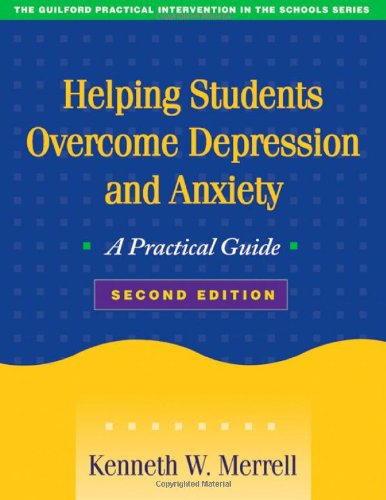
Helping Students Overcome Depression and Anxiety, Second Edition: A...
Authors:
Kenneth W. Merrell PhD
Publisher:
The Guilford Press
Publication Date:
Not available
ISBN:
1593856482
Now in a revised and expanded second edition, this bestselling guide provides expert information and clear-cut strategies for assessing and treating... internalizing problems in school settings. More than 40 specific psychoeducational and psychosocial intervention techniques are detailed, with a focus on approaches that are evidence based, broadly applicable, and easy to implement. Including 26 ready-to-use worksheets, in a large-size format with permission to photocopy, the second edition has been updated throughout to ensure its currency and clinical utility. Coverage of psychiatric medications has been extensively revised with the latest developments and findings. A new chapter addresses prevention-oriented social and emotional learning curricula for the classroom. This book is in The Guilford Practical Intervention in the Schools Series.
 '





