production
/viewbook/list/all/?page=5516
/
/static/
None
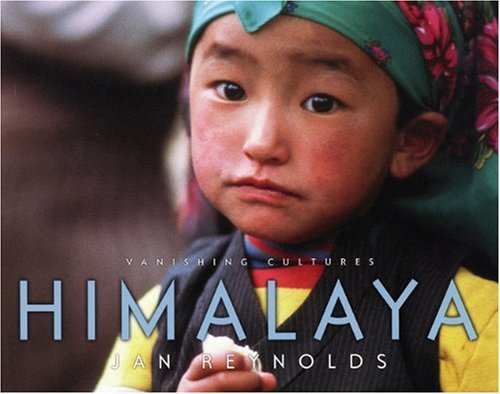
Himalaya (Vanishing Cultures)
Authors:
Jan Reynolds
Publisher:
Lee & Low Books
Publication Date:
Not available
ISBN:
1600601294
High in the Himalaya, Yangshi's mother is making a rice drink to trade at the market. For Sherpas and Tibetans, trading is a means of sharing their... crops and goods with others who live throughout the mountain chain. Yanghsi's family also takes some of the rice drink to the monastery as a gift for the monks. Sherpas and Tibetans live simply, in harmony with the world around them. Yangshi's people believe life is an endless circle that goes around and around, as symbolized by the prayer wheel she spins at the monastery.
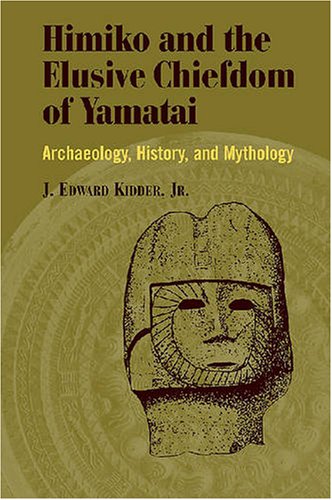
Himiko and Japan's Elusive Chiefdom of Yamatai
Authors:
Jr. J. Edward Kidder
Publisher:
University of Hawaii Press
Publication Date:
Not available
ISBN:
0824830350
The third-century Chinese chronicle Wei zhi (Record of Wei) is responsible for Japan's most enduring ancient mystery. This early history tells of... a group of islands off the China coast that were dominated by a female shaman named Himiko. Himiko ruled for more than half a century as head of the largest chiefdom, traditionally known as Yamatai, until her death in 248. Yet no such person appears in the old Japanese literature. Who was Himiko and where was the Yamatai she governed? These questions about a critical period in the rise of the Japanese state have puzzled scholars for more than two centuries. Although the postwar boom in archaeology has provided a more panoramic picture of Japan in the centuries following the introduction of rice, bronze, and iron, and the transformation into an agrarian society, scholarly discussion and archaeological evidence have been inconclusive. Nevertheless, the flood of new information, combined with the perennial interest in national origins, has produced a staggering amount of commentary and speculation.In this, the most comprehensive treatment in English to date, a senior scholar of early Japan turns to three sources--historical, archaeological, and mythological--to provide a multifaceted study of ancient Japanese society. Analyzing a tremendous amount of recent archaeological material and synthesizing it with a thorough examination of the textual sources, Professor Kidder locates Yamatai in the Yamato heartland, in the southeastern part of the Nara basin. He describes the formation in the Yayoi period of pan-regional alliances that created the reserves of manpower required to build massive mounded tombs. It is this decisive period, at the end of the Yayoi and the beginning of the Kofun, that he identifies as Himiko's era. He maintains, moreover, that Himiko played a part in the emergence of Yamato as an identifiable political entity. In exploring the cultural and political conditions of this period and identifying the location of Yamatai as Himiko's area of activity, Kidder considers the role of magic in early Japanese society to better understand why an individual with her qualifications reached such a prominent position. He enhances Himiko's story with insights drawn from mythology, turning to a rich body of commentary for explanations buried deep in mythological stories and the earliest descriptions.Himiko and Japan's Elusive Chiefdom of Yamatai is a masterful summary of Japanese archaeology, making it required reading for Japan historians as well as scholars with an interest in literature and art history during this formative stage in Japan's past.

HIMSS Dictionary of Healthcare Information Technology Terms,...
Authors:
HIMSS
Publisher:
HIMSS
Publication Date:
Not available
ISBN:
0980069750

Hinchcliffe and Goldblatt: Knowledge and the Social Sciences:...
Authors:
Not Available
Publisher:
Routledge
Publication Date:
Not available
ISBN:
0415329760
Knowledge and the Social Sciences takes as its point of departure the claims that all forms of knowledge, the social sciences included, must be seen and... understood in their social context. It argues that the social sciences both describe and transform their object of study, though rarely in ways that social scientists intend, and introduces students to the key epistemological and philosophical terms and issues essential for further study in the social sciences.In a radical and yet lucid and practical introduction to ways of thinking and knowing in the social sciences this text investigates:* the origins and consequences of different types of knowledge in substantive areas of social change: medical practice, religious beliefs, and the environment* whether there is a decline in public trust of expert knowledge systems* whether we are entering a knowledge society, a fragmented post-modern society, or a risk society.

Hindemith Sonata No. 2 in G Major (1936): Piano
Authors:
Bernhard Billeter
Publisher:
Schott
Publication Date:
Not available
ISBN:
3795795826

Hindenburg: Icon of German Militarism (Military Profiles)
Authors:
Dennis Showalter
Publisher:
Potomac Books Inc.
Publication Date:
Not available
ISBN:
1574886541
With his victory over the Russian army at the battle of Tannenberg in August 1914, Paul von Hindenburg became a war hero. By 1916 he had parlayed an... exaggerated reputation for decisive victory into near dictatorial powers. After Germany’s defeat at Verdun and War Minister Erich von Falkenhayn’s dismissal in late 1916, Hindenburg, along with his chief of staff Erich Ludendorff, took over strategic direction of the war. The eponymous Hindenburg Program attempted with some success to mobilize Germany’s economy for war. He also oversaw many of Germany’s most important wartime decisions, including the resumption of unrestricted submarine warfare, Bethmann Hollweg’s dismissal as chancellor, Russia’s defeat and negotiation of the Treaty of Brest-Litovsk, and the “Ludendorff Offensives” of 1918, which sought decisive victory on the Western Front but ended in Germany’s catastrophic defeat. After the war, Hindenburg played a crucial role in creating the Dolchstosslegende (the myth that the German Army had been “stabbed in the back” by a Jewish-Bolshevik conspiracy on the homefront), in leading Germany as president of the Weimar Republic, and, most tragically, in acquiescing to Adolf Hitler’s rise to power.
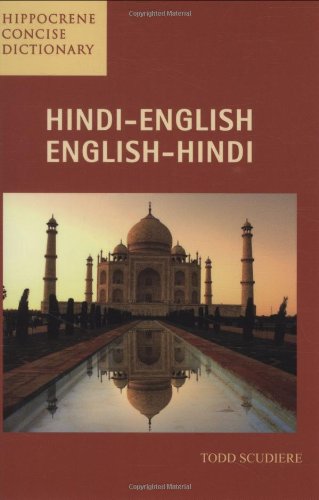
Hindi-English/English-Hindi Concise Dictionary (Hippocrene Concise...
Authors:
Todd Scudiere
Publisher:
Hippocrene Books
Publication Date:
Not available
ISBN:
0781811678
Hindi, with over 800 million speakers, is the world's second most widely spoken language and one of only two official lan-guages of India. This... essential guide provides businesspeople, travellers, and students with all the words they will need to handle just about any interaction with Hindi speakers. Features: Employs both native Devanagari script and Romanisation; Compact and easy-to-carry size, for added convenience; Over 11,000 total entries.
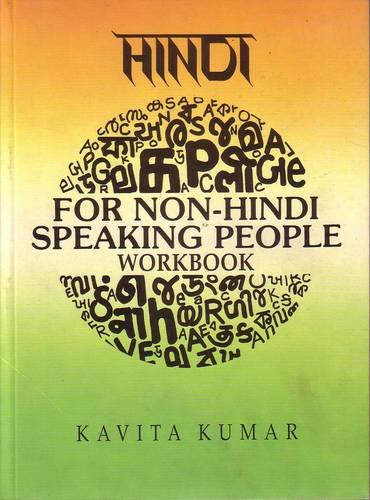
Hindi for Non-Hindi Speaking People (English and Hindi Edition)
Authors:
Kavita Kumar
Publisher:
Rupa and Company
Publication Date:
Not available
ISBN:
8171673503
This book is an original two-in-one monograph that covers grammar and is a reader for beginners. The book has virtually sprung from Kavita Kumar's long... experience of teaching Hindi to foreign students of several nationalities. It can be used both as a classroom text and for self study.
Hindi for Non Hindi Speaking People Workbook
Authors:
Kumar
Publisher:
Rupa
Publication Date:
Not available
ISBN:
8171673333
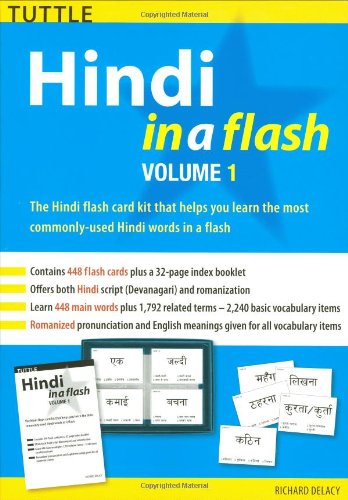
Hindi in a Flash Kit Volume 1 (Tuttle Flash Cards)
Authors:
Richard Delacy
Publisher:
Tuttle Publishing
Publication Date:
Not available
ISBN:
0804839603
Hindi—the national language of India, and growing fast in economic, political, and practical importance—is considered a "super critical need"... language by the U.S. State Department, and learners are flocking to it. Now available in Tuttle's bestselling In a Flash format!An excellent learning tool, Hindi in a Flash has a full range of features to help beginners and intermediate learners. With 448 flash cards teaching the most commonly used Hindi words and phrases, this newest addition to the acclaimed series makes for an effective way to start speaking.

HINDI PRAVESHIKA
Authors:
Not Available
Publisher:
Not available
Publication Date:
Not available
ISBN:
Not available
HINDI TRAVEL GUIDE AAKHIREE CHATTAN TAK
Authors:
Not Available
Publisher:
Not available
Publication Date:
Not available
ISBN:
Not available

Hindsight: The Promise and Peril of Looking Backward
Authors:
Mark Freeman
Publisher:
Oxford University Press, USA
Publication Date:
Not available
ISBN:
019538993X
Although the idea of hindsight is frequently associated with the biases, distortions, and outright lies of memory--as in the infamous "20-20" scenario... or the conviction that one "knew it all along"--Mark Freeman maintains that this process of looking backward over the terrain of the past can also serve as a profound source of insight, understanding, and self-knowledge. Consider Tolstoy's harrowing tale of Ivan Ilych, revisiting his past on the eve of his death, only to realize that the life he had been living was a lie. Consider as well the many times in our own lives when, upon reviewing the past, we are able to see what we could not, or would not, see earlier on. Hindsight is also intimately connected to what Freeman calls narrative reflection: Through the distance conferred by time, we can look back on past experiences and see them anew, as episodes in an evolving story. As important as "being in the now" and "living in the moment" are, it is no less important to pause at times and, by looking backward, seek to discern those aspects of experience that might otherwise escape our notice. Far from necessarily leading to deception and lies, therefore, hindsight can lead to wisdom and indeed truth--of a sort, Freeman contends, that is only available in retrospect. In addition to serving as a central site of self-knowledge, hindsight plays an integral role in the process of moral growth. For, through hindsight, there emerges the opportunity not only to see the possible errors of our ways but to transcend them and thereby to move on to better ways of being in the world. Drawing on psychology, philosophy, literature, and personal experience, this wide-ranging volume offers an insightful and engaging exploration of the role of hindsight both in discerning the personal past and in deepening moral life.

Hind Swaraj or Indian Home Rule
Authors:
Mahatma Gandhi
Publisher:
Greenleaf Books
Publication Date:
Not available
ISBN:
0934676259
Mohandas Karamchand Gandhi (1869-1948) was a major political and spiritual leader of India and the Indian independence movement. In India, he is... recognized as the Father of the Nation. A British-educated lawyer, Gandhi first employed his ideas of peaceful civil disobedience in the Indian community s struggle for civil rights in South Africa. Upon his return to India, he led nationwide campaigns for the alleviation of poverty, for the liberation of women, for brotherhood amongst differing religions and ethnicities, for an end to untouchability and caste discrimination, and for the economic self-sufficiency of the nation, but above all for Swaraj-the independence of India from foreign domination. He famously led Indians in the disobedience of the salt tax on the 400 kilometre (248 miles) Dandi Salt March in 1930, and in an open call for the British to Quit India in 1942. He was imprisoned for many years on numerous occasions in both South Africa and India. He dedicated his life to the wider purpose of discovering truth, or Satya. He tried to achieve this by learning from his own mistakes and conducting experiments on himself. He called his autobiography The Story of My Experiments with Truth.
Hind Swaraj or Indian Home Rule
Authors:
Gandhi
Publisher:
Navajivan Publishing House
Publication Date:
Not available
ISBN:
8172290713
Mohandas Karamchand Gandhi (1869-1948) was a major political and spiritual leader of India and the Indian independence movement. In India, he is... recognized as the Father of the Nation. A British-educated lawyer, Gandhi first employed his ideas of peaceful civil disobedience in the Indian community s struggle for civil rights in South Africa. Upon his return to India, he led nationwide campaigns for the alleviation of poverty, for the liberation of women, for brotherhood amongst differing religions and ethnicities, for an end to untouchability and caste discrimination, and for the economic self-sufficiency of the nation, but above all for Swaraj-the independence of India from foreign domination. He famously led Indians in the disobedience of the salt tax on the 400 kilometre (248 miles) Dandi Salt March in 1930, and in an open call for the British to Quit India in 1942. He was imprisoned for many years on numerous occasions in both South Africa and India. He dedicated his life to the wider purpose of discovering truth, or Satya. He tried to achieve this by learning from his own mistakes and conducting experiments on himself. He called his autobiography The Story of My Experiments with Truth.
 '





