production
/viewbook/list/all/?page=5520
/
/static/
None
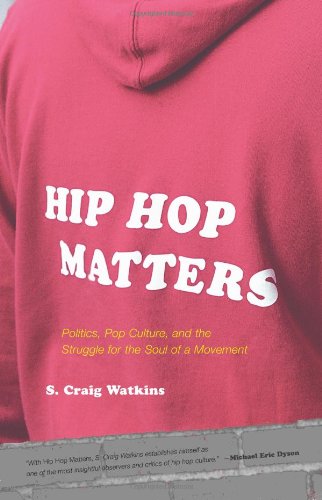
Hip Hop Matters: Politics, Pop Culture, and the Struggle for the...
Authors:
S. Craig Watkins
Publisher:
Beacon Press
Publication Date:
Not available
ISBN:
0807009865
Avoiding the easy definitions and caricatures that tend to celebrate or condemn the "hip hop generation," Hip Hop Matters focuses on fierce and... far-reaching battles being waged in politics, pop culture, and academe to assert control over the movement. At stake, Watkins argues, is the impact hip hop has on the lives of the young people who live and breathe the culture. He presents incisive analysis of the corporate takeover of hip hop and the rampant misogyny that undermines the movement's progressive claims. Ultimately, we see how hip hop struggles reverberate in the larger world: global media consolidation; racial and demographic flux; generational cleavages; the reinvention of the pop music industry; and the ongoing struggle to enrich the lives of ordinary youth.
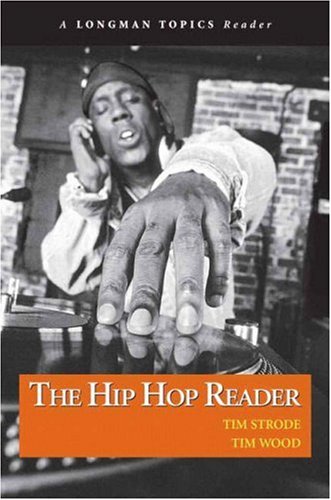
Hip Hop Reader, The (A Longman Topics Reader)
Authors:
Tim Strode
Publisher:
Pearson Longman
Publication Date:
Not available
ISBN:
0321385128
Composition and hip hop may seem unrelated, but the connection isn’t hard to make: Hip hop and rap rely on a complex of narrative practices that have... clear ties to some of the best American essay writing. A Hip Hop Reader brings together work by important writers about this cultural phenomenon and provides lively selections that represent a variety of styles and interests.
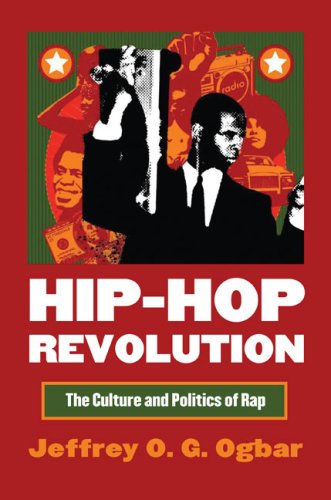
Hip-Hop Revolution: The Culture and Politics of Rap (Cultureamerica)
Authors:
Jeffrey O. G. Ogbar
Publisher:
Not available
Publication Date:
Not available
ISBN:
0700616519
In the world of hip-hop, "keeping it real" has always been a primary goal--and realness takes on special meaning as rappers mold their images for street... cred and increasingly measure authenticity by ghetto-centric notions of "Who's badder?" In this groundbreaking book, Jeffrey O. G. Ogbar celebrates hip-hop and confronts the cult of authenticity that defines its essential character--that dictates how performers walk, talk, and express themselves artistically and also influences the consumer market. Hip-Hop Revolution is a balanced cultural history that looks past negative stereotypes of hip-hop as a monolith of hedonistic, unthinking noise to reveal its evolving positive role within American society. A writer who's personally encountered many of hip-hop's icons, Ogbar traces hip-hop's rise as a cultural juggernaut, focusing on how it negotiates its own sense of identity. He especially explores the lyrical world of rap as artists struggle to define what realness means in an art where class, race, and gender are central to expressions of authenticity--and how this realness is articulated in a society dominated by gendered and racialized stereotypes. Ogbar also explores problematic black images, including minstrelsy, hip-hop's social milieu, and the artists' own historical and political awareness. Ranging across the rap spectrum from the conscious hip-hop of Mos Def to the gangsta rap of 50 Cent to the "underground" sounds of Jurassic 5 and the Roots, he tracks the ongoing quest for a unique and credible voice to show how complex, contested, and malleable these codes of authenticity are. Most important, Ogbar persuasively challenges widely held notions that hip-hop is socially dangerous--to black youths in particular--by addressing the ways in which rappers critically view the popularity of crime-focused lyrics, the antisocial messages of their peers, and the volatile politics of the word "nigga." Hip-Hop Revolution deftly balances an insider's love of the culture with a scholar's detached critique, exploring popular myths about black educational attainment, civic engagement, crime, and sexuality. By cutting to the bone of a lifestyle that many outsiders find threatening, Ogbar makes hip-hop realer than it's ever been before. This book is part of the CultureAmerica series.
Hip-Hop Revolution: The Culture and Politics of Rap (CultureAmerica)
Authors:
Jeffrey O. G. Ogbar
Publisher:
University Press Of Kansas
Publication Date:
Not available
ISBN:
0700615474
In the world of hip-hop, "keeping it real" has always been a primary goal-and realness takes on special meaning as rappers mold their images for street... cred and increasingly measure authenticity by ghetto-centric notions of "Who's badder?" In this groundbreaking book, Jeffrey O. G. Ogbar celebrates hip-hop and confronts the cult of authenticity that defines its essential character-that dictates how performers walk, talk, and express themselves artistically and also influences the consumer market. Hip-Hop Revolution is a balanced cultural history that looks past negative stereotypes of hip-hop as a monolith of hedonistic, unthinking noise to reveal its evolving positive role within American society. A writer who's personally encountered many of hip-hop's icons, Ogbar traces hip-hop's rise as a cultural juggernaut, focusing on how it negotiates its own sense of identity. He especially explores the lyrical world of rap as artists struggle to define what realness means in an art where class, race, and gender are central to expressions of authenticity-and how this realness is articulated in a society dominated by gendered and racialized stereotypes. Ogbar also explores problematic black images, including minstrelsy, hip-hop's social milieu, and the artists' own historical and political awareness. Ranging across the rap spectrum from the conscious hip-hop of Mos Def to the gangsta rap of 50 Cent to the "underground" sounds of Jurassic 5 and the Roots, he tracks the ongoing quest for a unique and credible voice to show how complex, contested, and malleable these codes of authenticity are. Most important, Ogbar persuasively challenges widely held notions that hip-hop is socially dangerous-to black youths in particular-by addressing the ways in which rappers critically view the popularity of crime-focused lyrics, the antisocial messages of their peers, and the volatile politics of the word "nigga." Hip-Hop Revolution deftly balances an insider's love of the culture with a scholar's detached critique, exploring popular myths about black educational attainment, civic engagement, crime, and sexuality. By cutting to the bone of a lifestyle that many outsiders find threatening, Ogbar makes hip-hop realer than it's ever been before.
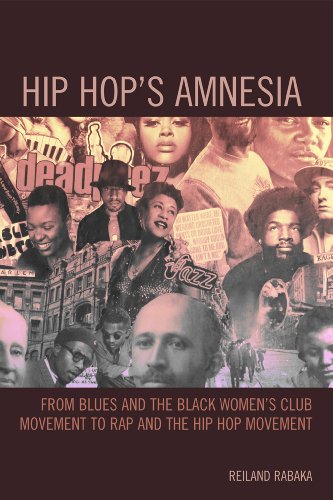
Hip Hop's Amnesia: From Blues and the Black Women's Club Movement...
Authors:
Reiland Rabaka
Publisher:
Lexington Books
Publication Date:
Not available
ISBN:
0739174924
.cs95E872D0{text-align:left;text-indent:0pt;margin:0pt 0pt 0pt 0pt} .cs5EFED22F{color:#000000;background-color:transparent;font-family:Times New... Roman; font-size:12pt; font-weight:normal; font-style:normal; } .csA62DFD6A{color:#000000;background-color:transparent;font-family:Times New Roman; font-size:12pt; font-weight:normal; font-style:italic; } .csF8CBA3A1{text-align:left;text-indent:36pt;margin:0pt 0pt 0pt 0pt} What did rap music and hip hop culture inherit from the spirituals, classic blues, ragtime, classic jazz, and bebop? What did rap music and hip hop culture inherit from the Black Women’s Club Movement, New Negro Movement, Harlem Renaissance, Hipster Movement, and Black Muslim Movement? How did black popular music and black popular culture between 1900 and the 1950s influence white youth culture, especially the Lost Generation and the Beat Generation, in ways that mirror rap music and hip hop culture’s influence on contemporary white youth music, culture, and politics? In Hip Hop’s Amnesia award-winning author, spoken-word artist, and multi-instrumentalist Reiland Rabaka answers these questions by rescuing and reclaiming the often-overlooked early twentieth century origins and evolution of rap music and hip hop culture. Hip Hop’s Amnesia is a study about aesthetics and politics, music and social movements, as well as the ways in which African Americans’ unique history and culture has consistently led them to create musics that have served as the soundtracks for their socio-political aspirations and frustrations, their socio-political organizations and nationally-networked movements. The musics of the major African American social and political movements of the 1950s, 1960s, and 1970s were based and ultimately built on earlier forms of “African American movement music.” Therefore, in order to really and truly understand rap music and hip hop culture we must critically examine both classical African American musics and the classical African American movements that these musics served as soundtracks for. This book is primarily preoccupied with the ways in which post-enslavement black popular music and black popular culture frequently served as a soundtrack for and reflected the grassroots politics of post-enslavement African American social and political movements. Where many Hip Hop Studies scholars have made clever allusions to the ways that rap music and hip hop culture are connected to and seem to innovatively evolve earlier forms of black popular music and black popular culture, Hip Hop’s Amnesia moves beyond anecdotes and witty allusions and earnestly endeavors a full-fledged critical examination and archive-informed re-evaluation of “hip hop’s inheritance” from the major African American musics and movements of the first half of the twentieth century: classic blues, ragtime, classic jazz, swing, bebop, the Black Women’s Club Movement, the New Negro Movement, the Harlem Renaissance, the Bebop Movement, the Hipster Movement, and the Black Muslim Movement.
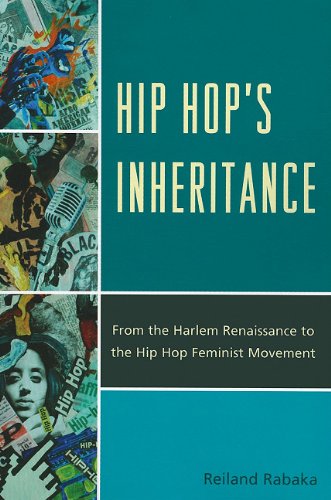
Hip Hop's Inheritance: From the Harlem Renaissance to the Hip Hop...
Authors:
Reiland Rabaka
Publisher:
Lexington Books
Publication Date:
Not available
ISBN:
0739164813
Hip Hop's Inheritance arguably offers the first book-length treatment of what hip hop culture has, literally, 'inherited' from the Harlem Renaissance,... the Black Arts movement, the Feminist Art movement, and 1980s and 1990s postmodern aesthetics. By comparing and contrasting the major motifs of the aforementioned cultural aesthetic traditions with those of hip hop culture, all the while critically exploring the origins and evolution of black popular culture from antebellum America through to "Obama's America," Hip Hop's Inheritance demonstrates that the hip hop generation is not the first generation of young black (and white) folk preoccupied with spirituality and sexuality, race and religion, entertainment and athletics, or ghetto culture and bourgeois culture. Taking interdisciplinarity and intersectionality seriously, Hip Hop's Inheritance employs the epistemologies and methodologies from a wide range of academic and organic intellectual/activist communities in its efforts to advance an intellectual history and critical theory of hip hop culture. Drawing from academic and organic intellectual/activist communities as diverse as African American studies and women's studies, postcolonial studies and sexuality studies, history and philosophy, politics and economics, and sociology and ethnomusicology, Hip Hop's Inheritance calls into question one-dimensional and monodisciplinary interpretations or, rather, misinterpretations, of a multidimensional and multivalent form of popular culture that has increasingly come to include cultural criticism, social commentary, and political analysis.
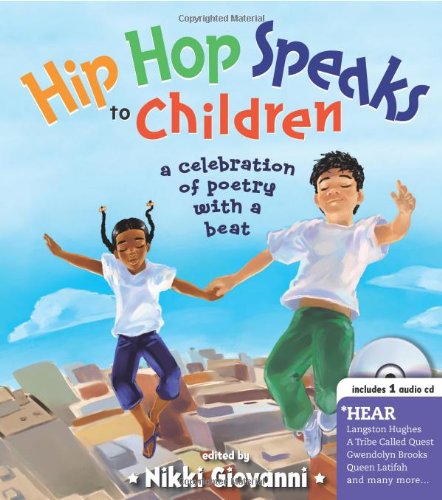
Hip Hop Speaks to Children with CD: A Celebration of Poetry with a...
Authors:
Nikki Giovanni
Publisher:
Sourcebooks Jabberwocky
Publication Date:
Not available
ISBN:
1402210485
NOW A NEW YORK TIMES BESTSELLER AND INCLUDED IN THE BOOKLIST TOP 10 ART BOOKS FOR YOUTH! Our consensus is Hip Hop Speaks to Children is the most... essential poetry purchase to make this year. The poetry is enough. The illustrations are enough. The CD is enough. Together, this book is a treasure of which you cannot get enough. We shall accomplish much this year. Children will be encouraged to put their words to poetry and beats. Teachers will be encouraged to allow the artists to speak to children. —Diane Chen, School Library Journal blog "Practically Paradise" ————————————————————————————————————————————— Hip Hop Speaks to Children is a celebration of poetry with a beat. Poetry can have both a rhyme and a rhythm. Sometimes it is obvious; sometimes it is hidden. But either way, make no mistake, poetry is as vibrant and exciting as it gets. And when you find yourself clapping your hands or tapping your feet, you know you've found poetry with a beat! Like Poetry Speaks to Children, the New York Times Bestselling classic poetry book and CD that started it all, Hip Hop Speaks to Children is meant to be the beginning of a journey of discovery. READ more than 50 remarkable poems and songs! HEAR poetry's rhymes and rhythms from Queen Latifah to Gwendolyn Brooks, Langston Hughes to A Tribe Called Quest and more! * Also hear part of Martin Luther Kind's original "I Have a Dream" speech, followed by the remarkable live performance of the speech by Nikki Giovanni, Oni Lasana and Val Gray Ward. * The Hip Hop Speaks to Children CD contains more than 30 performances, either by the artists who created them, or as unique interpretations by admiring poets and artists. DISCOVER Langston Hughes's elegant gospel "The Negro Speaks of Rivers," A Tribe Called Quest's playful "Ham 'N' Eggs," Sterling A. Brown's hard-luck "Long Track Blues," Gwendolyn Brooks's wake-up call "We Real Cool," Kanye West's lovely "Hey Mama," and Martin Luther King Jr.'s awe-inspiring "I Have a Dream." This is a collection of rhymes and rhythms unlike any other poetry book! Celebrate with remarkable poets, including: Eloise Greenfield Mos Def Lucille Clifton Oscar Brown Jr. Tupac Shakur Maya Angelou Queen Latifah Nikki Grimes Walter Dean Myers Common and, of course, Nikki Giovanni Poems Include: Ego Tripping Rapper's Delight The Negro Speaks of Rivers Hey Mama Ham 'N' Eggs Everything Is Everything Ladies First MORE PRAISE FOR HIP HOP SPEAKS TO CHILDREN "With its archival recordings of poems read by the poets themselves, [Hip Hop] reminds everyone that poetry springs from an oral tradition." —Publishers Weekly "This is the way to get children interested in reading and loving poetry. ... A great book for both teachers and parents." — Valerie Lewis, owner of Hicklebee's children's bookstore "The poems, the artwork, the CD...all complement each other to create a wonderful experience." —Becky Laney, Becky Laney's Books blog "Love this book. I think it is a K-8 must-have for classrooms and libraries. Like I said it is packed and it may be (at first) intimidating to young readers. But, once they hear some of the audio, spend time with the illustrations, and experience some of the poetry, I think it will become a favorite." —Franki Sibberson, A Year of Reading blog "Hip Hop Speaks to Children is a wonderfully composed collection of poems from writers like Eloise Greenfield to late rapper and poet, Tupac Shakur. ... Whether you read poetry or you hear it in a rap song, Giovanni's genius endeavor will inspire children of all ages to have fun while listening to poetry. Rap is poetry, right?" —Amy Bowllan, Amy Bowllan's Blog (a School Library Journal Blog) "I highly recommend this one for all collections. If the title didn't include the word "children" it'd be an excellent book all the way to high school. My coworkers and I are already talking about doing a Hip Hop poetry story time for our elementary school kids." —Jennifer Rothschild, Biblio File blog "This is an incredibly powerful, beautiful and important book. Both the book and CD are stellar in quality and diversity. The artwork is amazing and I find myself pulling it out of the shelf over and over for just one more re-read. The grandchildren (ages 3 and 5) love it as well and ask to hear the CD while they pore over the pages and take breaks prancing around the room and singing to the beat. They KNOW all the poems in the book and learned them in a relatively short time, which I attribute to the power of the beat, and all the artists; the poets, the illustrators, the singers and spoken word artists. What an astounding thing when a book moves children so that they LEARN - quickly and enjoyably. This book is for all ages and I can't recommend it highly enough." —Gina Ruiz, Blogcritics Magazine
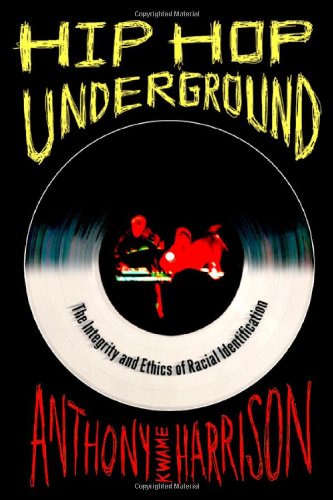
Hip Hop Underground: The Integrity and Ethics of Racial Identification
Authors:
Anthony Kwame Harrison
Publisher:
Temple University Press
Publication Date:
Not available
ISBN:
1439900612
"Hip Hop Underground" is a vivid ethnography of the author's observations and experiences in the multiracial world of the San Francisco underground hip... hop scene. While Anthony Kwame Harrison interviewed area hip hop artists for this entertaining and informative book, he also performed as the emcee "Mad Squirrel". His immersion in the subculture provides him with unique insights into this dynamic and racially diverse but close-knit community. "Hip Hop Underground" examines the changing nature of race among young Americans, and examines the issues of ethnic and racial identification, interaction, and understanding. Critiquing the notion that the Bay Area underground music scene is genuinely "colorblind", Harrison focuses on the issue of race to show how various ethnic groups engage hip hop in remarkably divergent ways - as a means to both claim subcultural legitimacy and establish their racial authenticity.
Hip Licks for Saxophone
Authors:
Greg Fishman
Publisher:
Greg Fishman Jazz Studios
Publication Date:
Not available
ISBN:
0984349243
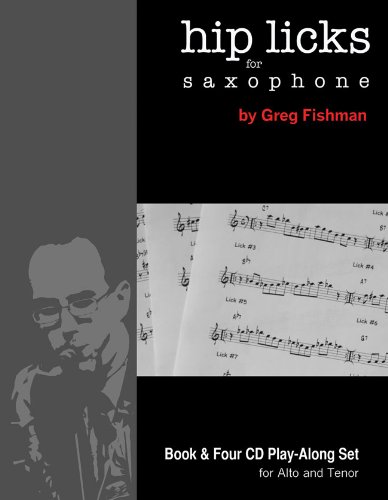
Hip Licks for Saxophone is designed to help saxophonists develop fluency in the jazz language by providing mainstream jazz vocabulary... (swing/bop/post-bop) that nails the changes and lays great on the horn. Think of Hip Licks for Saxophone as a musical reference book, like a dictionary of great licks in all twelve keys, available when you need it. You can open the book to any page and just start playing. Need something that will help you sound like a total pro while playing over the most challenging keys, like: C#, F# or B? Hip Licks for Saxophone is an indispensable resource that can immediately show you how a professional player would approach those tough keys and chord progressions. Special Features of Hip Licks for Saxophone by Greg Fishman: 168 Hip Licks Each lick is unique and customized for each key, based on the best timbre, register and playability on the horn. The C7 lick is different than the B7 lick, which is different than the Bb7 lick, etc. Idiomatic Construction Alto and Tenor read the same written part, while the rhythm section is recorded in two different keys, ensuring that each lick lays perfectly on all saxophones. Slow Tempo and Fast Tempo Play-Along CDs are included for both Alto and Tenor 4 CDs included: 2 Alto CDs and 2 Tenor CDs, providing over four hours of play-along tracks. Hip Licks Nail the Most Popular Chord Progressions: - Major 7th, Dominant 7th, Dominant 7b9, Minor 7th, Minor 7b5, and Diminished 7th and Augmented 7th Chords - ii-7 / V7 / I Major (two and four-measure phrases) - ii-7b5 / V7b9 / i Minor (two and four-measure phrases) - Parallel Major to Minor Progressions - ii- ii-Maj7 / ii-7 V7 / I Maj7 (ii-7 / V7 / I Maj7 with moving 7ths) Modular Design The licks are self-contained, easily taken out of the book to be used in a wide variety of songs. Interactive Call and Response Format, perfect for ear-training and developing your musical memory. Each lick is played twice in a row on the Play-Along CDs, so you can hear the lick and then immediately play along. Twelve Key Approach Every CD track takes you through all twelve keys. Rhythm-Section-Only Tracks let you experiment with your own variations on the licks and improvise over a wide variety of harmonic settings. These tracks are also excellent backgrounds for practicing all of your chords and scales. Technique Builder Use Hip Licks for Saxophone as part of your daily practice routine to dramatically increase your technical command of the saxophone. Hip Licks for Saxophone (Book and Four CD Play-along Set) By Greg Fishman Published by Greg Fishman Jazz Studios, Evanston, Illinois 40 pages, 4 Play-Along CDs included ISBN NO: 978-0-9843492-4-1
Hip Logic (National Poetry Series)
Authors:
Terrance Hayes
Publisher:
Penguin Books
Publication Date:
Not available
ISBN:
0142001392
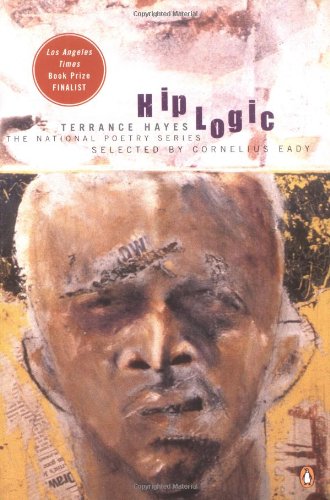
Terrance Hayes is a dazzlingly original poet, interested in adventurous explorations of subject and form. His new work, Hip Logic, is full of poetic... tributes to the likes of Paul Robeson, Big Bird, Balthus, and Mr. T, as well as poems based on the anagram principle of words within a word. Throughout, Hayes's verse dances in a kind of homemade music box, with notes that range from tender to erudite, associative to narrative, humorous to political. Hip Logic does much to capture the nuances of contemporary male African American identity and confirms Hayes's reputation as one of the most compelling new voices in American poetry.

HI-POLYMER VINYL ERASER
Authors:
Not Available
Publisher:
Not available
Publication Date:
Not available
ISBN:
Not available
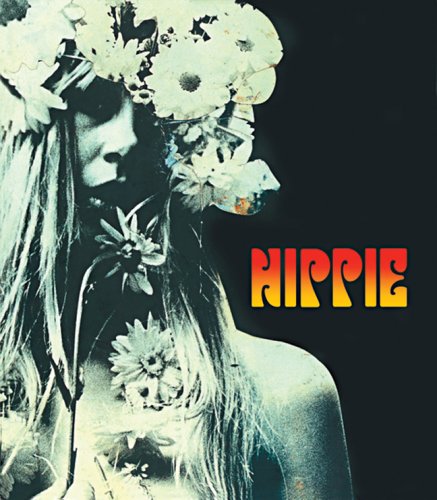
New York Times bestseller! Sales phenomenon! Now in an entirely new compact-sized paperback...at a mind-blowing price.Experience the ultimate flashback... with this celebration of an era. Rich in illustrations and filled with the history, politics, sayings, and slogans that defined an age, this tribute to the 1960's counterculture is as groovy as it gets. For those who were there, this volume will invoke the spirit of the time. Those who weren't, will wish they had been.Sex, drugs, and rock and roll; peace rallies and riots in the ghettos; Flower Power, Black Power, and Gay Power; Mothers of Invention and Women's Liberation; Woodstock, Monterey Pop, and Altamont. It was the best of times, it was the worst of times: it all depends on whom you ask. But without a doubt, hippies transformed society. Take a magical mystery tour through this revolutionary period. Every significant moment comes vibrantly alive once again in day-glo psychedelic images, rare portraits of writers and musicians, dynamite poster and album artwork, and photographic records of political events that shook the world. Hundreds of unforgettable quotations come from seminal figures such as Ken Kesey, Timothy Leary, Grace Slick, George Harrison, and Wavy Gravy.Proceeding year by year from 1965-1971, Hippie gives an unprecedented degree of shape and coherence to an age of change--from the free-loving flower children of Haight-Ashbery to the student protesters of France--that by its nature is kaleidoscopically bewildering.
Hippies American Values
Authors:
Timothy Miller
Publisher:
University of Tennessee Press
Publication Date:
Not available
ISBN:
0870496948
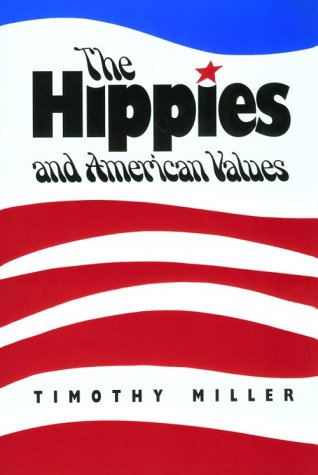
"The sixties' political agenda may have been ground down to ambiguity at best, but moral and spiritual America will never again be quite what it was... before the coming of the hippies, and Miller has shown how and why."—Robert S. Ellwood, University of Southern CaliforniaThe hippies of the late 1960s were cultural dissenters who, among other things, advocated drastic rethinking of certain traditional American values and standards. In this lucid, lively survey, Timothy Miller traces the movement's ethical innovations and analyzes the impact of its ideas on subsequent American culture.Dedicated to such tenets as the primacy of love, trust in intuition and direct experience, the rejection of meaningless work, and a disdain for money and materialism, the hippies advocated dropping out of the dominant culture, and proposed new and more permissive ethics in several areas. They argued that, while some drugs were indeed harmful, others provided useful insights and experiences and therefore should be freely available and widely used. They endorsed a liberal ethics of sex, in which no sexual act between or among consenting adults would be banned. They developed an ethics of rock-and-roll music, arguing that rock was the language of a generation and that it helped promote new ways of thinking and living. They also revived the venerable American tradition of communal living.In contrast to most available literature on the 1960s, this book deals with the cultural revolutionaries and not the political radicals of the New Left. And instead of relying on later interviews with persons who were active in the 1960s, Miller draws mainly on underground newspapers of the day, the most important literary creation of the hippies themselves. The result is a historical encounter of rare immediacy.Timothy Miller is assistant professor of religious studies at the University of Kansas.
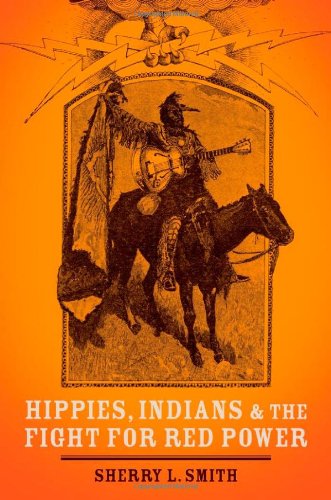
Hippies, Indians, and the Fight for Red Power
Authors:
Sherry L. Smith
Publisher:
Oxford University Press, USA
Publication Date:
Not available
ISBN:
0199855595
Through much of the 20th century, federal policy toward Indians sought to extinguish all remnants of native life and culture. That policy was... dramatically confronted in the late 1960s when a loose coalition of hippies, civil rights advocates, Black Panthers, unions, Mexican-Americans, Quakers and other Christians, celebrities, and others joined with Red Power activists to fight for Indian rights. In Hippies, Indians and the Fight for Red Power, Sherry Smith offers the first full account of this remarkable story. Hippies were among the first non-Indians of the post-World War II generation to seek contact with Native Americans. The counterculture saw Indians as genuine holdouts against conformity, inherently spiritual, ecological, tribal, communal-the original "long hairs." Searching for authenticity while trying to achieve social and political justice for minorities, progressives of various stripes and colors were soon drawn to the Indian cause. Black Panthers took part in Pacific Northwest fish-ins. Corky Gonzales' Mexican American Crusade for Justice provided supplies and support for the Wounded Knee occupation. Actor Marlon Brando and comedian Dick Gregory spoke about the problems Native Americans faced. For their part, Indians understood they could not achieve political change without help. Non-Indians had to be educated and enlisted. Smith shows how Indians found, among this hodge-podge of dissatisfied Americans, willing recruits to their campaign for recognition of treaty rights; realization of tribal power, sovereignty, and self-determination; and protection of reservations as cultural homelands. The coalition was ephemeral but significant, leading to political reforms that strengthened Indian sovereignty.Thoroughly researched and vividly written, this book not only illuminates this transformative historical moment but contributes greatly to our understanding about social movements.
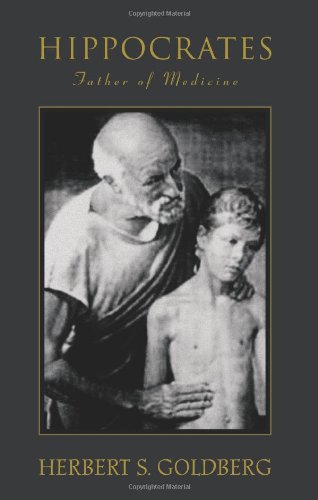
Hippocrates: Father of Medicine
Authors:
Herbert Goldberg
Publisher:
Authors Choice Press
Publication Date:
Not available
ISBN:
0595380239
The reader is given a concept of the life and times when Hippocrates lived. The professions and trades during Hippocrates time are described as well as... the early education of youth in ancient Greece. Medicines were not based on science but on driving evil spirits from the body. Hippocrates’ scientific approach to the study and treatment of disease has deservedly earned for him the title “Father of Medicine”. He was born on the island of Cos in 460 B.C., and his works remained for centuries the foundation of medical and biographical knowledge. In addition, it was Hippocrates’ daring approach to the problems of sickness and disease that drove the opening wedge into the wall of fear that surrounded human ills. Hippocrates’ scrupulous attention to professional ethics is honored even to this day by the medical oath that bears his name—“The Hippocratic Oath”. “Desperate diseases need desperate remedies”… “One man’s meat is another man’s poison”—these well known sayings by Hippocrates were a direct attack on human suffering. Hippocrates also wrote books on epidemics and stressed the importance of diet in combating them.
 '





