production
/viewbook/list/all/?page=5522
/
/static/
None
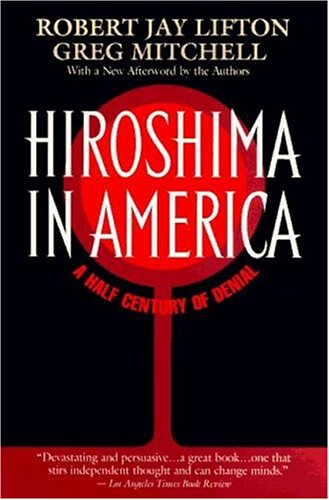
Hiroshima in America
Authors:
Robert J. Lifton
Publisher:
Harper Perennial
Publication Date:
Not available
ISBN:
0380727641
A half century after the bombing of Hiroshima, two distinguished writers look at the impact of the use of the A-bomb, and the supression of debate, on... American life. Lifton and Mitchell question why Hiroshima still touches such a raw nerve, and explore the distortion and supression of information about the use of the bomb.
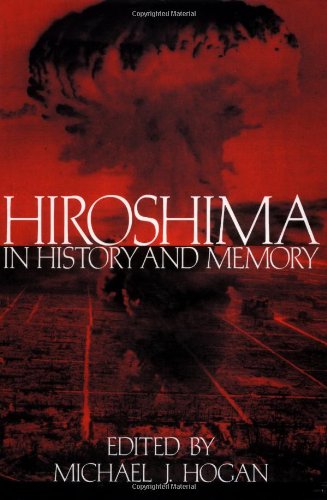
Hiroshima in History and Memory
Authors:
Not Available
Publisher:
Cambridge University Press
Publication Date:
Not available
ISBN:
0521566827
In this timely collection of essays, prominent historians survey the Hiroshima story from the American decision to drop the first atomic bomb to the... recent controversy over the Enola Gay exhibit in Washington, D.C. The first essay surveys the literature on the atomic bombing of Japan, while the second and third essays evaluate the decisions that led to that event. The remaining essays discuss how the Japanese and American people have remembered Hiroshima in the years since the end of World War II. They emphasize the construction of an official memory of Hiroshima, the challenge posed by alternative or counter-memories, and the tension between history and memory in the Hiroshima story. The collection thus unites up-to-date scholarship by diplomatic historians with the recent interest in memory that has emerged as part of the new cultural history.
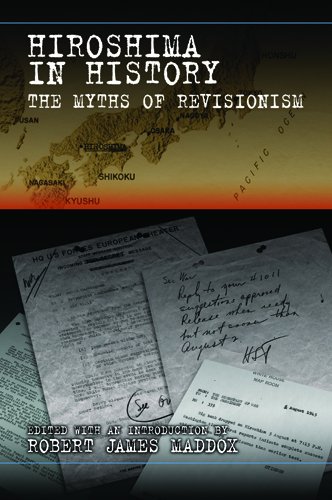
Hiroshima in History: The Myths of Revisionism
Authors:
Not Available
Publisher:
University of Missouri
Publication Date:
Not available
ISBN:
0826219624
When President Harry Truman authorized the use of atomic weapons against Japan, he did so to end a bloody war that would have been bloodier still had... the planned invasion of Japan proved necessary. Revisionists claim that Truman’s real interest was a power play with the Soviet Union and that the Japanese would have surrendered even earlier had the retention of their imperial system been assured. Truman wanted the war to continue, they insist, in order to show off America’s powerful new weapon.This anthology exposes revisionist fallacies about Truman’s motives, the cost of an invasion, and the question of Japan’s surrender. Essays by prominent military and diplomatic historians reveal the hollowness of revisionist claims, exposing the degree to which these agenda-driven scholars have manipulated the historical record to support their contentions. They show that, although some Japanese businessmen and minor officials indicated a willingness to negotiate peace, no one in a governmental decision-making capacity even suggested surrender. And although casualty estimates for an invasion vary considerably, the more authoritative approximations point to the very bloodbath that Truman sought to avoid.Volume editor Robert Maddox first examines the writings of revisionist Gar Alperovitz to expose the unscholarly methods Alperovitz employed to support his claims, then distinguished Japanese historian Sadao Asada reveals how difficult it was for his country’s peace faction to prevail even after the bombs had been dropped. Other contributors point to continuing Japanese military buildups, analyze the revisionists’ low casualty estimates for an invasion, reveal manipulations of the Strategic Bombing Survey of 1946, and show how even the exhibit commemorating the fiftieth anniversary of the bombing at the Smithsonian National Air and Space Museum hewed to the revisionist line. And a close reading of Tsuyoshi Hasegawa’s acclaimed Racing the Enemy exposes many grave discrepancies between that recent revisionist text and its sources.The use of atomic bombs against Japan remains one of the most controversial issues in American history. Gathered in a single volume for the first time, these insightful readings take a major step toward settling that controversy by showing how insubstantial Hiroshima revisionism really is—and that sometimes history cannot proceed without decisive action, however regrettable.
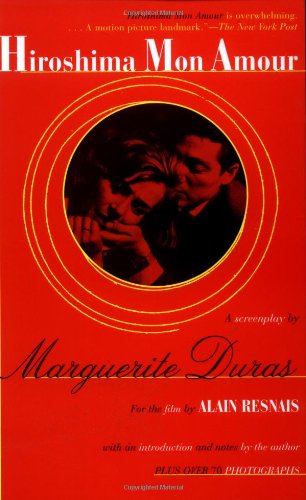
Hiroshima Mon Amour
Authors:
Marguerite Duras
Publisher:
Grove Press
Publication Date:
Not available
ISBN:
0802131042
Jacket description/back: One of the most influential works in the history of cinema, Alain Renais's Hiroshima Mon Amour gathered international acclaim... upon its release in 1959 and was awarded the International Critics' Prize at the Cannes Film festival and the New York Film Critics' Award. Ostensibly the story of a love affair between a Japanese architect and a French actress visiting Japan to make a film on peace, Hiroshima Mon Amour is a stunning exploration of the influence of war on both Japanese and French culture and the conflict between love and humanity.
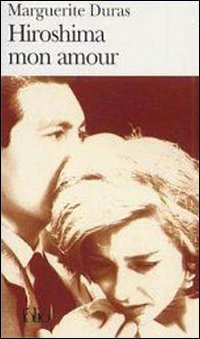
Hiroshima Mon Amour (Folio Ser. : No. 9) (French Edition)
Authors:
Marguerite Duras
Publisher:
Gallimard
Publication Date:
Not available
ISBN:
2070360091
Jacket description/back: One of the most influential works in the history of cinema, Alain Renais's Hiroshima Mon Amour gathered international acclaim... upon its release in 1959 and was awarded the International Critics' Prize at the Cannes Film festival and the New York Film Critics' Award. Ostensibly the story of a love affair between a Japanese architect and a French actress visiting Japan to make a film on peace, Hiroshima Mon Amour is a stunning exploration of the influence of war on both Japanese and French culture and the conflict between love and humanity.
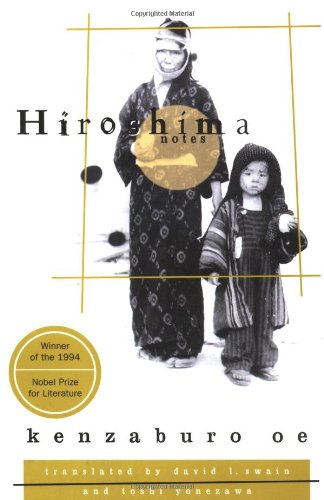
Hiroshima Notes
Authors:
Kenzaburo Oe
Publisher:
Grove Press
Publication Date:
Not available
ISBN:
0802134645
Hiroshima Notes is a powerful statement on the Hiroshima bombing and its terrible legacy by the 1994 Nobel laureate for literature. Oe’s account of... the lives of the many victims of Hiroshima and the valiant efforts of those who cared for them, both immediately after the atomic blast and in the years that follow, reveals the horrific extent of the devastation. It is a heartrending portrait of a ravaged city the human face” in the midst of nuclear destruction.
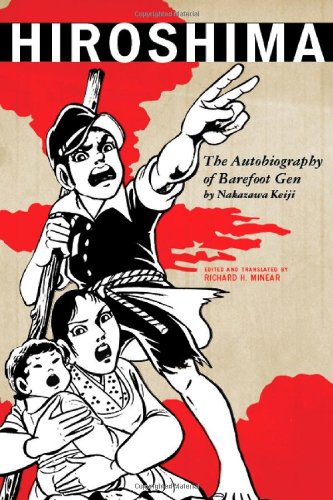
Hiroshima: The Autobiography of Barefoot Gen (Asian Voices)
Authors:
Nakazawa Keiji
Publisher:
Rowman & Littlefield Publishers
Publication Date:
Not available
ISBN:
1442207477
This compelling autobiography tells the life story of famed manga artist Nakazawa Keiji. Born in Hiroshima in 1939, Nakazawa was six years old when on... August 6, 1945, the United States dropped the atomic bomb. His gritty and stunning account of the horrific aftermath is powerfully told through the eyes of a child who lost most of his family and neighbors. In eminently readable and beautifully translated prose, the narrative continues through the brutally difficult years immediately after the war, his art apprenticeship in Tokyo, his pioneering "atomic-bomb" manga, and the creation of Barefoot Gen, the classic graphic novel based on Nakazawa's experiences before, during, and after the bomb. This first English-language translation of Nakazawa's autobiography includes twenty pages of excerpts from Barefoot Gen to give readers who don't know the manga a taste of its power and scope. A recent interview with the author brings his life up to the present. His trenchant hostility to Japanese imperialism, the emperor and the emperor system, and U.S. policy adds important nuance to the debate over Hiroshima. Despite the grimness of his early life, Nakazawa never succumbs to pessimism or defeatism. His trademark optimism and activism shine through in this inspirational work.
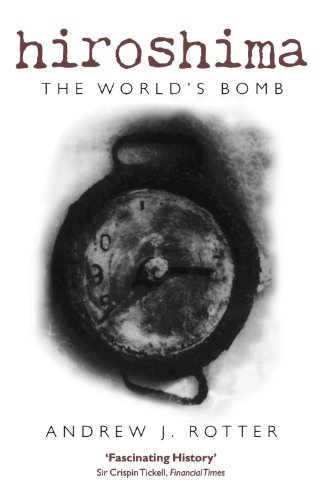
Hiroshima: The World's Bomb (Making of the Modern World)
Authors:
Andrew J. Rotter
Publisher:
Oxford University Press, USA
Publication Date:
Not available
ISBN:
0199569762
The US decision to drop an atomic bomb on Hiroshima remains one of the most controversial events of the twentieth century. But as this fascinating new... history shows, the bomb dropped by an American pilot that hot August morning was in many ways the world's bomb, in both a technological and a moral sense. And it was the world that would have to face its consequences, strategically, diplomatically, and culturally, in the years ahead. In this fast-paced and insightful narrative, Andrew J. Rotter tells the international story behind the development of the atom bomb, ranging from the global crises that led to the Second World War to the largely unavailing attempts to control the spread of nuclear weapons and the evolution of the nuclear arms race after the war had ended. He details the growth in the 1930s and '40s of a world-wide community of scientists dedicated to developing a weapon that could undo the evil in Nazi Germany, and he describes the harnessing of their efforts by the US wartime government. Rotter also sheds light on the political and strategic decisions that led to the bombing itself, the impact of the bomb on Hiroshima and the endgame of the Pacific War, the effects of the bombing and the bomb on society and culture, and the state of all things nuclear in the early 21st-century world.
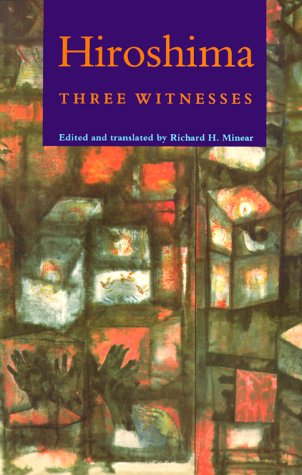
Hiroshima: Three Witnesses
Authors:
Not Available
Publisher:
Princeton University Press
Publication Date:
Not available
ISBN:
069100837X
"I'll search you out, put my lips to your tender ear, and tell you. . . . I'll tell you the real story--I swear I will."--from Little One by Toge... SankichiThree Japanese authors of note--Hara Tamiki, Ota Yoko, and Toge Sankichi--survived the atomic bombing of Hiroshima only to shoulder an appalling burden: bearing witness to ultimate horror. Between 1945 and 1952, in prose and in poetry, they published the premier first-person accounts of the atomic holocaust. Forty-five years have passed since August 6, 1945, yet this volume contains the first complete English translation of Hara's Summer Flowers, the first English translation of Ota's City of Corpses, and a new translation of Toge's Poems of the Atomic Bomb. No reader will emerge unchanged from reading these works. Different from each other in their politics, their writing, and their styles of life and death, Hara, Ota, and Toge were alike in feeling compelled to set down in writing what they experienced. Within forty-eight hours of August 6, before fleeing the city for shelter in the hills west of Hiroshima, Hara jotted down this note: "Miraculously unhurt; must be Heaven's will that I survive and report what happened." Ota recorded her own remarks to her half-sister as they walked down a street littered with corpses: "I'm looking with two sets of eyesthe eyes of a human being and the eyes of a writer." And the memorable words of Toge quoted above come from a poem addressed to a child whose father was killed in the South Pacific and whose mother died on August 6th--who would tell of that day? The works of these three authors convey as much of the "real story" as can be put into words.
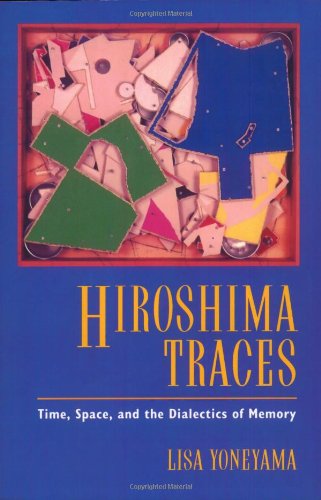
Hiroshima Traces: Time, Space, and the Dialectics of Memory...
Authors:
Lisa Yoneyama
Publisher:
University of California Press
Publication Date:
Not available
ISBN:
0520085876
Remembering Hiroshima, the city obliterated by the world's first nuclear attack, has been a complicated and intensely politicized process, as we learn... from Lisa Yoneyama's sensitive investigation of the "dialectics of memory." She explores unconventional texts and dimensions of culture involved in constituting Hiroshima memories--including history textbook controversies, discourses on the city's tourism and urban renewal projects, campaigns to preserve atomic ruins, survivors' testimonial practices, ethnic Koreans' narratives on Japanese colonialism, and the feminized discourse on peace--in order to illuminate the politics of knowledge about the past and present. In the way battles over memories have been expressed as material struggles over the cityscape itself, we see that not all share the dominant remembering of Hiroshima's disaster, with its particular sense of pastness, nostalgia, and modernity. The politics of remembering, in Yoneyama's analysis, is constituted by multiple and contradictory senses of time, space, and positionality, elements that have been profoundly conditioned by late capitalism and intensifying awareness of post-Cold War and postcolonial realities.Hiroshima Traces, besides clarifying the discourse surrounding this unforgotten catastrophe, reflects on questions that accompany any attempts to recover marginalized or silenced experiences. At a time when historical memories around the globe appear simultaneously threatening and in danger of obliteration, Yoneyama asks how acts of remembrance can serve the cause of knowledge without being co-opted and deprived of their unsettling, self-critical qualities.
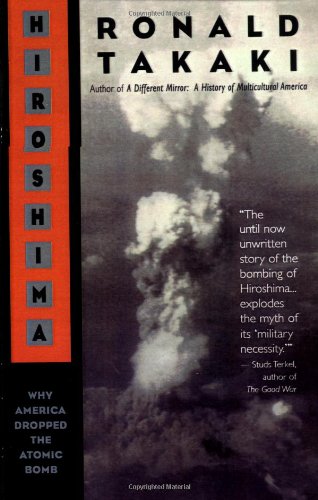
Hiroshima: Why America Dropped the Atomic Bomb
Authors:
Ronald Takaki
Publisher:
Back Bay Books
Publication Date:
Not available
ISBN:
0316831247
The bombing of Hiroshima was one of the pivotal events of the twentieth century, yet this controversial question remains unresolved. At the time,... General Dwight Eisenhower, General Douglas MacArthur, and chief of staff Admiral William Leahy all agreed that an atomic attack on Japanese cities was unnecessary. All of them believed that Japan had already been beaten and that the war would soon end. Was the bomb dropped to end the war more quickly? Or did it herald the start of the Cold War? In his probing new study, prizewinning historian Ronald Takaki explores these factors and more. He considers the cultural context of race - the ways in which stereotypes of the Japanese influenced public opinion and policymakers - and also probes the human dimension. Relying on top secret military reports, diaries, and personal letters, Takaki relates international policies to the individuals involved: Los Alamos director J. Robert Oppenheimer, Secretary of State James Byrnes, Secretary of War Henry L. Stimson, and others... but above all, Harry Truman.

HIS 1010 PACKET / KLIMEK
Authors:
Not Available
Publisher:
Not available
Publication Date:
Not available
ISBN:
Not available
His 221 Bundle
Authors:
Not Available
Publisher:
Not available
Publication Date:
Not available
ISBN:
0205897207
HIS 3060 PACKET / OBRYAN
Authors:
Not Available
Publisher:
Not available
Publication Date:
Not available
ISBN:
Not available
HIS 3120 PACKET / KLIMEK
Authors:
Not Available
Publisher:
Not available
Publication Date:
Not available
ISBN:
Not available
 '





