production
/viewbook/list/all/?page=5544
/
/static/
None
History in Crisis? Recent Directions in Historiography (2nd Edition)
Authors:
Norman J. Wilson
Publisher:
Pearson
Publication Date:
Not available
ISBN:
0131835521
This book explores the possibilities remaining for historical study in the face of the current trends, including postcolonialism, postmodernism, and... deconstruction, among others. The volume examines key topics such as what was history and what is history? The problems of historical knowledge: historicism, presentism, and the writing of history, cross-pollination, varieties of history, historical actors, post modernist (re)visions, post-colonialism and the scope of history, as well as the future of history. For those interested in the study of history as well as those interested in the influence of recent political trends.
History in Practice
Authors:
Ludmilla Jordanova
Publisher:
Bloomsbury USA
Publication Date:
Not available
ISBN:
0340814349
This study by one of the liveliest and most thought-provoking historians has a refreshing transparency and ground-breaking determination to demystify... what fellow practitioners do. In looking at history as an academic discipline and engaging the reader with the use of historical ideas in the wider world, this book takes into account recent world events such as the 9/11 terrorist attack in New York and the war in Iraq. Also included is a new chapter on the relationships between religious, ethnic and political identities, the history of international diplomacy and how the world map gets reconfigured. The study of history has changed dramatically in recent decades. The swiftness and scale of the shift has been well documented, but the precise nature of the implications of it remain hotly contested and are explored in this insightful analysis. Ludmilla Jordanova holds a Chair in History at King's College London. She was previously Director of the Centre for Research in the Arts, Social Sciences and Humanities at the University of Cambridge and a Fellow of Downing College. This study by one of the liveliest and most thought-provoking historians has a refreshing transparency and ground-breaking determination to demystify what fellow practitioners do. In looking at history as an academic discipline and engaging the reader with the use of historical ideas in the wider world, this book takes into account recent world events such as the 9/11 terrorist attack in New York and the war in Iraq. Also included is a new chapter on the relationships between religious, ethnic and political identities, the history of international diplomacy and how the world map gets reconfigured. The study of history has changed dramatically in recent decades. The swiftness and scale of the shift has been well documented, but the precise nature of the implications of it remain hotly contested and are explored in this insightful analysis. "Brilliant...abounds with penetrating yet down-to-earth insights about the practice of academic history. One of the last half-century's most insightful, level-headed, and humane reflections on the practice of history and its cultural significance...(to be) welcomed by professional historians...also accessible to general readers and undergraduates."—History Journal "Jordanova is brilliant in exposition...makes a fine case for the inescapability of the past and the absolute essentiality of studying it."—English Historical Review "Brilliant...abounds with penetrating yet down-to-earth insights about the practice of academic history. One of the last half-century's most insightful, level-headed, and humane reflections on the practice of history and its cultural significance...(to be) welcomed by professional historians...also accessible to general readers and undergraduates."—History Journal "Jordanova succeeds admirably in her aim to place the practice of history in a wider disciplinary context. Not only is she alive to the constructed nature of subject boundaries and their porosity, but also to the relatively recent date of their institutionalisation." —Reviews in History "A major, deeply reflective work upon the nature of studying and writing history....No other author has treated the subject in the same way."—Ronald Hutton, University of Bristol"Achieves what I had thought increasingly impossible in this congested field: it says something fresh, stimulating, and thought provoking. It is, to my mind, a very significant contribution to current debates about the nature of history in offering an account which is simultaneously rooted in common sense and the realities of day-to-day historical practice and engaged with theoretical debates." —Patrick Finney, University of Wales, Lampeter
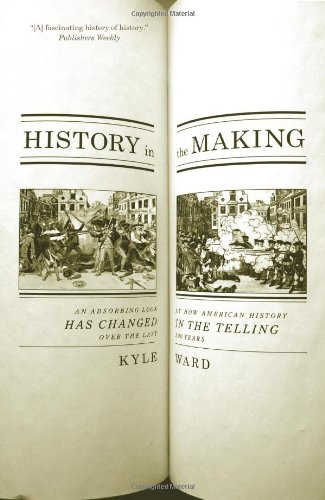
History in the Making: An Absorbing Look at How American History...
Authors:
Kyle Roy Ward
Publisher:
New Press, The
Publication Date:
Not available
ISBN:
1595582150
A fascinating reminder of how contemporary prejudices color the way each generation looks at the nation's past.In this "thought-provoking study"... (Library Journal), historian Kyle Ward—the widely acclaimed co-author of History Lessons—gives us another fascinating look at the biases inherent in the way we learn about our history. Juxtaposing passages from U.S. history textbooks from different eras, History in the Making provides us with intriguing new perspectives on familiar historical events and the ways in which they have been represented over time.The hardcover edition of History in the Making struck a chord among readers of popular history, and Ward was featured on NPR's popular series How the Understanding of U.S. History Changes. "Interesting and useful," according to Booklist, the book "convincingly illustrates how texts change as social and political attitudes evolve.With excerpts that span two hundred years, from Columbus's arrival to the Boston Massacre, from women's suffrage to Japanese internment, History in the Making exposes the stark contrasts between the lessons different generations have been taught about our past. "A good starting point for anyone interested in history and subjectivity" (Kirkus), this immensely readable book is proof positive that your history is not your grandparent's history and won't be your children's history.
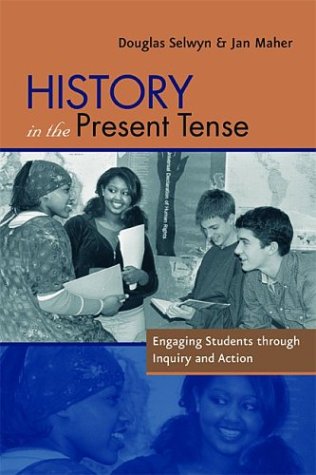
History in the Present Tense: Engaging Students Through Inquiry and...
Authors:
Douglas Selwyn
Publisher:
Heinemann
Publication Date:
Not available
ISBN:
0325005702
In this practical guidebook, Douglas Selwyn and Jan Maher propose a different way of teaching history - start from today and keep asking questions. As... students investigate possible answers, they make connections across miles and centuries. Along the way, they experience that essential insight of the social studies: Point of view has everything to do with how one perceives the world. To this end, each chapter explores projects connecting students' concerns with core content and concepts in history, geography, civics, and economics. Lessons center on the economics of ordinary objects, understanding current events in historical context, creating readers theater, photodocumentaries and more. While students dig deeply into issues of personal relevance, they also master the content and skills mandated in state and national standards. Students learn about history - and about themselves.
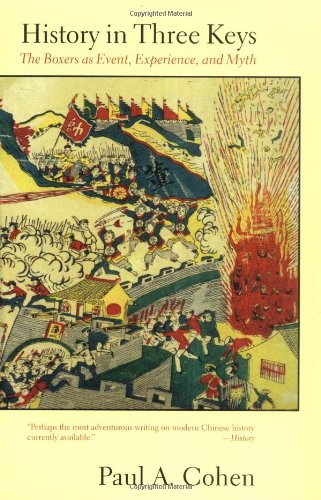
History in Three Keys: The Boxers as Event, Experience, and Myth
Authors:
Paul A. Cohen
Publisher:
Columbia University Press
Publication Date:
Not available
ISBN:
0231106513
HISTORY IN URBAN PLACES: THE HISTORIC DISTRICTS OF THE UNITED STA...
Authors:
DAVID HAMER
Publisher:
Ohio State University Press
Publication Date:
Not available
ISBN:
0814207901
Historic Districts in the United States now number over 8,000; the phenomenon of the Historic District has been of special interest to those concerned... with historic preservation and town planning, but there has been no analysis of such districts' significance from a historian's point of view. History in Urban Places explores the connections between American urban history and historic preservation. Hamer argues that four stages of history are represented by historic districts. The first is the history that the district actually embodies; the second is the story of what happened to the district from the time the historically significant events occurred until the present, when those events are judged to be significant; the third is the process leading to the district's classification as historic; and the fourth is the history of the district once the designation is official.
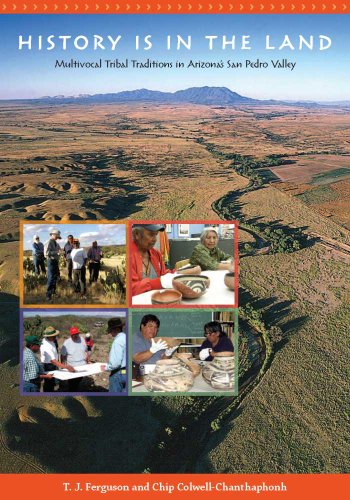
History Is in the Land: Multivocal Tribal Traditions in Arizona's...
Authors:
T. J. Ferguson
Publisher:
University of Arizona Press
Publication Date:
Not available
ISBN:
0816525668
Arizona’s San Pedro Valley is a natural corridor through which generations of native peoples have traveled for more than 12,000 years, and today many... tribes consider it to be part of their ancestral homeland. This book explores the multiple cultural meanings, historical interpretations, and cosmological values of this extraordinary region by combining archaeological and historical sources with the ethnographic perspectives of four contemporary tribes: Tohono O’odham, Hopi, Zuni, and San Carlos Apache. Previous research in the San Pedro Valley has focused on scientific archaeology and documentary history, with a conspicuous absence of indigenous voices, yet Native Americans maintain oral traditions that provide an anthropological context for interpreting the history and archaeology of the valley. The San Pedro Ethnohistory Project was designed to redress this situation by visiting archaeological sites, studying museum collections, and interviewing tribal members to collect traditional histories. The information it gathered is arrayed in this book along with archaeological and documentary data to interpret the histories of Native American occupation of the San Pedro Valley. This work provides an example of the kind of interdisciplinary and politically conscious work made possible when Native Americans and archaeologists collaborate to study the past. As a methodological case study, it clearly articulates how scholars can work with Native American stakeholders to move beyond confrontations over who “owns” the past, yielding a more nuanced, multilayered, and relevant archaeology.
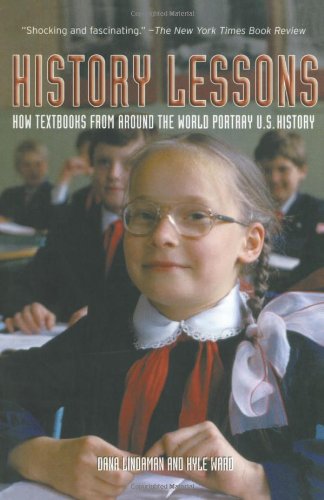
History Lessons: How Textbooks from Around the World Portray U.S....
Authors:
Dana Lindaman
Publisher:
New Press, The
Publication Date:
Not available
ISBN:
1595580824
The widely contrasting approaches to U.S. history that can be found in the textbooks of other nations. "The American invaders...accompanied by their... puppets, finally waged the war...The bastards who crossed the 38th parallel at dawn were stoking the flames of war, jumping around like mad men, yearning to invade the North." --North Korean textbook on the Korean War History Lessons offers a lighthearted and fascinating challenge to the biases we bring to our understanding of American history. The subject of widespread attention when it was first published in 2004--including a full front-page review in the Washington Post Book World and features on NPR's Talk of the Nation and the History Channel--this book gives us a glimpse into classrooms across the globe, where opinions about the United States are first formed. Heralded as "timely and important" (History News Network) and "shocking and fascinating" (New York Times), History Lessons includes selections from Russia, France, Iran, Saudi Arabia, Cuba, Canada, and others, covering such events as the American Revolution, the Cuban Missile Crisis, the Iran hostage crisis, and the Korean War, providing an alternative history of the United States from the Viking explorers to the post-Cold War era. By juxtaposing starkly contrasting versions of the historical events we take for granted, History Lessons affords us a sometimes hilarious, often sobering look at what the world learns about America's past.
History Lessons: Teaching, Learning, and Testing in U.S. High...
Authors:
S.G. Grant
Publisher:
Routledge
Publication Date:
Not available
ISBN:
0805845038
In this book, extended case studies of two veteran teachers and their students are combined with the extant research literature to explore current... issues of teaching, learning, and testing U.S. history. It is among the first to examine these issues together and in interaction. While the two teachers share several similarities, the teaching practices they construct could not be more different. To explore these differences, the author asks what their teaching practices look like, how their instruction influences their students' understandings of history, and what role statewide exams play in their classroom decisions. History Lessons: Teaching, Learning, and Testing in U.S. High School Classrooms is a major contribution to the emerging body of empirical research in the field of social studies education, chiefly in the subject area of history, which asks how U.S. students make sense of history and how teachers construct their classroom practices. Three case study chapters are paired with three essay review chapters intended to help readers analyze the cases by looking at them in the context of the current research literature. Two concluding chapters extend the cases and analyses: the first looks at how and why the teachers profiled in this book construct their individual teaching practices, in terms of three distinct but interacting sets of influences--personal, organizational, and policy factors; the second explores the prospects for promoting what the author defines as ambitious teaching and learning. Many policymakers assume that standards-based reforms support the efforts of ambitious teachers, but until we better understand how they and the students in their classes think and act, that assumption is hollow at best. This book is a must have for faculty and students in the field of social studies education, and broadly relevant across the fields of curriculum studies and educational policy.
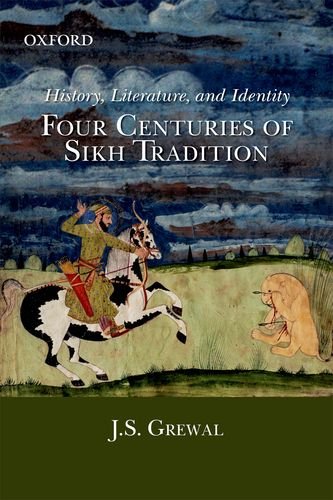
History, Literature, And Identity: Four Centuries of Sikh Tradition
Authors:
J.S. Grewal
Publisher:
Oxford University Press, USA
Publication Date:
Not available
ISBN:
0198070748
This book examines the entire range of Sikh sacred literature produced between the sixteenth- and nineteenth century to give a comprehensive account of... the Sikh tradition. Divided into five parts, it discusses the historical context of the production of Sikh literature and also the development of Sikh identity. The first part of the book (1500-1605) explores the compositions of the first five Gurus and the next analyses the literary genre characterizing the 'phase of confrontation' with the state (1606-75). The third (1675-1708) reveals how Sikhism responded to the external threats and the fourth part (1765-1849) discusses Guru Gobind Singh and literature produced during the period of Khalsa Raj. The last deals with works which have gained entry into the Sikh panth during the colonial period.
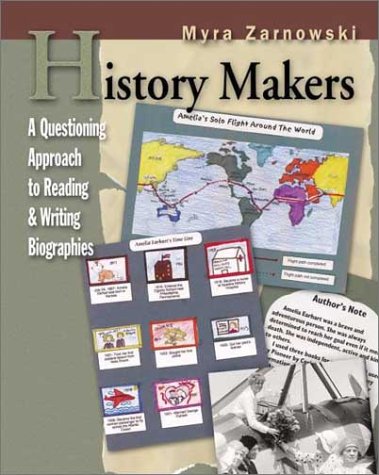
History Makers: A Questioning Approach to Reading & Writing...
Authors:
Myra Zarnowski
Publisher:
Heinemann
Publication Date:
Not available
ISBN:
032500434X
History is anything but boring or hard when taught the way Myra Zarnowski suggests. History students become biographers who read, discuss, research, and... write books about their subjects, providing their own original interpretations of the facts. By digging into the past and reflecting on what they have learned, students get involved in the process - and are eager to do it again and again. Zarnowski's practical text focuses on a questioning approach to teaching history. Rather than merely memorizing facts, students engage in historical sense making using the biography as an entryway into the larger issues of history. Each chapter deals with a new way of questioning and dialoguing with biographies, including such strategies as: what if...? - a means of exploring what might have happened in the past, but didn't powerful pairs, triplets, and quads - a careful examination of competing or complementary biographies about the same person visible authors - a look at how authors put themselves into their biographies by giving us their "take" on the facts sidebars, captions, timelines, and authors' notes - appealing ways of providing information to enhance the text simple questions (without simple answers) - What's the difference? What do you think? What else? - straightforward but challenging questions that grab students' attention and launch in-depth discussions. For each strategy Zarnowski provides a rationale based on existing research, a procedure to follow when using that approach in the classroom, and samples of student work. Plentiful artwork throughout the text, a hefty reference section, and lists of recommended biographies, including picture books and full-length works, will help you get started with using biographies in your own classroom. Support original thinking while meeting the goals of the NCSS standards for activities that involve learning and manipulating information and constructing knowledge. Offer your students the opportunity to become passionate, engaged, and original. Take a more thoughtful, open-ended approach to teaching history with biographies and turn your history students into history makers.
History, manners, and customs of the Indian nations who once...
Authors:
John Gottlieb Ernestus Heckewelder
Publisher:
Nabu Press
Publication Date:
Not available
ISBN:
1176665359
This is a reproduction of a book published before 1923. This book may have occasional imperfections such as missing or blurred pages, poor pictures,... errant marks, etc. that were either part of the original artifact, or were introduced by the scanning process. We believe this work is culturally important, and despite the imperfections, have elected to bring it back into print as part of our continuing commitment to the preservation of printed works worldwide. We appreciate your understanding of the imperfections in the preservation process, and hope you enjoy this valuable book.
History Matters: Patriarchy and the Challenge of Feminism
Authors:
Judith M. Bennett
Publisher:
University of Pennsylvania Press
Publication Date:
Not available
ISBN:
0812220048
Written for everyone interested in women's and gender history, History Matters reaffirms the importance to feminist theory and activism of long-term... historical perspectives. Judith M. Bennett, who has been commenting on developments in women's and gender history since the 1980s, argues that the achievement of a more feminist future relies on a rich, plausible, and well-informed knowledge of the past, and she asks her readers to consider what sorts of feminist history can best advance the struggles of the twenty-first century.Bennett takes as her central problem the growing chasm between feminism and history. Closely allied in the 1970s, each has now moved away from the other. Seeking to narrow this gap, Bennett proposes that feminist historians turn their attention to the intellectual challenges posed by the persistence of patriarchy. She posits a "patriarchal equilibrium" whereby, despite many changes in women's experiences over past centuries, women's status vis-à-vis that of men has remained remarkably unchanged. Although, for example, women today find employment in occupations unimaginable to medieval women, medieval and modern women have both encountered the same wage gap, earning on average only three-fourths of the wages earned by men. Bennett argues that the theoretical challenge posed by this patriarchal equilibrium will be best met by long-term historical perspectives that reach back well before the modern era. In chapters focused on women's work and lesbian sexuality, Bennett demonstrates the contemporary relevance of the distant past to feminist theory and politics. She concludes with a chapter that adds a new twist—the challenges of textbooks and classrooms—to viewing women's history from a distance and with feminist intent.A new manifesto, History Matters engages forthrightly with the challenges faced by feminist historians today. It argues for the radical potential of a history that is focused on feminist issues, aware of the distant past, attentive to continuities over time, and alert to the workings of patriarchal power.
History Meets Fiction
Authors:
Beverley Southgate
Publisher:
Longman
Publication Date:
Not available
ISBN:
1408220121
The relationship between history and fiction has always been contentious and sometimes turbulent, not least because the two have been seen as mutually... exclusive opposites. In this thought-provoking and original study, Beverly Southgate investigates the truth behind fiction and the fact behind history and shows that the culmination of 20 years of historical theorising may well be that history meets fiction at a point where the two become indistinguishable. History Meets Fiction provides a fascinating account of the relationship between history and fiction, a debate fast becoming central to the study of historical theory. It uses extracts and examples from well-known works of fiction to illustrate and reinforce points within the text, and Southgate is an engaging and accessible writer who has the rare ability to present this complex material with clarity.
History Museums in the United States: A CRITICAL ASSESSMENT
Authors:
Not Available
Publisher:
University of Illinois Press
Publication Date:
Not available
ISBN:
0252060644
An inspiring account of America at its worst-and Americans at their best-woven from the stories of Depression- era families who were helped by gifts... from the author's generous and secretive grandfather. Shortly before Christmas 1933 in Depression-scarred Canton, Ohio, a small newspaper ad offered $10, no strings attached, to 75 families in distress. Interested readers were asked to submit letters describing their hardships to a benefactor calling himself Mr. B. Virdot. The author's grandfather Sam Stone was inspired to place this ad and assist his fellow Cantonians as they prepared for the cruelest Christmas most of them would ever witness. Moved by the tales of suffering and expressions of hope contained in the letters, which he discovered in a suitcase 75 years later, Ted Gup initially set out to unveil the lives behind them, searching for records and relatives all over the country who could help him flesh out the family sagas hinted at in those letters. From these sources, Gup has re-created the impact that Mr B. Virdot's gift had on each family. Many people yearned for bread, coal, or other necessities, but many others received money from B. Virdot for more fanciful items-a toy horse, say, or a set of encyclopedias. As Gup's investigations revealed, all these things had the power to turn people's lives around- even to save them. But as he uncovered the suffering and triumphs of dozens of strangers, Gup also learned that Sam Stone was far more complex than the lovable- retiree persona he'd always shown his grandson. Gup unearths deeply buried details about Sam's life-from his impoverished, abusive upbringing to felonious efforts to hide his immigrant origins from U.S. officials-that help explain why he felt such a strong affinity to strangers in need. Drawing on his unique find and his award-winning reportorial gifts, Ted Gup solves a singular family mystery even while he pulls away the veil of eight decades that separate us from the hardships that united America during the Depression. In A Secret Gift, he weaves these revelations seamlessly into a tapestry of Depression-era America, which will fascinate and inspire in equal measure. Watch a Video
 '





