production
/viewbook/list/all/?page=5563
/
/static/
None
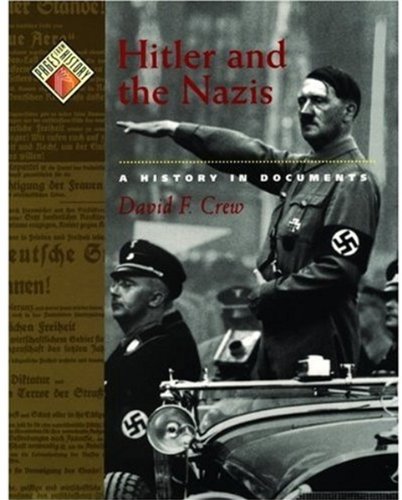
Hitler and the Nazis: A History in Documents (Pages from History)
Authors:
David F. Crew
Publisher:
Oxford University Press, USA
Publication Date:
Not available
ISBN:
0195152859
This latest edition of our classic text draws on analysis of new material released from archives in Moscow, Beijing, Hanoi, and other capitals of... communist-bloc nations—helping to develop a truly international history of the Cold War, a complex and dynamic conflict that lasted more than forty years and continues to shape the foreign policy of the United States and other nations. Another important recent trend considered is the intensive study of the role of ideology in influencing policy on both sides of the conflict. Dr. Levering holds that the liberal internationalism espoused by leading Democrats and Republicans during World War II, plus most Americans’ profound dislike of communism and communists, contributed greatly to America’s decision to oppose postwar Soviet foreign policy. Many recent studies of the Cold War emphasize the role of Marxist-Leninist ideology in postwar Soviet and Chinese foreign policy. Although these new directions in scholarship are important, the basic emphases of the original edition remains the same—U.S. actions and public opinion and relations between the two leading actors in the Cold War, the United States and the Soviet Union. Enhanced as well is coverage of the two large-scale but limited wars that grew out of the conflict, the Korean War and the Vietnam War, and of the most dangerous confrontation of the nuclear age thus far, the Cuban missile crisis.
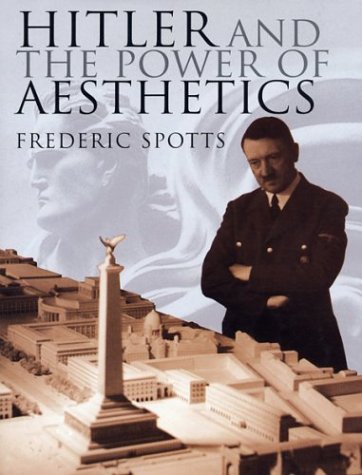
Hitler and the Power of Aesthetics
Authors:
Frederic Spotts
Publisher:
Overlook TP
Publication Date:
Not available
ISBN:
1585675075
A startling reassessment of Hitler’s aims and motivations, Frederic Spotts’s Hitler and the Power of Aesthetics is an adroitly argued and highly... original work that provides the key to a fuller understanding of the Third Reich. Spotts, author of the distinguished Bayreuth: A History of the Wagner Festival, convincingly demonstrates that unlike the traditional biographical view that Hitler was an "unperson" who had no life outside of politics, Hitler’s interest in the arts was as intense as his racism—and that he used the arts to disguise the heinous crimes that were the means to fulfilling his ends.
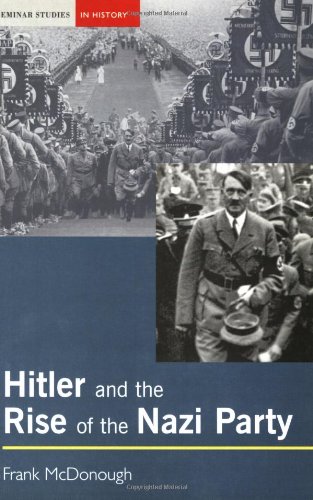
Hitler and the Rise of the Nazi Party
Authors:
Frank McDonough
Publisher:
Longman
Publication Date:
Not available
ISBN:
0582506069
Hitler was without doubt the the most destructively influential figure of the twentieth century. Frank McDonough provides a detailed analysis of the... rise of Adolf Hitler and the Nazi Party. The book begins with an overview of the personality and early life of Adolf Hitler and proceeds to examine the early years of the Nazi Party and the major factors which led to the growth of support for the Nazis, including the organisation and propoganda of the Nazi Party and the growth of electoral support. The book concludes by examining the reasons why Hitler was appointed German Chancellor in January 1943.
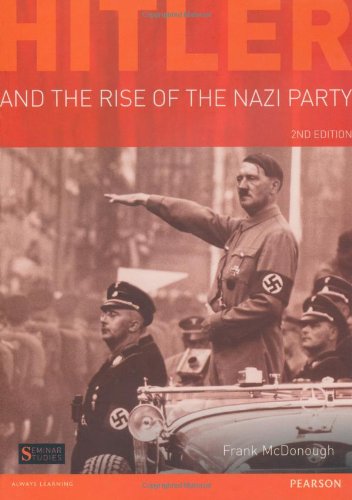
Hitler and the Rise of the Nazi Party (2nd Edition) (Seminar...
Authors:
Frank McDonough
Publisher:
Longman
Publication Date:
Not available
ISBN:
140826921X
Hitler and the Rise of the Nazi Party begins with an overview of the personality and early life of Adolf Hitler and proceeds to examine the early... years of the Nazi Party and the major factors which led to the growth of support for it among ordinary Germans. In particular it looks at organisation and party propaganda during this period and reassesses some of the commonly assumed reasons for Hitler’s appointment as German Chancellor in January 1933.
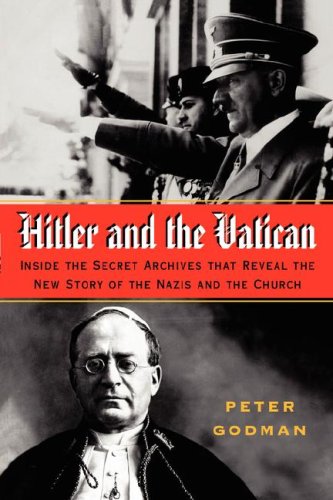
Hitler and the Vatican: Inside the Secret Archives That Reveal the...
Authors:
Peter Godman
Publisher:
Free Press
Publication Date:
Not available
ISBN:
0743245989
For years, the policies of the Catholic Church during the rise and terribly destructive rule of the Nazis have been controversial. Pope Pius XII has... been attacked as "Hitler's Pope," an anti-Semitic enabler who refused to condemn Nazism, much less urge Catholics to resist the German regime. The Church has been accused of standing by while the Nazis steadily revealed their evil designs. Yet all such arguments have been based only on sketchy evidence. The Vatican has kept its internal workings secret and locked away from scrutiny.Until now. In February 2003, the Vatican opened its archives for the crucial years of the Nazi consolidation of power, up until 1939. Peter Godman, thanks to his long experience in Vatican sources and his reputation as an impartial, non-Catholic historian of the Church, was one of the first scholars to explore the new documents. The story they tell is revelatory and surprising and forces a major revision of the history of the 1930s. It is a story that reveals the innermost workings of the Vatican, an institution far more fractured than monolithic, one that allowed legalism to trump moral outrage.Godman's narrative is doubly shocking: At first, the Church planned to condemn Nazism as heretical, and drafted several variations of its charges in the mid-1930s. However, as Mussolini drew close to Hitler, and Pope Pius XI grew more concerned about communism than fascism, the charge was reduced to a denunciation only of bolshevism. The Church abandoned its moral attack on the Nazis and retreated to diplomacy, complaining about treaty violations and delivering weak protests while the horrors of religious persecution mounted. As Godman demonstrates, the policiesof Pius XII were all determined by his predecessor, Pius XI. The Church was misled not so much by "Hitler's Pope" as by a tragic miscalculation and a special relationship with the Italian government. Mussolini toyed with the Church, even proposing that Hitler be excommunicated. Yet in the end, when presented with further evidence of Nazi depredations, Pius XI could only comment, "Kindly God, who has allowed all this to happen at present, undoubtedly has His purpose."Reproducing the key Church documents in full and quoting verbatim conversations between Pius XI and his bishops, "Hitler and the Vatican" is the most extraordinary look inside the secretive Vatican ever written.
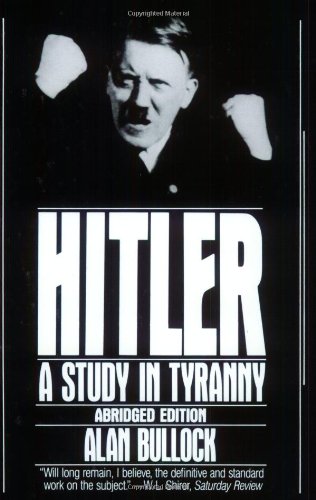
Hitler: A Study in Tyranny
Authors:
Alan Bullock
Publisher:
Harper Perennial
Publication Date:
Not available
ISBN:
0060920203
The classic biography of Hitler that remains, years after its publication, one of the most authoritative and readable accounts of his life. Here in an... abridged edition.
Hitler, Chamberlain and Appeasement (Cambridge Perspectives in...
Authors:
Frank McDonough
Publisher:
Cambridge University Press
Publication Date:
Not available
ISBN:
0521000483
An engaging range of period texts and theme books for AS and A Level history. This book examines the key roles played by Adolf Hitler and Neville... Chamberlain in the events that led to the outbreak of the Second World War. It looks at Hitler's foreign-policy aims, why appeasement became British foreign policy and, most extensively, the role of Chamberlain and appeasement in the unfolding international crisis of the late 1930s. Using a wide range of primary sources, Frank McDonough offers a generally critical interpretation of Chamberlain and appeasement, and suggests that standing up to Hitler earlier may have prevented war. The book also features a detailed analysis of the historical debates surrounding the issue of appeasement.
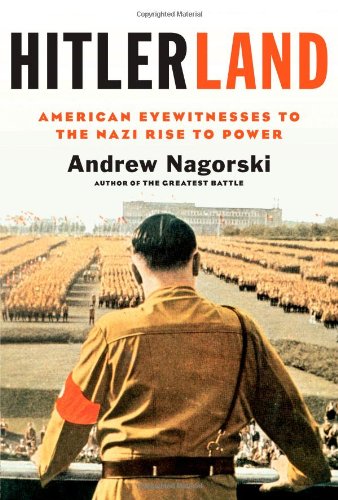
Hitlerland: American Eyewitnesses to the Nazi Rise to Power
Authors:
Andrew Nagorski
Publisher:
Simon & Schuster
Publication Date:
Not available
ISBN:
143919100X
Hitler’s rise to power, Germany’s march to the abyss, as seen through the eyes of Americans—diplomats, military, expats, visiting authors, Olympic... athletes—who watched horrified and up close. By tapping a rich vein of personal testimonies, Hitlerland offers a gripping narrative full of surprising twists—and a startlingly fresh perspective on this heavily dissected era. Some of the Americans in Weimar and then Hitler’s Germany were merely casual observers, others deliberately blind; a few were Nazi apologists. But most slowly began to understand the horror of what was unfolding, even when they found it difficult to grasp the breadth of the catastrophe. Among the journalists, William Shirer, Edgar Mowrer, and Dorothy Thompson were increasingly alarmed. Consul General George Messersmith stood out among the American diplomats because of his passion and courage. Truman Smith, the first American official to meet Hitler, was an astute political observer and a remarkably resourceful military attaché. Historian William Dodd, whom FDR tapped as ambassador in Hitler’s Berlin, left disillusioned; his daughter Martha scandalized the embassy with her procession of lovers from her initial infatuation with Nazis she took up with. She ended as a Soviet spy. On the scene were George Kennan, who would become famous as the architect of containment; Richard Helms, who rose to the top of the CIA; Howard K. Smith, who would coanchor the ABC Evening News. The list of prominent visitors included writers Sinclair Lewis and Thomas Wolfe, famed aviator Charles Lindbergh, the great athlete Jesse Owens, newspaper publisher William Randolph Hearst, and black sociologist and historian W.E.B. Dubois. Observing Hitler and his movement up close, the most perceptive of these Americans helped their reluctant countrymen begin to understand the nature of Nazi Germany as it ruthlessly eliminated political opponents, instilled hatred of Jews and anyone deemed a member of an inferior race, and readied its military and its people for a war for global domination. They helped prepare Americans for the years of struggle ahead.
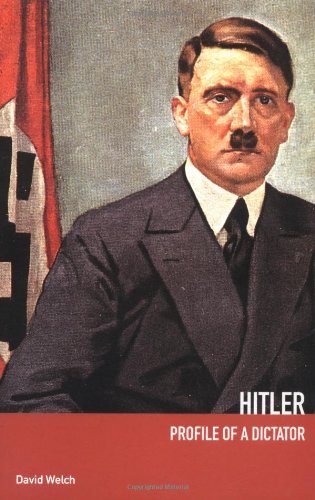
Hitler: Profile of a Dictator
Authors:
David Welch
Publisher:
Routledge
Publication Date:
Not available
ISBN:
0415250757
Hitler: Profile of a Dictator is a fascinating exploration of Hitler and his role in the Third Reich. The book unravels the complex historiographical... debate surrounding this notorious figure by examining his personality, his ideas and the nature of his power.Hitler: Profile of a Dictator surveys Hitler's career chronologically and includes coverage of:* the young idealogue* the Führer State* Hitler's role in the outbreak of the Second World War* Hitler's involvement in the Holocaust.This second edition brings the continuing debate up to date in light of the most recent reseach, and speculates on the implications of the Irving trial.
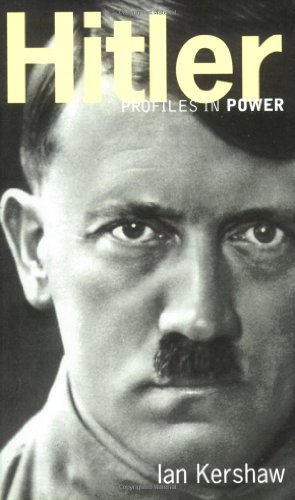
hitler profiles in power
Authors:
Ian Kershaw
Publisher:
Pearson Education Limited
Publication Date:
Not available
ISBN:
0582437563
Hitler'...this short book ought to be read by everybody with any interest, whether general or specialized, in Hitler and the Third Reich.' History... Adolf Hitler has left a lasting mark on the twentieth-century, as the dictator of Germany and instigator of a genocidal war, culminating in the ruin of much of Europe and the globe. This innovative best-seller explores the nature and mechanics of Hitler's power, and how he used it. On the face of it, Adolf Hitler was an unlikely candidate for dictatorial power. Why, of all the fanatics in Germany after the First World War, was it Hitler who found such mass appeal?How did such an unimpressive figure come to take control of the machinery of a complex modern state?Why - contrary to all expectations - was his authority not curtailed by the traditional ruling classes and constitutional constraints?What did his personal role in the shaping of policy amount to?Was he personally taking the key decisions, right to the very end? Professor Kershaw answers these questions to provide a lucid introduction to the character and exercise of Hitler's dictatorial power. Ian Kershaw is Professor of Modern History at the University of Sheffield.He has written widely on Hitler and the Third Reich and is author of the now definitive comprehensive biography Hitler, 1889-1936: Hubris (1998) and a second volume due in 2000. In addition to his publications, he was consultant to the BAFTA-winning BBC-TV series The Nazis: A Warning from History, to the BBC2 programme War of the Century, to ZDF's Hitler: eine Bilanz and to ZDF's series in preparation on the Holocaust.
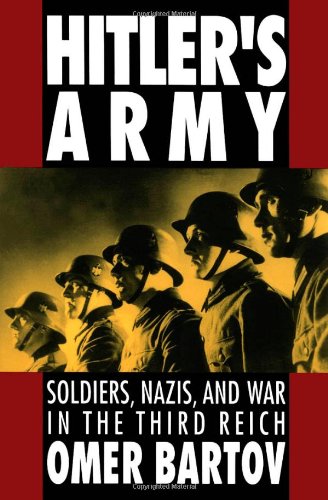
Hitler's Army: Soldiers, Nazis, and War in the Third Reich
Authors:
Omer Bartov
Publisher:
Oxford University Press, USA
Publication Date:
Not available
ISBN:
0195079035
As the Cold War followed on the heels of the Second World War, as the Nuremburg Trials faded in the shadow of the Iron Curtain, both the Germans and the... West were quick to accept the idea that Hitler's army had been no SS, no Gestapo, that it was a professional force little touched by Nazi politics. But in this compelling account Omer Bartov reveals a very different history, as he probes the experience of the average soldier to show just how thoroughly Nazi ideology permeated the army. In Hitler's Army, Bartov focuses on the titanic struggle between Germany and the Soviet Union--where the vast majority of German troops fought--to show how the savagery of war reshaped the army in Hitler's image. Both brutalized and brutalizing, these soldiers needed to see their bitter sacrifices as noble patriotism and to justify their own atrocities by seeing their victims as subhuman. In the unprecedented ferocity and catastrophic losses of the Eastrn front, he writes, soldiers embraced the idea that the war was a defense of civilization against Jewish/Bolshevik barbarism, a war of racial survival to be waged at all costs. Bartov describes the incredible scale and destruction of the invasion of Russia in horrific detail. Even in the first months--often depicted as a time of easy victories--undermanned and ill-equipped German units were stretched to the breaking point by vast distances and bitter Soviet resistance. Facing scarce supplies and enormous casualties, the average soldier sank to ta a primitive level of existence, re-experiencing the trench warfare of World War I under the most extreme weather conditions imaginable; the fighting itself was savage, and massacres of prisoners were common. Troops looted food and supplies from civilians with wild abandon; they mercilessly wiped out villages suspected of aiding partisans. Incredible losses led to recruits being thrown together in units that once had been filled with men from the same communities, making Nazi ideology even more important as a binding force. And they were further brutalized by a military justice system that executed almost 15,000 German soldiers during the war. Bartov goes on to explore letters, diaries, military reports, and other sources, showing how widespread Hitler's views became among common fighting men--men who grew up, he reminds us, under the Nazi regime. In the end, they truly became Hitler's army. In six years of warfare, the vast majority of German men passed through the Wehrmacht and almost every family had a relative who fought in the East. Bartov's powerful new account of how deeply Nazi ideology penetrated the army sheds new light on how deeply it penetrated the nation. Hitler's Army makes an important correction not merely to the historical record but to how we see the world today.
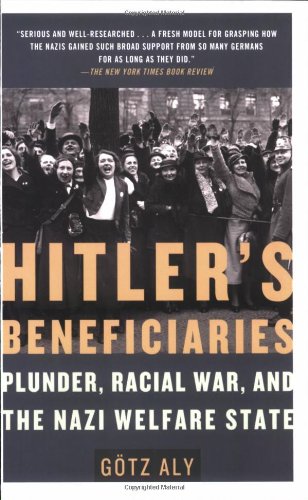
Hitler's Beneficiaries: Plunder, Racial War, and the Nazi Welfare...
Authors:
Götz Aly
Publisher:
Picador
Publication Date:
Not available
ISBN:
0805087265
A "provocative" account of great "intellectual significance," illuminating the economic workings of the Third Reich--and the reasons ordinary Germans... supported the Nazi state (The New York Times Book Review) In this groundbreaking book, historian Götz Aly addresses one of modern history's greatest conundrums: How did Hitler win the allegiance of ordinary Germans? The answer is as shocking as it is persuasive: by engaging in a campaign of theft on an almost unimaginable scale--and by channeling the proceeds into generous social programs--Hitler literally "bought" his people's consent. Drawing on secret files and financial records, Aly shows that while Jews and citizens of occupied lands suffered crippling taxation, mass looting, enslavement, and destruction, most Germans enjoyed an improved standard of living. Buoyed by millions of packages soldiers sent from the front, Germans also benefited from the systematic plunder of Jewish possessions. Any qualms were swept away by waves of tax breaks and government handouts. Hitler's Beneficiaries has been hailed as "startling" by Richard Evans, and as "fascinating and important" by Christopher Browning. Above all, as Omer Bartov testifies, this remarkable book "irreversibly transforms our understanding of the Third Reich."
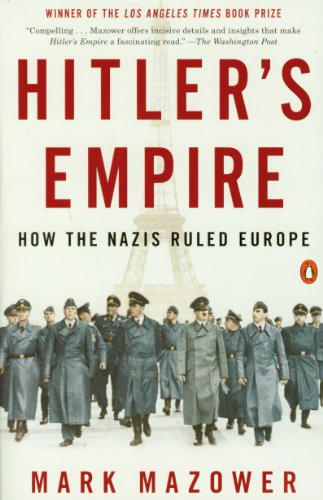
Hitler's Empire: How the Nazis Ruled Europe
Authors:
Mark Mazower
Publisher:
Penguin Books
Publication Date:
Not available
ISBN:
014311610X
Draw ing on an unprecedented range and variety of original research, Hitler?s Empire sheds new light on how the Nazis designed, maintained, and lost... their European dominion?and offers a chilling vision of what the world would have become had they won the war. Mark Mazower forces us to set aside timeworn opinions of the Third Reich, and instead shows how the party drew inspiration for its imperial expansion from America and Great Britain. Yet the Nazis? lack of political sophistication left them unequal to the task of ruling what their armies had conquered, despite a shocking level of cooperation from the overwhelmed countries. A work as authoritative as it is unique, Hitler?s Empire is a surprising?and controversial? new appraisal of the Third Reich?s rise and ultimate fall.
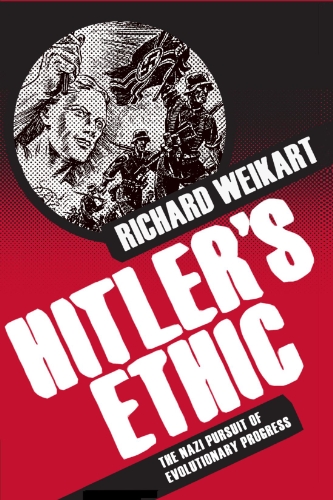
Hitler's Ethic: The Nazi Pursuit of Evolutionary Progress
Authors:
Richard Weikart
Publisher:
Palgrave Macmillan
Publication Date:
Not available
ISBN:
0230112730
In this fascinating follow-up to From Darwin to Hitler, Richard Weikart helps unlock the mystery of Hitler’s evil by vividly demonstrating that the... infamous dictator’s immorality flowed from a seemingly coherent ethic. Hitler was inspired by evolutionary theory to pursue the utopian project of biologically improving the human race, and this ethic underlay or influenced almost every major feature of Nazi policy: eugenics, euthanasia, racism, population expansion, offensive warfare, and racial extermination. This groundbreaking study provides truly fresh insights into one of the darkest chapters of the twentieth century as well as the field of evolutionary studies.
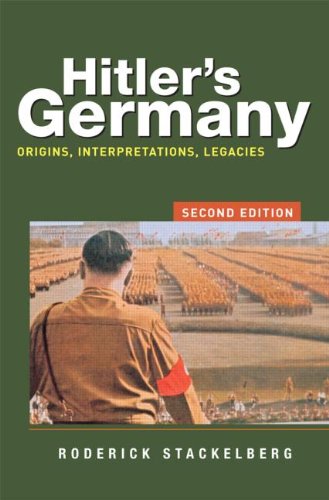
Hitler's Germany: Origins, Interpretations, Legacies
Authors:
Roderick Stackelberg
Publisher:
Routledge
Publication Date:
Not available
ISBN:
041537331X
Praise for the first edition: 'This is an important new textbook on the Nazi period which is geared to intermediate and advanced undergraduates and... will also interest general audiences ... this book is a real winner and deserves wide use.' - Bruce Campbell, German Studies Review 'An excellent job... provides a comprehensive and sophisticated analysis of the origins of National Socialism in Germany, Hitler's rise to power, and the nature of the Nazi regime after 1933... no small achievement.' - David Crew, University of Texas, Austin Hitler’s Germany provides a comprehensive narrative history of Nazi Germany and sets it in the wider context of nineteenth- and twentieth-century German history. Roderick Stackelberg analyzes how it was possible that a national culture of such creativity and achievement could generate such barbarism and destructiveness. This second edition has been updated throughout to incorporate recent historical research and engage with current debates in the field. It includes an expanded introduction focusing on the hazards of writing about Nazi Germany an extended analysis of fascism, totalitarianism, imperialism, and ideology a broadened contextualisation of antisemitism discussion of the Holocaust including the euthanasia program and the role of eugenics new chapters on Nazi social and economic policies and the structure of government as well as on the role of culture, the arts, education and religion additional maps, tables, and a chronology a fully updated bibliography. Exploring the controversies surrounding Nazism and its afterlife in historiography and historical memory, Hitler’s Germany provides students with an interpretive framework for understanding this extraordinary episode in German and European history.
 '





