production
/viewbook/list/all/?page=5625
/
/static/
None
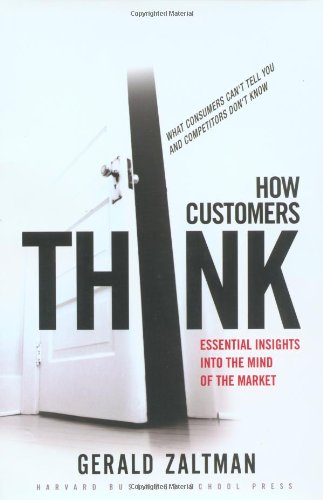
How Customers Think: Essential Insights into the Mind of the Market
Authors:
Gerald Zaltman
Publisher:
Harvard Business Review Press
Publication Date:
Not available
ISBN:
1578518261
How to unlock the hidden 95 per cent of the customer's mind that traditional marketing methods have never reached. This title provides practical... synthesis of the cognitive sciences. Drawing heavily on psychology, neuroscience, sociology, and linguistics, Zaltman combines academic rigor with real-world results to offer highly accessible insights, based on his years of research and consulting work with large clients like Coca-Cola and Procter & Gamble. An all-new tool kit: Zaltman provides research tools - metaphor elicitation, response latency, and implicit association techniques, to name a few - that will be all-new to marketers and demonstrates how innovators can use these tools to get clues from the subconscious when developing new products and finding new solutions, long before competitors do.

How Democratic Is the American Constitution?
Authors:
Robert A. Dahl
Publisher:
Yale University Press
Publication Date:
Not available
ISBN:
0300092180
In this provocative work, an American political scientist poses the question, "Why should we uphold our constitution?". The vast majority of Americans... venerate the American Constitution and the principles it embodies, but many also worry that the United States has fallen behind other nations on crucial democratic issues, including economic equality, racial integration and women's rights. Robert Dahl explores the vital tension between the Americans' belief in the legitimacy of their constitution and their belief in the principles of democracy. Dahl starts with the assumption that the legitimacy of the American Constitution derives solely from its utility as an instrument of democratic governance. Dahl demonstrates that, due to the context in which it was conceived, the constitution came to incorporate significant antidemocratic elements. Because the Framers of the Constitution had no relevant example of a democratic political system on which to model the American government, many defining aspects of the political system were implemented as a result of short-sightedness or last-minute compromise. Dahl highlights those elements of the American system that are most unusual and potentially antidemocratic: the federal system, the bicameral legislature, judicial review, presidentialism, and the electoral college system. The political system that emerged from the world's first great democratic experiment is unique - no other well-established democracy has copied it. How does the American constitutional system function in comparison to other democratic systems? How could the political system be altered to achieve more democratic ends? To what extent did the Framers of the Constitution build features into the political system that militate against significant democratic reform? Refusing to accept the status of the American Constitution as a sacred text, Dahl challenges America to think critically about the origins of its political system and to consider the opportunities for creating a more democratic society.

How Democratic is the American Constitution? Second Edition
Authors:
Robert A. Dahl
Publisher:
Yale University Press
Publication Date:
Not available
ISBN:
0300095244
In this volume, an eminent political scientist questions the extent to which the American Constitution furthers democratic goals. Robert Dahl reveals... the Constitution's potentially antidemocratic elements and explains why they are there, compares the American constitutional system to other democratic systems, and explores how Americans might alter their political system to achieve greater equality among citizens. In a new chapter for this second edition, he shows how increasing differences in state populations revealed by the Census of 2000 have further increased the veto power over constitutional amendments held by a tiny minority of Americans. He then explores the prospects for changing some important political practices that are not prescribed by the written Constitution, though most Americans may assume them to be so.
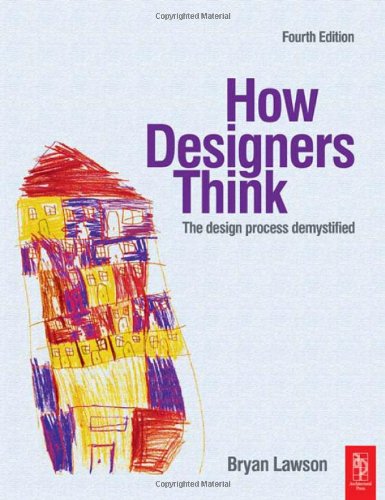
How Designers Think: The Design Process Demystified
Authors:
Bryan Lawson
Publisher:
Architectural Press
Publication Date:
Not available
ISBN:
0750660775
How Designers Think is based on Bryan Lawson's many observations of designers at work, interviews with designers and their clients and collaborators.... This extended work is the culmination of forty years' research and shows the belief that we all can, and do, design, and that we can learn to design better. The creative mind continues to have the power to surprise and this book aims to nurture and extend this creativity. Neither the earlier editions, nor this book, are intended as authoritative prescriptions of how designers should think but provide helpful advice on how to develop an understanding of design.In this fourth edition, Bryan Lawson continues to try and understand how designers think, to explore how they might be better educated and to develop techniques to assist them in their task. Some chapters have been revised and three completely new chapters added. The book is now intended to be read in conjunction with What Designers Know which is a companion volume. Some of the ideas previously discussed in the third edition of How Designers Think are now explored more thoroughly in What Designers Know. For the first time this fourth edition works towards a model of designing and the skills that collectively constitute the design process. * A unique look at the psychology of the designer that provides a greater insight to the process of design* 'Demystifies' the complexity of the subject and uncovers new ways that design can be done* Conclusions are drawn from years of research and provide the very latest debate on the subject

How Did American Slavery Begin & Great Awakening &...
Authors:
Edward Countryman
Publisher:
Bedford/St. Martin's
Publication Date:
Not available
ISBN:
145763936X

How Did American Slavery Begin? (Historians at Work)
Authors:
Edward Countryman
Publisher:
Bedford/St. Martin's
Publication Date:
Not available
ISBN:
0312182619
How did slavery in America begin? Gangs of black slaves toiling on large southern plantations dominate many students' ideas of African American history.... Although ultimately the reality for most forced immigrants of African descent, the institution of slavery was not inevitable in colonial America. Each of the 5 selections in this volume attempts to show students how slavery emerged, how it became the defining condition for African Americans in the British colonies, and how its development influenced and transformed every aspect of society from colonial law and politics to social relations and cultural values.
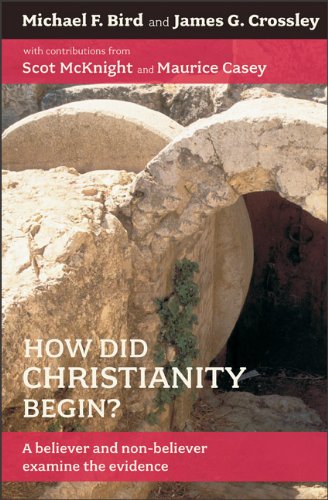
How Did Christianity Begin?: A Believer and Non-Believer Examine...
Authors:
Michael F. Bird
Publisher:
Baker Academic
Publication Date:
Not available
ISBN:
0801045657
• Provides an introduction to Christian origins from two very different points of view • There is increasing interest in Christian origins at the... scholarly and also popular level• Includes contributions from internationally known scholars Scot McKnight and Maurice CaseyThe objective of How Did Christianity Begin? is to present two contrasting perspectives on the history of early Christianity. The contrast is evidently sharp as one co-author comes from a conservative Christian background (Michael Bird), while the other co-author (James Crossley) approaches the matter from a secular standpoint. The volume works sequentially through Christian origins and addresses various topics including the historical Jesus, the resurrection of Jesus, the Apostle Paul, the Gospels, and the early church. Each author in turn examines these subjects and lays out his historical arguments concerning their origin and meaning.The volume also includes short responses from two other scholars (Maurice Casey and Scot McKnight) to the arguments of Bird and Crossley so as to give an even handed and broad evaluation of the arguments and debates that unfold.
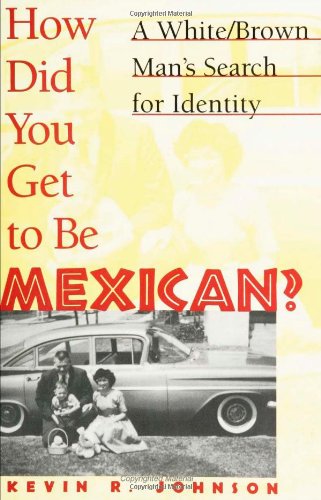
How Did You Get To Be Mexican
Authors:
Kevin Johnson
Publisher:
Temple University Press
Publication Date:
Not available
ISBN:
1566396514
This compelling account of racial identity takes a close look at the question 'Who is a Latino?' and determines where persons of mixed Anglo-Latino... heritage fit into the racial dynamics of the United States. The son of a Mexican-American mother and an Anglo father, Kevin Johnson has spent his life in the borderlands between racial identities. In this insightful book, he uses his experiences as a mixed Latino-Anglo to examine issues of diversity, assimilation, race relations, and affirmative action in contemporary United States. Kevin R. Johnson is Professor of Law at the University of California, Davis. He is author of a number of law review articles on civil procedure, civil rights, race relations, immigration law, and refugee law.

How Different Religions View Death & Afterlife
Authors:
Christopher Jay Johnson
Publisher:
Charles Press Publishers
Publication Date:
Not available
ISBN:
0914783858
This book presents an objective, thoughtful and practical explanation of the often-complicated subjects of death and afterlife. Offering a clear,... concise and comparative overview of the teachings and the death beliefs of 19 different religions, this popular book will be of enormous value to all readers who would like to obtain a better understanding of the various ways in which different faiths understand death and what happens afterward. Unlike many books on the subject of religious beliefs, the discourse here is refreshingly objective and entirely non-proselytizing. Furthermore, each chapter is written by a different expert or scholar who is internationally recognized as an authority on a particular faith. This book will be welcomed by theologians, healthcare professionals, clergy and chaplains of all religious traditions, teachers and students of comparative religion and death and dying, social workers, grief and pastoral counselors and funeral directors.
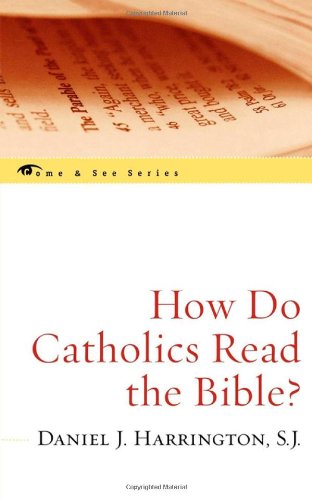
How Do Catholics Read the Bible? (The Come & See Series)
Authors:
S. J. Daniel J. Harrington
Publisher:
Rowman & Littlefield
Publication Date:
Not available
ISBN:
0742548716
Do Catholics really read the Bible? If so, how do they read it and is there anything unique about their approach? What role does the Bible play in... Catholic life, teaching, and culture?As a leading Scripture scholar who also teaches students and preaches to everyday people, Fr. Daniel Harrington, S.J., has made it his life's mission to answer these and many related questions about the Bible and its relationship to Catholic life. Accessibly written, How Do Catholics Read the Bible? blends biblical scholarship with compelling personal anecdotes to equip readers with the tools they need to more fully engage Scripture and the Catholic tradition. With chapters on how the Catholic canon came to be, what the Church teaches about the Bible, appropriate methods for analyzing Scripture passages, and how to incorporate the Bible into everyday life, this book is ideal for individual or group use in parishes and classrooms. Each chapter concludes with questions for reflection and recommendations for further reading.

How Doctors Think
Authors:
Jerome Groopman
Publisher:
Houghton Mifflin Company
Publication Date:
Not available
ISBN:
0618610030
On average, a physician will interrupt a patient describing her symptoms within eighteen seconds. In that short time, many doctors decide on the likely... diagnosis and best treatment. Often, decisions made this way are correct, but at crucial moments they can also be wrong -- with catastrophic consequences. In this myth-shattering book, Jerome Groopman pinpoints the forces and thought processes behind the decisions doctors make. Groopman explores why doctors err and shows when and how they can -- with our help -- avoid snap judgments, embrace uncertainty, communicate effectively, and deploy other skills that can profoundly impact our health. This book is the first to describe in detail the warning signs of erroneous medical thinking and reveal how new technologies may actually hinder accurate diagnoses. How Doctors Think offers direct, intelligent questions patients can ask their doctors to help them get back on track.Groopman draws on a wealth of research, extensive interviews with some of the country’s best doctors, and his own experiences as a doctor and as a patient. He has learned many of the lessons in this book the hard way, from his own mistakes and from errors his doctors made in treating his own debilitating medical problems.How Doctors Think reveals a profound new view of twenty-first-century medical practice, giving doctors and patients the vital information they need to make better judgments together.

How Doctors Think
Authors:
Jerome Groopman
Publisher:
Mariner Books
Publication Date:
Not available
ISBN:
0547053649
How Doctors Think is a window into the mind of the physician and an insightful examination of the all-important relationship between doctors and their... patients. In this myth-shattering work, Jerome Groopman explores the forces and thought processes behind the decisions doctors make. He pinpints why doctors succeed and why they err. Most important, Groopman shows when and how doctors can -- with our help -- avoid snap judgments, embrace uncertainty, communicate effectively, and deploy other skills that can profoundly impact our health.

How Doctors Think: Clinical Judgment and the Practice of Medicine
Authors:
Kathryn Montgomery
Publisher:
Oxford University Press, USA
Publication Date:
Not available
ISBN:
0195187121
How Doctors Think defines the nature and importance of clinical judgment. Although physicians make use of science, this book argues that medicine is not... itself a science but rather an interpretive practice that relies on clinical reasoning. A physician looks at the patient's history along with the presenting physical signs and symptoms and juxtaposes these with clinical experience and empirical studies to construct a tentative account of the illness. How Doctors Think is divided into four parts. Part one introduces the concept of medicine as a practice rather than a science; part two discusses the idea of causation; part three delves into the process of forming clinical judgment; and part four considers clinical judgment within the uncertain nature of medicine itself. In How Doctors Think, Montgomery contends that assuming medicine is strictly a science can have adverse side effects, and suggests reducing these by recognizing the vital role of clinical judgment.

How Does Earth Work: Physical Geology and the Process of Science
Authors:
Gary Smith
Publisher:
Prentice Hall
Publication Date:
Not available
ISBN:
0130341290
It’s about how we know what we know. How Does Earth Work? covers the traditional breadth of introductory geology topics, but takes the... non-traditional and highly effective approach of emphasizing conceptual learning of process rather than rote memorization of facts. Questions drive the development of the concepts: As with science itself, there are no answers without first asking questions. As a result, the concepts are introduced and developed in context ("If this is true, then why...?”), which facilitates deeper exploration of and linking between concepts. Illustrations bear much of the weight of explanation; they are as simple as possible, thoughtfully annotated, and paired wherever possible with photos of the concept manifest in nature.Why Geology? Minerals: Building Blocks of the Planet; Rocks and Rock-Forming Processes; Formation of Magma and Igneous Rocks; Formation of Sediment and Sedimentary Rocks; Formation of Metamorphic Rocks; Earth Materials as Time Keepers; Journey to the Center of Earth; Making Earth; Motion Inside Earth; Deformation of Rocks; Global Tectonics — Plates and Plumes; Tectonics and Surface Relief; Soil Formation and Landscape Stability; Mass Movement: Landscapes in Motion; Streams: Flowing Water Shapes the Landscape; Water Flowing Underground; Glaciers: Sculptors of Continents, Recorders of Climate Change; Shorelines: Changing Landscapes Where Land Meets Sea; Wind: A Global Geologic Process. A comprehensive reference for geology professionals.

How Does Earth Work? Physical Geology and the Process of Science...
Authors:
Gary Smith
Publisher:
Prentice Hall
Publication Date:
Not available
ISBN:
0136003680
With its unconventional yet highly effective approach, How Does Earth Work? demonstrates the process of science as a vehicle for investigating... physical geology. Smith and Pun connect readers to the evidence behind the facts, instead of reproducing known facts—sparking interest in how science is practiced and how we know what we know. Like geology detectives, readers learn to think through the scientific process and uncover evidence that explains Earth’s mysteries. Chapters open with an essay that places a curious investigator in a realistic field or lab setting to observe and ask questions about geological phenomena. Integrated real-world connections link topics to issues of societal concern or relevant experience to increase appreciation of the value of discovering science; and annotated illustrations with thoughtful descriptions help readers observe the hypotheses presented. Why Study Earth? Minerals: Building Blocks of the Planet; Rocks and Rock-Forming Processes; Formation of Magma and Igneous Rocks; Formation of Sediment and Sedimentary Rocks; Formation of Metamorphic Rocks; Earth Materials as Time Keepers; Journey to the Center of Earth; Making Earth; Motion Inside Earth; Deformation of Rocks; Global Tectonics: Plates and Plumes; Tectonics and Surface Relief; Soil Formation and Landscape Stability; Mass Movements: Landscapes in Motion; Streams: Flowing Water Shapes the Landscape; Water Flowing Underground; Glaciers: Cold-Climate Sculptors of Continents; Shorelines: Changing Landscapes Where Land Meets Sea; Wind: A Global Geologic Process; Global Warming: Real-time Change in the Earth System. MARKET: An interesting reference for anyone interested in learning more about Earth’s processes.
 '





