production
/viewbook/list/all/?page=5636
/
/static/
None

How Race Is Lived in America: Pulling Together, Pulling Apart
Authors:
Correspondents of The New York Times
Publisher:
Times Books
Publication Date:
Not available
ISBN:
0805070842
Whether it's the merger of a white church with a black church in the South, the hip-hop dreams of a suburban white teenager, or the struggles of a... biracial partnership in a high-tech start-up, race relations continue to permeate American lives. Powerful yet intimate, the stories in this volume present the real voices of America speaking out on the impact of race in their daily lives. The result of a virtually unprecedented commitment of talent and resources, the New York Times landmark series "How Race Is Lived in America" captured the cultural landscape of the nation in provocative, eye-opening articles following people from all backgrounds and every corner of society. The stories in the series are enhanced by additional commentary from the writers, photographers, and editors; results and analysis of an extensive Times poll on attitudes about race; and selected reader responses. Together they offer a highly personal yet panoramic view of real-world conflict and aspiration.
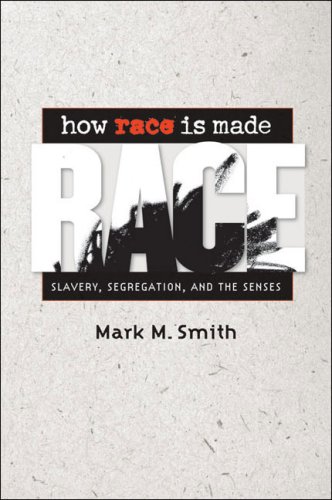
How Race Is Made: Slavery, Segregation, and the Senses
Authors:
Mark M. Smith
Publisher:
The University of North Carolina Press
Publication Date:
Not available
ISBN:
0807859257
For at least two centuries, argues Mark Smith, white southerners used all of their senses--not just their eyes--to construct racial difference and... define race. His provocative analysis, extending from the colonial period to the mid-twentieth century, shows how whites of all classes used the artificial binary of "black" and "white" to justify slavery and erect the political, legal, and social structure of segregation.Based on painstaking research, How Race Is Made is a highly original, always frank, and often disturbing book. After enslaved Africans were initially brought to America, the offspring of black and white sexual relationships (consensual and forced) complicated the purely visual sense of racial typing. As mixed-race people became more and more common and as antebellum race-based slavery and then postbellum racial segregation became central to southern society, white southerners asserted that they could rely on their other senses--touch, smell, sound, and taste--to identify who was "white" and who was not. Sensory racial stereotypes were invented and irrational, but at every turn, Smith shows, these constructions of race, immune to logic, signified difference and perpetuated inequality.Smith argues that the history of southern race relations and the construction of racial difference on which that history is built cannot be understood fully on the basis of sight alone. In order to come to terms with the South's past and present, Smith says, we must explore the sensory dynamics underpinning the deeply emotional construction of race. How Race Is Made takes a bold step toward that understanding.

How Race Survived US History: From Settlement and Slavery to the...
Authors:
David R. Roediger
Publisher:
Verso
Publication Date:
Not available
ISBN:
1844674347
An absorbing chronicle of the role of race in US history, by the foremost historian of race and labor.In this absorbing chronicle of the role of race in... US history, David R. Roediger explores how the idea of race was created and recreated from the 1600's to the present day. From the late seventeenth century—the era in which DuBois located the emergence of "whiteness"—through the American revolution and the emancipatory Civil War, to the civil rights movement and the emergence of the American empire, How Race Survived US History reveals how race did far more than persist as an exception in a progressive national history. Roediger examines how race intersected all that was dynamic and progressive in US history, from democracy and economic development to migration and globalization. Exploring the evidence that the USA will become a majority "non-white" nation in the next fifty years, this masterful account shows how race remains at the heart of American life in the twenty-first century.

How Racism Takes Place
Authors:
George Lipsitz
Publisher:
Temple University Press
Publication Date:
Not available
ISBN:
1439902569
White identity in the United States is place bound, asserts George Lipsitz in How Racism Takes Place. An influential scholar in American and racial... studies, Lipsitz contends that racism persists because a network of practices skew opportunities and life chances along racial lines. That is, these practices assign people of different races to different spaces and therefore allow grossly unequal access to education, employment, transportation, and shelter. Revealing how seemingly race-neutral urban sites contain hidden racial assumptions and imperatives, Lipsitz examines the ways in which urban space and social experience are racialized and emphasizes that aggrieved communities do not passively acquiesce to racism. He recognizes the people and communities that have re-imagined segregated spaces in expressive culture as places for congregation. How Racism Takes Place not only exposes the degree to which this white spatial imagining structures our society but also celebrates the black artists and activists who struggle to create a just and decent society.

How Reading Changed My Life
Authors:
Anna Quindlen
Publisher:
Ballantine Books
Publication Date:
Not available
ISBN:
0345422783
THE LIBRARY OF CONTEMPORARY THOUGHT is a groundbreaking series where America's finest writers and most brilliant minds tackle today's most provocative,... fascinating, and relevant issues. Striking and daring, creative and important, these original voices on matters political, social, economic, and cultural, will enlighten, comfort, entertain, enrage, and ignite healthy debate across the country.
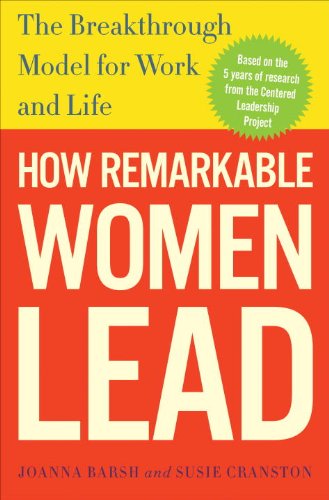
How Remarkable Women Lead: The Breakthrough Model for Work and Life
Authors:
Joanna Barsh
Publisher:
Crown Business
Publication Date:
Not available
ISBN:
0307461696
The Remarkable discoveries about what drives and sustains successful women leaders.Based on five years of proprietary research, How Remarkable Women... Lead speaks to you as no other book has, with its hopeful outlook and unique ideas about success. It's the new "right stuff" of leadership, raising provocative issues such as whether feminine leadership traits (for women and men) are better suited for our fast-changing, hyper-competitive, and increasingly complex world. The authors, McKinsey & Company consultants Joanna Barsh and Susie Cranston, establish the links between joy, happiness, and distinctive performance with the groundbreaking model of Centered Leadership. The book's personal stories and related insights show you the magic that happens when you put the five elements of Centered Leadership–meaning, framing, connecting, engaging, and energizing–to work. They include:• How Alondra de la Parra built on her strengths and passions to infuse her life with meaning and make her way in the male-dominated world of orchestra conducting• How Andrea Jung, the CEO of Avon, avoided a downward spiral when the company turned down by "firing herself" on Friday and re-emerging on Monday as the "new" turnaround CEO• How Ruth Porat's sponsors at Morgan Stanley not only helped her grow but were also her ballast for coping with difficult personal and professional times•How Eileen Naughton recovered after losing her dream job, landing on her feet at Google and open to a new leadership opportunity • How Julie Coates of Woolworth's Australia makes energy key to her professional success, with reserves for her "second shift" as wife and motherHow Remarkable Women Lead is both profoundly moving and actionable. Woman or man, you'll find yourself in its pages and emerge with a practical plan for breaking through at both work and in life.
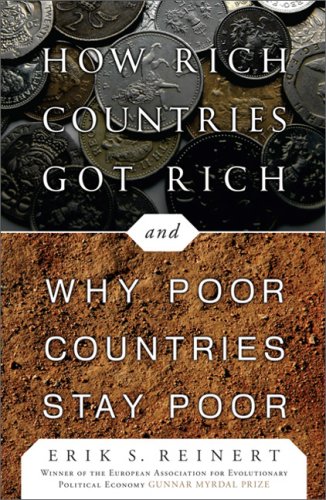
How Rich Countries Got Rich . . . and Why Poor Countries Stay Poor
Authors:
Erik Reinert
Publisher:
PublicAffairs
Publication Date:
Not available
ISBN:
1586486683
In this refreshingly revisionist history, Erik S. Reinert shows how rich countries developed through a combination of government intervention,... protectionism, and strategic investment—rather than through free trade. Yet when our leaders lecture poor countries on the right path to riches they do so in almost perfect ignorance of the fact that our economies were founded on protectionism long before they could afford the luxury of free trade. How Rich Countries Got Rich… will challenge economic orthodoxy and open up the debate on why self-regulating markets are not the best answer to our hopes of worldwide prosperity.
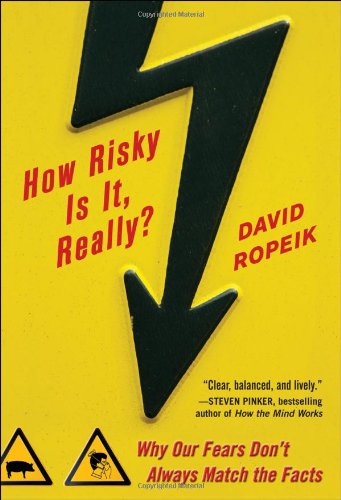
How Risky Is It, Really?: Why Our Fears Don't Always Match the Facts
Authors:
David Ropeik
Publisher:
McGraw-Hill
Publication Date:
Not available
ISBN:
0071629696
"Clear, balanced, and lively." -- Steven Pinker, bestselling author of How the Mind Works ARE YOU AFRAID OF THE "RIGHT" RISKS? Do you... worry more about radiation from nuclear power or from the sun? Are you more afraid of getting cancer than heart disease? Are you safer talking on your cell phone or using a hands-free device when you drive? Do you think global warming is a serious threat to your health? GET THE FACTS BEHIND YOUR FEARS—AND DISCOVER . . . HOW RISKY IS IT, REALLY? International risk expert David Ropeik takes an in-depth look at our perceptions of risk and explains the hidden factors that make us unnecessarily afraid of relatively small threats and not afraid enough of some really big ones. This read is a comprehensive, accessible, and entertaining mixture of what's been discovered about how and why we fear—too much or too little. It brings into focus the danger of The Perception Gap: when our fears don’t match the facts, and we make choices that create additional risks. This book will not decide for you what is really risky and what isn't. That's up to you. HOW RISKY IS IT, REALLY? will tell you how you make those decisions. Understanding how we perceive risk is the first step toward making wiser and healthier choices for ourselves as individuals and for society as a whole. TEST YOUR OWN "RISK RESPONSE" IN DOZENS OF SELF-QUIZZES!
How RTI Works in Secondary Schools
Authors:
Evelyn S. Johnson
Publisher:
Corwin Press
Publication Date:
Not available
ISBN:
1412971004
Featuring real-world examples and instructional strategies for Grades 6–12, this research-based book provides the guidance secondary administrators... need to implement RTI and improve student outcomes.

How Russia Really Works: The Informal Practices That Shaped...
Authors:
Alena V. Ledeneva
Publisher:
Cornell University Press
Publication Date:
Not available
ISBN:
0801473527
During the Soviet era, blat-the use of personal networks for obtaining goods and services in short supply and for circumventing formal procedures-was... necessary to compensate for the inefficiencies of socialism. The collapse of the Soviet Union produced a new generation of informal practices. In How Russia Really Works, Alena V. Ledeneva explores practices in politics, business, media, and the legal sphere in Russia in the 1990s-from the hiring of firms to create negative publicity about one's competitors, to inventing novel schemes of tax evasion and engaging in "alternative" techniques of contract and law enforcement.Ledeneva discovers ingenuity, wit, and vigor in these activities and argues that they simultaneously support and subvert formal institutions. They enable corporations, the media, politicians, and businessmen to operate in the post-Soviet labyrinth of legal and practical constraints but consistently undermine the spirit, if not the letter, of the law. The "know-how" Ledeneva describes in this book continues to operate today and is crucial to understanding contemporary Russia.

How Russia Shaped the Modern World: From Art to Anti-Semitism,...
Authors:
Steven G. Marks
Publisher:
Princeton University Press
Publication Date:
Not available
ISBN:
0691118450
In this sweeping history, Steven Marks tells the fascinating story of how Russian figures, ideas, and movements changed our world in dramatic but often... unattributed ways.On Europe's periphery, Russia was an early modernizing nation whose troubles stimulated intellectuals to develop radical and utopian alternatives to Western models of modernity. These provocative ideas gave rise to cultural and political innovations that were exported and adopted worldwide. Wherever there was discontent with modern existence or traditional societies were undergoing transformation, anti-Western sentiments arose. Many people perceived the Russian soul as the antithesis of the capitalist, imperialist West and turned to Russian ideas for inspiration and even salvation.Steven Marks shows that in this turbulent atmosphere of the past century and a half, Russia's lines of influence were many and reached far. Russia gave the world new ways of writing novels. It launched cutting-edge trends in ballet, theater, and art that revolutionized contemporary cultural life. The Russian anarchist movement benignly shaped the rise of vegetarianism and environmentalism while also giving birth to the violent methods of modern terrorist organizations. Tolstoy's visions of nonviolent resistance inspired Gandhi and the U.S. Civil Rights movement at the same time that Russian anti-Semitic conspiracy theories intoxicated right-wing extremists the world over. And dictators from Mussolini and Hitler to Mao and Saddam Hussein learned from the experiments of the Soviet regime.Moving gracefully from Moscow and St. Petersburg to Beijing and Berlin, London and Luanda, Mexico and Mississippi, Marks takes us on an intellectual tour of the Russian exports that shaped the twentieth century. The result is a richly textured and stunningly original account of the extent to which Russia--as an idea and a producer of ideas--has contributed to the making of the modern world. Placing Russia in its global context, the book betters our understanding of the anti-Western strivings that have been such a prominent feature of recent history.
How Science Takes Stock: The Story of Meta-Analysis
Authors:
Morton M. Hunt
Publisher:
Russell Sage Foundation
Publication Date:
Not available
ISBN:
0871543982
The Microsoft Excel2010 Coursenotes gives you the tools you need to succeed! Course Technology's CourseNotes are a six-panel quick reference card that... reinforces the most important and widely used features of a software application in a visual and user-friendly format. CourseNotes will serve as a great reference tool during and after you completes the course.

How Science Works: Evaluating Evidence in Biology and Medicine
Authors:
Stephen H. Jenkins
Publisher:
Oxford University Press, USA
Publication Date:
Not available
ISBN:
0195158954
One week, red wine is good for the heart. The next week, new reports say it's bad for the health. So which is true? Anyone who's ever read science... news with fascination, or who's ever been confounded by conflicting stories will appreciate this book. Taking a look at some true to life contemporary news stories, the author assesses recent studies on topics ranging from vitamin C and caffeine to pollution and cancer. With straight talk and a passion for the whole project of science, he demysifies the cult of the expert and sheds light on the nitty-gritty details of scientific processes. Any scientist loves a challenge, but the biggest challenge of all, observes Jenkins, is shared by scientists and nonscientitsts alike: how to make practical decisions in light of ambiguous evidence. Promising no simple answers, this book does offer excellent food for thought for people pondering that next glass of wine.
How Sex Changed: A History of Transsexuality in the United States
Authors:
Joanne Meyerowitz
Publisher:
Harvard University Press
Publication Date:
Not available
ISBN:
0674013794
How Sex Changed is a fascinating social, cultural, and medical history of transsexuality in the United States. Joanne Meyerowitz tells a powerful human... story about people who had a deep and unshakable desire to transform their bodily sex. In the last century when many challenged the social categories and hierarchies of race, class, and gender, transsexuals questioned biological sex itself, the category that seemed most fundamental and fixed of all. From early twentieth-century sex experiments in Europe, to the saga of Christine Jorgensen, whose sex-change surgery made headlines in 1952, to today's growing transgender movement, Meyerowitz gives us the first serious history of transsexuality. She focuses on the stories of transsexual men and women themselves, as well as a large supporting cast of doctors, scientists, journalists, lawyers, judges, feminists, and gay liberationists, as they debated the big questions of medical ethics, nature versus nurture, self and society, and the scope of human rights. In this story of transsexuality, Meyerowitz shows how new definitions of sex circulated in popular culture, science, medicine, and the law, and she elucidates the tidal shifts in our social, moral, and medical beliefs over the twentieth century, away from sex as an evident biological certainty and toward an understanding of sex as something malleable and complex. How Sex Changed is an intimate history that illuminates the very changes that shape our understanding of sex, gender, and sexuality today.

How Shall I Live My Life?: On Liberating the Earth from...
Authors:
Derrick Jensen
Publisher:
PM Press
Publication Date:
Not available
ISBN:
1604860030
In this collection of interviews, Derrick Jensen discusses the destructive dominant culture with ten people who have devoted their lives to undermining... it. Whether it is Carolyn Raffensperger and her radical approach to public health, or Thomas Berry on perceiving the sacred; be it Kathleen Dean Moore reminding us that our bodies are made of mountains, rivers, and sunlight; or Vine Deloria asserting that our dreams tell us more about the world than science ever can, the activists and philosophers interviewed in How Shall I Live My Life? each bravely present a few of the endless forms that resistance can and must take.
 '





