production
/viewbook/list/all/?page=5641
/
/static/
None

How the Immune System Works, Includes FREE Desktop Edition...
Authors:
Lauren M. Sompayrac
Publisher:
Wiley-Blackwell
Publication Date:
Not available
ISBN:
0470657294
How the Immune System Works is not a comprehensive textbook. It’s the book thousands of students have used to help them understand what’s in their... big, thick, immunology texts. In this book, Dr. Sompayrac cuts through the jargon and details to reveal, in simple language, the essence of this complex subject.Fifteen easy to follow lectures, featuring the uniquely popular humorous style and engaging analogies developed by Dr Sompayrac, provide an introduction to the ‘bigger picture’, followed by practical discussion on how each of the components interacts with one another. Now featuring full-color diagrams, this book has been rigorously updated for its fourth edition to reflect today’s immunology teaching and includes updated discussion of B and T cell memory, T cell activation, vaccines, immunodeficiency, and cancer.Whether you are completely new to immunology, or require a refresher, How the Immune System Works is an enjoyable way of engaging with the key concepts – you need know nothing of the workings of the immune system to benefit from this book!How the Immune System Works is now accompanied by a FREE enhanced Wiley Desktop Edition - the interactive, digital version of the book - featuring downloadable text and images, highlighting and note taking facilities, book-marking, cross-referencing, in-text searching, and linking to references and glossary terms. It is also available from CourseSmart for instant, online and offline access for studying anytime, anywhere.

How the Indians Lost Their Land: Law and Power on the Frontier
Authors:
Stuart Banner
Publisher:
Belknap Press of Harvard University Press
Publication Date:
Not available
ISBN:
067402396X
Between the early seventeenth century and the early twentieth, nearly all the land in the United States was transferred from American Indians to... whites. This dramatic transformation has been understood in two very different ways--as a series of consensual transactions, but also as a process of violent conquest. Both views cannot be correct. How did Indians actually lose their land? Stuart Banner provides the first comprehensive answer. He argues that neither simple coercion nor simple consent reflects the complicated legal history of land transfers. Instead, time, place, and the balance of power between Indians and settlers decided the outcome of land struggles. As whites' power grew, they were able to establish the legal institutions and the rules by which land transactions would be made and enforced. This story of America's colonization remains a story of power, but a more complex kind of power than historians have acknowledged. It is a story in which military force was less important than the power to shape the legal framework within which land would be owned. As a result, white Americans--from eastern cities to the western frontiers--could believe they were buying land from the Indians the same way they bought land from one another. How the Indians Lost Their Land dramatically reveals how subtle changes in the law can determine the fate of a nation, and our understanding of the past.

How the Irish Became White (Routledge Classics)
Authors:
Noel Ignatiev
Publisher:
Routledge
Publication Date:
Not available
ISBN:
0415963095
'…from time to time a study comes along that truly can be called ‘path breaking,’ ‘seminal,’ ‘essential,’ a ‘must read.’ How the Irish... Became White is such a study.' John Bracey, W.E.B. Du Bois Department of Afro-American Studies, University of Massachussetts, Amherst The Irish came to America in the eighteenth century, fleeing a homeland under foreign occupation and a caste system that regarded them as the lowest form of humanity. In the new country – a land of opportunity – they found a very different form of social hierarchy, one that was based on the color of a person’s skin. Noel Ignatiev’s 1995 book – the first published work of one of America’s leading and most controversial historians – tells the story of how the oppressed became the oppressors; how the new Irish immigrants achieved acceptance among an initially hostile population only by proving that they could be more brutal in their oppression of African Americans than the nativists. This is the story of How the Irish Became White.
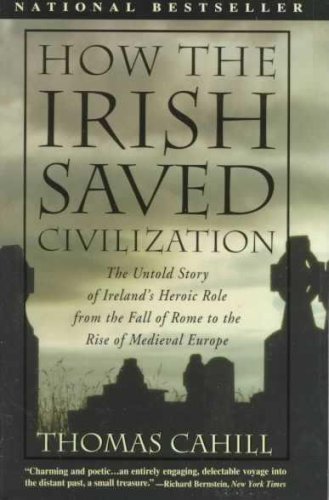
How the Irish Saved Civilization
Authors:
Thomas Cahill
Publisher:
Doubleday
Publication Date:
Not available
ISBN:
0385418493
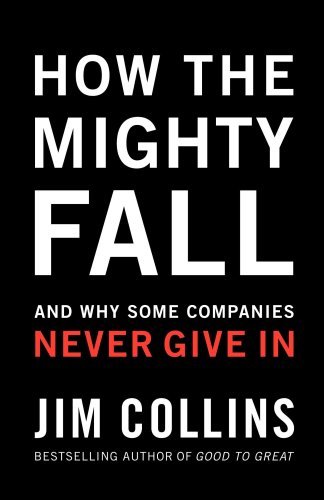
How The Mighty Fall: And Why Some Companies Never Give In
Authors:
Jim Collins
Publisher:
JimCollins
Publication Date:
Not available
ISBN:
0977326411
Decline can be avoided. Decline can be detected. Decline can be reversed. Amidst the desolate landscape of fallen great companies, Jim Collins began to... wonder: How do the mighty fall? Can decline be detected early and avoided? How far can a company fall before the path toward doom becomes inevitable and unshakable? How can companies reverse course? In How the Mighty Fall, Collins confronts these questions, offering leaders the well-founded hope that they can learn how to stave off decline and, if they find themselves falling, reverse their course. Collins' research project—more than four years in duration—uncovered five step-wise stages of decline: Stage 1: Hubris Born of Success Stage 2: Undisciplined Pursuit of More Stage 3: Denial of Risk and Peril Stage 4: Grasping for Salvation Stage 5: Capitulation to Irrelevance or Death By understanding these stages of decline, leaders can substantially reduce their chances of falling all the way to the bottom. Great companies can stumble, badly, and recover. Every institution, no matter how great, is vulnerable to decline. There is no law of nature that the most powerful will inevitably remain at the top. Anyone can fall and most eventually do. But, as Collins' research emphasizes, some companies do indeed recover—in some cases, coming back even stronger—even after having crashed into the depths of Stage 4. Decline, it turns out, is largely self-inflicted, and the path to recovery lies largely within our own hands. We are not imprisoned by our circumstances, our history, or even our staggering defeats along the way. As long as we never get entirely knocked out of the game, hope always remains. The mighty can fall, but they can often rise again.

How the Millennium Comes Violently: From Jonestown to Heaven's Gate
Authors:
Catherine Wessinger
Publisher:
Seven Bridges Pr Llc
Publication Date:
Not available
ISBN:
1889119245
In the summer of 1964, the turmoil of the civil rights movement reached its peak in Mississippi, with activists across the political spectrum claiming... that God was on their side in the struggle over racial justice. This was the summer when violence against blacks increased at an alarming rate and when the murder of three civil rights workers in Mississippi resulted in national media attention. Charles Marsh takes us back to this place and time, when the lives of activists on all sides of the civil rights issue converged and their images of God clashed. He weaves their voices into a gripping narrative: a Ku Klux Klansman, for example, borrows fiery language from the Bible to link attacks on blacks to his "priestly calling"; a middle-aged woman describes how the Gospel inspired her to rally other African Americans to fight peacefully for their dignity; a SNCC worker tells of harrowing encounters with angry white mobs and his pilgrimage toward a new racial spirituality called Black Power. Through these emotionally charged stories, Marsh invites us to consider the civil rights movement anew, in terms of religion as a powerful yet protean force driving social action.The book's central figures are Fannie Lou Hamer, who "worked for Jesus" in civil rights activism; Sam Bowers, the Imperial Wizard of the White Knights of the Ku Klux Klan of Mississippi; William Douglas Hudgins, an influential white Baptist pastor and unofficial theologian of the "closed society"; Ed King, a white Methodist minister and Mississippi native who campaigned to integrate Protestant congregations; and Cleveland Sellers, a SNCC staff member turned black militant.Marsh focuses on the events and religious convictions that led each person into the political upheaval of 1964. He presents an unforgettable American social landscape, one that is by turns shameful and inspiring. In conclusion, Marsh suggests that it may be possible to sift among these narratives and lay the groundwork for a new thinking about racial reconciliation and the beloved community. He maintains that the person who embraces faith's life-affirming energies will leave behind a most powerful legacy of social activism and compassion.
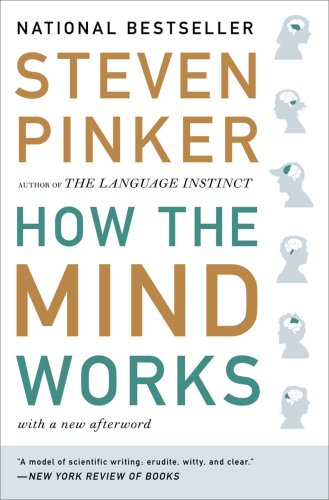
How the Mind Works
Authors:
Steven Pinker
Publisher:
W. W. Norton & Company
Publication Date:
Not available
ISBN:
0393334775
“A model of scientific writing: erudite, witty, and clear.” —New York Review of BooksThe Pulitzer Prize finalist and national bestseller How... the Mind Works is a fascinating, provocative work exploring the mysteries of human thought and behavior. How do we see in three dimensions? How do we remember names and faces? How is it, indeed, that we ponder the nature of our own consciousness? Why do we fall in love? In this bold, extraordinary book, Pinker synthesizes the best of cognitive science and evolutionary biology to explain what the mind is, how it has evolved, and, ultimately, how it works. This edition includes a new afterword that explores the impact of the book and its relevance today.

How Then, Shall We Live?: Four Simple Questions That Reveal the...
Authors:
Wayne Muller
Publisher:
Bantam
Publication Date:
Not available
ISBN:
0553375059
We all long to experience a sense of inner wholeness and guidance, but today's notions of healing and recovery too often keep us focused on our... brokenness, on our deficiencies rather than our strengths. Wayne Muller's luminous new book gently guides us to the place where we are already perfect, already blessed with the wisdom we need to live a life of meaning, purpose and grace.He starts, as do so many spiritual teachers, with simple questions: Who am I? What do I love? How shall I live, knowing I will die? What is my gift to the family of the earth? He then takes us deeper, exploring each question through transformative true stories. We meet men and women--Wayne's neighbors, friends, patients--who have discovered love, courage, and kindness even in the midst of sorrow and loss. And through them we glimpse that relentless spark of spiritual magic that burns within each of us.Woven throughout are contemplations, daily practices, poems, and teachings from the great wisdom teachings. Page by page, we become more awake to the joy and mystery of this precious human life, and to the unique gifts every one of us has to offer the world.

How Then Should We Choose?: Three Views on God's Will and Decision...
Authors:
Not Available
Publisher:
Kregel Publications
Publication Date:
Not available
ISBN:
082542898X
Henry and Richard Blackaby, Garry Friesen, and Gordon T. Smith present three principal views on God's will and how his will should affect our everyday... decisions as Christians.

How the Ocean Works: An Introduction to Oceanography
Authors:
Mark Denny
Publisher:
Princeton University Press
Publication Date:
Not available
ISBN:
069112647X
The world's oceans account for roughly 71 percent of the planet's surface and 99 percent of its livable volume. Any study of this huge habitat requires... a solid foundation in the principles that underlie marine biology and physical and chemical oceanography, yet until now undergraduate textbooks have largely presented compilations of facts rather than explanations of principles. How the Ocean Works fills this gap, providing a concise and accessible college-level introduction to marine science that is also ideal for general readers. How are winds and currents driven? What is the dilemma of the two-layered ocean? Mark Denny explains key concepts like these in rich and fascinating detail. He explores early scientific knowledge of oceans, photosynthesis, trophic interactions and energy flow, and the impacts of human activities on marine and atmospheric systems. Focusing each chapter on a major topic and carefully explaining the principles and theory involved, Denny gives readers the conceptual building blocks needed to develop a coherent picture of the living ocean. How the Ocean Works is an indispensable resource that teaches readers how to think about the ocean--its biology, mechanics, and conservation.Provides a concise, up-to-date introduction to marine science Develops the conceptual basis needed to understand how the ocean works Explains fundamental principles and theory Includes color illustrations and informative diagrams Serves as a college textbook and a reference for general readers
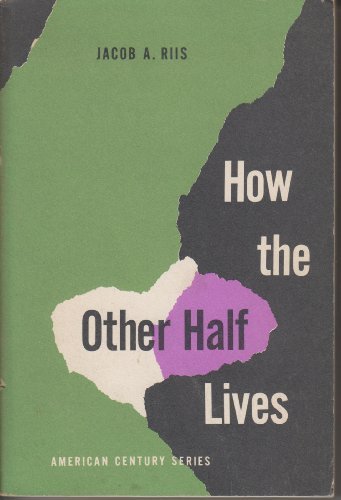
How the Other Half Lives
Authors:
Jacob A. Riis
Publisher:
Hill & Wang Pub
Publication Date:
Not available
ISBN:
0809000121
THERE is another line not always so readily drawn in the tenements, yet the real boundary line of the Other Half: the one that defines the "flat." The... law does not draw it at all, accounting all flats tenements without distinction. The health officer draws it from observation, lumping all those which in his judgment have nothing, or not enough, to give them claim upon the name, with the common herd.
How the Other Half Lives (Bedford Series in History & Culture)
Authors:
Jacob A. Riis
Publisher:
Bedford/St. Martin's
Publication Date:
Not available
ISBN:
0312117000
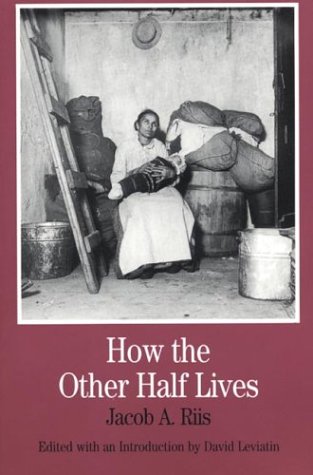
Jacob Riis's famed 1890 photo-text addressed the problems of immigration, technological innovation, industry, and urban life at the dawn of the... twentieth century. American studies instructor and freelance photographer David Leviatin edited this edition to be as faithful to the original text as possible; all interior photos are uncropped reprints made from Riis's original negatives, lantern slides, and prints.

How the Other Half Lives (Norton Critical Editions)
Authors:
Jacob Riis
Publisher:
W. W. Norton & Company
Publication Date:
Not available
ISBN:
0393930262
How the Other Half Lives occupies a premier place on a small list of American books—along with Uncle Tom’s Cabin, The Jungle, Silent Spring, The... Feminine Mystique, and Unsafe at Any Speed—that changed public opinion, influenced public policy, and left an indelible mark on history.The text of this Norton Critical Edition is based on the 1901 Scribner edition and includes all 47 of Riis’s unforgettable photographs, along with 2 maps. It is accompanied by Hasia Diner’s insightful introduction and detailed explanatory annotations. An unusually rich “Contexts” section includes autobiographical writings by Riis, observations of “the other half” by Riis contemporaries, including William T. Elsing, Thomas Byrnes, William Dean Howells, Lilliam W. Betts, John Spargo, and Lillian Wald, and contemporary evaluations of Riis and his seminal book by, among others, Warren P. Adams, Joseph B. Gilder, Margaret Burton, and Theodore Roosevelt. From the many hundreds of books and articles published on Riis and How the Other Half Lives, Hasia Diner has selected nineteen interpretations of the central aspects of author and work. Among these are Jacob Prager on Riis as immigrant and crusader; Louise Ware on Riis the police reporter, reformer, and “useful citizen”; Roy Lubove on the Progressive Movement and tenement reform; Richard Tuerk on Riis and the Jews; Maren Strange on American social documentary photography; Katrina Irving on immigrant mothers; and Timothy J. Gilfoyle on “street culture” and immigrant children. A Chronology of Riis’s life and work and a Selected Bibliography are also included. 49 illustrations; 2 maps

How the Other Half Lives: Studies Among the Tenements of New York
Authors:
Jacob A. Riis
Publisher:
Penguin Classics
Publication Date:
Not available
ISBN:
0140436790
First published in 1890, Jacob Riis's remarkable study of the horrendous living conditions of the poor in New York City had an immediate and... extraordinary impact on society, inspiring reforms that affected the lives of millions of people.
How the Other Half Lives: Studies Among the Tenements of New York
Authors:
Jacob Riis
Publisher:
Dover Publications
Publication Date:
Not available
ISBN:
0486220125
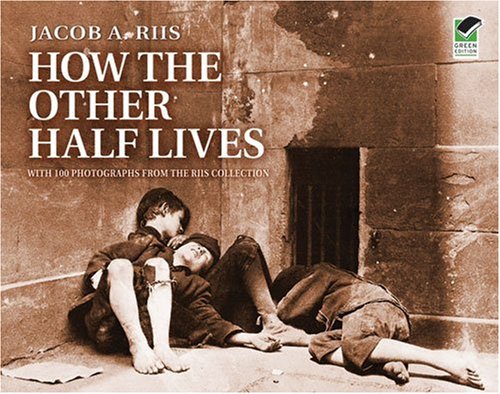
This famous journalistic record of the filth and degradation of New York's slums at the turn of the century is a classic in social thought and a... monument of early American photography. Captured on film by photographer, journalist, and reformer Jacob Riis, more than 100 grim scenes reveal man's struggle to survive.
 '





