production
/viewbook/list/all/?page=5647
/
/static/
None
How To Be The Salesman They Remember
Authors:
Walt Atkins
Publisher:
Xlibris, Corp.
Publication Date:
Not available
ISBN:
1469184435
This book explores new and leading edge marketing research approaches as successfully practiced by visionaries of academia and the research industry.... Ideal as either a supplementary text for students or as a guidebook for practitioners, this book showcases the excitement of a field where discoveries abound and researchers are valued for solving weighty problems and minimizing risks. The authors offer rich new tools to measure and analyze consumer attitudes, combined with existing databases, online bulletin boards, social media, neuroscience, radio frequency identification (RFID) tags, behavioral economics, and more. The reader will profit from the numerous contemporary case studies that demonstrate the key role of marketing research in corporate decision-making.
How to Be Useful: A Beginner's Guide to Not Hating Work
Authors:
Megan Hustad
Publisher:
Houghton Mifflin Harcourt
Publication Date:
Not available
ISBN:
0618713506
There's a lot of career advice out there. Much of it dumb. But what if someone read all the advice books -- over a hundred years' worth -- and put all... the good ideas in one place? Could you finally escape the cube? Stop mailing things? Be happier?In How to Be Useful, Megan Hustad dismantles the myths of getting ahead and helps you navigate the murky waters of office life. Humorous yet wise, irreverent yet marvelously practical, this book will help you learnWhy "just being yourself" is a terrible idea.How to be smart, but not too smart.Why you shouldn't be "nice."When not to be good at your job.How to screw up with grace and dignity.Why shoes matter.The right and wrong ways to talk trash about yourself.That ambition, practiced wisely, is a noble thing.
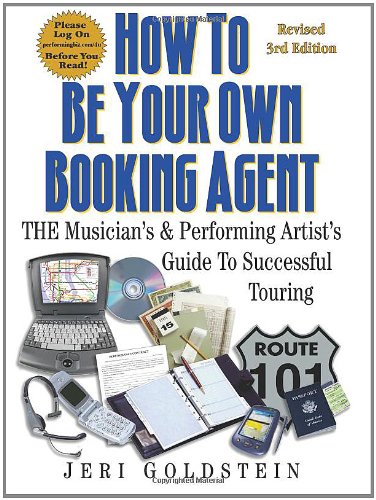
How To Be Your Own Booking Agent: THE Musician's & Performing...
Authors:
Jeri Goldstein
Publisher:
New Music Times, Incorporated, The
Publication Date:
Not available
ISBN:
0960683054
The award-winning, How To Be Your Own Booking Agent THE Musician’s & Performing Artist’s Guide To Successful Touring is one of the top selling... music and performing arts business books. It is regularly selected by professors teaching music business and the performing arts and is continually recommended by musicians and performing artists worldwide. Goldstein’s unique step-by-step guide and resource book is artfully organized into 488 pages of savvy advice, realistic methods and action plans for the performing artist and is now available in its Revised 3rd Edition. It provides current immigration regulations for touring artists, a completely rewritten Internet Marketing chapter along with exciting new insights from experienced professionals in the entertainment industry. The 24 chapters have completely updated resource sections following each chapter packed with recommended books, directories, web sites and new conferences to help performers achieve their career goals.

How to Break a Terrorist: The U.S. Interrogators Who Used Brains,...
Authors:
Matthew Alexander
Publisher:
Free Press
Publication Date:
Not available
ISBN:
1416573151
Finding Abu Musab al Zarqawi, the leader of Al Qaeda in Iraq, had long been the U.S. military's top priority -- trumping even the search for Osama bin... Laden. No brutality was spared in trying to squeeze intelligence from Zarqawi's suspected associates. But these "force on force" techniques yielded exactly nothing, and, in the wake of the Abu Ghraib scandal, the military rushed a new breed of interrogator to Iraq. Matthew Alexander, a former criminal investigator and head of a handpicked interrogation team, gives us the first inside look at the U.S. military's attempt at more civilized interrogation techniques -- and their astounding success. The intelligence coup that enabled the June 7, 2006, air strike onZarqawi's rural safe house was the result of several keenly strategized interrogations, none of which involved torture or even "control" tactics. Matthew and his team decided instead to get to know their opponents. Who were these monsters? Who were they working for? What were they trying to protect? Every day the "'gators" matched wits with a rogues' gallery of suspects brought in by Special Forces ("door kickers"): egomaniacs, bloodthirsty adolescents, opportunistic stereo repairmen, Sunni clerics horrified by the sectarian bloodbath, Al Qaeda fanatics, and good people in the wrong place at the wrong time. With most prisoners, negotiation was possible and psychological manipulation stunningly effective. But Matthew's commitment to cracking the case with these methods sometimes isolated his superiors and put his own career at risk. This account is an unputdownable thriller -- more of a psychological suspense story than a war memoir. And indeed, the story reaches far past the current conflict in Iraq with a reminder that we don't have to become our enemy to defeat him. Matthew Alexander and his ilk, subtle enough and flexible enough to adapt to the challenges of modern, asymmetrical warfare, have proved to be our best weapons against terrorists all over the world.

How to Breathe Underwater
Authors:
Julie Orringer
Publisher:
Vintage
Publication Date:
Not available
ISBN:
1400034361
Nine brave, wise, and spellbinding stories make up this award-winning debut. In "When She is Old and I Am Famous" a young woman confronts the... inscrutable power of her cousin's beauty. In "Note to Sixth-Grade Self" a band of popular girls exert their social power over an awkward outcast. In "Isabel Fish" fourteen-year-old Maddy learns to scuba dive in order to mend her family after a terrible accident. Alive with the victories, humiliations, and tragedies of youth, How to Breathe Underwater illuminates this powerful territory with striking grace and intelligence.

How to Build a Digital Library, Second Edition (Morgan Kaufmann...
Authors:
Ian H. Witten
Publisher:
Morgan Kaufmann
Publication Date:
Not available
ISBN:
0123748577
How to Build a Digital Library is the only book that offers all the knowledge and tools needed to construct and maintain a digital library, regardless... of the size or purpose. It is the perfectly self-contained resource for individuals, agencies, and institutions wishing to put this powerful tool to work in their burgeoning information treasuries. The Second Edition reflects new developments in the field as well as in the Greenstone Digital Library open source software. In Part I, the authors have added an entire new chapter on user groups, user support, collaborative browsing, user contributions, and so on. There is also new material on content-based queries, map-based queries, cross-media queries. There is an increased emphasis placed on multimedia by adding a "digitizing" section to each major media type. A new chapter has also been added on "internationalization," which will address Unicode standards, multi-language interfaces and collections, and issues with non-European languages (Chinese, Hindi, etc.). Part II, the software tools section, has been completely rewritten to reflect the new developments in Greenstone Digital Library Software, an internationally popular open source software tool with a comprehensive graphical facility for creating and maintaining digital libraries. As with the First Edition, a web site, implemented as a digital library, will accompany the book and provide access to color versions of all figures, two online appendices, a full-text sentence-level index, and an automatically generated glossary of acronyms and their definitions. In addition, demonstration digital library collections will be included to demonstrate particular points in the book. to access the online content please visit, http://www.greenstone.org/howto *Outlines the history of libraries-- both traditional and digital-- and their impact on present practices and future directions. *Written for both technical and non-technical audiences and covers the entire spectrum of media, including text, images, audio, video, and related XML standards. *Web-enhanced with software documentation, color illustrations, full-text index, source code, and more.
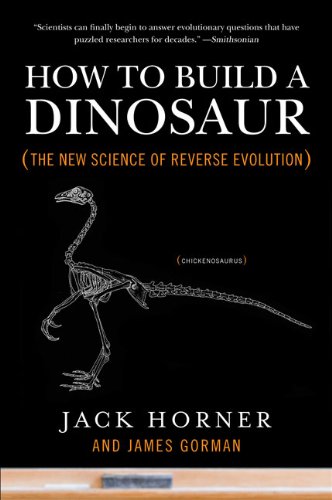
How to Build a Dinosaur: The New Science of Reverse Evolution
Authors:
Jack Horner
Publisher:
Plume
Publication Date:
Not available
ISBN:
0452296013
A world-renowned paleontologist reveals groundbreaking science that trumps science fiction: how to grow a living dinosaur Over a decade after Jurassic... Park, Jack Horner and his colleagues in molecular biology labs are in the process of building the technology to create a real dinosaur. Based on new research in evolutionary developmental biology on how a few select cells grow to create arms, legs, eyes, and brains that function together, Jack Horner takes the science a step further in a plan to "reverse evolution" and reveals the awesome, even frightening, power being acquired to recreate the prehistoric past. The key is the dinosaur's genetic code that lives on in modern birds- even chickens. From cutting-edge biology labs to field digs underneath the Montana sun, How to Build a Dinosaur explains and enlightens an awesome new science.
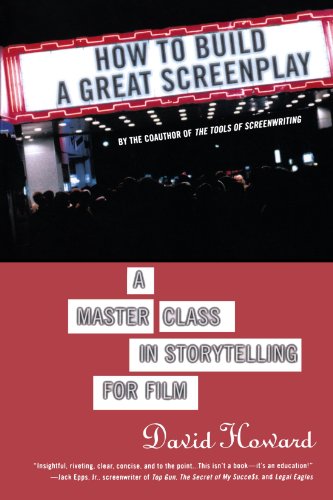
How to Build a Great Screenplay: A Master Class in Storytelling for...
Authors:
David Howard
Publisher:
St. Martin's Griffin
Publication Date:
Not available
ISBN:
031235262X
Acclaimed USC screenwriting teacher David Howard has guided hundreds of students to careers in writing for film and television. Drawing on decades of... practical experience and savvy, How to Build a Great Screenplay deconstructs the craft of screenwriting and carefully reveals how to build a good story from the ground up. Howard eschews the "system" offered by other books, emphasizing that a great screenplay requires dozens of unique decisions by the author. He offers in-depth considerations of:* characterization * story arc * plotting and subplotting * dealing with coincidence in story plotting* classical vs. revolutionary screenplay structure * tone, style, and atmosphere * the use of time on screen* the creation of drama and tension * crucial moments in storytellingThroughout the book, Howard clarifies his lessons through examples from some of the most successful Hollywood and international script-oriented films, including Pulp Fiction, American Beauty, Trainspotting, North by Northwest, Chinatown, and others. The end result is what could very well become the classic text in the field---a bible for the burgeoning screenwriter.

How to Build a Habitable Planet
Authors:
Wallace S. Broecker
Publisher:
Columbia University Press
Publication Date:
Not available
ISBN:
0961751126
"A classic work of American literature . . . in full, as the author wrote it." —New York Times......"This is Red Badge as Crane actually wrote it."... — Boston GlobeThe Red Badge of Courage is an American masterpiece-and yet the novel familiar to so many readers is not, in fact, the story Crane wrote. That story is the one printed here, as Henry Binder has recovered it, as fully as possible, from the author's final handwritten manuscript. Just prior to the first publication of The Red Badge of Courage in 1895, many key passages, phrases, words, and an entire chapter were deleted. Almost certainly, these deletions were made at the suggestions of Crane's editor, with the intention of satisfying a wider contemporary audience with a simpler story. The deletions were made hastily, not as careful or deliberate improvements. In this new, "authentic" (Herbert Mitgang, New York Times) text, Binder has restored the deleted material and followed the manuscript in many details; he has thus given us the version of Crane's gripping work in which the author's controlling vision is unmistakably present. Binder describes his editorial procedures and discusses the "new novel" that is the result, as well as providing textual notes.

How to Build a Habitable Planet: The Story of Earth from the Big...
Authors:
Charles H. Langmuir
Publisher:
Princeton University Press
Publication Date:
Not available
ISBN:
0691140065
Since its first publication more than twenty-five years ago, How to Build a Habitable Planet has established a legendary reputation as an accessible yet... scientifically impeccable introduction to the origin and evolution of Earth, from the Big Bang through the rise of human civilization. This classic account of how our habitable planet was assembled from the stuff of stars introduced readers to planetary, Earth, and climate science by way of a fascinating narrative. Now this great book has been made even better. Harvard geochemist Charles Langmuir has worked closely with the original author, Wally Broecker, one of the world's leading Earth scientists, to revise and expand the book for a new generation of readers for whom active planetary stewardship is becoming imperative. Interweaving physics, astronomy, chemistry, geology, and biology, this sweeping account tells Earth's complete story, from the synthesis of chemical elements in stars, to the formation of the Solar System, to the evolution of a habitable climate on Earth, to the origin of life and humankind. The book also addresses the search for other habitable worlds in the Milky Way and contemplates whether Earth will remain habitable as our influence on global climate grows. It concludes by considering the ways in which humankind can sustain Earth's habitability and perhaps even participate in further planetary evolution. Like no other book, How to Build a Habitable Planet provides an understanding of Earth in its broadest context, as well as a greater appreciation of its possibly rare ability to sustain life over geologic time.

How to Build a Long-Lasting Fire: Writing Poems from Your Life
Authors:
Carol Morrison
Publisher:
NTC/Contemporary Publishing Company
Publication Date:
Not available
ISBN:
0844259357

How to Build a Nuclear Bomb: And Other Weapons of Mass Destruction...
Authors:
Dr. Frank Barnaby Dr.
Publisher:
Nation Books
Publication Date:
Not available
ISBN:
1560256036
Weapons of mass destruction (WMD) are the greatest threat to national security in the twenty-first century. How to Build a Nuclear Bomb explains what it... takes for a rogue state or terrorist group to obtain and use them. But nuclear weapons and terrorism expert Frank Barnaby has not written a collection of scare stories. His purpose in How to Build a Nuclear Bomb is to counteract the "misinformation, often put out for propaganda purposes" and general ignorance on this most urgent of topics. Barnaby describes, in straightforward, non-sensational terms what is involved when a state or a terrorist group sets out to make a weapon of mass destruction, what they are capable of doing, and what is needed to produce one. By outlining the parameters of the problem, Barnaby is able to accurately gauge the threat that WMD pose, arguing that counterterrorist measures urgently need to be stepped up to meet the challenges of a new era of international terror.

How to Build a Thriving Fee-for-Service Practice: Integrating the...
Authors:
Laurie Kolt
Publisher:
Academic Press
Publication Date:
Not available
ISBN:
0124179452
Twenty years ago, a therapist could hang up a shingle, make some networking calls, and begin to create a steady stream of referrals. Since then, private... practice has changed dramatically. Now therapists everywhere are struggling just to keep their practices going. The need has never been greater for sound business tools for building and marketing a therapy practice. How to Build a Thriving Fee-for-Service Practice is essential reading for newly licensed therapists, seasoned professionals, and others wanting to prepare practitioners for success. How to Build a Thriving Fee-for-Service Practice guides you from your ideal practice vision through the "how-to" steps to succeed. You will learn that a private practice is, in effect, a small business. Chapters contain solid training to help you not only to survive, but also to thrive in a highly competitive market place. Examples, worksheets, business forms, flow charts, paper and pen exercises, and even assignments in the "real world," expose you to essential materials and ideas.Coverage includes surveying the needs of one's community, capitalizing on unusual market niches, marketing ideas to build one's practice, creating brochures, widening one's scope and expertise through public speaking, seminars, workshops, and writing, analyzing financial data and projections, tracking client information, and more.* Contains foreword by American Psychological Association President Dr. Patrick DeLeon* Provides a crash course in business management for therapists* Includes examples, worksheets, business forms, and exercises* Supplies tools for bypassing restrictions of managed care* Suitable for newly licensed therapists and seasoned professionals Written by a licensed therapist with over 19 years of experience in private practice, this book is a much-needed reference for mental health practitioners pursuing fee-for-service practice. Key Features* Learn solid training to not only survive, but thrive, in private practice today* Go from your ideal practice vision through the "how-to" steps to succeed.* Mobilize yourself into action!* Market your clinical specialty to attract more cash clients* Learn how to set realistic practice goals, and track your progress * Regain your autonomy, income and career satisfaction* Lean how to communicate the value of your services to the public* Learn how to give powerful workshops and speaking engagements and write effective community articles* Turn your specialty into a market niche * Use the media as a vehicle to give psychology away and gain visibility* Learn the skills that have never been taught in graduate school--until now* Lay the foundation for your practice that builds momentum* Attract new clients through seminars, speaking engagements and published articles* Build a dynamic referral base* Re-ignite the passion for your career and love what you do for a living* Make your practice adaptive, challenging and enjoyable for the rest of your career
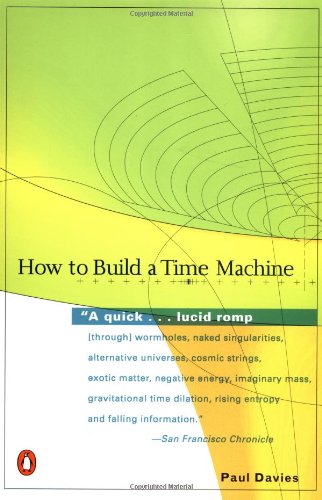
How to Build a Time Machine
Authors:
Paul Davies
Publisher:
Penguin Books
Publication Date:
Not available
ISBN:
0142001864
With his unique knack for making cutting-edge theoretical science effortlessly accessible, world-renowned physicist Paul Davies now tackles an issue... that has boggled minds for centuries: Is time travel possible? The answer, insists Davies, is definitely yes—once you iron out a few kinks in the space-time continuum. With tongue placed firmly in cheek, Davies explains the theoretical physics that make visiting the future and revisiting the past possible, then proceeds to lay out a four-stage process for assembling a time machine and making it work. Wildly inventive and theoretically sound, How to Build a Time Machine is creative science at its best—illuminating, entertaining, and thought provoking.

How to Build Social Science Theories
Authors:
Pamela J. Shoemaker
Publisher:
Sage Publications, Inc
Publication Date:
Not available
ISBN:
0761926674
As straightforward as its title, How to Build Social Science Theories sidesteps the well-traveled road of theoretical examination by demonstrating how... new theories originate and how they are elaborated. Essential reading for students of social science research, this book traces theories from their most rudimentary building blocks (terminology and definitions) through multivariable theoretical statements, models, the role of creativity in theory building, and how theories are used and evaluated. Authors Pamela J. Shoemaker, James William Tankard, Jr., and Dominic L. Lasorsa intend to improve research in many areas of the social sciences by making research more theory-based and theory-oriented. The book begins with a discussion of concepts and their theoretical and operational definitions. It then proceeds to theoretical statements, including hypotheses, assumptions, and propositions. Theoretical statements need theoretical linkages and operational linkages; this discussion begins with bivariate relationships, as well as three-variable, four-variable, and further multivariate relationships. The authors also devote chapters to the creative component of theory-building and how to evaluate theories.
 '





