production
/viewbook/list/all/?page=5651
/
/static/
None
How to do Discourse Analysis: A Toolkit
Authors:
James Paul Gee
Publisher:
Routledge
Publication Date:
Not available
ISBN:
0415572088
How to do Discourse Analysis: A Toolkit is the essential new book from James Paul Gee, bestselling author of An Introduction to Discourse Analysis:... Theory and Method. Discourse analysis is widely used in a range of academic subjects, all concerned with how humans make meaning and communicate within and across different social and cultural groups. Using a practical how-to approach, Gee provides the tools necessary to work with discourse analysis, with engaging step-by-step tasks featured throughout the book. Each tool is clearly explained, along with guidance on how to use it, and authentic data is provided for readers to practice using the tools. Readers from all fields will gain both a practical and theoretical background in how to do discourse analysis and knowledge of discourse analysis as a distinctive research methodology. How to do Discourse Analysis: a Toolkit is the ideal preparation for future learning in discourse analysis and applied linguistics. It is the companion text to Gee’s An Introduction to Discourse Analysis: Theory and Method, meant for those interested in learning discourse analysis by doing it. The interdisciplinary approach means that it is suitable for students across a range of subjects, including Applied Linguistics, Anthropology, and Communication Studies.

How to Do Ecology: A Concise Handbook
Authors:
Richard Karban
Publisher:
Princeton University Press
Publication Date:
Not available
ISBN:
0691125775
Most ecology books and courses focus on the facts and the concepts. While these are essential, many young ecologists need to figure out how to actually... do research themselves. How to Do Ecology provides nuts-and-bolts advice on how to develop a successful thesis and research program. This book presents different approaches to posing testable ecological questions. In particular, it covers the uses, strengths, and limitations of manipulative experiments in ecology. It will help young ecologists consider meaningful treatments, controls, replication, independence, and randomization in experiments, as well as where to do experiments and how to organize a season of work. This book also presents strategies for analyzing natural patterns, the value of alternative hypotheses, and what to do with negative results.Science is only part of being a successful ecologist. This engagingly written book offers students advice on working with other people and navigating their way through the land mines of research. Findings that don't get communicated are of little value. How to Do Ecology suggests effective ways to communicate information in the form of journal articles, oral presentations, and posters. Finally, it outlines strategies for developing successful grant and research proposals. Numerous checklists, figures, and boxes throughout the book summarize and reinforce the main points. In short, this book makes explicit many of the unspoken assumptions behind doing good research in ecology, and provides an invaluable resource for meaningful conversations among ecologists.
How to Do Everything Genealogy 3/E
Authors:
George G. Morgan
Publisher:
McGraw-Hill Osborne Media
Publication Date:
Not available
ISBN:
007178084X
Unearth your family's past by mining the global wealth of digital and print ancestry records In How to Do Everything Genealogy, award-winning researcher... and genealogy writer George G. Morgan shows how to start and continue your family history research using traditional records and techniques, as well as the full array of online databases, digitized records, social networks, and other tools. Learn how to organize and create your family tree; find documents about your family; research census documents, military service records, and land and property rolls; plan a successful genealogy research trip; evaluate sources; and other vital skills to help you uncover and illuminate your family's story. Structure an effective research strategy Locate and access genealogy resources for U.S., Canadian, UK and Ireland, and Australian research See illustrations of scores of sample documents Get past brick walls and dead ends in your research Place your ancestors in geographical and historical context Access libraries, archives, and other repositories online Learn the most efficient Internet search techniques Research and verify ancestors using genetic genealogy (DNA) Use social networking sites and collaboration techniques Discover and use alternative research paths to locate difficult-to-find records Learn to integrate your research by reviewing a real case study
How to Do Everything with YouTube
Authors:
Chad Fahs
Publisher:
McGraw-Hill Osborne Media
Publication Date:
Not available
ISBN:
0071498656
Create, post, and promote your own videos on the world's most popular online service! How to Do Everything with YouTube explains how to shoot and edit... videos, insert titles and captions, add special effects, and upload content. You'll learn how to set up a YouTube channel and integrate YouTube videos into your websites and blogs. You'll also discover the success secrets behind YouTube celebrities and breakout videos. Share your unique video creations with millions of viewers with help from this easy-to-follow guide. Navigate the YouTube interface, play videos, and set up an accountShoot professional-quality videos with a camcorder, Web cam, or camera phoneGet the lighting right and add sound and special effectsCreate a short film, vlog, or video mashupEdit your videos with Windows Movie Maker, iMovie, and RemixerAdd audio tracks with AudioSwapOptimize your videos and upload them to YouTubeJoin the YouTube community, create playlists, subscribe to channels, and participate in groupsCustomize your YouTube channelPromote your videos to a huge audience
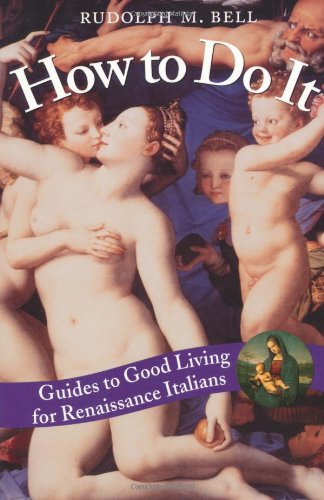
How to Do It: Guides to Good Living for Renaissance Italians
Authors:
Rudolph M. Bell
Publisher:
University Of Chicago Press
Publication Date:
Not available
ISBN:
0226042006
How to Do It shows us sixteenth-century Italy from an entirely new perspective: through manuals which were staples in the households of middlebrow... Italians merely trying to lead better lives. Addressing challenges such as how to conceive a boy, the manuals offered suggestions such as tying a tourniquet around your husband's left testicle. Or should you want to goad female desires, throw 90 grubs in a liter of olive oil, let steep in the sun for a week and apply liberally on the male anatomy. Bell's journey through booklets long dismissed by scholars as being of little literary value gives us a refreshing and surprisingly fun social history.
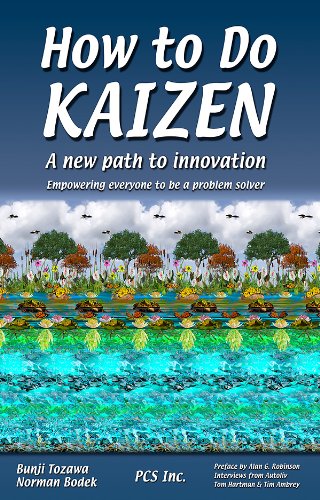
How to do Kaizen: A new path to innovation - Empowering everyone to...
Authors:
Bunji Tozawa
Publisher:
PCS Inc.
Publication Date:
Not available
ISBN:
0971243670
Kaizen is a system of continuous improvement: an industrial philosophy that embraces absolutely everyone within the company culture. The goal is in... maintaining constant improvement towards productivity, quality, safety, waste reduction, and leadership. A vast continuous flow of tiny constructive ideas will invariably make a huge differences in aggregate. And the process never stops... Kaizen is the key element in the Japanese miracle taping into the creative abilities of every single person in the organization. When understood and appreciated by management, people will joyfully participate to make their work easier, more interesting and build their skills and capabilities. Gulfstream Corporation in one of their plants in 2009 obtained 40 implemented ideas per employee, both enriching the working lives of their employees and saving millions of dollars. Autoliv in Ogden, Utah is asking each of their employees, in 2010, to submit 96 ideas. The Kaizen process is simple. Just ask people to look around their work area and identify small problems, come up with possible solutions, present them to their managers and implement them on their own. It is powerful. It works very well.
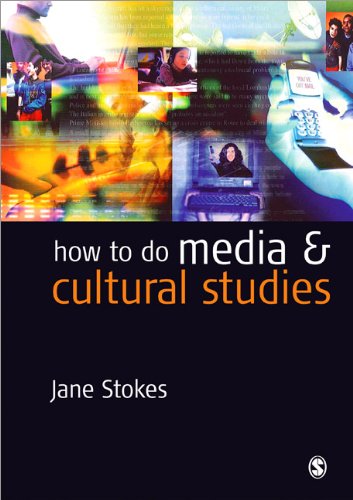
How to do Media and Cultural Studies
Authors:
Jane Stokes
Publisher:
Sage Publications Ltd
Publication Date:
Not available
ISBN:
076197329X
'Crammed with useful advice delivered in a straight-forward, no nonsense approach this text helps students to get off the starting blocs.... I recommend... that all media dissertation students begin their project with it' - Simon Cottle, University of Melbourne How to do Media and Cultural Studies provides an essential student guide to the process of research and writing. Aimed at any student about to start on an extended essay or dissertation it covers all the key stages - from formulating a research question to writing up. How to do Media and Cultural Studies: - Covers both quantitative and qualitative methods - Includes separate chapters of how to analyze media and cultural texts, industries and audiences - Works through a series of key examples of media and cultural research - Includes a list of useful library resources and essential web sites Suitable for use as a coursebook, this book can also be used independently by students. No other book provides such an accessible and practical guide. How to do Media and Cultural Studies is an essential purchase for all media, communication, film and cultural studies students.

How to Do Systems Analysis (Wiley Series in Systems Engineering and...
Authors:
John E. Gibson
Publisher:
Wiley-Interscience
Publication Date:
Not available
ISBN:
0470007656
This book focuses on systems analysis, broadly defined to also include problem formulation and interpretation of proposed alternatives in terms of the... value systems of stakeholders. Therefore, the book is a complement, not a substitute to other books when teaching systems engineering and systems analysis. The nature of problem solving discussed in this book is appropriate to a wide range of systems analyses. Thus the book can be used as a stand-alone book for teaching the analysis of systems. Also unique is the inclusion of broad case studies to stress problem solving issues, making How to Do Systems Analysis a complement to the many fine works in systems engineering available today.

How to Do Theory (How to Study Literature)
Authors:
Wolfgang Iser
Publisher:
Wiley-Blackwell
Publication Date:
Not available
ISBN:
1405115807
This succinct introduction to modern theories of literature and the arts demonstrates how each theory is built and what it can accomplish. Represents a... wide variety of theories, including phenomenological theory, hermeneutical theory, gestalt theory, reception theory, semiotic theory, Marxist theory, deconstruction, anthropological theory, and feminist theory. Uses classic literary texts, such as Keats’s Ode on a Grecian Urn, Spenser’s The Shephearde’s Calender and T. S. Eliot’s The Waste Land to illustrate his explanations. Includes key statements by the major proponents of each theory. Presents the different theories objectively, allowing students to decide which if any, they subscribe to. Gives students a sense of the potential of theory. Includes a glossary of technical terms.
How To Do Things With Logic
Authors:
C. Grant Luckhardt
Publisher:
Psychology Press
Publication Date:
Not available
ISBN:
080580076X
In the past 15 years a host of critical thinking books have appeared that teach students to find flaws in the arguments of others by learning to detect... a number of informal fallacies. This book is not in that tradition. The authors of this book believe that while students learn to become vicious critics, they still continue to make the very mistakes they criticize in others. Thus, this book has adopted the approach of teaching the construction of good arguments first and then introducing criticism as a secondary skill. Moreover, the emphasis of the book is not on learning to name fallacies, but on being able to identify weaknesses in an argument so as to be able to construct an effective critique of that argument. The book is accompanied by a workbook featuring a wealth of examples to help students acquire the material.
How To Do Things With Logic Workbook: Workbook with Exercises
Authors:
C. Grant Luckhardt
Publisher:
Psychology Press
Publication Date:
Not available
ISBN:
0805800778
In the past 15 years a host of critical thinking books have appeared that teach students to find flaws in the arguments of others by learning to detect... a number of informal fallacies. This book is not in that tradition. The authors of this book believe that while students learn to become vicious critics, they still continue to make the very mistakes they criticize in others. Thus, this book has adopted the approach of teaching the construction of good arguments first and then introducing criticism as a secondary skill. Moreover, the emphasis of the book is not on learning to name fallacies, but on being able to identify weaknesses in an argument so as to be able to construct an effective critique of that argument. The book is accompanied by a workbook featuring a wealth of examples to help students acquire the material.

How to Do Things with Videogames (Electronic Mediations)
Authors:
Ian Bogost
Publisher:
Univ Of Minnesota Press
Publication Date:
Not available
ISBN:
081667647X
In recent years, computer games have moved from the margins of popular culture to its center. Reviews of new games and profiles of game designers now... regularly appear in the New York Times and the New Yorker, and sales figures for games are reported alongside those of books, music, and movies. They are increasingly used for purposes other than entertainment, yet debates about videogames still fork along one of two paths: accusations of debasement through violence and isolation or defensive paeans to their potential as serious cultural works. In How to Do Things with Videogames, Ian Bogost contends that such generalizations obscure the limitless possibilities offered by the medium’s ability to create complex simulated realities.Bogost, a leading scholar of videogames and an award-winning game designer, explores the many ways computer games are used today: documenting important historical and cultural events; educating both children and adults; promoting commercial products; and serving as platforms for art, pornography, exercise, relaxation, pranks, and politics. Examining these applications in a series of short, inviting, and provocative essays, he argues that together they make the medium broader, richer, and more relevant to a wider audience.Bogost concludes that as videogames become ever more enmeshed with contemporary life, the idea of gamers as social identities will become obsolete, giving rise to gaming by the masses. But until games are understood to have valid applications across the cultural spectrum, their true potential will remain unrealized. How to Do Things with Videogames offers a fresh starting point to more fully consider games’ progress today and promise for the future.
How To Do Things With Words (Oxford Paperbacks)
Authors:
J. L. Austin
Publisher:
Oxford Higher Education
Publication Date:
Not available
ISBN:
019281205X
This work sets out Austin's conclusions in the field to which he directed his main efforts for at least the last ten years of his life. Starting from an... exhaustive examination of his already well-known distinction between performative utterances and statements, Austin here finally abandons that distinction, replacing it with a more general theory of 'illocutionary forces' of utterances which has important bearings on a wide variety of philosophical problems.
How to Do Things with Words: Second Edition (William James Lectures)
Authors:
J. L. Austin
Publisher:
Harvard University Press
Publication Date:
Not available
ISBN:
0674411528
John L. Austin was one of the leading philosophers of the twentieth century. The William James Lectures presented Austin's conclusions in the field to... which he directed his main efforts on a wide variety of philosophical problems. These talks became the classic How to Do Things with Words. For this second edition, the editors have returned to Austin's original lecture notes, amending the printed text where it seemed necessary. Students will find the new text clearer, and, at the same time, more faithful to the actual lectures. An appendix contains literal transcriptions of a number of marginal notes made by Austin but not included in the text. Comparison of the text with these annotations provides new dimensions to the study of Austin's work.
How to do your Case Study: A Guide for Students and Researchers
Authors:
Gary Thomas
Publisher:
Sage Publications Ltd
Publication Date:
Not available
ISBN:
0857025635
This accessible text introduces students and researchers to the basics of case study research, using a wide range of real-life examples. It deals with... the core issues and methods that anyone new to case study will need to understand: What is a case study? When and why should case study methods be used? How are case studies designed? What methods can be used? How do we analyze our data and write up our case?
 '





