production
/viewbook/list/all/?page=5661
/
/static/
None
How to Prove It: A Structured Approach
Authors:
Daniel J. Velleman
Publisher:
Cambridge University Press
Publication Date:
Not available
ISBN:
0521675995
Geared to preparing students to make the transition from solving problems to proving theorems, this text teaches them the techniques needed to read and... write proofs. The book begins with the basic concepts of logic and set theory, to familiarize students with the language of mathematics and how it is interpreted. These concepts are used as the basis for a step-by-step breakdown of the most important techniques used in constructing proofs. To help students construct their own proofs, this new edition contains over 200 new exercises, selected solutions, and an introduction to Proof Designer software. No background beyond standard high school mathematics is assumed. Previous Edition Hb (1994) 0-521-44116-1 Previous Edition Pb (1994) 0-521-44663-5
How to Put Your Book Together and Get a Job in Advertising (Newly...
Authors:
Maxine Paetro
Publisher:
W. W. Norton & Company
Publication Date:
Not available
ISBN:
0393732851
In print for over thirty years, the advertising industry bible and ultimate insider’s guide to getting in and getting noticed.Praised as the... “essential,” “award-winning advertising career classic,” here is the industry standard that all aspiring creatives turn to for brutally honest—and often droll—career advice, now fully updated to reflect what most impresses today’s top firms. This is the unequivocal go-to source for anyone looking to break into the business. Originally published under the title The Copy Workshop. Contributors include: David Baldwin, Tom Cuniff, Greg DiNoto, Jim Durfee, Doreen Dvorin, Heidi Ehlers, Jeffrey Epstein, George Felton, Jack Foster, Cliff Freeman, Roz Goldfarb, Jeff Goodby, Dean Hacohen, Charles Hall, Jhames Holley, Lee Kovel, Leora Mechanic, Deborah Morrison, Jim Mountjoy, James Patterson, Robin Raj, Amy Krouse Rosenthal, Helen Klein Ross, Ron Seichrist, Susan Spiegel Solovay, Helayne Spivak, Luke Sullivan, Eric Weber. From the Introduction: Although media are changing at the speed of light, the basics of advertising, speculative ads, and the job-getting process haven't changed. The information in this spanking-new revision concerns first-year issues.* In Part I, I define concepts and campaigns for those who have just begun to ask what this portfolio thing is all about. And there are new questions and answers that I hope will help those about to graduate, those who are about to enter or have already entered the tougher-than-ever entry-level job competition.... * Part II addresses all aspects of getting a job, from resumes, cover letters, and business cards to interview etiquette and follow-up. * As I've done since the first edition of this book, I've invited creative heads of some of the top agencies around, headhunters, creative managers, and junior creative people to write essays and supplement the text of this book with their comments, their stories, and examples from their portfolios. The contributions of these generous people are of enormous value and make up Part III, "A Little Help from Some Friends." 50 illustrations
How To Reach and Teach All Children in the Inclusive Classroom:...
Authors:
Sandra F. Rief M.A.
Publisher:
Jossey-Bass
Publication Date:
Not available
ISBN:
0787981540
This thoroughly updated edition of the best-selling book gives all classroom teachers, special educators, and administrators an arsenal of adaptable and... ready-to-use strategies, lessons, and activities. How to Reach and Teach All Children in the Inclusive Classroom is a comprehensive resource that helps teachers reach students with varied learning styles, ability levels, skills, and behaviors. The authors offer a team approach that includes parents, colleagues, and learning specialists, enabling teachers to guide diverse groups of students in grades 3–8 toward academic, social, and emotional success.
How to Reach and Teach English Language Learners: Practical...
Authors:
Rachel Carrillo Syrja
Publisher:
Jossey-Bass
Publication Date:
Not available
ISBN:
0470767618
Practical, ready-to-use ELL strategies firmly rooted in the latest researchThis book provides practical strategies and tools for assessing and teaching... even the most hard to reach English language learners across the content areas. Syrja offers educators the latest information on working with ELLs (including using formative assessments) and provides a wealth of classroom-tested models and measures. These tools have proven to be effective with ESL students at all levels, including Long Term English Learners (LTELs). Throughout the book, the author shares powerful research-based strategies and clearly illustrates how they should be implemented in the classroom for maximum impact.Filled with proven ideas and easy-to-implement tips for teaching ELLsDesigned to be a practical ELL/ESL resource for classroom teachersSyrja, a former teacher and ESL student, is a noted expert in English language learning and a Professional Development Associate with the Leadership and Learning CenterThis value-packed guide offers educators accessible and research-based classroom strategies for reaching and teaching ELLs.
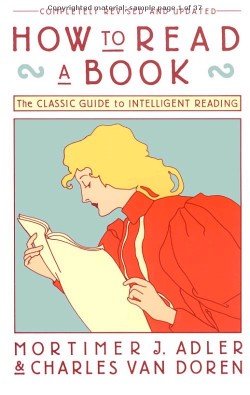
How to Read a Book (A Touchstone book)
Authors:
Mortimer J. Adler
Publisher:
Simon & Schuster
Publication Date:
Not available
ISBN:
0671212095
How to Read a Book: The Classic Guide to Intelligent Reading......How to Read a Book was first written in 1940 by Mortimer Adler. He co-authored a... heavily revised edition in 1972 with Charles Van Doren, which gives guidelines for critically reading good and great books of any tradition, but refrains from recommending any book outside the Western tradition; the 1972 revision, in addition to the first edition, treats genres (poetry, history, science, fiction, et cetera), inspectional and syntopical reading.
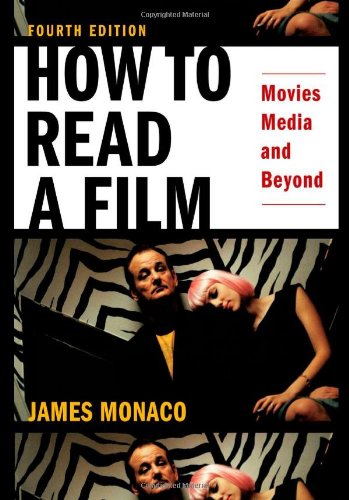
How to Read a Film: Movies, Media, and Beyond
Authors:
James Monaco
Publisher:
Oxford University Press, USA
Publication Date:
Not available
ISBN:
0195321057
Richard Gilman referred to How to Read a Film as simply "the best single work of its kind." And Janet Maslin in The New York Times Book Review marveled... at James Monaco's ability to collect "an enormous amount of useful information and assemble it in an exhilaratingly simple and systematic way." Indeed, since its original publication in 1977, this hugely popular book has become the definitive source on film and media. Now, James Monaco offers a special anniversary edition of his classic work, featuring a new preface and several new sections, including an "Essential Library: One Hundred Books About Film and Media You Should Read" and "One Hundred Films You Should See." As in previous editions, Monaco once again looks at film from many vantage points, as both art and craft, sensibility and science, tradition and technology. After examining film's close relation to other narrative media such as the novel, painting, photography, television, and even music, the book discusses the elements necessary to understand how films convey meaning, and, more importantly, how we can best discern all that a film is attempting to communicate. In addition, Monaco stresses the still-evolving digital context of film throughout--one of the new sections looks at the untrustworthy nature of digital images and sound--and his chapter on multimedia brings media criticism into the twenty-first century with a thorough discussion of topics like virtual reality, cyberspace, and the proximity of both to film. With hundreds of illustrative black-and-white film stills and diagrams, How to Read a Film is an indispensable addition to the library of everyone who loves the cinema and wants to understand it better.
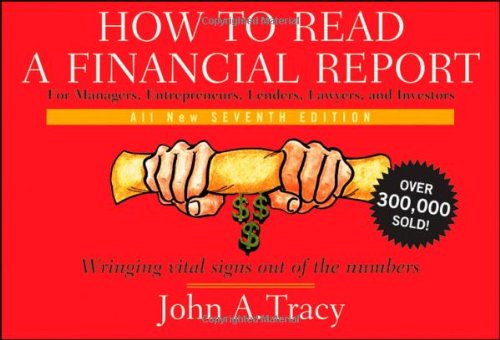
How to Read a Financial Report: Wringing Vital Signs Out of the...
Authors:
John A. Tracy CPA
Publisher:
Wiley
Publication Date:
Not available
ISBN:
0470405309
How to Read a Financial Report Seventh EditionFinancial reports provide vital information to investors, lenders, and managers. Yet, the financial... statements in a financial report seem to be written in a foreign language that only accountants can understand. This Seventh Edition of How to Read a Financial Report breaks through the language barrier, clears away the fog, and offers a plain-English user's guide to financial reports. The book helps you get a sure-handed grip on the profit, cash flow, and financial condition of any business.Here's what's new in the Seventh Edition:Discussion of the transition to international accounting and financial reporting standardsA streamlined centerpiece exhibit used throughout the book to explain connections between the three financial statementsAn integrated section on analyzing profit, cash flow, and solvency for investors, lenders, and managers (now Part Two in this edition)Reflection on financial reporting and auditing in the post-Enron era"What distinguishes Tracy's efforts from other manuals is an innovative structure that visually ties together elements of the balance sheet and income statement by tracing where and how a line item in one affects an entry in another."—Inc."An excellent job of showing how to separate the wheat from the chaff without choking in the process."—The Miami Herald"A wonderful book organized logically and written clearly. For a Fool to be an effective investor, she has to know her way around a financial statement. This book will help you develop that skill. It's the clearest presentation of many accounting concepts that this Fool has seen."—Selena Maranjian, The Motley Fool
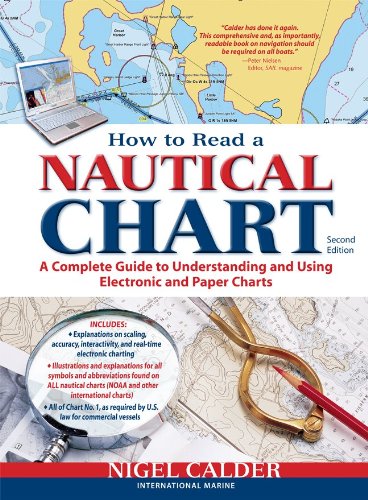
How to Read a Nautical Chart, 2nd Edition (Includes ALL of Chart...
Authors:
Nigel Calder
Publisher:
International Marine/Ragged Mountain Press
Publication Date:
Not available
ISBN:
0071779825
Authoritative, practical, and hands-on information on reading and relying on electronic and paper nautical charts The classic How to Read a... Nautical Chart explains every aspect of electronic and paper nautical charts: how a chart is assembled, how to gauge the accuracy of chart data, how to read charts created by other governments, how to use information such as scale, projection technique and datum that every chart contains; how not to get fooled or run aground by overzooming. Nigel Calder teaches you how to squeeze every ounce of information out of a nautical chart (on your GPS, chartplotter, or nav station) and understand the limits of accuracy for all charts, paper and electronic, raster and vector. This much-awaited second edition addresses the changes in the world of electronic charting, integrated onboard navigation systems, as well as radar overlays and AIS and their interfacing with charts. A new chapter on the Wiki Revolution explores the mechanisms allowing you to incorporate user-generated content into navigational products and share this content with others—harnessing a user-base never before possible. Calder also explores how 3D-technology and real-time depth and weather information is creating interactive charting capacities that are fundamentally changing how we navigate. Calder's unique, practical insights will help you to navigate safely for years to come.
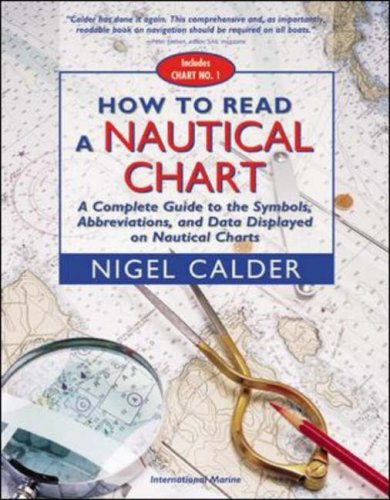
How to Read a Nautical Chart : A Complete Guide to the Symbols,...
Authors:
Nigel Calder
Publisher:
International Marine/Ragged Mountain Press
Publication Date:
Not available
ISBN:
0071376151
The best handbook on chart usage, from one of the most trusted names in boating In 2000, the U.S. government ceased publication of Chart No. 1,... the invaluable little book that generations of mariners have consulted to make sense of the complex system of signs, symbols, and graphic elements used in nautical charts. Now Chart No. 1 is not just reborn but expanded and improved in How to Read a Nautical Chart. The demand for a book like this has never been greater. Arranged and edited by Nigel Calder, one of today's most respected boating authors, --and containing four-color illustrations throughout,-- How to Read a Nautical Chart presents a number of original features that help readers make optimum use of the data found in Chart No. 1, including a more intuitive format, crucial background information, international chart symbol equivalents, electronic chart symbology, and thorough explanations of the practical aspects of nautical chart reading.
How to Read and Do Proofs: An Introduction to Mathematical Thought...
Authors:
Daniel Solow
Publisher:
Wiley
Publication Date:
Not available
ISBN:
0470392169
When engineers, computer scientists, and economists need to learn how to read, think about, and create proofs, they turn to Solow. In order to make the... material more relevant, the exercises in each chapter have been revised and expanded. New and more complete discussions are included on how to use a previously-proved proposition in both the forward and backward processes. The fifth edition also presents new, self-contained chapters on uniqueness, induction, either/or, and max/min methods. Several final examples of how to read and do proofs are included in the final chapter to reinforce the reader’s knowledge of the various proof techniques.

How to Read an Oral Poem
Authors:
John Miles Foley
Publisher:
see notes for publisher info
Publication Date:
Not available
ISBN:
0252070828
Though they appear diverse, Homer's "Odyssey" and slam poetry from contemporary urban America both draw from the well of oral tradition. This unique,... practical, and user-friendly guide explores the cultural contexts of verbal art to provide more-than-textual methods for understanding the structure, principles, and social applications of oral poetry. Using dozens of examples, including a North American slam poet, a Tibetan paper-singer, a South African praise-poet, and an ancient Greek bard, John Miles Foley shows that although oral poetry long predates the invention of writing, it continues to be a vital culture-making and communications tool in societies all over the world. Based on fieldwork and archival research on epics, folktales, lyrics, laments, charms, and other oral traditions, "How to Read an Oral Poem" answers the questions, What is oral poetry? How does it work? What is reading, literally and figuratively? This accessible and engaging work is enhanced by audio and video examples of oral poetry, which are available at website. The book can also be used as companion volume to Foley's "Teaching Oral Traditions".
How to Read a Paper: The Basics of Evidence-based Medicine
Authors:
Trisha Greenhalgh
Publisher:
BMJ Books
Publication Date:
Not available
ISBN:
1405139765
How to Read a Paper is one of the bestselling texts on evidence-based medicine, used by health care professionals and medical students worldwide. Trisha... Greenhalgh’s ability to explain the basics of evidence-based medicine in an accessible and readable way means the book is an ideal introduction for all, from first year students to experienced practitioners. This is a text that explains the meaning of critical appraisal and terms such as 'numbers needed to treat', 'how to search the literature', 'evaluate the different types of papers' and 'put the conclusions to clinical use'.New features of the third edition include:New discussion putting evidence-based medicine into the current context, with more emphasis on patient perspectives Increased coverage of qualitative research in evidence-based medicine New information on literature sources and search mechanisms
How to Read a Paper: The Basics of Evidence-Based Medicine
Authors:
Trisha Greenhalgh
Publisher:
BMJ Books
Publication Date:
Not available
ISBN:
1444334360
How to Read a Paper describes the different types of clinical research reporting, and explains how to critically appraise the publications. The book... provides the tools to find and evaluate the literature, and implement the findings in an evidence-based, patient-centered way. Written for anyone in the health care professions who has little or no knowledge of evidence-based medicine, it provides a clear understanding of the concepts and how to put them into practice at the basic, clinical level.Changes for the 4th editionThe fourth edition will include two new chapters on important developments in health care research and delivery, but otherwise retains its original style, size, and scope.New chapter on quality improvement – describing papers on quality improvement projects using ebm methods; this will extend the readership to non clinical health care professionals working in hospitals and family practice, and to nurse specialists and practice nurses working in this fieldNew chapter on complex interventions - how to set up research projects involving both qualitative and quantitative methodology (known as mixed methods)Thorough revision and updating of existing chapters and referencesNew illustrations – diagrammatic representations of ebm concepts
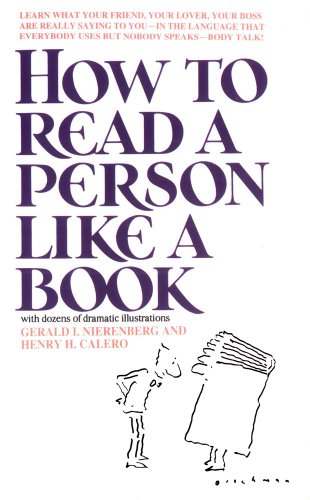
How to Read a Person Like a Book
Authors:
Gerard Nierenberg
Publisher:
Pocket Books
Publication Date:
Not available
ISBN:
0671735578
The body never lies. A tilt of the head, a crossing or uncrossing of the legs, even the buttoning or unbuttoning of a jacket, can speak pages about... what a person is thinking or feeling about his or her immediate surroundings and situation. More importantly, it can tell a great deal about how one person reacts to another. To be able to recognize the meaning of these cues and to be able to respond to them in the manner one chooses is the art at the center of this provocative book. How to Read a Person Like a Book is an illustrated guide on learning how to spot the hidden messages that we send to each other with our bodies.
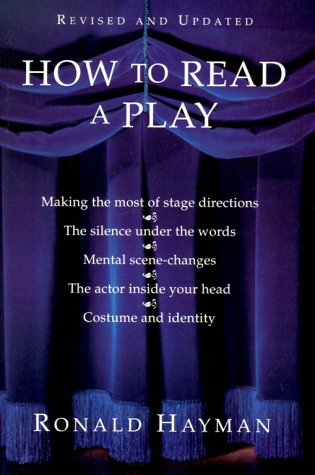
How to Read a Play
Authors:
Ronald Hayman
Publisher:
Grove Press
Publication Date:
Not available
ISBN:
080213629X
How to Read a Play is an introductory guide to the art of translating the printed page of a play or screenplay into dramatic mental images; it has been... a classic among actors, directors, and writers for the past twenty years. Now fully updated and revised, the book devotes a chapter exclusively to screenplays, noting the intrinsic differences between a screenplay and a playscript and thus bringing this invaluable classic up to date.
 '





