production
/viewbook/list/all/?page=5664
/
/static/
None
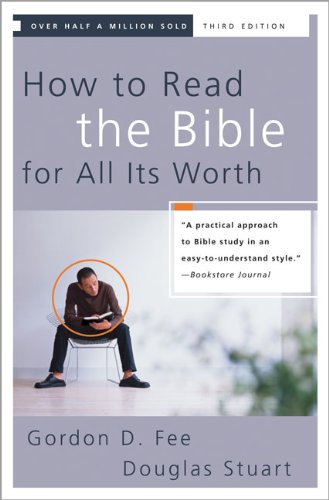
How to Read the Bible for All Its Worth
Authors:
Gordon D. Fee
Publisher:
Zondervan
Publication Date:
Not available
ISBN:
0310246040
Understanding the Bible isn't for the few, the gifted, the scholarly. The Bible is accessible. It's meant to be read and comprehended by everyone from... armchair readers to seminary students. A few essential insights into the Bible can clear up a lot of misconceptions and help you grasp the meaning of Scripture and its application to your 21st-century life. More than half a million people have turned to How to Read the Bible for All Its Worth to inform their reading of the Bible. This third edition features substantial revisions that keep pace with current scholarship, resources, and culture. Changes include: * Updated language * A new authors' preface * Several chapters rewritten for better readability * Updated list of recommended commentaries and resources Covering everything from translational concerns to different genres of biblical writing, How to Read the Bible for All Its Worth is used all around the world. In clear, simple language, it helps you accurately understand the different parts of the Bible---their meaning for ancient audiences and their implications for you today---so you can uncover the inexhaustible worth that is in God's Word.
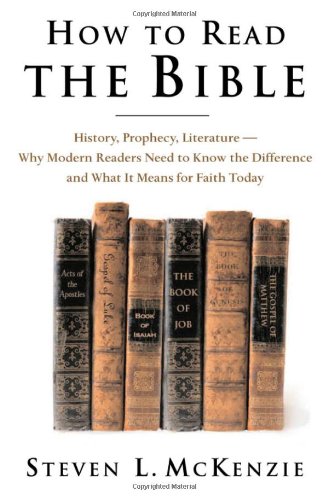
How to Read the Bible: History, Prophecy, Literature--Why Modern...
Authors:
Steven L. McKenzie
Publisher:
Oxford University Press, USA
Publication Date:
Not available
ISBN:
0195161491
More people read the Bible than any other book. Indeed, many try to live their lives according to its words. The question is, do they understand what... they're reading? As Steven McKenzie shows in this provocative book, quite often the answer is, "No." McKenzie argues that to comprehend the Bible we must grasp the intentions of the biblical authors themselves--what sort of texts they thought they were writing and how they would have been understood by their intended audience. In short, we must recognize the genres to which these texts belong. McKenzie examines several genres that are typically misunderstood, offering careful readings of specific texts to show how the confusion arises, and how knowing the genre produces a correct reading. The book of Jonah, for example, offers many clues that it is meant as a humorous satire, not a straight-faced historical account of a man who was swallowed by a fish. Likewise, McKenzie explains that the very names "Adam" and "Eve" tell us that these are not historical characters, but figures who symbolize human origins ("Adam" means man, "Eve" is related to the word for life). Similarly, the authors of apocalyptic texts--including the Book of Revelation--were writing allegories of events that were happening in their own time. Not for a moment could they imagine that centuries afterwards, readers would be poring over their works for clues to the date of the Second Coming of Christ, or when and how the world would end. For anyone who takes reading the Bible seriously and who wants to get it right, this book will be both heartening and enlightening.
How to Read the Bible: History, Prophecy, Literature--Why Modern...
Authors:
Steven L McKenzie
Publisher:
Oxford University Press, USA
Publication Date:
Not available
ISBN:
0195383303
McKenzie argues that to comprehend the Bible we must grasp the intentions of the biblical authors themselves--what sort of texts they thought they were... writing and how they would have been understood by their intended audience. In short, we must recognize the genres to which these texts belong. McKenzie examines several genres that are typically misunderstood, offering careful readings of specific texts to show how the confusion arises, and how knowing the genre produces a correct reading. The book of Jonah, for example, offers many clues that it is meant as a humorous satire, not a straight-faced historical account of a man who was swallowed by a fish. Likewise, McKenzie explains that the very names "Adam" and "Eve" tell us that these are not historical characters, but figures who symbolize human origins ("Adam" means man , "Eve" is related to the word for life ). Similarly, the authors of apocalyptic texts--including the Book of Revelation--were writing allegories of events that were happening in their own time. Not for a moment could they imagine that centuries afterwards, readers would be poring over their works for clues to the date of the Second Coming of Christ, or when and how the world would end.For anyone who takes reading the Bible seriously and who wants to get it right, this book will be both heartening and enlightening.
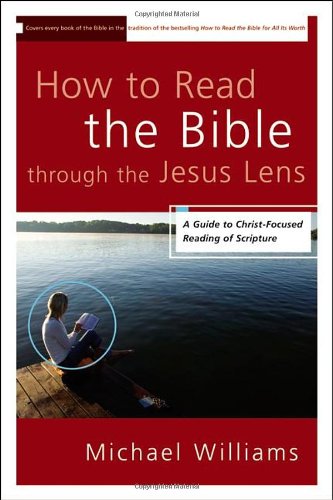
How to Read the Bible through the Jesus Lens: A Guide to...
Authors:
Michael Williams
Publisher:
Zondervan
Publication Date:
Not available
ISBN:
031033165X
Many Christians today experience Bible teaching in isolated, unconnected pieces, receiving little or no guidance into how these pieces form a coherent... picture in Christ. How to Read the Bible through the Jesus Lens presents Christ as the central focus of each biblical book and the primary way the Bible relates to contemporary circumstances. Each book of the Bible has an identifiable theme ultimately fulfilled in the person and work of Christ. Williams provides the following for his readers: * succinct statement of the theme of every biblical book * An explanation of how that theme finds its focus in Christ * A brief discussion of how the New Testament treats that theme as fulfilled in Christ * Suggestions for contemporary implications * Scripture memory electronic flashcards * A convenient summary chart An excellent tool for Bible teachers, ministry leaders, and students, How to Read the Bible through the Jesus Lens facilitates other Christian disciplines such as Bible reading, Scripture memory and evangelism. By demonstrating how each theme relates to living the Christian life, this book promises to be an invaluable guide for reading and understanding the Bible.
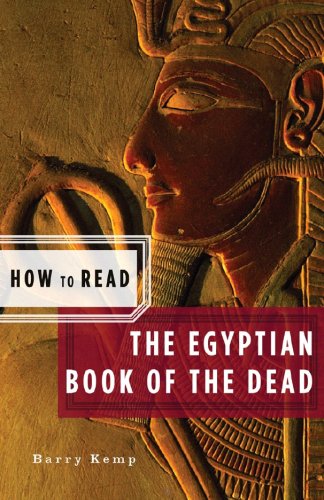
How to Read the Egyptian Book of the Dead (How to Read)
Authors:
Barry Kemp
Publisher:
W. W. Norton & Company
Publication Date:
Not available
ISBN:
0393330796
Intent upon letting the reader experience the pleasure and intellectual stimulation in reading classic authors, the How to Read series will facilitate... and enrich your understanding of texts vital to the canon.The ancient Egyptians created a world of supernatural forces so vivid, powerful, and inescapable that controlling their destiny within it was their constant preoccupation. In life, supernatural forces manifested themselves through misfortune and illness, and after death were faced for eternity in the Otherworld, along with the divine gods that controlled the universe. The Book of the Dead, the modern name given to a popular compilation of ancient Egyptian spells, empowered the reader to overcome the dangers lurking in the Otherworld and to become one with the gods that governed. Barry Kemp selects a number of spells to explore who and what the Egyptians feared and the kind of assistance that the book offered them, revealing a relationship between the human individual and the divine quite unlike that found in the major faiths of the modern world.

How To Read The Federalist Papers (First Principles Series)
Authors:
Anthony A. Peacock
Publisher:
The Heritage Foundation
Publication Date:
Not available
ISBN:
0891951350
Thomas Jefferson called The Federalist Papers the best commentary on the principles of government, which ever was written. Over 200 years after the... writing of these essays, most commentators — liberal and conservative — still agree. While The Federalist is indeed an important resource for understanding the meaning of our Constitution, its relevance is based on something deeper. The authors of the essays knew that the principles of our Founding would not always be unquestioned, so they gave us the strongest defense of those principles as part of the immediate political struggle for ratification. The Federalist not only illuminates the meaning of the Constitution's text. It also explains how our Constitution embodies the core principles of the Declaration of Independence and why it must be preserved in the face of present struggles. In this monograph, Anthony Peacock, professor of political science at Utah State University, offers us a brief guide to The Federalist, a road map illuminating the major issues treated in the essays and explaining their continued relevance for us today. An appendix of important passages on contemporary subjects is also included as a helpful resource for interested readers. Despite our contemporary challenges, we still enjoy some measure of constitutional government. More important, our Founders have left us with their teaching and example, showing us the way to restore our Constitution to its rightful place. Our Constitution will endure only if our leaders understand why it is defensible, and there is no better argument in favor of the Constitution that The Federalist Papers.
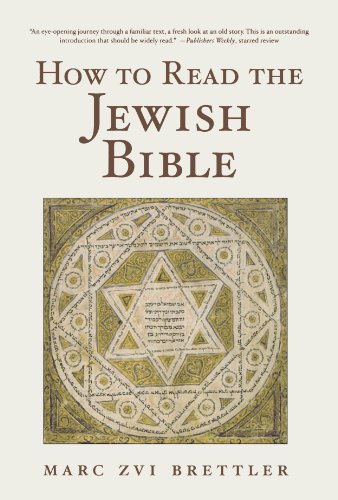
How to Read the Jewish Bible
Authors:
Marc Zvi Brettler
Publisher:
Oxford University Press, USA
Publication Date:
Not available
ISBN:
0195325222
In his new book, master Bible scholar and teacher Marc Brettler argues that today's contemporary readers can only understand the ancient Hebrew... Scripture by knowing more about the culture that produced it. And so Brettler unpacks the literary conventions, ideological assumptions, and historical conditions that inform the biblical text and demonstrates how modern critical scholarship and archaeological discoveries shed light on this fascinating and complex literature. Brettler surveys representative biblical texts from different genres to illustrate how modern can read these texts. He guides us in reading the Bible as it was read in the biblical period, independent of later religious norms and interpretive traditions. Understanding the Bible this way lets us appreciate it as an interesting text that speaks in multiple voices on profound issues. Although the emphasis of How to Read the Jewish Bible is on showing contemporary Jews, as well as Christians, how they can relate to the Bible in a more meaningful way, readers at any level of religious faith can benefit greatly from this comprehensive but remarkably clear guide to interpreting the Jewish Bible.
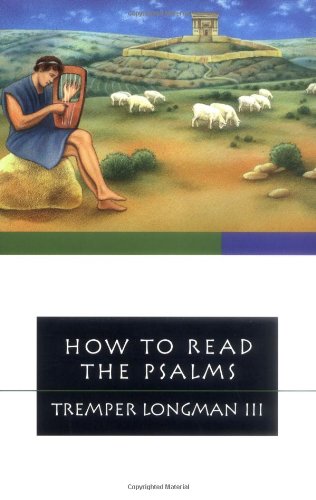
How to Read the Psalms (How to Read Series How to Read)
Authors:
Tremper Longman III
Publisher:
IVP
Publication Date:
Not available
ISBN:
0877849412
The Psalms possess an enduring fascination for us. For frankness, directness, intensity and intimacy, they are unrivaled in all of Scripture. Somehow... the psalmists seem to have anticipated all our awe, desires and frustrations. No wonder Christians have used the Psalms in worship from the earliest times to the present. Yet the Psalms cause us difficulties when we look at them closely. Their poetry is unfamiliar in form. Many images they use are foreign to us today. And the psalmists sometimes express thoughts that seem unworthy of Scripture. Tremper Longman gives us the kind of help we need to overcome the distance between the psalmists' world and ours. He explains the various kinds of psalms, the way they were used in Hebrew worship and their relationship to the rest of the Old Testament. Then he looks at how Christians can appropriate their message and insights today. Turning to the art of Old Testament poetry, he explains the use of parallelism and imagery. Step-by-step suggestions for interpretating the psalms on our own are followed by exercises for further study and reflection. Also included is a helpful guide to commentaries on the Psalms. Here is a book for all those who long to better understand these mirrors of the soul.
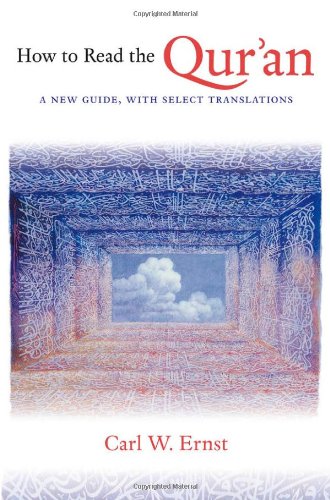
How to Read the Qur'an: A New Guide, with Select Translations
Authors:
Carl W. Ernst
Publisher:
The University of North Carolina Press
Publication Date:
Not available
ISBN:
0807835161
How to Read the Qur'an, a compact introduction and reader's guide to the Qur'an, featuring illuminating new translations of 725 Qur'anic verses, is the... most up-to-date toolbox for anyone who wants to know how to approach, read, and understand the text of the Qur'an. Noting that many people are baffled by existing English translations, Ernst aims for the book to be useful for both non-Muslim and Muslim readers who are interested in a historical, literary, and religious studies approach to understanding the Qur'an. The book is designed for general readers and will also be eminently suitable for introductory college courses, advanced secondary courses, As Ernst says, a text like the Qur'an--which has such immense importance for Muslims, and which, given the geopolitical tensions in today's world, poses extraordinary problems for non-Muslims--cannot be treated as a clearly defined subject that can be explained simplistically. Its history, composition, structure, style, vocabulary, and meaning have all been interpreted and disputed in a variety of ways. The ideal introduction to this text for English-language readers ought to take into account the various audiences, both Muslim and non-Muslim, that will be looking for different answers. It will also have to deal with sensitive issues regarding the historical and literary interpretation of sacred texts. It will have to explain the different points of view and major debates, and clarify what is at stake. Ernst thus provides a significant explanatory introduction that not only summarizes the historical and literary issues but also engages with the religious and political context of understanding the Qur'an today, including an understanding of the ritual and oral uses of the text.
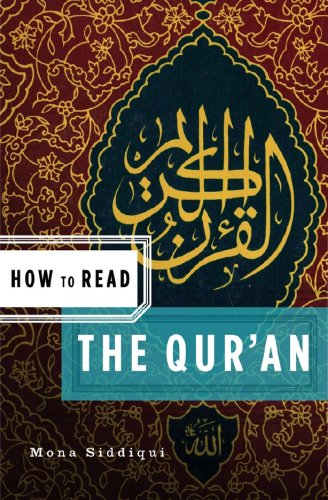
How to Read the Qur'an (How to Read)
Authors:
Mona Siddiqui
Publisher:
W. W. Norton & Company
Publication Date:
Not available
ISBN:
039333080X
How to Read is a personal master class that brings you face-to-face with the work of some of the most influential and... challenging texts in history.The Qur’an is the scripture of Islam, sacred to over one billion Muslims worldwide. It is regarded by Muslims as the direct word of God, timeless and unchanged. Muslims turn to the Qur’an not only for prayer and worship but also to understand the essence of their relationship with God. Mona Siddiqui considers how the Qur’an has been understood by Muslims in the intellectual traditions of Islam as well as in popular worship. She explores the “big themes” of prophecy, law, sin, and salvation, and what the Qur’an teaches about the particular place of Islam as God’s last revelation in human history. Siddiqui’s central concern is that Muslims must look to the Qur’an to breathe new life into the social and ethical relations between Muslims and non-Muslims.
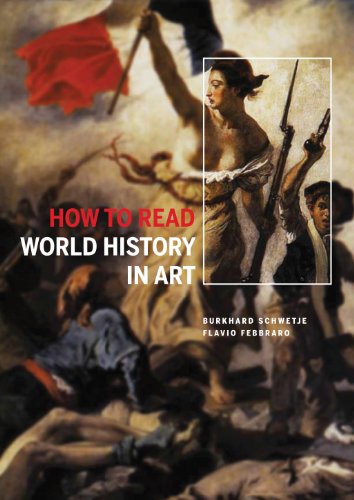
How to Read World History in Art
Authors:
Flavio Febbraro
Publisher:
Abrams
Publication Date:
Not available
ISBN:
0810996839
How does an artist’s interpretation of historical events alter our understanding of them? Kings, queens, presidents, and generals from Alexander the... Great to Theodore Roosevelt have commissioned paintings, drawings, sculptures, and photographs of major events, and artists have responded to important moments with works that forever shape historical memory. The book deals with specific episodes, from the proclamation of the Code of Hammurabi to more recent events such as the fall of the Berlin Wall and the terrorist attacks of September 11, 2001. It also deals with broader themes, such as the founding of states (Persia, Rome, the Chinese Empire, the United States) and war (Delacroix’s Liberty Leading the People, Picasso’s Guernica). Here too are the great voyages of exploration, the industrial revolution, and much more. World history is vividly elucidated in these works of art.
How to Read World Literature (How to Study Literature)
Authors:
David Damrosch
Publisher:
Wiley-Blackwell
Publication Date:
Not available
ISBN:
1405168269
How to Read World Literature addresses the unique challenges faced by a reader confronting foreign literature. Accessible and enlightening, Damrosch... offers readers the tools to navigate works as varied as Homer, Sophocles, Kalidasa, Du Fu, Dante, Murasaki, Moliere, Kafka, Soyinka, and Walcott. Offers a unique set of "modes of entry” for readers encountering foreign literatureProvides readers with the tools to think creatively and systematically about key issues such as reading across time and cultures, reading translated works, and emerging global perspectivesCovers a wide variety of genres, from lyric and epic poetry to drama and prose fiction and discusses how these forms have been used in different eras and cultures
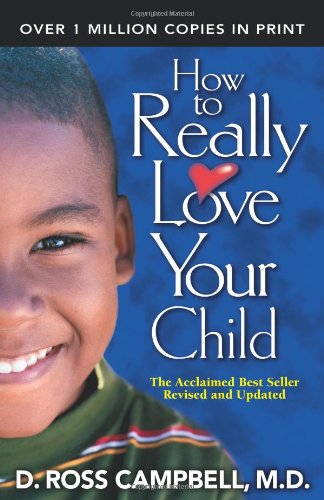
How to Really Love Your Child
Authors:
D. Ross Campbell
Publisher:
David C. Cook
Publication Date:
Not available
ISBN:
0781439124
Many parents would be dismayed to discover that their child feels unloved. After all, they make sure that their child has the things they need. They... attend their child's school events. They buy their child the things they want. So why is it then that most children doubt that they are genuinely and unconditionally loved? In this best-selling book, Dr. D. Ross Campbell reveals the emotional needs of a child and provides parents with the skill and techniques that can begin to help make your child feel truly loved and accepted. You'll learn to really love your child through every situation of child rearing from physical touch to discipline and from affirmation to spiritual nurture.
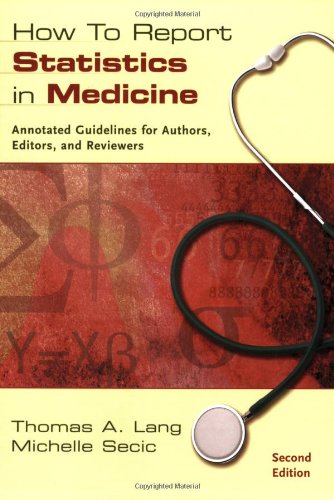
How to Report Statistics in Medicine: Annotated Guidelines for...
Authors:
Not Available
Publisher:
American College of Physicians
Publication Date:
Not available
ISBN:
1930513690
How to Report Statistics in Medicine presents a comprehensive and comprehensible set of guidelines for reporting the statistical analyses and research... designs and activities commonly used in biomedical research. Containing elements of a reference book, a style manual, a dictionary, an encyclopedia, and a text book, it is the standard guide in the fields of medical writing, scientific publications, and evidence-based medicine throughout the world. Features: Specific, detailed guidelines for reporting and interpreting statistics and research designs and activities in biomedical science. Sample presentations that guide you in reporting statistics correctly and completely. Coverage of current and emerging topics in statistics and trial design. Written by a senior medical writer and a senior biostatistician, the text is both clear and accurate, and the information is complete and pragmatic. Designed for anyone who needs to interpret or report statistics in medicine.
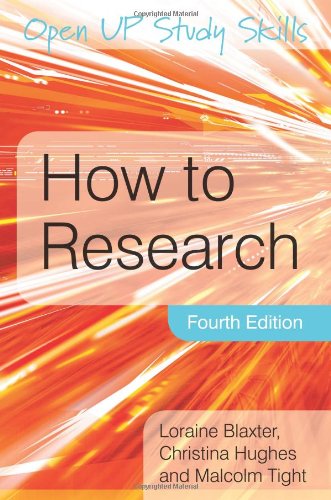
How to Research
Authors:
Loraine Blaxter
Publisher:
Open University Press
Publication Date:
Not available
ISBN:
033523867X
"I found this book brilliant, I had never undertaken anything like a dissertation before and this book had everything in it that I needed to know. It is... written in 'simple English' which is a bonus as some books are just too hard to understand. Everything you need to know about writing your dissertation is in here. I would recommend this book to all levels." *****Review of the third edition from Amazon.co.uk How to Research is a bestselling, practical book that reassures the first time researcher by leading them systematically through the whole research process; from the initial meetings with a supervisor to critically evaluating their ideas, doing the research and finally writing up the project. The book includes vignettes to help readers relate to research examples and provides both methodological and process information. New features in this edition include: Additional coverage on literature reviews New material on changes in research ethics More detailed information on the use of diaries, internet ethnographies and visual methods Increased coverage of mixed methodologies How to Research 4e is an ideal resource for the first-time researcher doing a small-scale research project in the social sciences whether they are at university or in the workplace. It supports its readers as they develop their skills to become more experienced researchers.
 '





