production
/viewbook/list/all/?page=5672
/
/static/
None

How To Think About Weird Things: Critical Thinking
Authors:
Not Available
Publisher:
Not available
Publication Date:
Not available
ISBN:
Not available

How to Think About Weird Things: Critical Thinking for a New Age
Authors:
Theodore Schick
Publisher:
McGraw-Hill Humanities/Social Sciences/Languages
Publication Date:
Not available
ISBN:
0073386626
This brief, inexpensive text helps the reader to think critically, using examples from the weird claims and beliefs that abound in our culture to... demonstrate the sound evaluation of any claim. The authors focus on types of logical arguments and proofs, making How to Think about Weird Things a versatile supplement for logic, critical thinking, philosophy of science, or any other science appreciation courses.

How to Think About Weird Things: Critical Thinking for a New Age
Authors:
Theodore Schick
Publisher:
McGraw-Hill Humanities/Social Sciences/Languages
Publication Date:
Not available
ISBN:
007353577X
This brief, affordable text helps students to think critically, using examples from the weird claims and beliefs that abound in our culture to... demonstrate the sound evaluation of any claim. It explains step-by-step how to sort through reasons, evaluate evidence, and tell when a claim (no matter how strange) is likely to be true. The emphasis is neither on debunking nor on advocating specific assertions, but on explaining principles of critical thinking that enable readers to evaluate claims for themselves. The authors focus on types of logical arguments and proofs, making How to Think about Weird Things a versatile supplement for logic, critical thinking, philosophy of science, or any other science appreciation courses.
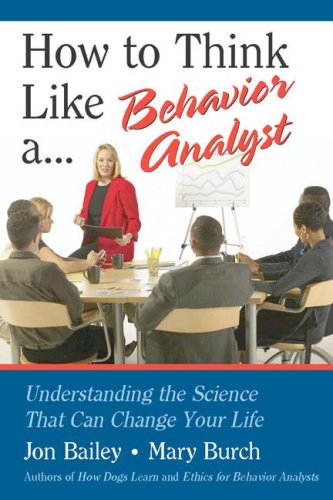
How to Think Like a Behavior Analyst
Authors:
Jon Bailey
Publisher:
Lawrence Erlbaum Assoc Inc
Publication Date:
Not available
ISBN:
0805858881
How to Think Like a Behavior Analyst is a revolutionary resource for understanding complex human behavior and making potentially significant quality of... life improvements. Behavior analysts offer a worldview of the human condition different than almost any other professional perspective. To a behavior analyst, human behavior is largely learned and subject to change if the right variables are put into play. This is an empowering outlook, providing an opportunity for individuals to analyze the actions of those around them and an understanding of why others exhibit such behavior. Practical, clear, and direct, this book addresses basic questions such as how behavior analysis is different from psychotherapy, what analysis involves, and the meaning of evidence-based treatment. A chapter on Applications presents tips on using behavioral procedures to improve lives and deal with others, and articulates how behavioral procedures are used in community settings. In question and answer format, the text thoroughly covers 50 frequently asked questions about behavior analysis in an educational and entertaining manner. It was developed out of questions raised by students in behavior analysis classes over the last 35 years, as well as questions raised by consumers of behavior analysis services. This text is written for all professionals concerned with behavior, including undergraduate students in psychology and behavior analysis, parents, teachers, employers, and employees. The book can easily be used as a supplement to primary texts in introductory psychology courses, and the exercises that follow each question can be used to stimulate lively discussion in role-play and other active learning situations.
How To Think Like A Computer Scientist
Authors:
Not Available
Publisher:
Not available
Publication Date:
Not available
ISBN:
Not available
How to Think Like a Computer Scientist: JAVA Programming
Authors:
Allen B. Downey
Publisher:
CreateSpace Independent Publishing Platform
Publication Date:
Not available
ISBN:
1441419209
How to Think Like a Computer Scientist - JAVA Version 4.1. (2008 Edition) * Published under the terms of the GNU Free Documentation License. Money... raised from the sale of this book supports the development of free software and documentation.
How to Think Like a Great Graphic Designer
Authors:
Debbie Millman
Publisher:
Allworth Press
Publication Date:
Not available
ISBN:
1581154968
Take a peek inside the heads of some of the world’s greatest living graphic designers. How do they think, how do they connect to others, what special... skills do they have? In honest and revealing interviews, nineteen designers, including Stefan Sagmeister, Michael Beirut, David Carson, and Milton Glaser, share their approaches, processes, opinions, and thoughts about their work with noted brand designer Debbie Millman. The internet radio talk host of Design Matters, Millman persuades the greatest graphic designers of our time to speak frankly and openly about their work. How to Think Like a Great Graphic Designers offers a rare opportunity to observe and understand the giants of the industry. Designers interviewed include:Milton GlaserStefan SagmeisterDavid CarsonPaula ScherAbbott MilerLucille TenazasPaul SahreEmily Oberman and Bonnie SieglerChip KiddJames VictoreCarin GoldbergMichael BierutSeymour ChwastJessica Helfand and William DrenttelSteff GeissbuhlerJohn Maeda

How to Think Like A Horse: The Essential Handbook for Understanding...
Authors:
Cherry Hill
Publisher:
Storey Publishing, LLC
Publication Date:
Not available
ISBN:
1580178359
Horse trainer and instructor Cherry Hill believes that every human/horse relationship benefits from a greater human understanding of what motivates... horses, how they experience the world, what makes them happy, and what worries them. Journey through the equine mind with Hill as she explores what makes a horse tick. How do his basic needs dictate his behavior and mood? What touches and tastes appeal to his senses? How does his “flight or fight” instinct dictate his response to sudden movements? If horses are treated respectfully with methods they understand, everyone involved — animal and human — will be happier, safer, and more productive.
How to Think Like a Mathematician: A Companion to Undergraduate...
Authors:
Kevin Houston
Publisher:
Cambridge University Press
Publication Date:
Not available
ISBN:
052171978X
Looking for a head start in your undergraduate degree in mathematics? Maybe you've already started your degree and feel bewildered by the subject you... previously loved? Don't panic! This friendly companion will ease your transition to real mathematical thinking. Working through the book you will develop an arsenal of techniques to help you unlock the meaning of definitions, theorems and proofs, solve problems, and write mathematics effectively. All the major methods of proof - direct method, cases, induction, contradiction and contrapositive - are featured. Concrete examples are used throughout, and you'll get plenty of practice on topics common to many courses such as divisors, Euclidean algorithms, modular arithmetic, equivalence relations, and injectivity and surjectivity of functions. The material has been tested by real students over many years so all the essentials are covered. With over 300 exercises to help you test your progress, you'll soon learn how to think like a mathematician.
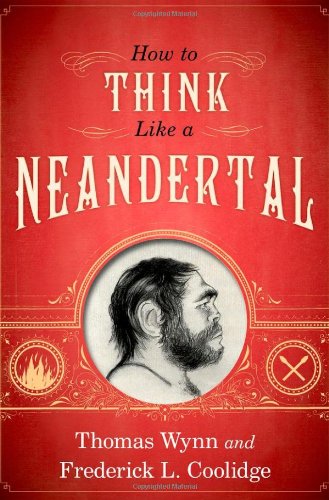
How To Think Like a Neandertal
Authors:
Thomas Wynn
Publisher:
Oxford University Press, USA
Publication Date:
Not available
ISBN:
0199742820
There have been many books, movies, and even TV commercials featuring Neandertals--some serious, some comical. But what was it really like to be a... Neandertal? How were their lives similar to or different from ours? In How to Think Like a Neandertal, archaeologist Thomas Wynn and psychologist Frederick L. Coolidge team up to provide a brilliant account of the mental life of Neandertals, drawing on the most recent fossil and archaeological remains. Indeed, some Neandertal remains are not fossilized, allowing scientists to recover samples of their genes--one specimen had the gene for red hair and, more provocatively, all had a gene called FOXP2, which is thought to be related to speech. Given the differences between their faces and ours, their voices probably sounded a bit different, and the range of consonants and vowels they could generate might have been different. But they could talk, and they had a large (perhaps huge) vocabulary--words for places, routes, techniques, individuals, and emotions. Extensive archaeological remains of stone tools and living sites (and, yes, they did often live in caves) indicate that Neandertals relied on complex technical procedures and spent most of their lives in small family groups. The authors sift the evidence that Neandertals had a symbolic culture--looking at their treatment of corpses, the use of fire, and possible body coloring--and conclude that they probably did not have a sense of the supernatural. The book explores the brutal nature of their lives, especially in northwestern Europe, where men and women with spears hunted together for mammoths and wooly rhinoceroses. They were pain tolerant, very likely taciturn, and not easy to excite. Wynn and Coolidge offer here an eye-opening portrait of Neandertals, painting a remarkable picture of these long-vanished people and providing insight, as they go along, into our own minds and culture.
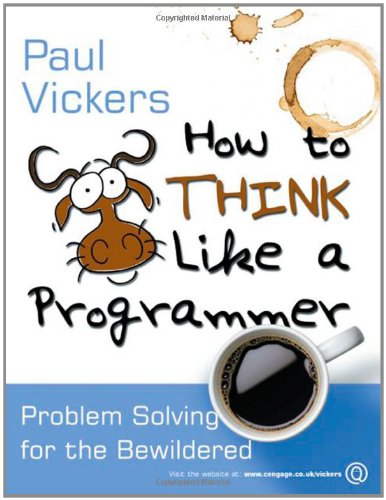
How to Think Like a Programmer: Problem Solving for the Bewildered
Authors:
Paul Vickers
Publisher:
Thomson Course Technology
Publication Date:
Not available
ISBN:
1844809005
How to Think Like a Programmer is a bright, accessible, fun read describing the mindset and mental methods of programmers. Anticipating the problems... that students have through the character of Brian the Bewildered Wildebeest, the slower pace required for this approach is made interesting and engaging by hand-drawn sketches, frequent (paper-based) activities and the everyday tasks (e.g. coffee making) used as a basis of worked examples. How to Think Like a Programmer provides a fun and accessible way to learn the mental models needed to approach computational programmable problems.
How to Think Like a Psychologist: Critical Thinking in Psychology...
Authors:
Donald H. McBurney
Publisher:
Pearson
Publication Date:
Not available
ISBN:
0130150460
Featuring an informal writing style throughout, this unique book uses a question-and-answer format to explore some of the most common questions asked... about psychology. Topics feature many everyday examples, and include exercises that encourage readers to think critically and to relate the material to their own lives. The book also features discussion of common misconceptions and impediments to understanding psychology.
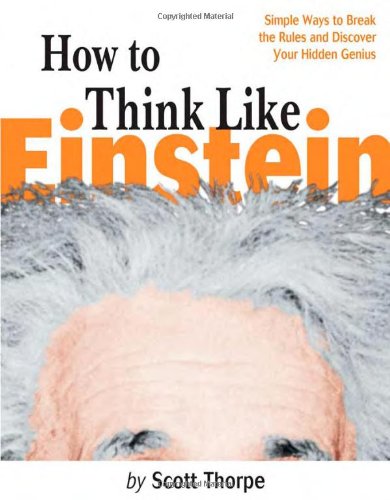
How to Think Like Einstein: Simple Ways to Break the Rules and...
Authors:
Scott Thorpe
Publisher:
Sourcebooks
Publication Date:
Not available
ISBN:
1570715858
In this totally accessible, ingenious book, you will learn the tricks and techniques to solve bewildering problems from the greatest minds in history,... including Albert Einstein. From business and parenting to becoming more creative and improving relationships, How to Think Like Einstein provides the tools to discovering breakthrough solutions to everyday challenges.Author Scott Thorpe will guide you step-by-step through the process of freeing yourself from your “rule ruts” to dreaming up some of the craziest, but possibly most important, solutions of your life! Learn to solve your problems by:--thinking like a bug--organizing a party--learning the game of poker--pretending you’re James Bond--acting like a millionaire
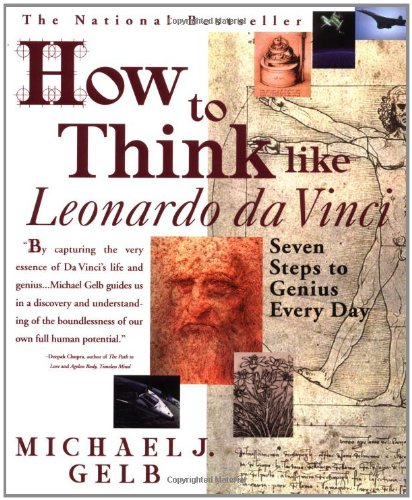
How to Think Like Leonardo da Vinci: Seven Steps to Genius Every Day
Authors:
Michael J. Gelb
Publisher:
Dell
Publication Date:
Not available
ISBN:
0440508274
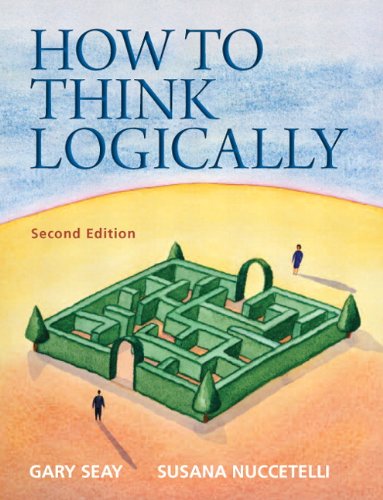
How to Think Logically
Authors:
Gary Seay
Publisher:
Pearson
Publication Date:
Not available
ISBN:
0205154980
Concise Principles of Reasoning Concise, yet covering all the basics of a 15-week course in informal logic or critical reasoning, this text... engages students with a lively format and clear writing style. The small scale of the book keeps the cost low, a vital consideration in today’s economy, yet without compromising on logical rigor. The author’s presentation strikes a careful balance: it offers clear, jargon-free writing while preserving rigor. Brimming with numerous pedagogical features, this accessible text assists students with analysis, reconstruction, and evaluation of arguments and helps them become independent, analytical thinkers. Introductory students are exposed to the basic principles of reasoning while also having their appetites whetted for future courses in philosophy. Teaching and Learning Experience Personalize Learning - MySearchLabdelivers proven resultsin helping individual students succeed. It provides engaging experiencesthat personalize, stimulate, and measure learning for each student. And, it comes from a trusted partnerwith educational expertise and a deep commitment to helping students, instructors, and departments achieve their goals. Improve Critical Thinking - Abundant pedagogical aids -- including exercises and study questions within each chapter -- encourage students to examine their assumptions, discern hidden values, evaluate evidence, assess their conclusions, and more! Engage Students - Chapter and section outlines, summaries, illustrative examples, special-emphasis boxes and key terms present new ideas in manageable-sized units of information so students can digest each concept before moving on to the next one, and ensure students key-in on crucial points to remember. Support Instructors -Teaching your course just got easier! You can create a Customized Text or use our Instructor’s Manual, or PowerPoint Presentation Slides. Plus, this concise textbook contains only as much material as you can cover in a course, creating an affordable alternative you can assign with confidence to a cost-conscious student population. Additionally, each chapter in How to Think Logically is designed as a self-contained unit so that you can choose the combination and order of chapters according to the needs of your courses; making the text a flexible base for courses in logic, critical thinking, and rhetoric. Note: MySearchLab does not come automatically packaged with this text. To purchase MySearchLab, please visit www.MySearchLab.com or you can purchase a valuepack of the text + MySearchLab (VP ISBN-10: 0205234410, VP ISBN-13: 9780205234417).
 '





