production
/viewbook/list/all/?page=5682
/
/static/
None
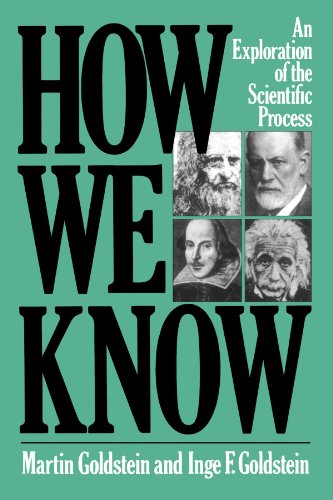
How We Know: An Exploration Of The Scientific Process
Authors:
Martin Goldstein
Publisher:
Da Capo Press
Publication Date:
Not available
ISBN:
030680140X
The portraits of Freud, Shakespeare, Einstein, and Leonardo da Vinci on the cover symbolize a major theme of How We Know—that the creative imagination... plays a role in the sciences no less than in the arts, and that scientific discoveries have an aesthetic beauty of their own that can be enjoyed by the nonscientist. Written to be understood by readers without proper scientific training, the main features of scientific method are illustrated by the use of case histories of research and discovery. The book also explores such questions as the nature of scientific understanding of the world, how theories are invented, how they are tested experimentally, and whether the scientist is ever "objective."The broad scientific experience of Martin and Inge Goldstein has made them aware not only of the distinctive features of diverse disciplines, but also of the common ground all fields of science share. This book was written in the belief that these common features of the scientific enterprise can be communicated to the nonscientist, and that it is important both for science and for society as a whole that this be done.How We Know offers help to those mystified and confused by the methods and aims of science. It firmly establishes science as a product of human beings acting in human ways, a process where the search for beauty can be as compelling as the search for truth.
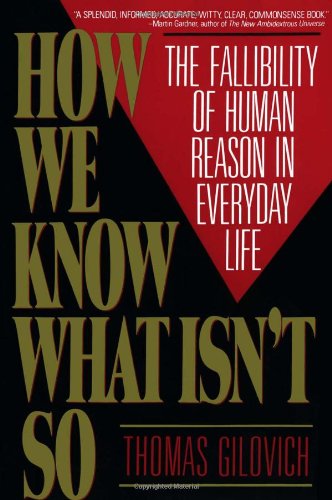
How We Know What Isn't So: The Fallibility of Human Reason in...
Authors:
Thomas Gilovich
Publisher:
Free Press
Publication Date:
Not available
ISBN:
0029117062
When can we trust what we believe - that "teams and players have winning streaks", that "flattery works", or that "the more people who agree, the more... likely they are to be right" - and when are such beliefs suspect? Thomas Gilovich offers a guide to the fallacy of the obvious in everyday life. Illustrating his points with examples, and supporting them with the latest research findings, he documents the cognitive, social and motivational processes that distort our thoughts, beliefs, judgements and decisions. In a rapidly changing world, the biases and stereotypes that help us process an overload of complex information inevitably distort what we would like to believe is reality. Awareness of our propensity to make these systematic errors, Gilovich argues, is the first step to more effective analysis and action.
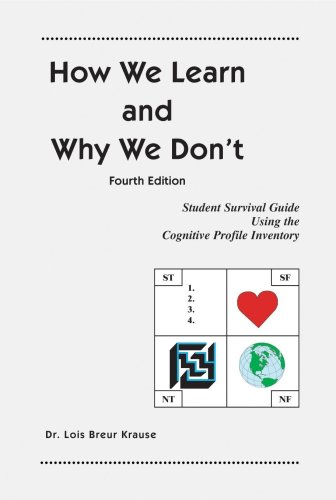
How We Learn and Why We Don't
Authors:
Lois Breur Krause
Publisher:
Custom Publishing
Publication Date:
Not available
ISBN:
0759327343
Suitable for almost every course, How We Learn and Why We Don't is a relatively short, 60-page book designed to help students understand how they think,... how they learn, and even perhaps why they don't think as clearly as they could or learn as much as they can. Beginning with a self-assessment, students are offered proven strategies to help them achieve better grades and to maximize and match learning profiles with their academic and career paths.

How We Survived Communism And Even Laughed
Authors:
Slavenka Drakulic
Publisher:
Harper Perennial
Publication Date:
Not available
ISBN:
0060975407
Hailed by feminists as one of the most important contributions to women's studies in the last decade, this gripping, beautifully written account... describes the daily struggles of women under the Marxist regime in the former republic of Yugoslavia.

HOW WE TALK
Authors:
Not Available
Publisher:
Not available
Publication Date:
Not available
ISBN:
Not available
HOW WE TALK-NORTON MIX CUSTOM
Authors:
Not Available
Publisher:
Not available
Publication Date:
Not available
ISBN:
Not available
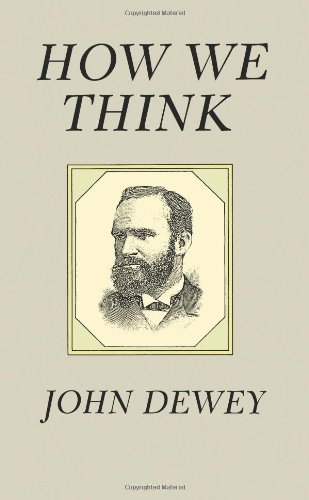
How We Think
Authors:
John Dewey
Publisher:
Dover Publications
Publication Date:
Not available
ISBN:
0486298957
The dean of American philosophers shares his views on methods of training students to think well. His considerations include inductive and deductive... logic, interpreting facts, concrete and abstract thinking, the roles of activity, language, and observation, and many other aspects of thought training. This volume is essential reading for teachers and other education professionals.
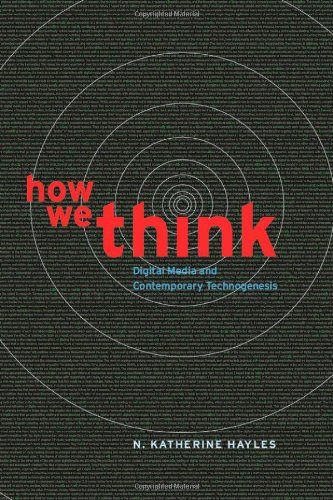
How We Think: Digital Media and Contemporary Technogenesis
Authors:
N. Katherine Hayles
Publisher:
University Of Chicago Press
Publication Date:
Not available
ISBN:
0226321428
“How do we think?” N. Katherine Hayles poses this question at the beginning of this bracing exploration of the idea that we think through, with, and... alongside media. As the age of print passes and new technologies appear every day, this proposition has become far more complicated, particularly for the traditionally print-based disciplines in the humanities and qualitative social sciences. With a rift growing between digital scholarship and its print-based counterpart, Hayles argues for contemporary technogenesis—the belief that humans and technics are coevolving—and advocates for what she calls comparative media studies, a new approach to locating digital work within print traditions and vice versa.Hayles examines the evolution of the field from the traditional humanities and how the digital humanities are changing academic scholarship, research, teaching, and publication. She goes on to depict the neurological consequences of working in digital media, where skimming and scanning, or “hyper reading,” and analysis through machine algorithms are forms of reading as valid as close reading once was. Hayles contends that we must recognize all three types of reading and understand the limitations and possibilities of each. In addition to illustrating what a comparative media perspective entails, Hayles explores the technogenesis spiral in its full complexity. She considers the effects of early databases such as telegraph code books and confronts our changing perceptions of time and space in the digital age, illustrating this through three innovative digital productions—Steve Tomasula’s electronic novel, TOC; Steven Hall’s The Raw Shark Texts; and Mark Z. Danielewski’s Only Revolutions. Deepening our understanding of the extraordinary transformative powers digital technologies have placed in the hands of humanists, How We Think presents a cogent rationale for tackling the challenges facing the humanities today.
How We Think (Great Books in Philosophy)
Authors:
John Dewey
Publisher:
Prometheus Books
Publication Date:
Not available
ISBN:
0879757019
John Dewey, one of America's greatest popular philosophers and educators, emphasises the importance of critical thinking and the vital role education... should play. In this progressive work, written more than 80 years ago, Dewey, recognising that we are born with the ability to think, argues that the educator's fundamental role is to train us to think well. At a time when America is lamenting the lack of solid training in the sciences at the elementary and secondary levels, Dewey's enthusiastic correlation between the scientific mind and the natural attitude of childhood marked by curiosity, imagination, and the love of experimental inquiry offers a refreshing and optimistic perspective. He demonstrates how an appreciation of this correlation and a recognition of its value in educational practice can promote individual happiness and reduce social waste.
How We Think: Revised and Expanded Edition
Authors:
John Dewey
Publisher:
Wadsworth Publishing
Publication Date:
Not available
ISBN:
0395897548
The dean of American philosophers shares his views on methods of training students to think well. His considerations include inductive and deductive... logic, interpreting facts, concrete and abstract thinking, the roles of activity, language, and observation, and many other aspects of thought training. This volume is essential reading for teachers and other education professionals.
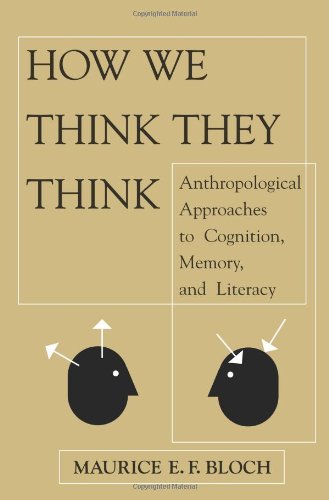
How We Think They Think: Anthropological Approaches To Cognition,...
Authors:
Maurice E F Bloch
Publisher:
Westview Press
Publication Date:
Not available
ISBN:
0813333741
These essays by one of anthropology’s most original theorists consider such fundamental questions as: Is cognition language-based? How reliable a... guide to memory are people’s narratives about themselves? What connects the social recalling” studied by anthropologists to the autobiographical memory” studied by psychologists? Now gathered in accessible form for the first time and drawing frequently upon the author’s fieldwork among the Zafimaniry of Madagascar for ethnographic examples, the twelve closely linked essays of How We Think They Think pose provocative challenges not only to conventional cognitive models but to the basic assumptions that underlie much of ethnography. This book will be read with interest by those who study culture and cognition, ethnographic theory and practice, and the peoples and cultures of Africa.
How We Work
Authors:
William F. Pinar
Publisher:
Peter Lang Publishing
Publication Date:
Not available
ISBN:
0820441023
How We Work is a collection of essays by writers from across the disciplines on the ways they produce work. Each writer offers a description of the... processes and quirks of putting thoughts into form. Some of the essays are humorous, confessing to the ways writers confront the terror of the blank page. Others are helpful, offering hints and analyses. All give personal reflection on how creating is both horizontal and vertical, involving the writer with places, sensual experiences, and other bodies, as well as with other parts of the self. Deliberately interdisciplinary and multicultural, this collection contains the work of curriculum theorists, fiction writers, poets, musicians, and professors of mathematics, English, philosophy, and women's studies. We hope to encourage readers to become more aware of their own creative potential by reading these essays.
How: Why How We Do Anything Means Everything
Authors:
Dov Seidman
Publisher:
Wiley
Publication Date:
Not available
ISBN:
1118106377
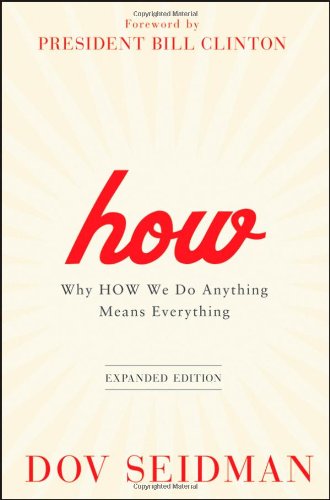
The flood of information, unprecedented transparency, increasing interconnectedness-and our global interde¬pendence-are dramatically reshaping today's... world, the world of business, and our lives. We are in the Era of Behavior and the rules of the game have fundamentally changed. It is no longer what you do that matters most and sets you apart from others, but how you do what you do. Whats are commodities, easily duplicated or reverse-engineered. Sustainable advantage and enduring success for organizations and the people who work for them now lie in the realm of how, the new frontier of conduct.For almost two decades, Dov Seidman's pioneering organi¬zation, LRN, has helped some of the world's most respected companies build "do it right," winning cultures and inspire principled performance throughout their organizations. Seidman's distinct vision of the world, business, and human endeavor has helped enable more than 15 million people do¬ing business in more than 120 countries to outbehave the competition. In HOW: Why HOW We Do Anything Means Everything, Dov Seidman shares his unique approach with you. Now updated and expanded, HOW includes a new Fore¬word from President Bill Clinton and a new Preface from Dov Seidman on why how we behave, lead, govern, operate, consume, engender trust in our relationships, and relate to others matters more than ever and in ways it never has before.Through entertaining anecdotes, surprising case studies, cutting-edge research in a wide range of fields, and reveal¬ing interviews with a diverse group of leaders, business executives, experts, and everyday people on the front lines, this book explores how we think, how we behave, how we lead, and how we govern our institutions and ourselves to uncover the values-inspired "hows" of twenty-first-century success and significance.Divided into four comprehensive parts, this insightful book:Exposes the forces and factors that have fundamentally restructured the world in which organizations operate and their people conduct themselves, placing a new focus on their howsProvides frameworks to help you understand those hows and implement them in powerful and productive waysHelps you channel your actions and decisions in order to thrive uniquely within today's new realitiesSheds light on the systems of how-the dynamics between people that shape organizational culture-andintroduces a bold new vision for leading and winning through self-governanceThe qualities that many once thought of as "soft"-values, trust, and reputation-are now the hard currency of success and the ultimate drivers of efficiency, performance, innova¬tion, and growth.With in-depth insights and practical advice, HOW will help you bring excellence and significance to your business endeavors- and your life-and refocus your efforts in powerful new ways.If you want to stand out, to thrive in our fast changing, hyper¬connected, and hypertransparent world, read this book and discover HOW.
HOW+WHY OF WORLD HISTORY
Authors:
Not Available
Publisher:
Kendall Hunt Publishing
Publication Date:
Not available
ISBN:
146520699X
How Wide the Divide?: A Mormon & an Evangelical in Conversation
Authors:
Craig L. Blomberg
Publisher:
IVP Academic
Publication Date:
Not available
ISBN:
0830819916
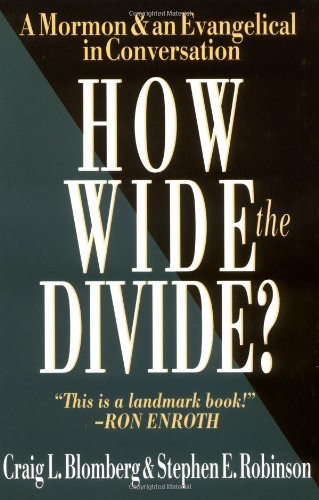
Voted one of Christianity Today's 1998 Books of the Year! Mormons and evangelicals don't often get along very well, at least not once they begin to... discuss their religious beliefs. They often set about trying to convert one another, considering the faith the other holds as defective in some critical way. Unfortunately, much of what they say about one another simply isn't true. False stereotypes abound on both sides, preventing genuine and helpful communication. Having discovered this sad state of affairs, Craig Blomberg, a committed evangelical scholar, and Stephen Robinson, a committed Mormon scholar, set out to listen to one another and to ferret out the real agreements and disagreements between them. In the conversation that develops, you will read what each believes about key theological issues--the nature and bounds of Scripture, the nature of God and deification, the person of Christ and the Trinity, and the essentials of salvation--and see how they interact with one another. What they agree on may surprise you. Though this book does not sweep differences under the rug, it is meant to help Mormons and evangelicals know and tell the truth about one another. It does not expect to end evangelistic efforts from either side. In fact, it may help to promote more effective communication because it can help to get rid of misrepresentations from both sides. In the end, however, you will be able to judge for yourself just how wide the divide between them is.
 '





