production
/viewbook/list/all/?page=5695
/
/static/
None
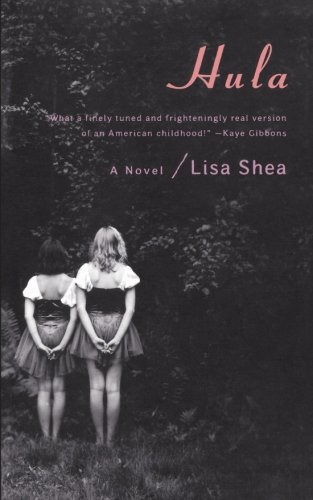
Hula: A Novel
Authors:
Lisa Shea
Publisher:
W. W. Norton & Company
Publication Date:
Not available
ISBN:
0393321304
"What a finely tuned and frighteningly real version of an American childhood!"—Kaye GibbonsFor two young girls in the 1960s, the family backyard is... both playground and prison. Among the bushes and brambles, it offers places to hide from the rages of their war-scarred father, places that also become secret gardens of the imagination. Told over the course of two hot Virginia summers, Hula presents a child's-eye view of a family drama played out to a chilling climax. The younger sister narrates, introducing us to her older sister's ritual taunts, her mother's dreamy distance, her father's escalating temper. Lisa Shea's haunting first novel probes the dark place where adolescent fantasies and real terrors collide.
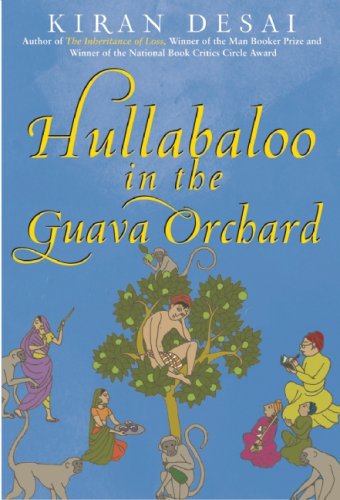
Hullabaloo in the Guava Orchard: A Novel
Authors:
Kiran Desai
Publisher:
Grove Press
Publication Date:
Not available
ISBN:
0802144500
Winner of the 2006 Man Booker Prize and the National Book Critics Circle Award for Fiction for her second novel The Inheritance of Loss, Kiran Desai is... one of the most talented writers of her generation. Now available for the first time as a Grove Press paperback, Hullabaloo in the Guava OrchardDesai’s dazzling debut novelis a wryly hilarious and poignant story that simultaneously captures the vivid culture of the Indian subcontinent and the universal intricacies of human experience. Sampath Chawla was born in a time of drought into a family not quite like other families, in a town not quite like other towns. After years of failure at school, failure at work, of spending his days dreaming in tea stalls, it does not seem as if Sampath is going to amount to muchuntil one day he climbs a guava tree in search of peaceful contemplation and becomes unexpectedly famous as a holy man, sending his tiny town into turmoil. A syndicate of larcenous, alcoholic monkeys terrorize the pilgrims who cluster around Sampath’s tree, spies and profiteers descend on the town, and none of Desai’s outrageous characters goes unaffected as events spin increasingly out of control.

HUM 101 CUSTOM FALL 2011-WINTERS
Authors:
Not Available
Publisher:
Not available
Publication Date:
Not available
ISBN:
Not available
HUM 103 WWI COURSEPACK
Authors:
Not Available
Publisher:
Not available
Publication Date:
Not available
ISBN:
Not available
HUM 131 READER Ed: 1ST
Authors:
Not Available
Publisher:
Not available
Publication Date:
Not available
ISBN:
Not available
HUM 2410 TEXT & BLACKBOARD PACKAGE NORTH CAROLINA CENTRAL UNIVERSITY
Authors:
Not Available
Publisher:
Not available
Publication Date:
Not available
ISBN:
Not available
HUMAN 21: FROM CASABLANCA TO KABUL
Authors:
Not Available
Publisher:
Not available
Publication Date:
Not available
ISBN:
Not available
HUMAN 6: AMERICAN CULTURES
Authors:
Not Available
Publisher:
Not available
Publication Date:
Not available
ISBN:
Not available
HUMAN 6: WHAT IT WAS: READINGS ON 1960'
Authors:
Not Available
Publisher:
Not available
Publication Date:
Not available
ISBN:
Not available
HUMAN 7: INTRO TO THE HUMANITIES
Authors:
Not Available
Publisher:
Not available
Publication Date:
Not available
ISBN:
Not available
HUMAN 8: COMP MYTH; ANCIENT NEAR EAST
Authors:
Not Available
Publisher:
Not available
Publication Date:
Not available
ISBN:
Not available
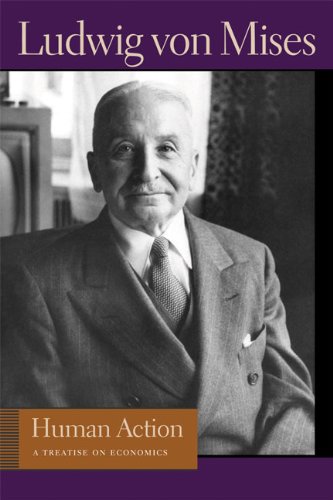
Human Action: A Treatise on Economics
Authors:
Ludwig von Mises
Publisher:
Liberty Fund
Publication Date:
Not available
ISBN:
0865976317
In the foreword to Human Action: A Treatise on Economics, Mises explains complex market phenomena as "the outcomes of countless conscious, purposive... actions, choices, and preferences of individuals, each of whom was trying as best as he or she could under the circumstances to attain various wants and ends and to avoid undesired consequences." It is individual choices in response to personal subjective value judgments that ultimately determine market phenomena—supply and demand, prices, the pattern of production, and even profits and losses. Although governments may presume to set "prices," it is individuals who, by their actions and choices through competitive bidding for money, products, and services, actually determine "prices". Thus, Mises presents economics—not as a study of material goods, services, and products—but as a study of human actions. He sees the science of human action, praxeology, as a science of reason and logic, which recognizes a regularity in the sequence and interrelationships among market phenomena. Mises defends the methodology of praxeology against the criticisms of Marxists, socialists, positivists, and mathematical statisticians.Mises attributes the tremendous technological progress and the consequent increase in wealth and general welfare in the last two centuries to the introduction of liberal government policies based on free-market economic teachings, creating an economic and political environment which permits individuals to pursue their respective goals in freedom and peace. Mises also explains the futility and counter-productiveness of government attempts to regulate, control, and equalize all people's circumstances: "Men are born unequal and ... it is precisely their inequality that generates social cooperation and civilization."Ludwig von Mises (1881–1973) was the leading spokesman of the Austrian School of Economics throughout most of the twentieth century. He earned his doctorate in law and economics from the University of Vienna in 1906. In 1926, Mises founded the Austrian Institute for Business Cycle Research. From 1909 to 1934, he was an economist for the Vienna Chamber of Commerce. Before the Anschluss, in 1934 Mises left for Geneva, where he was a professor at the Graduate Institute of International Studies until 1940, when he emigrated to New York City. From 1948 to 1969, he was a visiting professor at New York University.Bettina Bien Greaves is a former resident scholar, trustee, and longtime staff member of the Foundation for Economic Education. She has written and lectured extensively on topics of free market economics. Her articles have appeared in such journals as Human Events, Reason, and The Freeman: Ideas on Liberty. A student of Mises, Greaves has become an expert on his work in particular and that of the Austrian School of economics in general. She has translated several Mises monographs, compiled an annotated bibliography of his work, and edited collections of papers by Mises and other members of the Austrian School.
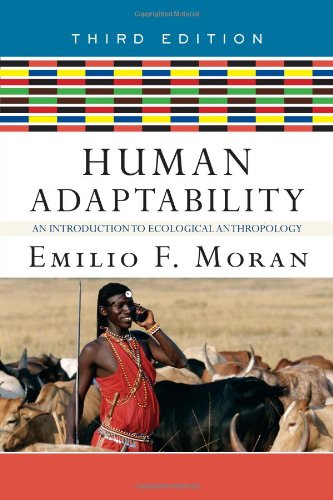
Human Adaptability: An Introduction to Ecological Anthropology
Authors:
Emilio F. Moran
Publisher:
Westview Press
Publication Date:
Not available
ISBN:
0813343674
Designed to help students understand the multiple levels at which human populations respond to their surroundings, this essential text offers the most... complete discussion of environmental, physiological, behavioral, and cultural adaptive strategies available. Among the unique features that make Human Adaptability outstanding as both a textbook for students and a reference book for professionals are a complete discussion of the development of ecological anthropology and relevant research methods; the use of an ecosystem approach with emphasis on arctic, high altitude, arid land, grassland, and tropical rain forest environments; an extensive bibliography on ecological anthropology; and a comprehensive glossary of technical terms. Entirely new to the third edition are chapters on urban sustainability and methods of spatial analysis, with enhanced emphasis throughout on the role of gender in human-adaptability research and on global environmental issues as they affect particular ecosystems. In addition, brand-new sections in each chapter guide students to websites that provide access to relevant material, complement the text’s coverage of biomes, and suggest ways to become active in environmental issues.
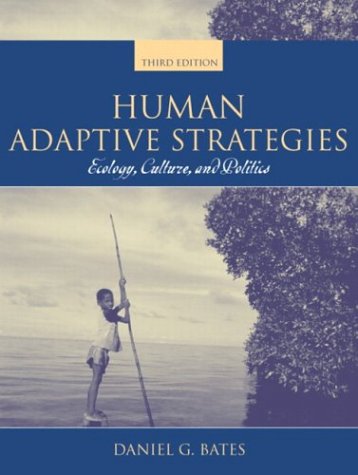
Human Adaptive Strategies: Ecology, Culture, and Politics (3rd...
Authors:
Daniel G. Bates
Publisher:
Pearson
Publication Date:
Not available
ISBN:
0205418155
Based on Bates' Cultural Anthropology, this book provides a framework for analyzing cultures based on their economic systems. Cultural ecology is... the study of human behavior and culture within an environmental context. It examines how humans adapt to their environment and how the environment shapes culture. Based on a selection of materials from Bates and Fratkin's Cultural Anthropology, Third Edition, Human Adaptive Strategies uses case studies to show how cultures evolved within the context of their environment and how their methods of surviving in their environment have affected other aspects of their culture. One reviewer says, “Concentrating, as the book does, on subsistence patterns and cultural ecology, it creates a conceptual structure conducive to the needs of the introductory student in anthropology.” The new third edition includes an expanded discussion of basic ecological concepts and ecosystem components and organization; expanded material on population related issues; and addresses in some depth the controversy involving Napolean Chagnon's work as it touches on a number of important aspects of scholarship and research.
Human Adjustment
Authors:
John W. Santrock
Publisher:
Not available
Publication Date:
Not available
ISBN:
0072990597
In this new text for Psychology of Adjustment courses, John Santrock presents psychology as a research-based science that can be applied successfully to... improving personal adjustment. Providing numerous opportunities for self-evaluation and strategies for adjustment, Human Adjustment helps students cope effectively with the challenges they face.
 '





