production
/viewbook/list/all/?page=5724
/
/static/
None

HUMAN DEVELOPMENT + MYDEVLAB ]PKG[
Authors:
Not Available
Publisher:
Not available
Publication Date:
Not available
ISBN:
Not available
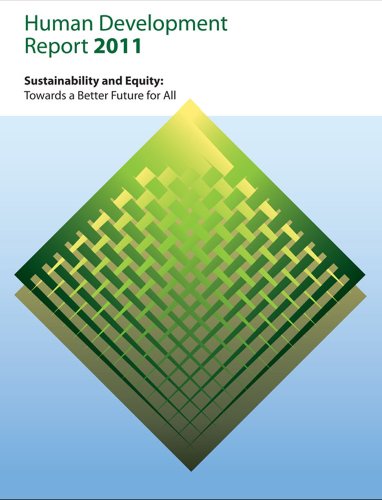
Human Development Report 2011: Sustainability and Equity: Towards a...
Authors:
Not Available
Publisher:
Palgrave Macmillan
Publication Date:
Not available
ISBN:
0230363318
The 2011 Human Development Report argues that the urgent global challenges of sustainability and equity must be addressed together – and identifies... policies on the national and global level that could spur progress towards these interlinked goals at the same time. Bold action is needed on both fronts, the Report contends, if the recent human development progress experienced by most of the world's poor majority is to be sustained, for the benefit of future generations as well as for those living today. Past Reports have shown that living standards in most countries have been rising – and converging – for several decades now. Yet the 2011 Report projects a disturbing reversal of those trends if environmental deterioration and social inequalities continue to intensify, with the least developed countries diverging downwards from global patterns of progress by 2050. The Report shows further how the world's most disadvantaged people suffer the most from environmental degradation, including in their immediate personal environment, and disproportionately lack political power, making it all the harder for the world community to reach agreement on needed global policy change. Yet the Report also outlines great potential for positive synergies in the quest for greater equity and sustainability, especially at the national level. The Report further emphasizes the right to a healthy environment, the importance of integrating equity into environmental policies, and the critical importance of public participation and official accountability. The 2011 Report concludes with proposals for bold new approaches to global development financing and environmental controls, arguing that these are both essential and feasible. The 2011 Report will also feature the 2011 Human Development Index (HDI) and updated editions of the complementary indices introduced in the 20th anniversary Report in 2010: the Inequality-Adjusted HDI, the Gender Inequality Index, and the Multidimensional Poverty Index.
Human Development - Study Guide (6th, 13) by Kail, Robert V -...
Authors:
Kail
Publisher:
Wadsworth, Paperback(2012)
Publication Date:
Not available
ISBN:
1111835543
Balanced coverage of the entire life span is just one thing that distinguishes HUMAN DEVELOPMENT: A LIFE-SPAN VIEW, 6TH EDITION. With its comprehensive,... succinct, and applied coverage, the text has proven its ability to capture students' interest while introducing them to the issues, forces, and outcomes that make us who we are. Robert V. Kail's expertise in childhood and adolescence, combined with John C. Cavanaugh's extensive research in gerontology, result in a book with a rich description of all life-span stages and important topics. A modified chronological approach traces development in sequential order from conception through late life, while also dedicating several chapters to key topical issues. This organization also allows the book to be relatively briefer than other texts a benefit given the enormous amount of information covered in the course.
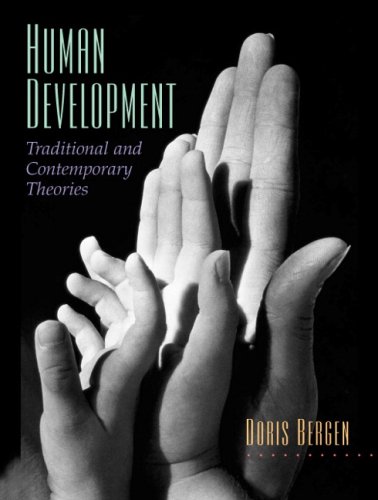
Human Development: Traditional and Contemporary Theories
Authors:
Doris Bergen
Publisher:
Pearson
Publication Date:
Not available
ISBN:
0131343971
For courses in human development, theories of development and development over the lifespan. Throughout years of teaching various courses in... psychology, Doris Bergen struggled with a familiar problem in Human Development classes: the texts available to her did not meet the needs of the types of students in her classes. In teaching students who were primarily working towards degrees in professional practice, rather than those focusing on advanced degrees in psychology, the current texts did not present theoretical work in a way that helped her students translate the concepts into their careers. Here, Doris Bergen has authored a text that does just that. By making the theoretical issues relevant and accessible to students going into professional practice, enabling them to apply theory to case examples, and helping them see which theories are focused primarily on specific developmental domains, this text will give students the edge they need as they move forward in their working lives.
HUMAN DEVELOPMENT UAA PACK
Authors:
Not Available
Publisher:
Not available
Publication Date:
Not available
ISBN:
Not available
HUMAN DEVELOPMENT W/LIVES ACROSS CULT.
Authors:
Not Available
Publisher:
Not available
Publication Date:
Not available
ISBN:
Not available
Human Development W/Mydevelopmentlab (Making The G
Authors:
Not Available
Publisher:
Not available
Publication Date:
Not available
ISBN:
Not available
HUMAN DEV.W/WEB TUTOR F/BLACKBOARD BUN.
Authors:
Not Available
Publisher:
Not available
Publication Date:
Not available
ISBN:
Not available

Human Dignity
Authors:
George Kateb
Publisher:
Belknap Press of Harvard University Press
Publication Date:
Not available
ISBN:
0674048377
We often speak of the dignity owed to a person. And dignity is a word that regularly appears in political speeches. Charters are promulgated in its... name, and appeals to it are made when people all over the world struggle to achieve their rights. But what exactly is dignity? When one person physically assaults another, we feel the wrong demands immediate condemnation and legal sanction. Whereas when one person humiliates or thoughtlessly makes use of another, we recognize the wrong and hope for a remedy, but the social response is less clear. The injury itself may be hard to quantify. Given our concern with human dignity, it is odd that it has received comparatively little scrutiny. Here, George Kateb asks what human dignity is and why it matters for the claim to rights. He proposes that dignity is an “existential” value that pertains to the identity of a person as a human being. To injure or even to try to efface someone’s dignity is to treat that person as not human or less than human—as a thing or instrument or subhuman creature. Kateb does not limit the notion of dignity to individuals but extends it to the human species. The dignity of the human species rests on our uniqueness among all other species. In the book’s concluding section, he argues that despite the ravages we have inflicted on it, nature would be worse off without humanity. The supremely fitting task of humanity can be seen as a “stewardship” of nature. This secular defense of human dignity—the first book-length attempt of its kind—crowns the career of a distinguished political thinker.
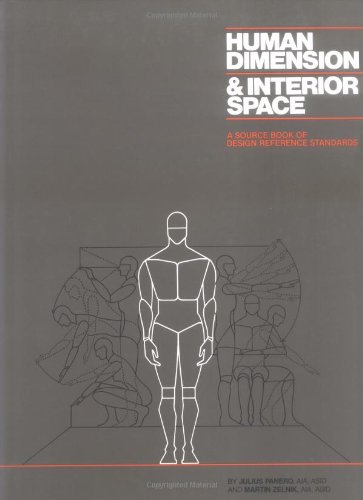
Human Dimension & Interior Space: A Source Book of Design...
Authors:
Julius Panero
Publisher:
Watson-Guptill
Publication Date:
Not available
ISBN:
0823072711
The study of human body measurements on a comparative basis is known as anthropometrics. Its applicability to the design process is seen in the physical... fit, or interface, between the human body and the various components of interior space.Human Dimension and Interior Space is the first major anthropometrically based reference book of design standards for use by all those involved with the physical planning and detailing of interiors, including interior designers, architects, furniture designers, builders, industrial designers, and students of design. The use of anthropometric data, although no substitute for good design or sound professional judgment should be viewed as one of the many tools required in the design process. This comprehensive overview of anthropometrics consists of three parts.The first part deals with the theory and application of anthropometrics and includes a special section dealing with physically disabled and elderly people. It provides the designer with the fundamentals of anthropometrics and a basic understanding of how interior design standards are established. The second part contains easy-to-read, illustrated anthropometric tables, which provide the most current data available on human body size, organized by age and percentile groupings. Also included is data relative to the range of joint motion and body sizes of children. The third part contains hundreds of dimensioned drawings, illustrating in plan and section the proper anthropometrically based relationship between user and space. The types of spaces range from residential and commercial to recreational and institutional, and all dimensions include metric conversions.In the Epilogue, the authors challenge the interior design profession, the building industry, and the furniture manufacturer to seriously explore the problem of adjustability in design. They expose the fallacy of designing to accommodate the so-called average man, who, in fact, does not exist. Using government data, including studies prepared by Dr. Howard Stoudt, Dr. Albert Damon, and Dr. Ross McFarland, formerly of the Harvard School of Public Health, and Jean Roberts of the U.S. Public Health Service, Panero and Zelnik have devised a system of interior design reference standards, easily understood through a series of charts and situation drawings. With Human Dimension and Interior Space, these standards are now accessible to all designers of interior environments.
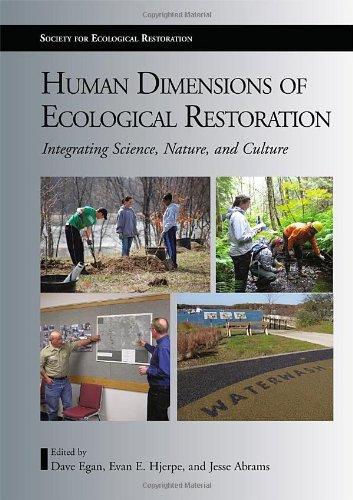
Human Dimensions of Ecological Restoration: Integrating Science,...
Authors:
Not Available
Publisher:
Island Press
Publication Date:
Not available
ISBN:
1597266906
When it comes to implementing successful ecological restoration projects, the social, political, economic, and cultural dimensions are often as... important as-and sometimes more important than-technical or biophysical knowledge. Human Dimensions of Ecological Restoration takes an interdisciplinary look at the myriad human aspects of ecological restoration. In twenty-six chapters written by experts from around the world, it provides practical and theoretical information, analysis, models, and guidelines for optimizing human involvement in restoration projects. Six categories of social activities are examined: collaboration between land manager and stakeholders ecological economics volunteerism and community-based restoration environmental education ecocultural and artistic practices policy and politics For each category, the book offers an introductory theoretical chapter followed by multiple case studies, each of which focuses on a particular aspect of the category and provides a perspective from within a unique social/political/cultural setting. Human Dimensions of Ecological Restoration delves into the often-neglected aspects of ecological restoration that ultimately make the difference between projects that are successfully executed and maintained with the support of informed, engaged citizens, and those that are unable to advance past the conceptual stage due to misunderstandings or apathy. The lessons contained will be valuable to restoration veterans and greenhorns alike, scholars and students in a range of fields, and individuals who care about restoring their local lands and waters.
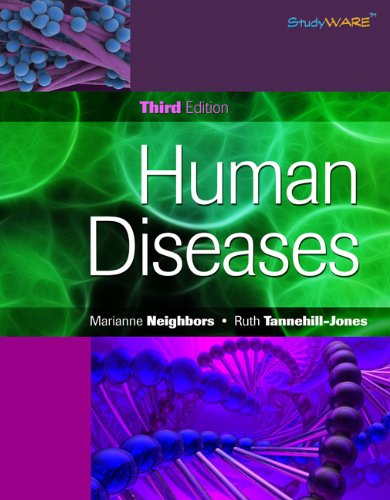
Human Diseases
Authors:
Marianne Neighbors
Publisher:
Delmar Cengage Learning
Publication Date:
Not available
ISBN:
1435427513
Now in its third edition, this best selling full-color text is better than ever! Organized by body systems, this essential pathophysiology text is... written specifically for allied health learners and as a reference for allied health professionals. This book is also ideal as a resource on basic diseases for anyone within the medical arena or lay community. It is designed to make difficult pathophysiology concepts easier to understand by using consistent organization, and includes pronunciations, boxed features, and full-color illustrations and photos. Chapters progress through a basic review of anatomy and physiology before introducing the most common diseases. Common diseases and disorders are presented consistently through description, etiology, symptoms, diagnosis, treatment and prevention headings.
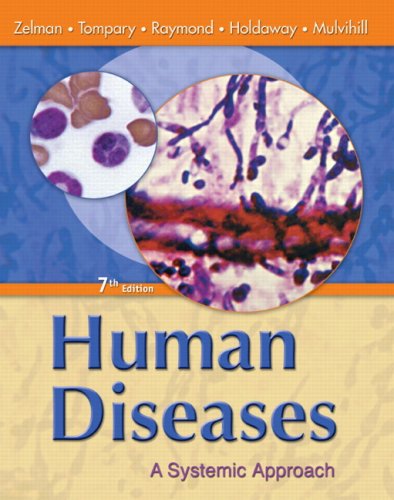
Human Diseases: A Systemic Approach (7th Edition)
Authors:
Mark Zelman
Publisher:
Prentice Hall
Publication Date:
Not available
ISBN:
0135155568
This book presents the basic principles of human disease, organized by human organ system. It provides practical information for both health career and... non-professional readers—unlike other books, which are generally too high level or specialized for this purpose. New to this edition are: new diagnostic tests and lab procedures; enhanced coverage in treatment and diagnostic sections in disorders to include common treatments and general pharm options; increased coverage of disease statistics, prevalencies, risk factors for diseases and conditions; addition of prevention and aging to Diseases at a Glance table at the end of each chapter; A new page will be added at the end of each chapter which walks the readers through the multimedia resources that are available for each chapter; and much more!
HUMAN DISEASES W/2 ACCESS CODES (W/WEBTUTOR)
Authors:
Not Available
Publisher:
Not available
Publication Date:
Not available
ISBN:
Not available
HUMAN DISEASE (WEBTUTOR ACCESS CARD)
Authors:
Not Available
Publisher:
Not available
Publication Date:
Not available
ISBN:
Not available
 '





