production
/viewbook/list/all/?page=5726
/
/static/
None
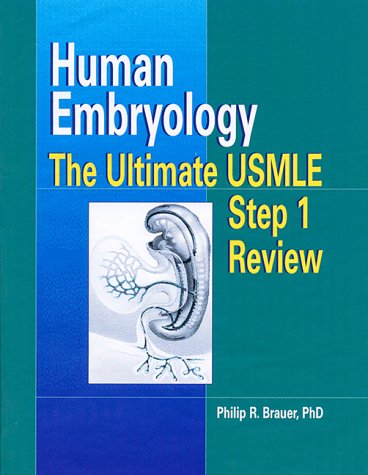
Human Embryology: The Ultimate USMLE Step 1 Review, 1e
Authors:
Philip R. Brauer BS PhD
Publisher:
Hanley & Belfus
Publication Date:
Not available
ISBN:
156053561X
This book is a valuable tool for enabling students to recall the many details regarding human development and congenital diseases, and it is... particularly valuable for those preparing for licensing exams. Copiously illustrated, each chapter consists of a singe page of illustrations coupled with a single page of focused, high-yield text. After each of the book's three parts, a series of practice questions tests the reader's recollection and understanding.Reader-friendly two-page chapter format (one page of text facing one page of figures)200 stunning line drawings prepared exclusively for this bookAttractive 2-color presentationQuick, efficient review of high-yield informationPractice test with MCQs
Human Emotions: A Reader
Authors:
Not Available
Publisher:
Wiley-Blackwell
Publication Date:
Not available
ISBN:
0631207481
Human Emotions: A Reader brings together a collection of articles which give an approach to the fast-growing field of empirical and theoretical research... on emotions. The volume includes classic writings from Darwin, James and Freud chosen to show their current significance, together with articles from contemporary research literature. The articles give a broad coverage of the subject and include selections from cross-cultural, biological, social, developmental and clinical areas of study.Human Emotions: A Reader begins with an overall introduction to both the volume and subject area by the Editors. Each of the six sections of the book, and each article are introduced, contextualizing and relating these articles to comparable research.The volume is organized to correspond with the structure and coverage of Understanding Emotions written by Keith Oatley and Jennifer M. Jenkins (also published by Blackwell). It can also be used independently allowing instructors to teach courses on emotions with their own emphases, and giving students access to a range of primary source material in this thought provoking field.
Human Enhancement
Authors:
Julian Savulescu
Publisher:
Oxford University Press, USA
Publication Date:
Not available
ISBN:
0199594961
To what extent should we use technology to try to make better human beings? Because of the remarkable advances in biomedical science, we must now find... an answer to this question. Human enhancement aims to increase human capacities above normal levels. Many forms of human enhancement are already in use. Many students and academics take cognition enhancing drugs to get a competitive edge. Some top athletes boost their performance with legal and illegal substances. Many an office worker begins each day with a dose of caffeine. This is only the beginning. As science and technology advance further, it will become increasingly possible to enhance basic human capacities to increase or modulate cognition, mood, personality, and physical performance, and to control the biological processes underlying normal aging. Some have suggested that such advances would take us beyond the bounds of human nature. These trends, and these dramatic prospects, raise profound ethical questions. They have generated intense public debate and have become a central topic of discussion within practical ethics. Should we side with bioconservatives, and forgo the use of any biomedical interventions aimed at enhancing human capacities? Should we side with transhumanists and embrace the new opportunities? Or should we perhaps plot some middle course? Human Enhancement presents the latest moves in this crucial debate: original contributions from many of the world's leading ethicists and moral thinkers, representing a wide range of perspectives, advocates and sceptics, enthusiasts and moderates. These are the arguments that will determine how humanity develops in the near future.
Human Error
Authors:
James Reason
Publisher:
Cambridge University Press
Publication Date:
Not available
ISBN:
0521314194
Modern technology has now reached a point where improved safety can only be achieved through a better understanding of human error mechanisms. In its... treatment of major accidents, the book spans the disciplinary gulf between psychological theory and those concerned with maintaining the reliabiblity of hazardous technologies. Much of the theoretical structure is new and original, and of particular importance is the identification of cognitive processes common to a wide variety of error types.
Human Ethology
Authors:
Irenaus Eibl-Eibesfeldt
Publisher:
Aldine Transaction
Publication Date:
Not available
ISBN:
0202309703
With the discovery of conditioned reflexes by I. P. Pavlov, the possibilities for experimenting, following the example set by the classical, exact... sciences, were made available to the behavioral sciences. Many psychologists hoped that the component parts of behavior had also been found from which the entire, multifaceted cosmos of behavior could then be constructed. An experimentally oriented psychology subsequently developed including the influential school of behaviorism. This first text on human ethology presents itself as a unified work, even though not every area could be treated with equal depth. For example, a branch of ethology has developed in the past decade which places particular emphasis on ecology and population genetics. This field, known as sociobiology, has enriched discussion beyond the boundaries of behavioral biology through its stimulating, and often provocative, theses. After vigorous debates between behaviorists, anthropologists, and sociologists, we have entered a period of exchange of thoughts and a mutual approach, which in many instances has led to cooperative projects of researchers from different disciplines. This work offers a biological point of view for discussion and includes data from the author's cross-cultural work and research from the staff of his institute. It confirms, above all else, the astonishing unity of mankind and paints a basically positive picture of how we are moved by the same passions, jealousies, friendliness, and active curiosity. The need to understand ourselves has never been as great as it is today. An ideologically torn humanity struggles for its survival. Our species, does not know how it should compensate its workers, and it experiments with various economic systems, constitutions, and forms of government. It struggles for freedom and stumbles into newer conflicts. Population growth is apparently completely out of hand, and at the same time many resources are being depleted. We must consider our existence rationally in order to understand it, but certainly not with cold, calculating reason but with the warm feeling of a heart concerned for the welfare of later generations.
Human Evolution
Authors:
Not Available
Publisher:
CCThomas
Publication Date:
Not available
ISBN:
0398066264

Human Evolution and Culture, Books a la Carte Plus MyAnthroLab (7th...
Authors:
Melvin R. Ember
Publisher:
Prentice Hall
Publication Date:
Not available
ISBN:
0205251420
A Brief Empirical Introduction to the Four Fields of Anthropology Human Evolution and Culture presents the highlights of the popular... Anthropology, 13th edition by the same author team. It provides students with an empirical introduction to the four fields of anthropology, and helps them understand humans in all their variety - and why such variety exists. Its four sections introduce students to 1) anthropology, 2) the biological and cultural evolution of humans, 3) cultural variation, and 4) how anthropology can be applied beyond academia. This new 7th edition places an increased emphasis on immigration, migration and globalization. Additionally, the size of the book (19 chapters) makes it useful for quarter courses, as well as for courses that encourage a lot of supplemental reading. Teaching and Learning Experience Personalize Learning - MyAnthroLab delivers proven results in helping students succeed, provides engaging experiences that personalize learning, and comes from a trusted partner with educational expertise and a deep commitment to helping students and instructors achieve their goals. Improve Critical Thinking – Throughout each chapter in Human Evolution and Culture there are a number of critical thinking questions to encourage students to examine their assumptions, discern hidden values, evaluate evidence, assess their conclusions, and more! Engage Students – Along with a detailed summary, each chapter ends with a listing of new terms that have been introduced; helping students to engage in major concepts and findings. Support Instructors - Teaching your course just got easier! You can create a Customized Text or use our Instructor’s Manual, Electronic “MyTest” Test Bank or PowerPoint Presentation Slides. Additionally, the size of the book (19 chapters) makes it useful for quarter courses, as well as for courses that encourage a lot of supplemental reading. Note: MyAnthroLab does not come automatically packaged with this text. To purchase MyAnthroLab, please visit www.MyAnthroLab.com or you can purchase a valuepack of the text + MyAnthroLab (VP ISBN-10: 0205201172, VP ISBN-13: 9780205201174)
Human Evolution and Culture: Highlights of Anthropology
Authors:
Carol R. Ember
Publisher:
Pearson
Publication Date:
Not available
ISBN:
0205232396
A Brief Empirical Introduction to the Four Fields of Anthropology Human Evolution and Culture presents the highlights of the popular... Anthropology, 13th edition by the same author team. It provides students with an empirical introduction to the four fields of anthropology, and helps them understand humans in all their variety - and why such variety exists. Its four sections introduce students to 1) anthropology, 2) the biological and cultural evolution of humans, 3) cultural variation, and 4) how anthropology can be applied beyond academia. This new 7th edition places an increased emphasis on immigration, migration and globalization. Additionally, the size of the book (19 chapters) makes it useful for quarter courses, as well as for courses that encourage a lot of supplemental reading. Teaching and Learning Experience Personalize Learning - MyAnthroLab delivers proven results in helping students succeed, provides engaging experiences that personalize learning, and comes from a trusted partner with educational expertise and a deep commitment to helping students and instructors achieve their goals. Improve Critical Thinking – Throughout each chapter in Human Evolution and Culture there are a number of critical thinking questions to encourage students to examine their assumptions, discern hidden values, evaluate evidence, assess their conclusions, and more! Engage Students – Along with a detailed summary, each chapter ends with a listing of new terms that have been introduced; helping students to engage in major concepts and findings. Support Instructors - Teaching your course just got easier! You can create a Customized Text or use our Instructor’s Manual, Electronic “MyTest” Test Bank or PowerPoint Presentation Slides. Additionally, the size of the book (19 chapters) makes it useful for quarter courses, as well as for courses that encourage a lot of supplemental reading. Note: MyAnthroLab does not come automatically packaged with this text. To purchase MyAnthroLab, please visit www.MyAnthroLab.com or you can purchase a valuepack of the text + MyAnthroLab (VP ISBN-10: 0205201172, VP ISBN-13: 9780205201174)
Human Evolution and Culture: Highlights of Anthropology (6th Edition)
Authors:
Melvin R. Ember
Publisher:
Prentice Hall
Publication Date:
Not available
ISBN:
013603635X
For one semester/quarter introductory courses in General Anthropology (Four Fields). This book presents the highlights of the popular Anthropology,... 12th edition by the same author team. The size of the book (19 chapters) makes it useful for quarter courses, as well as for courses that encourage a lot of supplemental reading. This text provides students with a comprehensive and scientific introduction to the four fields of anthropology and helps students understand humans in all their variety and why such variety exists. This new edition places an increased emphasis on immigration, migration and globalization. The four sections of the text introduce students to anthropology, address the biological and cultural evolution of humans, introduce students to cultural variation, and show how anthropology can be applied beyond academia.

Human Evolution and Prehistory
Authors:
WALL ROBERT
Publisher:
Kendall Hunt Publishing
Publication Date:
Not available
ISBN:
0757588131
Human Evolution: An Illustrated Introduction
Authors:
Roger Lewin
Publisher:
Wiley-Blackwell
Publication Date:
Not available
ISBN:
1405103787
The brief length and focused coverage of Human Evolution: An Illustrated Introduction have made this best-selling textbook the ideal complement to any... biology or anthropology course in which human evolution is taught. The text places human evolution in the context of humans as animals, while also showing the physical context of human evolution, including climate change and the impact of extinctions. Chapter introductions, numerous drawings and photographs, and an essential glossary all add to the accessibility of this text.The fifth edition has been thoroughly updated to include coverage of the latest discoveries and perspectives, including:· New early hominid fossils from Africa and Georgia, and their implications· New archaeological evidence from Africa on the origin of modern humans· Updated coverage of prehistoric art, including new sites· New perspectives on molecular evidence and their implications for human population history. An Instructor manual CD-ROM for this title is available. Please contact our Higher Education team at HigherEducation@wiley.com for more information.
Human Evolutionary Biology
Authors:
Not Available
Publisher:
Cambridge University Press
Publication Date:
Not available
ISBN:
052170510X
Wide-ranging and inclusive, this text provides an invaluable review of an expansive selection of topics in human evolution, variation and adaptability... for professionals and students in biological anthropology, evolutionary biology, medical sciences and psychology. The chapters are organized around four broad themes, with sections devoted to phenotypic and genetic variation within and between human populations, reproductive physiology and behavior, growth and development, and human health from evolutionary and ecological perspectives. An introductory section provides readers with the historical, theoretical and methodological foundations needed to understand the more complex ideas presented later. Two hundred discussion questions provide starting points for class debate and assignments to test student understanding.
Human Evolutionary Genetics: Origins, Peoples and Disease
Authors:
Mark A. Jobling
Publisher:
Garland Science
Publication Date:
Not available
ISBN:
0815341857
Human Evolutionary Genetics is a groundbreaking text which for the first time brings together molecular genetics and genomics to the study of the... origins and movements of human populations. Starting with an overview of molecular genomics for the non-specialist (which can be a useful review for those with a more genetic background), the book shows how data from the post-genomic era can be used to examine human origins and the human colonisation of the planet, richly illustrated with genetic trees and global maps. For the first time in a textbook, the authors outline how genetic data and the understanding of our origins which emerges, can be applied to contemporary population analyses, including genealogies, forensics and medicine.
Human Evolutionary Psychology
Authors:
Louise Barrett
Publisher:
Princeton University Press
Publication Date:
Not available
ISBN:
0691096228
Why do people resort to plastic surgery to look young? Why are stepchildren at greatest risk of fatal abuse? Why do we prefer gossip to algebra? Why... must Dogon wives live alone in a dark hut for five days a month? Why are young children good at learning language but not sharing? Over the past decade, psychologists and behavioral ecologists have been finding answers to such seemingly unrelated questions by applying an evolutionary perspective to the study of human behavior and psychology. Human Evolutionary Psychology is a comprehensive, balanced, and readable introduction to this burgeoning field. It combines a sophisticated understanding of the basics of evolutionary theory with a solid grasp of empirical case studies.Covering not only such traditional subjects as kin selection and mate choice, this text also examines more complex understandings of marriage practices and inheritance rules and the way in which individual action influences the structure of societies and aspects of cultural evolution. It critically assesses the value of evolutionary explanations to humans in both modern Western society and traditional preindustrial societies. And it fairly presents debates within the field, identifying areas of compatibility among sometimes competing approaches.Combining a broad scope with the more in-depth knowledge and sophisticated understanding needed to approach the primary literature, this text is the ideal introduction to the exciting and rapidly expanding study of human evolutionary psychology.
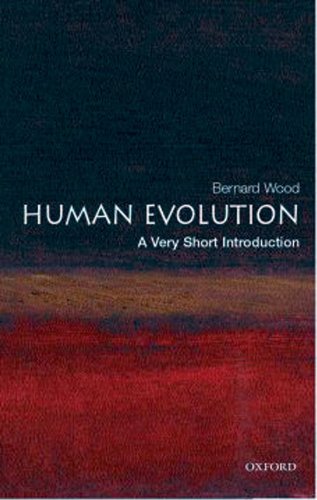
Human Evolution: A Very Short Introduction
Authors:
Bernard Wood
Publisher:
Oxford University Press
Publication Date:
Not available
ISBN:
0192803603
The recent discovery of the diminutive Homo floresiensis (nicknamed "the Hobbit") in Indonesia has sparked new interest in the study of human evolution.... In this Very Short Introduction, renowned evolutionary scholar Bernard Wood traces the history of paleoanthropology from its beginnings in the eighteenth century to today's latest fossil finds. Along the way we are introduced to the lively cast of characters, past and present, involved in evolutionary research. Although concentrating on the fossil evidence for human evolution, the book also covers the latest genetic evidence about regional variations in the modern human genome that relate to our evolutionary history. Wood draws on over thirty years of experience to provide an insiders view of the field, and demonstrates that our understanding of human evolution is critically dependent on advances in related sciences such as paleoclimatology, geochronology, systematics, genetics, and developmental biology. This is an ideal introduction for anyone interested in the origins and development of humankind.
 '





