production
/viewbook/list/all/?page=573
/
/static/
None
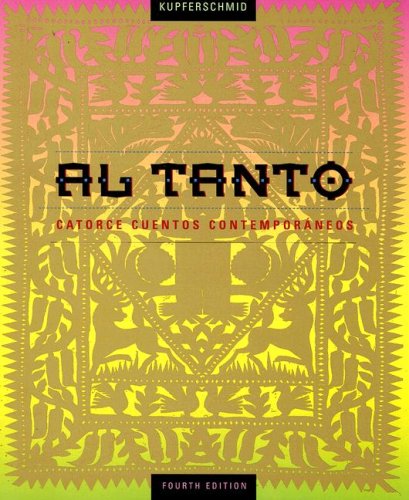
Al tanto: catorce cuentos contemporáneos
Authors:
Gene Kupferschmid
Publisher:
Heinle
Publication Date:
Not available
ISBN:
0395904064
This successful reader for second-year Spanish focuses on language acquisition, reading comprehension, and communicative competence. Designed to... introduce literature without demanding complicated literary analysis, it contains 14 unadapted short stories by contemporary writers from different parts of the Spanish-speaking world. To facilitate reading comprehension, the text includes marginal glosses, a complete Spanish-English vocabulary, and an introduction to reading strategies and literary terms.
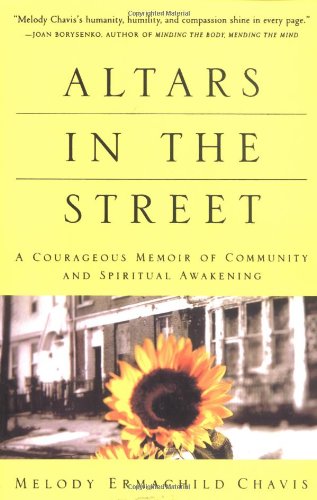
Altars in the Street: A Courageous Memoir of Community and...
Authors:
Melody Chavis
Publisher:
Three Rivers Press
Publication Date:
Not available
ISBN:
0609801961
A wonderfully written memoir, overflowing with miraculous stories, of a Buddhist private eye who vows to heal her community's suffering from violence... and racism.Altars in the Street is for people who live in cities and those who have fled them. It will speak to anyone who cares about the future of our children, our neighborhoods, and our nation, as well as anyone who wants to look truthfully at the relationship between poverty and prisons and between community and education. Drawing on deep reserves of good humor, common sense, and practical experience of nonviolent action, Melody Ermachild Chavis has written a moving testament to the power of spirit in today's often cynical world.

Altazor; Temblor de cielo (COLECCION LETRAS HISPANICAS) (Spanish...
Authors:
Vicente Huidobro
Publisher:
Catedra
Publication Date:
Not available
ISBN:
8437602793
This four-color atlas is bundled with the text upon request, and includes 107 bone and 47 soft tissue photographs with easy-to-read labels. Featuring... photos taken by renowned biomedical photographer Ralph Hutchings, this high-quality photographic atlas makes an excellent resource for the classroom and laboratory and is referenced in appropriate figure legends throughout the text.
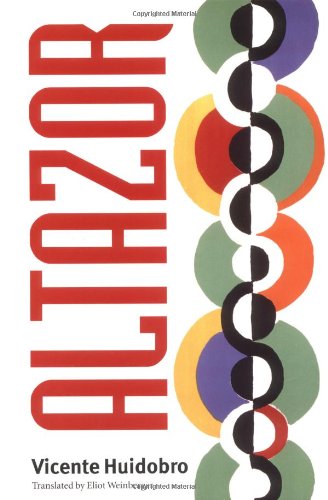
Altazor (Wesleyan Poetry Series)
Authors:
Vicente Huidobro
Publisher:
Wesleyan
Publication Date:
Not available
ISBN:
0819566780
Often compared with Apollinaire as the first and liveliest avant-garde poet in his language, Vicente Huidobro was a one-man movement ("Creationism") in... the modernist swirl of Paris and Barcelona between the two World Wars. His masterpiece was the 1931 book-length epic Altazor, a Machine Age paean to flight that sends its hero (Altazor, the "antipoet") hurtling through Einsteinian space at light speed. Perhaps the fastest-reading long poem of the century, and certainly the wildest, Altazor rushes through the universe in a lyrical babble of bird-languages, rose-languages, puns, neologisms, and pages of identical rhymes, finally ending in the pure sound of the language of the future. Universally considered untranslatable until the appearance of Eliot Weinberger's celebrated version in 1988, Altazor appears again in an extensively revised translation with an expanded introduction.

ALT DIS: Alternative Discourses and the Academy
Authors:
Patricia Bizzell
Publisher:
Heinemann
Publication Date:
Not available
ISBN:
0867095164
Patricia Bizzell has argued that teachers of composition, if they are going to prepare students for success in other classrooms and other contexts,... cannot afford to ignore alternative forms of discourse that are appearing now in the academy. This edited collection of original essays both discusses and at times exemplifies extraordinary examples of just such alternatives-discourses that embody new and different forms of intellectual work Together, their writings pose and answer some intriguing questions about the: use of nonstandard discourse to illustrate unconventional forms of intellectual work role of nonstandard discourse in scholarship from disciplines across the curriculum theoretical complexities of discourses defined as "alternative," "hybrid," "mixed," or "constructed" relationships among communities, discourses, and linguistic standards new conditions in composition classrooms made up of more students of English as a foreign language and students using non-standard dialects teacher-student relationships within the context of alternative forms of intellectual work. Using unconventional structures and formats while acknowledging new modes and methods, this provocative volume argues eloquently for inclusion of a broader range of expression in academic writing.

Alterations of Consciousness: An Empirical Analysis for Social...
Authors:
Imants Baruss
Publisher:
Amer Psychological Assn
Publication Date:
Not available
ISBN:
1557989931
Alterations of Consciousness is a refreshing and richly analytic investigation into the nature of cognitive reality. Imants Baruss explores various... manifestations of consciousness with rational and empirical rigor beginning with more ordinary states such as thinking, sleeping, dreaming and continuing on into hypnosis, trance, psychedelic experiences, transcendence, and experiences related to death. This comprehensive overview of altered states examines consciousness from the physiological, cognitive, and experiential points of view. Readers will gain from this engaging text an enriched understanding of consciousness, reality, and the scientific endeavor.
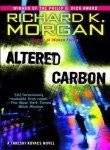
Altered Carbon: A Takeshi Kovacs Novel (Takeshi Kovacs Novels)
Authors:
Richard K. Morgan
Publisher:
Del Rey 2006-02-28
Publication Date:
Not available
ISBN:
0345457692
In the twenty-fifth century, humankind has spread throughout the galaxy, monitored by the watchful eye of the U.N. While divisions in race, religion,... and class still exist, advances in technology have redefined life itself. Now, assuming one can afford the expensive procedure, a person’s consciousness can be stored in a cortical stack at the base of the brain and easily downloaded into a new body (or “sleeve”) making death nothing more than a minor blip on a screen.Ex-U.N. envoy Takeshi Kovacs has been killed before, but his last death was particularly painful. Dispatched one hundred eighty light-years from home, re-sleeved into a body in Bay City (formerly San Francisco, now with a rusted, dilapidated Golden Gate Bridge), Kovacs is thrown into the dark heart of a shady, far-reaching conspiracy that is vicious even by the standards of a society that treats “existence” as something that can be bought and sold. For Kovacs, the shell that blew a hole in his chest was only the beginning. . . .From the Trade Paperback edition.
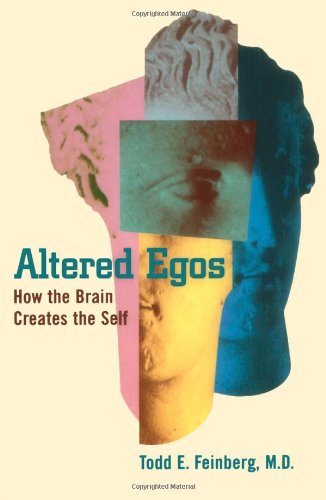
Altered Egos: How the Brain Creates the Self
Authors:
Todd E. Feinberg
Publisher:
Oxford University Press, USA
Publication Date:
Not available
ISBN:
0195152425
In Altered Egos, Dr. Todd Feinberg presents a new theory of the self based on his first-hand experience as both a psychiatrist and neurologist. ... Feinberg introduces dozens of intriguing cases of patients whose disorders have resulted in what he calls "altered egos": a change in the brain that transforms the boundaries of the self. He describes patients who suffer from "alien hand syndrome" where one hand might attack the patient's own throat, patients with frontal lobe damage who invent fantastic stories about their lives, paralyzed patients who reject and disown one of their limbs. He then argues that the brain damage suffered by these people has done more than simply impair certain functions--it has fragmented their sense of self. From these fascinating cases, Feinberg proposes a new model of the self that links the workings of the brain with unique and personal features of the mind, such as meaning, purpose, and being. Drawing on his own and other evidence, he explains how the unified self, while not located in one or another brain region, arises out of the staggering complexity and number of the brain's component parts. Lucid, insightful, filled with fascinating case studies and provocative new ideas, Altered Egos promises to change the way we think about human consciousness and the creation and maintenance of human identity.
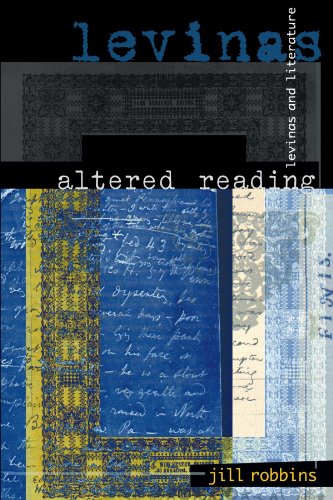
Altered Reading: Levinas and Literature
Authors:
Jill Robbins
Publisher:
University Of Chicago Press
Publication Date:
Not available
ISBN:
0226721132
How might the ethical philosophy of the renowned French thinker Emmanuel Levinas relate to literature? Because his philosophy addresses the very opening... of ethical experience, it cannot be applied readily as a critical method to literary texts. Yet Levinas's work, studded as it is with literary sources and quotations, demands a literary account.With an attitude at once respectful and interrogative, closely attentive to Levinas's texts while in dialogue with readings by Derrida, Blanchot, and Bataille, Altered Reading shows how the thread of the literary leads directly to the internal tensions of Levinas's ethical discourse. Jill Robbins provides a comprehensive critical account of Levinas's early and mature philosophy as well as later key transitional essays. In an invaluable appendix, she includes her own translation of an important, previously untranslated essay by Bataille on Levinas.Altered Reading will interest philosophers, literary critics, scholars of religion, and others drawn to Levinas's work.

Altered States: The United States and Japan since the Occupation
Authors:
Michael Schaller
Publisher:
Oxford University Press, USA
Publication Date:
Not available
ISBN:
0195069161
The relationship between the United States and Japan is torn by contrary impulses. We face each other across the Pacific as friends and allies, as the... two most powerful economies in the world--and as suspicious rivals. Americans admire the industry of the Japanese, but we resent the huge trade deficit that has developed between us, due to what we consider to be unfair trade practices and "unlevel playing fields." Now, in Altered States, historian Michael Schaller strips away the stereotypes and misinformation clouding American perceptions of Japan, providing the historical background that helps us make sense of this important relationship. Here is an eye-opening history of U.S.-Japan relations from the end of World War II to the present, revealing its rich depths and startling complexities. Perhaps Schaller's most startling revelation is that modern Japan is what we made it--that most of what we criticize in Japan's behavior today stems directly from U.S. policy in the 1950s. Indeed, as the book shows, for seven years after the end of the war, our occupational forces exerted enormous influence over the shape and direction of Japan's economic future. Stunned by the Communist victory in China and the outbreak of war in Korea, and fearful that Japan might form ties with Mao's China, the U.S. encouraged the rapid development of the Japanese economy, protecting the huge industrial conglomerates and creating new bureaucracies to direct growth. Thus Japan's government-guided, export-driven economy was nurtured by our own policy. Moreover, the United States fretted about Japan's economic weakness--that they would become dependent on us--and sought to expand Tokyo's access to markets in the very areas it had just tried to conquer, the old Co Prosperity Sphere. Schaller documents how, as the Cold War deepened throughout the 1950s, Washington showered money on what it saw as the keystone of the eastern shore of Asia, working assiduously to expand the Japanese economy and, in fact, worrying intensely over the American trade surplus. Fear of Japanese instability ran so deep that Presidents Eisenhower, Kennedy, and Johnson approved secret financial help to Japanese conservative politicians, some of whom had been accused of war crimes against Americans. Then came the 1960s, and the surplus faded into a deficit. The book reveals how Washington's involvement in Vietnam provided the Japanese government with political cover for quietly pursuing a more independent course. Even in the 1970s, however, with America's one time ward turned into an economic powerhouse, the Nixon administration failed to pay much attention to Tokyo. Schaller shows that Kissinger openly preferred the more charismatic company of Zhou Enlai to that of Japanese technocrats, while economics bored him. The United States almost missed the fact that Japan had developed into a country that could say no, and very loudly. Michael Schaller has won widespread acclaim for his earlier books on U. S. relations with Asia. His fearless judgments, his fluid pen, his depth of knowledge and research have all lifted him to the front rank of historians writing today. In Altered States, he illuminates the most important, and troubled, relationship in the world in a work certain to cement his reputation.

Altering American Consciousness: The History of Alcohol and Drug...
Authors:
Sarah W. Tracy
Publisher:
Univ. of Massachusetts Press
Publication Date:
Not available
ISBN:
1558494251
Virtually every American alive has at some point consumed at least one, and very likely more, consciousness altering drug. Even those who actively... eschew alcohol, tobacco, and coffee cannot easily avoid the full range of psychoactive substances pervading the culture. With many children now taking Ritalin for Attention Deficit Hyperactivity Disorder, professional athletes relying on androstenidione to bulk up, and the chronically depressed resorting to selective serotonin reuptake inhibitors such as Prozac, the early twenty-first century appears no less rife with drugs than previous periods.Yet, if the use of drugs is a constant in American history, the way they have been perceived has varied extensively. Just as the corrupting cigarettes of the early twentieth century ("coffin nails" to contemporaries) became the glamorous accessory of Hollywood stars and American GIs in the 1940s, only to fall into public disfavor later as an unhealthy and irresponsible habit, the social significance of every drug changes over time. The essays in this volume explore these changes, showing how the identity of any psychoactive substance from alcohol and nicotine to cocaine and heroin owes as much to its users, their patterns of use, and the cultural context in which the drug is taken, as it owes to the drug's documented physiological effects. Rather than seeing licit drugs and illicit drugs, recreational drugs and medicinal drugs, "hard" drugs and "soft" drugs as mutually exclusive categories, the book challenges readers to consider the ways in which drugs have shifted historically from one category to another.
Alterity and Narrative: Stories and the Negotiation of Western...
Authors:
Kathleen Glenister Roberts
Publisher:
State University of New York Press
Publication Date:
Not available
ISBN:
0791472183
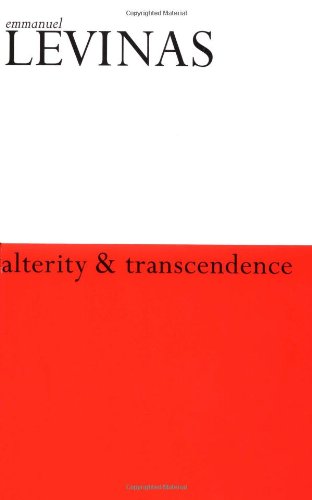
Alterity and Transcendence
Authors:
Emmanuel Levinas
Publisher:
Columbia University Press
Publication Date:
Not available
ISBN:
0231116519
Internationally renowned as one of the great French philosophers of the twentieth century, the late Emmanuel Levinas remains a pivotal figure across the... humanistic disciplines for his insistence -- against the grain of Western philosophical tradition -- on the primacy of ethics in philosophical investigation. This first English translation of a series of twelve essays known as Alterity and Transcendence offers a unique glimpse of Levinas defining his own place in the history of philosophy. Published by a mature thinker between 1967 and 1989, these works exhibit a refreshingly accessible perspective that seasoned admirers and newcomers will appreciate.In today's world, where religious conceptions of exalted higher powers are constantly called into question by theoretical investigation and by the powerful influence of science and technology on our understanding of the universe, has the notion of transcendence been stripped of its significance? In Levinas's incisive model, transcendence is indeed alive -- not in any notion of our relationship to a mysterious, sacred realm but in the idea of our worldly, subjective relationships to others.Without presupposing an intimate knowledge of the history of philosophy, Levinas explores the ways in which Plotinus, Descartes, Husserl, and Heidegger have encountered the question of transcendence. In discourses on the concepts of totality and infinity, he locates his own thinking in the context of pre-Socratic philosophers, Aristotle, Leibniz, Spinoza, Kant, and Descartes. Always centering his discussions on the idea of interpersonal relations as the basis of transcendence, Levinas reflects on the rights of individuals (and how they are inextricably linked to those of others), the concept of peace, and the dialogic nature of philosophy. Finally, in interviews conducted by Christian Chabanis and Angelo Bianchi, Levinas responds to key questions not directly addressed in his writings. Throughout, Alterity and Transcendence reveals a commitment to ethics as first philosophy -- obliging modern thinkers to investigate not merely the true but the good.

Alternate Assessment for Students with Significant Cognitive...
Authors:
Harold L. Kleinert
Publisher:
Paul H Brookes Publishing
Publication Date:
Not available
ISBN:
1598570765
Develop effective alternate assessment based on alternate achievement standards (AA-AAS). With this practical guidebook, K-12 educators will modify... assessments and ensure high-quality instruction that leads to better outcomes.
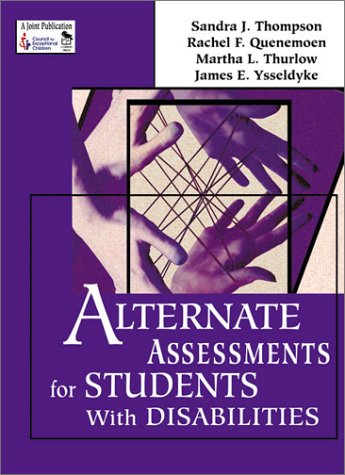
Alternate Assessments for Students With Disabilities
Authors:
Sandra J. Thompson
Publisher:
Corwin Press
Publication Date:
Not available
ISBN:
0761977740
 '
'