production
/viewbook/list/all/?page=5734
/
/static/
None

HUMANISTIC TRADITION,VOL.1 ]CUSTOM[
Authors:
Not Available
Publisher:
Not available
Publication Date:
Not available
ISBN:
Not available
HUMANISTIC TRAD. V1+CNCT+CRD PKG.
Authors:
Not Available
Publisher:
Not available
Publication Date:
Not available
ISBN:
Not available
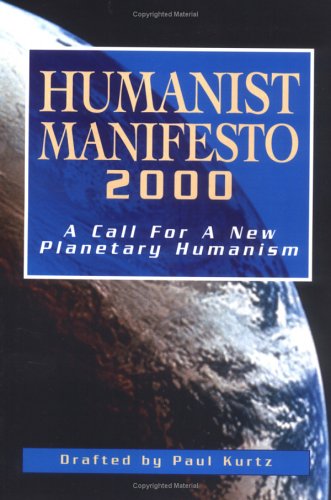
Humanist Manifesto 2000: A Call for New Planetary Humanism
Authors:
Paul Kurtz
Publisher:
Prometheus Books
Publication Date:
Not available
ISBN:
157392783X
This entirely new "Humanist Manifesto" is designed to address the problems of the twenty-first century and the millennium beyond. Providing a strong... defence of scientific naturalism and technology, it is offered as a contribution to the dialogue among the different cultural, political, and economic viewpoints in the world. "Humanist Manifesto 2000" is formulated in the conviction that science, reason, democracy, education, and humanist values can enhance human progress. Drawing on the achievements of modernity - the success of scientific medicine, the overall improvement of public health, the Green Revolution, the conveniences of a consumer society, global communication and transportation, increased understanding of the natural world, and many others - the planetary humanism that this manifesto presents seeks to transcend the negativity of postmodernism and looks forward to the information age now upon us. "Humanist Manifesto 2000" promotes a humanistic ethics based on reason and a planetary bill of rights and responsibilities. It proposes a new global agenda, stresses the need for international institutions (including a new world parliament and regulation of global conglomerates), and concludes on a note of optimism about the human prospect. Endorsed by a distinguished list of humanist intellectuals including Arthur C. Clarke, Alan Cranston, Richard Dawkins, Richard Leakey, Jill Tarter, E.O.Wilson, and eleven Nobel Laureates, "Humanist Manifesto 2000" recommends long-range attainable goals and generates confidence in the ability of the human species to solve its problems by rational means and a positive outlook. This manifesto was drafted by Paul Kurtz in consultation with a twelve-person internal committee.
Humanitarian aid in the midst of conflict: The United Nations High...
Authors:
Jolene Kay Jesse
Publisher:
Institute for the Study of Diplomacy Pub
Publication Date:
Not available
ISBN:
1569274711
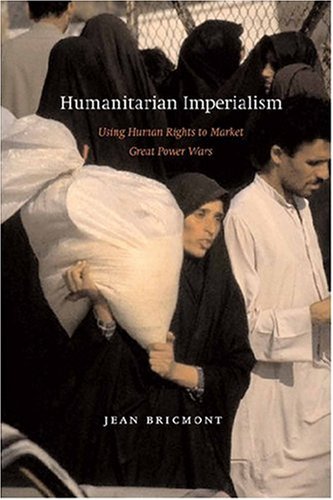
Humanitarian Imperialism: Using Human Rights to Sell War
Authors:
Jean Bricmont
Publisher:
Monthly Review Press
Publication Date:
Not available
ISBN:
1583671471
Since the end of the Cold War, the idea of human rights has been made into a justification for intervention by the world's leading economic and military... powers—above all, the United States—in countries that are vulnerable to their attacks. The criteria for such intervention have become more arbitrary and self-serving, and their form more destructive, from Yugoslavia to Afghanistan to Iraq. Until the U.S. invasion of Iraq, the large parts of the left was often complicit in this ideology of intervention—discovering new “Hitlers” as the need arose, and denouncing antiwar arguments as appeasement on the model of Munich in 1938.Jean Bricmont’s Humanitarian Imperialism is both a historical account of this development and a powerful political and moral critique. It seeks to restore the critique of imperialism to its rightful place in the defense of human rights. It describes the leading role of the United States in initiating military and other interventions, but also on the obvious support given to it by European powers and NATO. It outlines an alternative approach to the question of human rights, based on the genuine recognition of the equal rights of people in poor and wealthy countries.Timely, topical, and rigorously argued, Jean Bricmont’s book establishes a firm basis for resistance to global war with no end in sight.
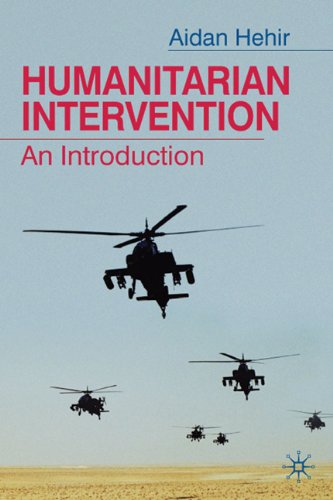
Humanitarian Intervention: An Introduction
Authors:
Aidan Hehir
Publisher:
Palgrave Macmillan
Publication Date:
Not available
ISBN:
0230220312
A broad-ranging introduction to the theory, practice and politics of humanitarian intervention on the contemporary world, its historical background and... future prospects after the experiences of Rwanda, Kosovo, Darfur and Iraq.
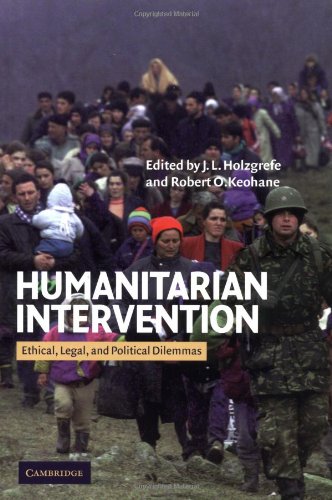
Humanitarian Intervention: Ethical, Legal and Political Dilemmas
Authors:
Not Available
Publisher:
Cambridge University Press
Publication Date:
Not available
ISBN:
052152928X
"The genocide in Rwanda showed us how terrible the consequences of inaction can be in the face of mass murder. But the conflict in Kosovo raised equally... important questions about the consequences of action without international consensus and clear legal authority. On the one hand, is it legitimate for a regional organization to use force without a UN mandate? On the other, is it permissible to let gross and systematic violations of human rights, with grave humanitarian consequences continue unchecked?" (United Nations Secretrary-General Kofi Annan). This book is a comprehensive, integrated discussion of `the dilemma' of humanitarian intervention. Written by leading analysts of international politics, ethics, and law, it seeks, among other things, to identify strategies that may, if not resolve, at least reduce the current tension between human rights and state sovereignty. Humanitarian Intervention is an invaluable contribution to the debate on all aspects of this vital global issue. J.L. Holzgrefe is a Visiting Research Scholar in the Department of Political Science, Duke University. He is a former Lecturer in International Relations at the University of St. Andrews, Scotland, and visiting scholar at the Center of International Studies, Princeton University, the Center for International Affairs, Harvard University, and elsewhere. He was educated at Monash University, Australia and Balliol College, Oxford. He has published on the history of international relations thought. Robert O. Keohane is James B. Duke Professor of Political Science, Duke University. He is interested in the role played by governance in world politics, and in particular on how international institutions and transnational networks operate. He is the author of After Hegemony: Cooperation and Discord in the World Political Economy (Princeton, 1984), for which he was awarded the second annual Grawemeyer Award in 1989 for Ideas Improving World Order. He is also the author of International Institutions and State Power: Essays in International Relations Theory (Westview, 1989), co-author of Power and Independence: World Politics in Transition (Little, Brown, 1977; 3rd edition 2001), and co-author of Designing Social Inquiry: Scientific Inference in Qualitative Research (Princeton, 1994). He is a fellow of the American Academy of Arts and Sciences and has been the recipient of a Guggenheim fellowship.
Humanitarian Intervention: Ideas in Action (WCMW - War and Conflict...
Authors:
T. Weiss
Publisher:
Polity
Publication Date:
Not available
ISBN:
0745640222
A singular development of the post Cold-War era is the use of military force to protect human beings. From Rwanda to Kosovo, Sierra Leone to East Timor,... soldiers have rescued civilians in some of the world's most notorious war zones.Drawing on two decades of research, Thomas G. Weiss provides a compelling introduction to the theory and practice of humanitarian intervention in the modern world. He examines political, ethical, legal, strategic, economic, and operational dimensions and uses a wide range of cases to highlight key debates and controversies.This succinct and highly accessible survey is neither celebratory nor complacent. The author locates the normative evolution of what is increasingly known as "the responsibility to protect" in the context of the war on terror and the 2005 UN World Summit. The result is an engaging exploration of the current dilemmas and future challenges for international humanitarian action in the 21st Century.
Humanitarian Intervention (WCMW - War and Conflict in the Modern...
Authors:
Thomas Weiss
Publisher:
Polity
Publication Date:
Not available
ISBN:
0745659810
A singular development of the post Cold-War era is the use of military force to protect human beings. From Rwanda to Kosovo, Sierra Leone to East Timor,... and more recently Libya to Côte d'Ivoire, soldiers have rescued some civilians in some of the world's most notorious war zones. Could more be saved? Drawing on over two decades of research, Thomas G. Weiss answers "yes" and provides a persuasive introduction to the theory and practice of humanitarian intervention in the modern world. He examines political, ethical, legal, strategic, economic, and operational dimensions and uses a wide range of cases to highlight key debates and controversies.The updated and expanded second edition of this succinct and highly accessible survey is neither celebratory nor complacent. The author locates the normative evolution of what is increasingly known as "the responsibility to protect" in the context of the global war on terror, UN debates, and such international actions as Libya. The result is an engaging exploration of the current dilemmas and future challenges for robust international humanitarian action in the twenty-first century.
Humanitarianism Contested: Where Angels Fear to Tread (Routledge...
Authors:
Michael Barnett
Publisher:
Routledge
Publication Date:
Not available
ISBN:
0415496632
This book provides a succinct but sophisticated understanding of humanitarianism and insight into the on-going dilemmas and tensions that have... accompanied it since its origins in the early nineteenth century. Combining theoretical and historical exposition with a broad range of contemporary case studies, the book: provides a brief survey of the history of humanitarianism, beginning with the anti-slavery movement in the early nineteenth century and continuing to today’s challenge of post-conflict reconstruction and saving failed states explains the evolution of humanitarianism. Not only has it evolved over the decades, but since the end of the Cold War, humanitarianism has exploded in scope, scale, and significance presents an overview of the contemporary humanitarian sector, including briefly who the key actors are, how they are funded and what they do with their money analyses the ethical dilemmas confronted by humanitarian organization, not only in the abstract but also, and most importantly, in real situations and when lives are at stake examines how humanitarianism poses fundamental ethical questions regarding the kind of world we want to live in, what kind of world is possible, and how we might get there. An accessible and engaging work by two of the leading scholars in the field, Humanitarianism Contested is essential reading for all those concerned with the future of human rights and international relations.
Humanitarianism in Question: Politics, Power, Ethics
Authors:
Not Available
Publisher:
Cornell University Press
Publication Date:
Not available
ISBN:
0801473012
Years of tremendous growth in response to complex emergencies have left a mark on the humanitarian sector. Various matters that once seemed settled are... now subjects of intense debate. What is humanitarianism? Is it limited to the provision of relief to victims of conflict, or does it include broader objectives such as human rights, democracy promotion, development, and peacebuilding?For much of the last century, the principles of humanitarianism were guided by neutrality, impartiality, and independence. More recently, some humanitarian organizations have begun to relax these tenets. The recognition that humanitarian action can lead to negative consequences has forced humanitarian organizations to measure their effectiveness, to reflect on their ethical positions, and to consider not only the values that motivate their actions but also the consequences of those actions.In the indispensable Humanitarianism in Question, Michael Barnett and Thomas G. Weiss bring together scholars from a variety of disciplines to address the humanitarian identity crisis, including humanitarianism's relationship to accountability, great powers, privatization and corporate philanthropy, warlords, and the ethical evaluations that inform life-and-death decision making during and after emergencies.Contributors: Michael Barnett, University of Minnesota; Craig Calhoun, New York University; James D. Fearon, Stanford University; Laura Hammond, SOAS, University of London; Peter J. Hoffman, Hunter College; Stephen Hopgood, SOAS, University of London; Peter Redfield, University of North Carolina, Chapel Hill; Jennifer C. Rubenstein, Princeton University; Jack Snyder, Columbia University; Janice Gross Stein, University of Toronto; Thomas G. Weiss, CUNY Graduate Center
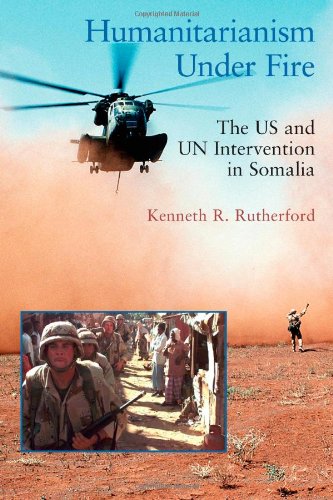
Humanitarianism Under Fire: The US and UN Intervention in Somalia
Authors:
Kenneth R. Rutherford
Publisher:
Kumarian Press
Publication Date:
Not available
ISBN:
1565492609
The international humanitarian intervention in Somalia was one of the most challenging operations ever conducted by US and UN military forces. Until... Somalia, the UN had never run a Chapter VII exercise with large numbers of troops operating under a fighting mandate. It became a deadly test of the UN s ability carry out a peace operation using force against an adversary determined to sabotage the intervention.Humanitarianism Under Fire is a candid, detailed historical and political narrative of this remarkably complicated intervention that was one of the first cases of multilateral action in the post-Cold War era. Rutherford presents new information gleaned from interviews and intensive research in five countries. His evidence shows how Somalia became a turning point in the relationship between the UN and US and how policy and strategy decisions in military operations continue to refer back to this singular event, even today.
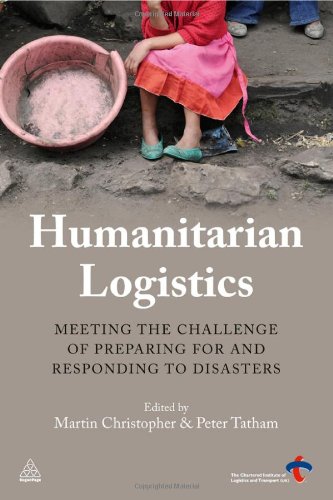
Humanitarian Logistics: Meeting the Challenge of Preparing for and...
Authors:
Not Available
Publisher:
Kogan Page
Publication Date:
Not available
ISBN:
0749462469
In 2007, there were 34 armed conflicts worldwide. That same year, a total of 414 natural disasters affected 211 million people. Humanitarian Logistics... examines the challenges facing those whose role it is to organize and distribute resources in difficult situations. This multi-contributor volume includes insights from some of the world's leading experts in disaster relief. It examines key issues including warehousing, procurement, and funding. With particular focus on pre-disaster preparation rather than post-disaster assistance, Humanitarian Logistics provides current thinking as well as best practice for those who need to understand the many challenges and the ways to respond effectively.
Humanities Bk W/Access & Utopia
Authors:
Not Available
Publisher:
Not available
Publication Date:
Not available
ISBN:
0205913172
Humanities: Books 1 & 2 - W/New Myartslab Sac (Pkg)
Authors:
Not Available
Publisher:
Not available
Publication Date:
Not available
ISBN:
0205246265
 '





