production
/viewbook/list/all/?page=5740
/
/static/
None

Human Muscle Fatigue
Authors:
Not Available
Publisher:
Routledge
Publication Date:
Not available
ISBN:
0415453283
When human muscle fatigues, athletic performance becomes impaired. For those individuals suffering muscle or metabolic diseases the effects of muscle... fatigue can make everyday tasks difficult. Understanding the scientific processes responsible for skeletal muscle fatigue is therefore central to the study of the physiology of sport, exercise and health. Written by a team of leading international exercise scientists, this book explores the mechanisms of muscle fatigue and presents a comprehensive survey of current research on this important topic. Examining the wide variety of protocols, assessment methods and exercise models used to study muscle fatigue, the book explores the differential effects of fatigue as influenced by: age gender fitness and training the use of ergogenic aids medical conditions including cerebral palsy, muscular dystrophy and glycogenosis. Human Muscle Fatigue covers both clinical and applied approaches in sport and exercise physiology and devotes an entire section to the conceptual framework underpinning research in this area, helping readers from a wide range of backgrounds to engage with the topic. Accessible and detailed, this book is a key text for students and practitioners working in exercise and sports science, medicine, physical therapy and health.

Human Nature After Darwin: A Philosophical Introduction (Philosophy...
Authors:
Janet Radcliffe Richards
Publisher:
Routledge
Publication Date:
Not available
ISBN:
0415212448
Human Nature After Darwin is an original investigation of the implications of Darwinism for our understanding of ourselves and our situation. It casts... new light on current Darwinian controversies, also providing an introduction to philosophical reasoning and a range of philosophical problems.Janet Radcliffe Richards claims that many current battles about Darwinism are based on mistaken assumptions about the implications of the rival views. Her analysis of these implications provides a much-needed guide to the fundamentals of Darwinism and the so-called Darwin wars, as well as providing a set of philosophical techniques relevant to wide areas of moral and political debate.The lucid presentation makes the book an ideal introduction to both philosophy and Darwinism as well as a substantive contribution to topics of intense current controversy. It will be of interest to students of philosophy, science and the social sciences, and critical thinking.
Human Nature and Conduct: An Introduction to Social Psychology...
Authors:
John Dewey
Publisher:
Prometheus Books
Publication Date:
Not available
ISBN:
1591020328
This insightful treatise on the essential components of human nature by the great American philosopher and educator John Dewey, in his own words, "sets... forth a belief that an understanding of habit and of different types of habit is the key to social psychology, while the operation of impulse and intelligence gives the key to individualised mental activity." Some eighty years after its original publication, during which time psychological theories have proliferated in ever-more arcane flights of abstraction, it is refreshing to read Dewey's commonsensical views rooted in experience and objective observation. This classic work still has much to recommend it to students of ethics, psychology, and sociology.

Human Nature and De Corpore Politico (Oxford World's Classics) (Pt. 1)
Authors:
Thomas Hobbes
Publisher:
Oxford University Press, USA
Publication Date:
Not available
ISBN:
0199549702
Thomas Hobbes' timeless account of the human condition, first developed in The Elements of Law (1640), which comprises Human Nature and De Corpore... Politico, is a direct product of the intellectual and political strife of the seventeenth century. His analysis of the war between the individual and the group lays out the essential strands of his moral and political philosophy later made famous in Leviathan. This first ever complete paperback edition of Human Nature and De Corpore Politico is also supplemented by chapters from Hobbes' later work De Corpore and "The Three Lives," never before published together in English.About the Series: For over 100 years Oxford World's Classics has made available the broadest spectrum of literature from around the globe. Each affordable volume reflects Oxford's commitment to scholarship, providing the most accurate text plus a wealth of other valuable features, including expert introductions by leading authorities, voluminous notes to clarify the text, up-to-date bibliographies for further study, and much more.

Human Nature: A Reader (Hackett Readings in Philosophy)
Authors:
Joel J. Kupperman
Publisher:
Hackett Publishing Co.
Publication Date:
Not available
ISBN:
1603847456
Part I. Some Ancient Views of Human Nature1. Indian Philosophy: The Upanishads and Buddha-Katha Upanishad,The Buddhist Dhamapada2. Confucius-Analects3.... Plato and Aristotle, and Freudian Echoes of Plato-Republic, Nicomachean Ethics, The Ego and the Id4. Mengzi and Xunzi: The Capacity for True Benevolence, Mengzi, Xunzi5. Human Imperfection in the Judeo-Christian Tradition: From Adam to St. Augustine, The King James Bible, Confessions.Part II. Some Modern Views of Human Nature:6. Hobbes, Leviathan7. Butler and Hume: Inherent Tendencies toward Altruism, Sermon I, A Treatise of Human Nature, Book III: Of Morals8. Kant: The Need for Reason to Dominate, Grounding for the Metaphysics of Morals9. Marx and Alienation: Our Flawed Participation in Life, Alienated Labor, The Communist Manifesto10. Sartre and Kierkegaard: Radical Incompleteness as the Human Lot, Being and Nothingness, The Sickness unto Death
Human Natures: Genes, Cultures, and the Human Prospect
Authors:
Paul R. Ehrlich
Publisher:
Penguin Books
Publication Date:
Not available
ISBN:
0142000531
Why do we behave the way we do? Biologist Paul Ehrlich suggests that although people share a common genetic code, these genes "do not shout commands at... us...at the very most, they whisper suggestions." He argues that human nature is not so much result of genetic coding; rather, it is heavily influenced by cultural conditioning and environmental factors. With personal anecdotes, a well-written narrative, and clear examples, Human Natures is a major work of synthesis and scholarship as well as a valuable primer on genetics and evolution that makes complex scientific concepts accessible to lay readers.
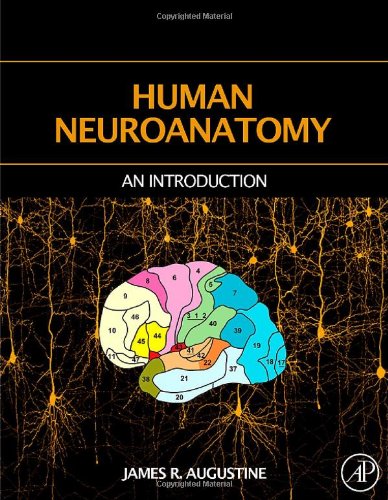
Human Neuroanatomy
Authors:
James R. Augustine
Publisher:
Academic Press
Publication Date:
Not available
ISBN:
0120682516
This textbook provides a thorough and comprehensive overview of the human brain and spinal cord for medical and graduate students as well as residents... in the clinical neurosciences. Standing on the shoulders of training from outstanding scientist-teacher mentors and based on more than 30 years of experience teaching about the brain and spinal cord to medical and graduate students, this single authored text presents everything the reader would need as they begin their study of the nervous system. At the same time the experienced neuroscientist will find much useful and valuable information in these pages that is based almost exclusively on studies in experimental primates and observations in humans. Every effort has been made to present the complexities of the nervous system as simply and clearly as possible. The careful reader will discover a clarity and depth of coverage that makes the reading both instructional and enjoyable. Topics are presented logically and the text in an easy-to-read style. The accompanying line drawings emphasize important concepts in a clear and uncluttered manner. Topics presented:. Neurons, glial cells, degeneration, regeneration, axonal transport. Review of the development of the human nervous system. Overview of the anatomy of the spinal cord, brain stem and forebrain. General sensory paths (pain, temperature, touch, pressure, proprioception). Special sensory systems (auditory, vestibular, visual, olfactory and gustatory). Eye movements and visual reflexes. Comprehensive presentation of the regions involved in motor activity including the clinical manifestation of injuries to these motor areas. Limbic system, hypothalamus and the autonomic nervous system. Lobes of the brain, clinically important cortical areas and the results of lesions in these areas. Blood supply to the spinal cord, brain stem, and brain including classical brain stem syndromes. The meninges and the ventricular system. Numerous helpful clinical correlations that emphasize the practical application of basic anatomical information. * Presents the complexities of the nervous system as simply and clearly as possible * Written with a clarity and depth of coverage that makes the reading both instructional and enjoyable * Includes numerous illustrations emphasizing important concepts
Human Neuroanatomy: A Text, Brain Atlas and Laboratory Dissection...
Authors:
J. Edward Bruni
Publisher:
Oxford University Press, USA
Publication Date:
Not available
ISBN:
0195371429
Human Neuroanatomy: A Text, Brain Atlas, and Laboratory Dissection Guide has been substantially changed and updated from a previous edition entitled The... Human Brain in Dissection published in 1988 and accordingly has been re-titled. The last 20 years have seen a significant shift in the way anatomy and its sub-disciplines like neuroanatomy are taught in both undergraduate and graduate neuroscience courses; not only has the time allocated for these courses been reduced, but the teaching methodologies have become more focused and specific due to time constraints. As reported by Drake et. al., "Medical education in the anatomical sciences: the winds of change continue to blow" (Anat. Sci. Educ., 2: 253-259, 2009), we have seen an overall drop in the total number of lecture hours and laboratory hours since the last survey done of medical curricula in 2002. Human Neuroanatomy has been reconstructed to appeal to just these changes: courses with a lab/dissection component as well as those without will find this guide the perfect teaching tool to understand human neuroanatomy.With these limitations in mind and to better meet current requirements the authors have expanded the textural content in this new edition and separated it entirely from the dissection instructions which have been retained. The "Laboratory Exercise" as it is now designated stands alone in a highlighted box in each chapter. It outlines what is to be accomplished during a given session using pre-dissected specimens and/or appropriate models or by exposing them in a dissection. Clear step by step procedural instructions are provided and important structures to be seen are highlighted. The dissection sequence laid out in the chapters is a progressive one requiring only a single wet specimen and ideally completed in two hour periods. Students who do not have the opportunity to dissect, however may simply skip these paragraphs. In this 3rd edition of the book many new illustrations have been added to better depict the salient features of the brain at various stages of dissection and to facilitate understanding the subject matter. Labeling of some illustrations has changed and others have been replaced. All are amply referenced to the text and to the laboratory exercises and are intended to assist with or be used in lieu of dissection. New also in this edition is a section of clinically-relevant notes as well as USMLE type multiple-choice questions added in separate sections at the end of each chapter. These quiz type questions provide students with a means of assessing their understanding of the subject matter in each chapter and an indication of how their knowledge might be tested. And finally, an atlas of 62 labelled brain sections in four different planes, at the end of the book, has been retained. CT scans and M.R. images that correspond as closely as possible to the anatomic section are included. Comprehensive and concise Human Neuroanatomy: A Text, Brain Atlas, and Laboratory Dissection Guide is an invaluable guide to assist medical, dental and allied health science students understand nervous system structure, function and disease.
Human Neuropsychology (2nd Edition)
Authors:
G. Neil Martin
Publisher:
Pearson
Publication Date:
Not available
ISBN:
0131974521
Human Neuropsychologycovers every major topic in the field, providing the perfect balance between theory and application, simultaneously introducing... students to significant new developments in the area.

Human Nutrition & Diet Therapy+Diet Analysis Plus 2-Semester Pac
Authors:
Not Available
Publisher:
Not available
Publication Date:
Not available
ISBN:
1133801242

Human Origins and Prehistory
Authors:
Carol Ember
Publisher:
Pearson Custom Publishing
Publication Date:
Not available
ISBN:
0536568715
What is the price of a limb? A child? Ethnicity? Love? In a world that is often ruled by buyers and sellers, those things that are often considered... priceless become objects to be marketed and from which to earn a profit. Ranging from black market babies to exploitative sex trade operations to the marketing of race and culture, Rethinking Commodification presents an interdisciplinary collection of writings, including legal theory, case law, and original essays to reexamine the traditional legal question: ̶To commodify or not to commodify?”In this pathbreaking course reader, Martha M. Ertman and Joan C. Williams present the legal cases and theories that laid the groundwork for traditional critiques of commodification, which tend to view the process as dehumanizing because it reduces all human interactions to economic transactions. This "canonical" section is followed by a selection of original essays that present alternative views of commodification based on the concept that commodification can have diverse meanings in a variety of social contexts. When viewed in this way, the commodification debate moves beyond whether or not commodification is good or bad, and is assessed instead on the quality of the social relationships and wider context that is involved in the transaction. Rethinking Commodification contains an excellent array of contemporary issues, including intellectual property, reparations for slavery, organ transplants, and sex work; and an equally stellar array of contributors, including Richard Posner, Margaret Jane Radin, Regina Austin, and many others.
Human Origins: An Introduction
Authors:
QUINTYN CONRAD B.
Publisher:
Kendall Hunt Publishing
Publication Date:
Not available
ISBN:
1465200843
HUMAN ORIGINS LECTURE OUTLINE
Authors:
Not Available
Publisher:
Not available
Publication Date:
Not available
ISBN:
Not available

Human Origins : The Fossil Record
Authors:
Clark Spencer Larsen
Publisher:
Waveland Pr Inc
Publication Date:
Not available
ISBN:
1577660021
An up-to-date pictorial review of the major fossil finds in the world! This updated, introductory guidebook to the fossil record of prehuman and human... evolution presents detailed drawings of complete or nearly complete specimens representative of particular grades of evolution. Each drawing (usually shown at 75 percent of original size) is accompanied by appropriate information, including geographical location, approximate age, and general description. Descriptions include information on the context of the discovery and summary anatomical details. The detailed drawings in this highly regarded volume make it an excellent sourcebook for use in departments with limited fossil cast collections.
Human Origins: What Bones and Genomes Tell Us about Ourselves
Authors:
Dr. Rob DeSalle
Publisher:
Texas A&M University Press
Publication Date:
Not available
ISBN:
1585445673
Ever since the recognition of the Neanderthals as an archaic human in the mid-nineteenth century, the fossilized bones of extinct humans have been used... by paleoanthropologists to explore human origins. These bones told the story of how the earliest humansbipedal apes, actuallyfirst emerged in Africa some 6 to 7 million years ago. Starting about 2 million years ago, the bones revealed, as humans became anatomically and behaviorally more modern, they swept out of Africa in waves into Asia, Europe and finally the New World.Even as paleoanthropologists continued to make important discoveriesMary Leakey’s Nutcracker Man in 1959, Don Johanson’s Lucy in 1974, and most recently Martin Pickford’s Millennium Man, to name just a fewexperts in genetics were looking at the human species from a very different angle. In 1953 James Watson and Francis Crick first saw the double helix structure of DNA, the basic building block of all life. In the 1970s it was shown that humans share 98.7% of their genes with the great apesthat in fact genetically we are more closely related to chimpanzees than chimpanzees are to gorillas. And most recently the entire human genome has been mappedwe now know where each of the genes on the chromosomes that make up DNA is located on the double helix.In Human Origins: What Bones and Genomes Tell Us about Ourselves, two of the world’s foremost scientists, geneticist Rob DeSalle and paleoanthropologist Ian Tattersall, show how research into the human genome confirms what fossil bones have told us about human origins. This unprecedented integration of the fossil and genomic records provides the most complete understanding possible of humanity’s place in nature, its emergence from the rest of the living world, and the evolutionary processes that have molded human populations to be what they are today.Human Origins serves as a companion volume to the American Museum of Natural History’s new permanent exhibit, as well as standing alone as an accessible overview of recent insights into what it means to be human.
 '





