production
/viewbook/list/all/?page=5757
/
/static/
None
Human Rights and Social Justice: Social Action and Service for the...
Authors:
Joseph M. Wronka
Publisher:
Sage Publications, Inc
Publication Date:
Not available
ISBN:
1412938732
Human Rights and Social Justice: Social Action and Service for the Helping and Health Professions has a unique perspective that views human rights as... the bedrock of social justice. It provides a clear blueprint how human rights and social justice concerns can serve as a conceptual framework for policy and practice interventions among the helping and health professions.
Human Rights and Social Work: Towards Rights-Based Practice
Authors:
Jim Ife
Publisher:
Cambridge University Press
Publication Date:
Not available
ISBN:
0521719623
Human rights ideals are at the pinnacle of contemporary social work practice and international political discourse. Yet in recent years, with the... heightened threat of terrorism, we have begun to witness an erosion of many traditional civil liberties. Set against this backdrop, the revised edition of Human Rights and Social Work moves beyond the limitations of conventional legal frameworks. With customary clarity and ease of style, Jim Ife challenges the notion of the 'three generations of human rights', teasing out the conceptual problems of this approach and demonstrating how the three generations actually overlap at an intrinsic level. Essential reading for scholars, students and practitioners alike, this book shows how an implicit understanding of human rights principles can provide a foundation for practice that is central to social work, community development and the broader human services.
Human Rights and the Environment
Authors:
Svitlana Kravchenko
Publisher:
Carolina Academic Press
Publication Date:
Not available
ISBN:
1594604134
Increasingly, environmental rights are being recognized as enforceable human rights, both substantive and procedural. Environmental law can no longer be... viewed merely as a matter for policy choices in legislation. This new casebook shows how international and national court cases in Europe, Africa, Asia, and the Americas have begun to interpret treaties, national constitutions, and human rights legislation to protect the environment through the recognition of rights. For the first time, these rich developments are brought together in a book suitable as a primary text for classes and seminars.
Human Rights and Trafficking in Persons in the Americas: Summary...
Authors:
United Nations
Publisher:
United Nations
Publication Date:
Not available
ISBN:
9211214319
Human Rights and Wrongs: Slavery, Terror, Genocide
Authors:
Helen Fein
Publisher:
Paradigm Publishers
Publication Date:
Not available
ISBN:
1594513279
Human Rights and Wrongs explains the persistence of crimes against humanity since the Holocaust including slavery, terror, and genocide. Using extended... country descriptions and analyses, the book goes beyond case studies to explain such gross human rights violations in terms of an integrated theory of life integrity, giving readers vivid illustrations in addition to a theoretical framework. Distinguished author Helen Fein then asks how we can arrest human wrongs and discusses whether democracy is the answer. She shows the positive links among human rights, freedom, and development and draws out policy recommendations from her findings.

Human Rights: An Interdisciplinary Approach (Polity Key Concepts in...
Authors:
Michael A. Freeman
Publisher:
Polity
Publication Date:
Not available
ISBN:
0745639666
Human Rights is an introductory text that is both innovative and challenging. It invites students to think conceptually about one of the most important... and influential political concepts of our time. In this unique interdisciplinary approach, Michael Freeman emphasizes the complex ways in which the experiences of the victims of human rights violations are related to legal, philosophical and social-scientific approaches to human rights. By tracing the history of the concept, the book shows that there is a fundamental tension between the philosophy of human rights and the way in which it is understood in the social sciences. This analysis throws light on some of the most controversial issues in the field: Is the idea of the universality of human rights consistent with respect for cultural difference? Are there collective human rights? Should feminists embrace, revise or reject the idea of human rights? Does the idea of human rights distract our attention from the structural causes of oppression and exploitation? What are the underlying causes of human rights violations; and why do some countries have much worse human rights records than others?The book will appeal to students in the social sciences, as well as students of human rights law who want an introduction to the non-legal aspects of their subject. It will also be read by scholars interested in ethics and the social sciences, as well as the general reader. This is a substantially revised edition that takes account of recent events such as the ‘war on terror’ and the global economic crisis of 2008.

Human Rights: An Introduction
Authors:
Darren O'Byrne
Publisher:
Longman
Publication Date:
Not available
ISBN:
0582438241
Human Rights: An Introduction is an important and particularly timely text that provides a comprehensive overview of human rights and related issues... from a social science perspective. First, this book does more than discuss theory, it uses case studies and personal testimonies in the debate. Human rights as an area of academic interest cannot be easily divorced from human rights struggles and the reality of contemporary conditions.Second, the book is aimed at what is an emerging and growing cross-disciplinary field of study. Human rights issues are increasingly coming to the fore in a number of academic debates. Whereas the study of human rights has traditionally been included in departments of law, international relations and philosophy, a number of courses are now being set up in departments of sociology and anthropology. Consequently, there is an increasing need to bring these disparate approaches together.
Human Rights: A Political and Cultural Critique (Pennsylvania...
Authors:
Makau Mutua
Publisher:
University of Pennsylvania Press
Publication Date:
Not available
ISBN:
0812220498
In 1948 the United Nations adopted the Universal Declaration of Human Rights, and with it a profusion of norms, processes, and institutions to define,... promote, and protect human rights. Today virtually every cause seeks to cloak itself in the righteous language of rights. But even so, this universal reliance on the rights idiom has not succeeded in creating common ground and deep agreement as to the scope, content, and philosophical bases for human rights.Makau Mutua argues that the human rights enterprise inappropriately presents itself as a guarantor of eternal truths without which human civilization is impossible. Mutua contends that in fact the human rights corpus, though well meaning, is a Eurocentric construct for the reconstitution of non-Western societies and peoples with a set of culturally biased norms and practices.Mutua maintains that if the human rights movement is to succeed, it must move away from Eurocentrism as a civilizing crusade and attack on non-European peoples. Only a genuine multicultural approach to human rights can make it truly universal. Indigenous, non-European traditions of Asia, Africa, the Pacific, and the Americas must be deployed to deconstruct—and to reconstruct—a universal bundle of rights that all human societies can claim as theirs.
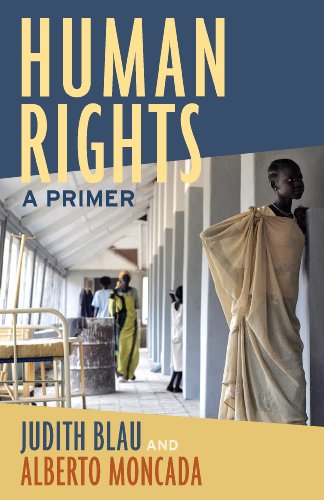
Human Rights: A Primer
Authors:
Judith Blau
Publisher:
Paradigm Publishers
Publication Date:
Not available
ISBN:
1594516146
Achieving human rights is an ongoing struggle in fact a collective struggle. Even though the progressive realization of human rights for all depends on... international, national, and local laws, human rights are realized on the ground, in praxis and reciprocally, which is to say, in deeply democratic communities and societies. The logic of human rights and the logic of capitalism and profit-making have always been somewhat at odds with one another because self-interest rests somewhat uneasily in the realm of solidarity and collective struggle, but the advent of market fundamentalism in the 1980s put these two logics in dramatic opposition with one another. When Prime Minister Thatcher stated, there is no such thing as society, what she really meant was societies are obstacles to the operation of unencumbered financial, commodity, labor, and land markets. Since the mid-1980s, the world economy has increasingly been dominated by voracious multinationals that exploit workers and the environment and, with the assistance of international agencies, exploit national and local governments. As opposed to the logic of profits, the logic of human rights relies on social solidarity, which is to say, collectively working together to promote human rights. The interesting paradox of human rights is that all humans have equal rights and unique rights. That is they have equal rights to freedom, self-determination, economic and social security, democracy, and peace. Yet all humans have equal rights to their own particular identity, personality, faith, and culture. Of course there are also rights that particular groups have, such as the members of a language community or an indigenous group or people with disabilities. Quite simply enacting human rights ensures our inclusive humanness. Quite possibly people did not fully appreciate the significance of this until the age of globalization.

Human Rights as Politics and Idolatry: (University Center for Human...
Authors:
Michael Ignatieff
Publisher:
Princeton University Press
Publication Date:
Not available
ISBN:
0691114749
Michael Ignatieff draws on his extensive experience as a writer and commentator on world affairs to present a penetrating account of the successes,... failures, and prospects of the human rights revolution. Since the United Nations adopted the Universal Declaration of Human Rights in 1948, this revolution has brought the world moral progress and broken the nation-state's monopoly on the conduct of international affairs. But it has also faced challenges. Ignatieff argues that human rights activists have rightly drawn criticism from Asia, the Islamic world, and within the West itself for being overambitious and unwilling to accept limits. It is now time, he writes, for activists to embrace a more modest agenda and to reestablish the balance between the rights of states and the rights of citizens.Ignatieff begins by examining the politics of human rights, assessing when it is appropriate to use the fact of human rights abuse to justify intervention in other countries. He then explores the ideas that underpin human rights, warning that human rights must not become an idolatry. In the spirit of Isaiah Berlin, he argues that human rights can command universal assent only if they are designed to protect and enhance the capacity of individuals to lead the lives they wish. By embracing this approach and recognizing that state sovereignty is the best guarantee against chaos, Ignatieff concludes, Western nations will have a better chance of extending the real progress of the past fifty years. Throughout, Ignatieff balances idealism with a sure sense of practical reality earned from his years of travel in zones of war and political turmoil around the globe.Based on the Tanner Lectures that Ignatieff delivered at Princeton University's Center for Human Values in 2000, the book includes two chapters by Ignatieff, an introduction by Amy Gutmann, comments by four leading scholars--K. Anthony Appiah, David A. Hollinger, Thomas W. Laqueur, and Diane F. Orentlicher--and a response by Ignatieff.
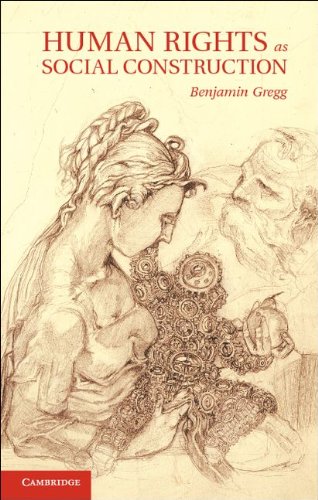
Human Rights as Social Construction
Authors:
Benjamin Gregg
Publisher:
Cambridge University Press
Publication Date:
Not available
ISBN:
1107015936
Most conceptions of human rights rely on metaphysical or theological assumptions that construe them as possible only as something imposed from outside... existing communities. Most people, in other words, presume that human rights come from nature, God, or the United Nations. This book argues that reliance on such putative sources actually undermines human rights. Benjamin Gregg envisions an alternative; he sees human rights as locally developed, freely embraced, and indigenously valid. Human rights, he posits, can be created by the average, ordinary people to whom they are addressed, and that they are valid only if embraced by those to whom they would apply. To view human rights in this manner is to increase the chances and opportunities that more people across the globe will come to embrace them.
Human Rights at the UN: The Political History of Universal Justice...
Authors:
Normand
Publisher:
Indiana University Press
Publication Date:
Not available
ISBN:
0253219345
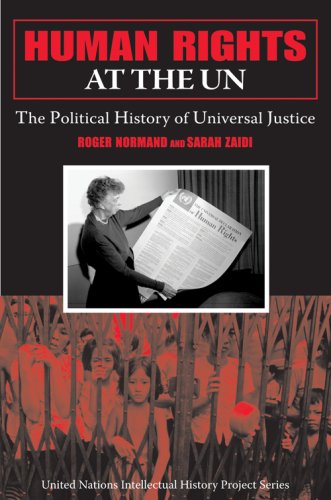
Human rights activists Roger Normand and Sarah Zaidi provide a broad political history of the emergence and development of the human rights movement in... the 20th century through the crucible of the United Nations, focusing on the hopes and expectations, concrete power struggles, national rivalries, and bureaucratic politics that molded the international system of human rights law. The book emphasizes the period before and after the creation of the UN, when human rights ideas and proposals were shaped and transformed by the hard-edged realities of power politics and bureaucratic imperatives. It also analyzes the expansion of the human rights framework in response to demands for equitable development after decolonization and organized efforts by women, minorities, and other disadvantaged groups to secure international recognition of their rights.

Human Rights: A Very Short Introduction
Authors:
Andrew Clapham
Publisher:
Oxford University Press
Publication Date:
Not available
ISBN:
0199205523
From the controversial incarceration of prisoners at Guantanamo Bay, to the brutal ethnic cleansing being practiced in Darfur, to the widespread denial... of equal rights to women in many areas of the world, human rights violations are a constant presence in the news and in our lives. Taking an international perspective, and focusing on highly topical issues such as torture, arbitrary detention, privacy, health, and discrimination, this Very Short Introduction will help readers to understand for themselves the controversies and complexities behind this vitally relevant issue. Looking at the philosophical justification for rights, the historical origins of human rights and how they are formed in law, Andrew Clapham explains what our human rights actually are, what they might be, and where the human rights movement is heading.
Human Rights: Beyond the Liberal Vision
Authors:
Judith Blau
Publisher:
Rowman & Littlefield Publishers
Publication Date:
Not available
ISBN:
0742542432
There is growing recognition around the globe that people's fundamental human rights are being imperiled in a world economy that is being driven by... multinationals, investors, and banks. The 'race to the bottom' and insatiable greed has intensified poverty and economic inequalities, fueled migration, and rapidly accelerated environmental degradation. The fates of all nations are interdependent and even though the U.S. is the prime driver of the new economy, Americans have likewise experienced declines over the past decades. Blau and Moncada outline the fundamental human rights that all people are entitled to and the important role that nations have in upholding these rights. Americans find it somewhat difficult to accept the basic premise of human rights because liberalism, as a social, political, and economic ethos powerfully undercuts the premise of human rights. American liberalism highlights the efficacy of individual achievement and individual autonomy, thereby promoting the idea that people have no rights to security. . Human rights, in contrast to the liberal ethos, asserts that all humans have inalienable rights, including rights to a job, housing, social security, education, and a cultural, racial or ethnic identity. Under the conditions of a turbulent global economy, human rights need to be granted the highest standing. The authors consider global capitalism, as well as the role of the global media, and the problematic relationship between the state and society in America. In the final chapter, we review the many currents of transformative movements that are promoting a more equitable, fairer, and more egalitarian world.
Human Rights, Culture and Context: Anthropological Perspectives...
Authors:
Not Available
Publisher:
Pluto Press
Publication Date:
Not available
ISBN:
0745311423
Drawing on case studies from around the world - including Iran, Guatemala, USA and Mexico - this collection documents how transnational human rights... discourses and legal institutions are materialised, imposed, resisted and transformed in a variety of contexts.
 '





