production
/viewbook/list/all/?page=5771
/
/static/
None
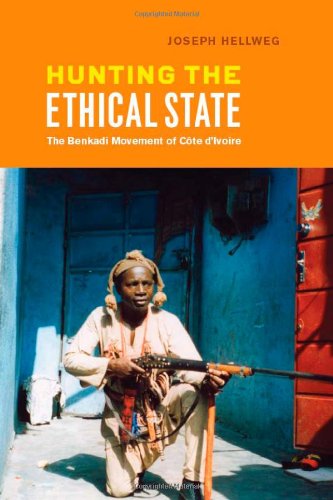
Hunting the Ethical State: The Benkadi Movement of Cote d'Ivoire
Authors:
Joseph Hellweg
Publisher:
University Of Chicago Press
Publication Date:
Not available
ISBN:
0226326543
In the 1990s a nationwide crime wave overtook Côte d’Ivoire. The Ivoirian police failed to control the situation, so a group of poor, politically... marginalized, and mostly Muslim men took on the role of the people’s protectors as part of a movement they called Benkadi. These men were dozos—hunters skilled in ritual sacrifice—and they applied their hunting and occult expertise, along with the ethical principles implicit in both forms of knowledge, to the tracking and capturing of thieves. Meanwhile, as Benkadi emerged, so too did the ethnic, regional, and religious divisions that would culminate in Côte d’Ivoire’s 2002–07 rebellion. Hunting the Ethical State reveals how dozos worked beyond these divisions to derive their new roles as enforcers of security from their ritual hunting ethos. Much as they used sorcery to shape-shift and outwit game, they now transformed into unofficial police, and their ritual networks became police bureaucracies. Though these Muslim and northern-descended men would later resist the state, Joseph Hellweg demonstrates how they briefly succeeded at making a place for themselves within it. Ultimately, Hellweg interprets Benkadi as a flawed but ingenious and thoroughly modern attempt by non-state actors to reform an African state.

Huntress: Year One
Authors:
Ivory Madison
Publisher:
DC Comics
Publication Date:
Not available
ISBN:
1401221262
As the last survivor of a crime family eliminated by bloody rivalries among the mobs of Gotham City, the orphaned Helena Bertinelli grew into the... mysterious vigilante known as the Huntress.New writer Ivory Madison shines a light on the dark underbelly of the mob world spanning from Gotham to Sicily, exploring exactly what led Helena away from a life in the Cosa Nostra criminal society and set her on a path of vigilantism. Also, find out more about Batman's first meeting with the fledgling female crime-fighter and why, to this day, they struggle to see eye-to-eye.

Hurley Custom Acp Critical Thinking Bundle
Authors:
Not Available
Publisher:
Not available
Publication Date:
Not available
ISBN:
1285151356
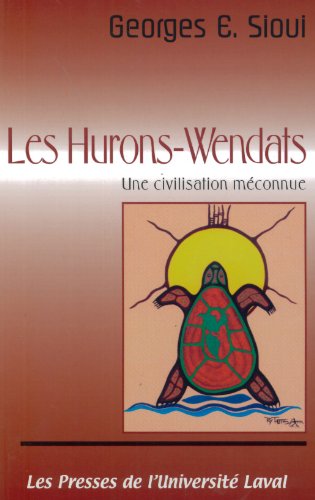
Hurons-wendats : une civilisation meconn
Authors:
Georges E. Sioui
Publisher:
Not available
Publication Date:
Not available
ISBN:
2763773605
Cette approche par trois voies (orale, ethnographique et archéologique) à la société wendat nous instruit de l'existence et de la nature d'une... pensée nord-amérindienne qui peut faire voir à juste titre la société wendat comme le foyer d'une véritable civilisation, méconnue jusqu'à présent.
Hurra!!! Po Polsku
Authors:
a. Burkat
Publisher:
Prolog Language School
Publication Date:
Not available
ISBN:
836022918X
Hurra Po Polsku 1
Authors:
M Maolepsza
Publisher:
Prolog Language School
Publication Date:
Not available
ISBN:
8360229155

Hurra!!! Po Polsku (English and Polish Edition)
Authors:
M Malolepsza
Publisher:
Bay Foreign Language Books
Publication Date:
Not available
ISBN:
8360229244

Hurra!!! Po Polsku (English and Polish Edition)
Authors:
M Malolepsza
Publisher:
Bay Foreign Language Books
Publication Date:
Not available
ISBN:
8360229252

Hurra!!! Po Polsku (English and Polish Edition)
Authors:
A Burkat
Publisher:
Prolog Language School
Publication Date:
Not available
ISBN:
8360229260

Hurra!!! Po Polsku (English and Polish Edition)
Authors:
A Burkat
Publisher:
Prolog
Publication Date:
Not available
ISBN:
8360229279
Returning to her hometown after years of traveling the world and pretending to be a world-famous diva, Caetana draws the town's most illustrious... citizens--among them a cattle baron, an historian and poet, and a pharmacist--into her life.
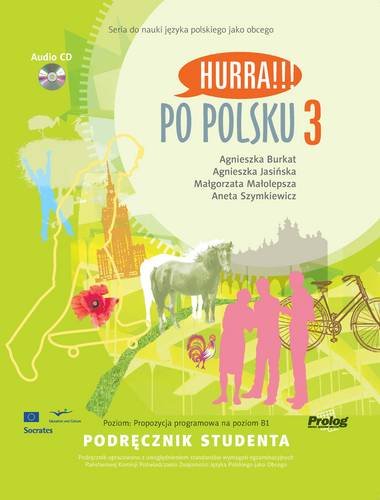
Hurra!!! Po Polsku (English and Polish Edition)
Authors:
a.Et Al Burkat
Publisher:
Bay Foreign Language Books
Publication Date:
Not available
ISBN:
8360229287
Why should we avoid doing moral wrong? The inability of philosophy to answer this question in a compelling manner—along with the moral skepticism... and ethical confusion that ensue—result, Stephen Darwall argues, from our failure to appreciate the essentially interpersonal character of moral obligation. After showing how attempts to vindicate morality have tended to change the subject—falling back on nonmoral values or practical, first-person considerations—Darwall elaborates the interpersonal nature of moral obligations: their inherent link to our responsibilities to one another as members of the moral community. As Darwall defines it, the concept of moral obligation has an irreducibly second-person aspect; it presupposes our authority to make claims and demands on one another. And so too do many other central notions, including those of rights, the dignity of and respect for persons, and the very concept of person itself. The result is nothing less than a fundamental reorientation of moral theory that enables it at last to account for morality's supreme authority—an account that Darwall carries from the realm of theory to the practical world of second-person attitudes, emotions, and actions. (20090301)
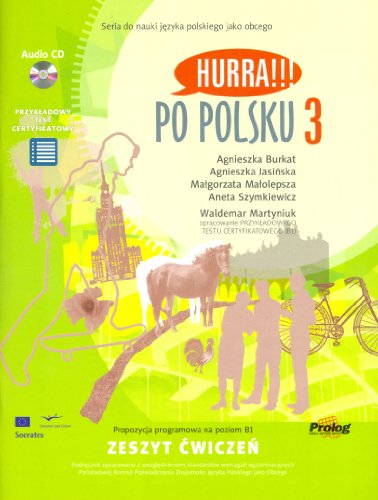
Hurra!!! Po Polsku: Student's Workbook Volume 3 (Polish Edition)
Authors:
Not Available
Publisher:
Prolog
Publication Date:
Not available
ISBN:
8360229295

Hurra!!! Po Polsku (v. 2)
Authors:
a. Burkat
Publisher:
Prolog Language School
Publication Date:
Not available
ISBN:
8360229198
HURRICANE ISLAND OUTWARD BOUND SCHOOL
Authors:
Not Available
Publisher:
Not available
Publication Date:
Not available
ISBN:
Not available
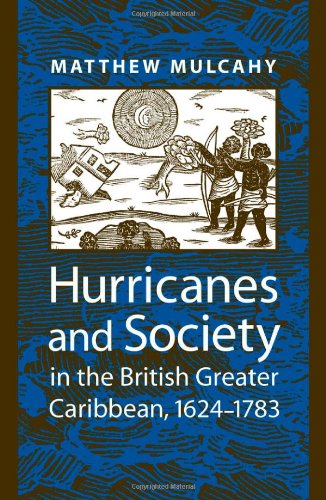
Hurricanes and Society in the British Greater Caribbean, 1624-1783...
Authors:
Matthew Mulcahy
Publisher:
The Johns Hopkins University Press
Publication Date:
Not available
ISBN:
0801890799
Hurricanes created unique challenges for the colonists in the British Greater Caribbean during the seventeenth and eighteenth centuries. These storms... were entirely new to European settlers and quickly became the most feared part of their physical environment, destroying staple crops and provisions, leveling plantations and towns, disrupting shipping and trade, and resulting in major economic losses for planters and widespread privation for slaves. In this study, Matthew Mulcahy examines how colonists made sense of hurricanes, how they recovered from them, and the role of the storms in shaping the development of the region's colonial settlements. Hurricanes and Society in the British Greater Caribbean, 1624–1783 provides a useful new perspective on several topics including colonial science, the plantation economy, slavery, and public and private charity. By integrating the West Indies into the larger story of British Atlantic colonization, Mulcahy's work contributes to early American history, Atlantic history, environmental history, and the growing field of disaster studies.
 '





