production
/viewbook/list/all/?page=5818
/
/static/
None
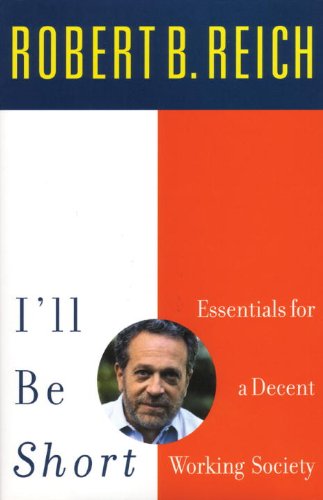
I'll Be Short: Essentials for a Decent Working Society
Authors:
Robert Reich
Publisher:
Beacon Press
Publication Date:
Not available
ISBN:
0807043419
'I don't like the basic philosophy that everyone is on their own, out for themselves, a kind of social Darwinism. It's bad for society, especially now.... . . . Call me crotchety, but I can't help asking, whatever happened to the social contract?'The get-rich-quick exuberance of the late nineties may have temporarily blinded us to how dependent we are on one another. Subsequent events serve as reminders that the strength of our economy and the security of our society rest on the bonds that connect us. But what, specifically, are these bonds? What do we owe one another as members of the same society?With his characteristic humor, humanity, and candor, one of the nation's most distinguished public leaders and thinkers delivers a fresh vision of politics by returning to basic American values: workers should share in the success of their companies; those who work should not have to live in poverty; and everyone should have access to an education that will better their chances in life.An insider who knows how the economy and government really work, Reich combines realistic solutions with democratic ideals. Businesses do have civic responsibilities, and government must stem a widening income gap that threatens to stratify our nation. And everyone must get involved to help return us to a society that works for everyone.
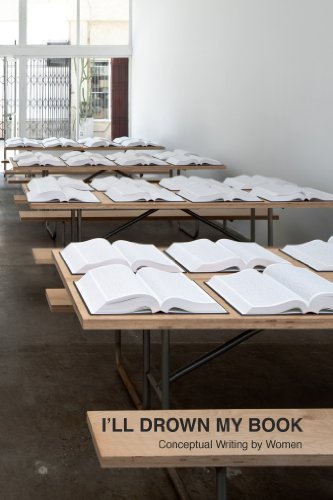
I'll Drown My Book: Conceptual Writing by Women
Authors:
Not Available
Publisher:
Les Figues Press
Publication Date:
Not available
ISBN:
1934254339
Poetry. Fiction. Women's Studies. Edited by Caroline Bergvall, Laynie Browne, Teresa Carmody, and Vanessa Place, the book includes work by 64 women from... 10 countries. Contributors respond to the question: What is conceptual writing? I'LL DROWN MY BOOK offers feminist perspectives within this literary phenomenon.Contributors are Kathy Acker, Oana Avasilichioaei and Erin Moure, Dodie Bellamy, Lee Ann Brown, Angela Carr, Mónica de la Torre, Danielle Dutton, Renee Gladman, Jen Hofer, Bernadette Mayer, Sharon Mesmer, Laura Mullen, Harryette Mullen, Deborah Richards, Juliana Spahr, Cecilia Vicuña, Wendy Walker, Jen Bervin, Inger Christiansen, Marcella Durand, Katie Degentesh, Nada Gordon, Jennifer Karmin, Mette Moestrup, Yedda Morrison, Anne Portugal, Joan Retallack, Cia Rinne, giovanni singleton, Anne Tardos, Hannah Weiner, Christine Wertheim, Norma Cole, Debra Di Blasi, Stacy Doris and Lisa Robertson, Sarah Dowling, Bhanu Kapil, Rachel Levitsky, Laura Moriarty, Redell Olsen, Chus Pato, Julie Patton, Kristin Prevallet, a.rawlings, Ryoko Seikiguchi, Susan M. Schultz, Rosmarie Waldrop, Renee Angle, Rachel Blau DuPlessis, Theresa Hak Kyung Cha, Tina Darragh, Judith Goldman, Susan Howe, Maryrose Larkin, Tracie Morris, Sawako Nakayasu, M. NourbeSe Philip, Jena Osman, kathryn l. pringle, Frances Richard, Kim Rosenfeld, and Rachel Zolf.

Illegal Alphabets and Adult Biliteracy: Latino Migrants Crossing...
Authors:
Tomás Mario Kalmar
Publisher:
Routledge
Publication Date:
Not available
ISBN:
0805836276
Illegal Alphabets and Adult Biliteracy--based on four years of intensive fieldwork in a small rural community in Southern Illinois--is a landmark work... in the area of adult literacy, combining insights from linguistics, anthropology, literacy studies, and education in a culturally situated exploration of the language and literacy practices of migrant workers. As such, it is a substantive contribution to the linguistic study of indigenous literacies; to sociocultural approaches to language, learning, and literacy; and to ethnographic and critical approaches to education. The book begins with a true story about "illegal aliens" who, in the summer of 1980, in the town of Cobden, Illinois, decided to help each other write down English como de veras se oye--the way it really sounds. The focus is on why and how they did this, what they actually wrote down, and what happened to their texts. The narrative then shifts to how and why the strategies adult immigrants actually use in order to cope with English in the real world seem to have little in common with those used by students in publicly funded bilingual and ESL classrooms. The book concludes with a discussion of the ideal of a universal alphabet, about the utopian claim that anyone can use a canonical set of 26 letters to reduce to script any language, ever spoken by anyone, anywhere, at any time. This claim is so familiar that it is easy to overlook how much undocumented intellectual labor was invested over the centuries by those who successfully carried the alphabet across the border from one language to the next. From this undocumented labor, without which none of us would now be able to read, everyone profits. To make his story and his argument as accessible as possible, Kalmar steers clear of jargon and excessive technical terminology. At the same time, however, readers who are familiar with any of the current postmodern discourses on the social construction of symbolic forms will be able to bring such discourses to bear on what he has to say about the game, the discourse, and the scene of writing that constitute the focus of his theoretical analysis. When people today argue about "illegal aliens" in the United States, probably the last question on their minds is the one to which this book is devoted: how do "illegal aliens" use an alphabet they already know in order to chart the speech sounds of colloquial English? It is the author's hope that readers will interpret his story as a parable with serious political implications. Illegal Alphabets and Adult Biliteracy is a compelling, vitally relevant book for researchers, students, practitioners, and anyone else interested in language and literacy in social, cultural, and political contexts, including bilingual and ESL education, second-language acquisition and development, applied and sociolinguistics, multicultural education, educational anthropology, and qualitative research.
Illegal Beings: Human Clones and the Law
Authors:
Kerry Lynn Macintosh
Publisher:
Cambridge University Press
Publication Date:
Not available
ISBN:
0521853281
Many people think human reproductive cloning should be a crime-some states have even outlawed it and Congress is working to enact a national ban.... However, if reproductive cloning soon becomes a reality, it will be impossible to prevent infertile couples and others from choosing the technology, even if they have to break the law. While most books on cloning cover the advantages and disadvantages of cloning technology, Illegal Beings describes the pros and cons of laws against human reproductive cloning. Kerry Lynn Macintosh, an attorney with expertise in the area of law and technology, argues that the most common objections to cloning are false or exaggerated, inspiring laws that stigmatize human clones as subhuman and unworthy of existence. She applies the same reasoning that was used to invalidate racial segregation to show how anti-cloning laws, by reinforcing negative stereotypes, deprive human clones of their equal protection rights under the law. Her book creates a new topic within constitutional law: existential segregation, or the practice of discriminating by preventing the existence of a disfavored group or class. This comprehensive and novel work looks at how anti-cloning laws will hurt human clones in a fresh perspective on this controversial subject. Kerry Lynn Macintosh is a member of the Law and Technology faculty at Santa Clara University School of Law. She is the author of papers, articles, and book chapters on the law and technology and has contributed to the Harvard Journal of Law and Technology, Boston University Journal of Science and Technology Law, and Berkeley Technology Law Journal.
Illegal Drugs: A Complete Guide to their History, Chemistry, Use,...
Authors:
Paul Gahlinger
Publisher:
Plume
Publication Date:
Not available
ISBN:
0452285054
Does Ecstasy cause brain damage? Why is crack more addictive than cocaine? What questions regarding drugs are legal to ask in a job interview? When does... marijuana possession carry a greater prison sentence than murder? Illegal Drugs is the first comprehensive reference to offer timely, pertinent information on every drug currently prohibited by law in the United States. It includes their histories, chemical properties and effects, medical uses and recreational abuses, and associated health problems, as well as addiction and treatment information. Additional survey chapters discuss general and historical information on illegal drug use, the effect of drugs on the brain, the war on drugs, drugs in the workplace, the economy and culture of illegal drugs, and information on thirty-three psychoactive drugs that are legal in the United States, from caffeine, alcohol and tobacco to betel nuts and kava kava.
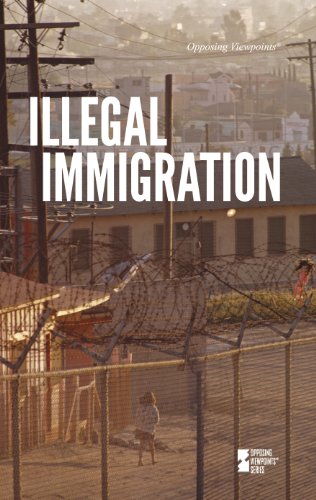
Illegal Immigration (Opposing Viewpoints) (English and English...
Authors:
David M. Haugen
Publisher:
Greenhaven Press
Publication Date:
Not available
ISBN:
0737752262
Those who do not know their opponent's arguments do not completely understand their own. This book is one volume of the highly acclaimed Opposing... Viewpoints Series developed by Greenhave Press. "Each volume in the Opposing Viewpoints Series could serve as a model...not only providing access to a wide diversity of opinions, but also simulating readers to do further research for group discussion and individual interest. Both shrill and moderate, the selections-by experts, policy makers, and concerned citizens-include complete articles and speeches, long book excerpts, and occasional cartoons and boxed quotations...all up to date and fully documented. The editing is intelligent and unobtrusive, organizing the material around substantive issues within the general debate. Brief introductions to each section and to each reading focus the questions raised and offer no slick answers."

Illegal: Life and Death in Arizona's Immigration War Zone
Authors:
Terry Greene Sterling
Publisher:
HOMEGROWN
Publication Date:
Not available
ISBN:
1599218615
Terry Greene Sterling enters the fearful ghettoes of Arizona, the gateway for nearly half of the nation's undocumented immigrants and the state that... is the least welcoming toward them, to tell the stories of the men, women, and children who have crossed the border.
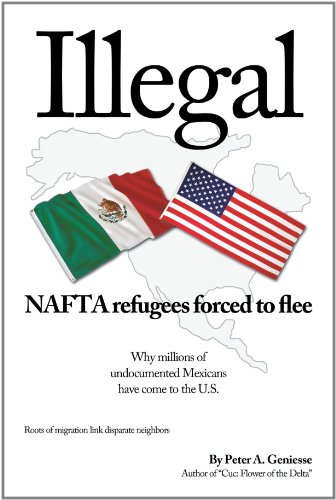
Illegal: NAFTA refugees forced to flee
Authors:
Peter A. Geniesse
Publisher:
iUniverse
Publication Date:
Not available
ISBN:
1440190984
Why have millions of Mexicans and other Latinos fled their homelands and risked their lives to come to the U.S. in search of a job? Why are they living... in the shadows, ever fearful of being discovered by the migras and of being deported? Why is the United States, a nation of immigrants, which often welcomed and recruited millions of Mexicans workers in the past, now spending billions of dollars on walls, border patrols, detention centers and workplace raids to get them out and keep them out? The issue is as complex as it is divisive. There are root causes, of course, and U.S. politics and trade policies have played a major role in producing today's immigration crisis. But the migrants themselves, real people with real experiences related throughout "Illegal," are the most credible witnesses to the system gone awry as well as the injustices suffered and endured on both sides of the border. Let them tell you their poignant stories. Rosa lost her husband to the drug wars and Rogelio lost his best friend in the desert. Ernesto lost his farm. Enrique was deported after a workplace raid. And Cresencio and Hector now are living the American dream, thanks to the amnesty program of the 1980s. That's just a sample.
Illegal People : How globalization creates migration and...
Authors:
David Bacon
Publisher:
Beacon Press
Publication Date:
Not available
ISBN:
0807042307
For two decades David Bacon has documented the connections between labor, migration, and the global economy. In Illegal People he explains why our... national policy produces even more displacement, migration, immigration raids, and an increasingly divided and polarized society. Arguing for a sea change in how we think, debate, and legislate about and around immigration, Bacon promotes a human rights perspective in a globalized world.
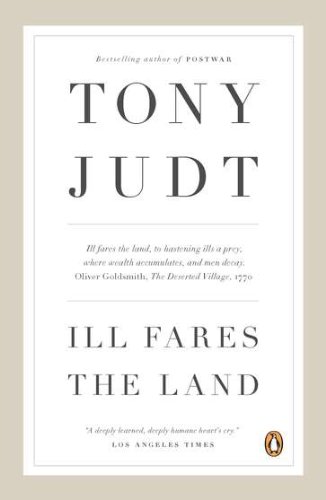
Ill Fares the Land
Authors:
Tony Judt
Publisher:
Penguin Books
Publication Date:
Not available
ISBN:
0143118765
A gift to the next generation of engaged citizens, from one of our most celebrated intellectuals. As the economic collapse of 2008 made clear, the... social contract that defined postwar life in Europe and America-the guarantee of security, stability, and fairness-is no longer guaranteed; in fact, it's no longer part of the common discourse. Tony Judt, one of our leading historians and thinkers, offers the language we need to address our common needs, rejecting the nihilistic individualism of the far Right and the debunked socialism of the past. In reintroducing alternatives to the status quo, Judt invigorates our political conversation, furnishing the tools necessary to imagine a new form of governance and a better way of life.
Ill Fares the Land
Authors:
Tony Judt
Publisher:
Penguin Press HC, The
Publication Date:
Not available
ISBN:
1594202761
Something is profoundly wrong with the way we think about how we should live today. In Ill Fares The Land, Tony Judt, one of our leading historians... and thinkers, reveals how we have arrived at our present dangerously confused moment. Judt masterfully crystallizes what we’ve all been feeling into a way to think our way into, and thus out of, our great collective dis-ease about the current state of things. As the economic collapse of 2008 made clear, the social contract that defined postwar life in Europe and America – the guarantee of a basal level of security, stability and fairness -- is no longer guaranteed; in fact, it’s no longer part of the common discourse. Judt offers the language we need to address our common needs, rejecting the nihilistic individualism of the far right and the debunked socialism of the past. To find a way forward, we must look to our not so distant past and to social democracy in action: to re-enshrining fairness over mere efficiency. Distinctly absent from our national dialogue, social democrats believe that the state can play an enhanced role in our lives without threatening our liberties. Instead of placing blind faith in the market—as we have to our detriment for the past thirty years—social democrats entrust their fellow citizens and the state itself. Ill Fares the Land challenges us to confront our societal ills and to shoulder responsibility for the world we live in. For hope remains. In reintroducing alternatives to the status quo, Judt reinvigorates our political conversation, providing the tools necessary to imagine a new form of governance, a new way of life.

ILL FARES THE LAND
Authors:
Not Available
Publisher:
Not available
Publication Date:
Not available
ISBN:
1101223677
Ill Fares the Land: A Treatise on Our Present Discontents
Authors:
Tony Judt
Publisher:
Penguin Books
Publication Date:
Not available
ISBN:
0718191412
'Ill fares the land, to hastening ills a prey, Where wealth accumulates, and men decay' - Oliver Goldsmith. Something is profoundly wrong with the way... we live today. For thirty years we have made a virtue out of the pursuit of material self-interest: indeed, this very pursuit now constitutes whatever remains of our sense of shared purpose. But we have forgotten how to think about the life we live together: its goals and purposes. We are now not only post-ideological; we have become post-ethical. We have lost touch with the old questions that have defined politics since the Greeks: is it good? Is it fair? Is it just? Is it right? Will it help bring about a better society? A better world? The social contract that defined postwar life in Europe and America - the guarantee of security, stability and fairness - is no longer assured; in fact, it's no longer part of collective conversation. In this exceptional short book, Tony Judt reveals how we have arrived at our present dangerously confused moment and masterfully crystallizes our great unease, showing how we might yet think ourselves out of it. If we are to replace fear with confidence then we need a different story to tell, about state and society alike: a story that carries moral and political conviction. Providing that story is the purpose of this book.
I'll Fly Away: Further Testimonies from the Women of York Prison...
Authors:
Wally Lamb
Publisher:
Harper Perennial
Publication Date:
Not available
ISBN:
0061626392
For several years, Wally Lamb, the author of two of the most beloved novels of our time, has run a writing workshop at the York Correctional... Institution, Connecticut's only maximum-security prison for women. Writing, Lamb discovered, was a way for these women to face their fears and failures and begin to imagine better lives. Couldn't Keep It to Myself, a collection of their essays, was published in 2003 to great critical acclaim. With I'll Fly Away, Lamb offers readers a new volume of intimate pieces from the York workshop. Startling, heartbreaking, and inspiring, these stories are as varied as the individuals who wrote them, but each illuminates an important core truth: that a life can be altered through self-awareness and the power of the written word.
Ill-Gotten Gains: Evasion, Blackmail, Fraud, and Kindred Puzzles of...
Authors:
Leo Katz
Publisher:
University Of Chicago Press
Publication Date:
Not available
ISBN:
0226425940
In Ill-Gotten Gains, Leo Katz describes the underlying principles that not only guide the law but also moral decisions. Mixing wit with insight,... anecdotes with analysis, Katz uncovers what is really at stake in crimes such as insider trading, blackmail, and plagiarism. With its startling conclusions and myriad twists, this book will fascinate all those intrigued by the perplexing relationship between morality and law."An ambitious and well-written book of legal and moral theory to overthrow both utilitarianism and its cousin, the economic approach to law."—Richard A. Posner, New Republic"A good, well-written book full of interesting examples."—Library Journal"[An] elegant defense of circumvention and subterfuge . . . a heroically counterintuitive book."—Malcolm Gladwell, New Yorker
 '





