production
/viewbook/list/all/?page=5838
/
/static/
None
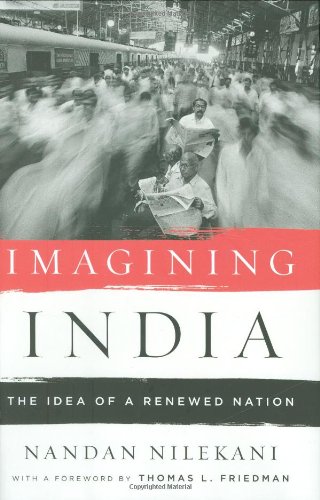
Imagining India: The Idea of a Renewed Nation
Authors:
Nandan Nilekani
Publisher:
Penguin Press HC, The
Publication Date:
Not available
ISBN:
1594202044
A visionary look at the evolution and future of India In this momentous book, Nandan Nilekani traces the central ideas that shaped India's past and... present and asks the key question of the future: How will India as a global power avoid the mistakes of earlier development models? As a co-founder of Infosys, a global leader in information technology, Nilekani has actively participated in the company's rise during the past twenty-seven years. In Imagining India, he uses his global experience and understanding to discuss the future of India and its role as a global citizen and emerging economic giant. Nilekani engages with India's particular obstacles and opportunities, charting a new way forward for the young nation.

Imagining Ireland's Independence: The Debates over the Anglo-Irish...
Authors:
Jason K. Knirck
Publisher:
Rowman & Littlefield Publishers
Publication Date:
Not available
ISBN:
0742541487
The key turning point in modern Ireland's history, the Anglo-Irish Treaty of 1921 has shadowed Ireland's political life for decades. In this first... book-length assessment of the treaty in over seventy years, Jason Knirck recounts the compelling story of the nationalist politics that produced the Irish Revolution, the tortuous treaty negotiations, and the deep divisions within Sinn Féin that led to the slow unraveling of fragile party cohesion. Focusing on broad ideological and political disputes, as well as on the powerful personalities involved, the author considers the major issues that divided the pro- and anti-treaty forces, why these issues mattered, and the later judgments of historians. He concludes that the treaty debates were in part the result of the immaturity of Irish nationalist politics, as well as the overriding emphasis given to revolutionary unity. A fascinating story in their own right, the treaty debates also open a wider window onto questions of European nationalism, colonialism, state-building, and competing visions of Irish national independence.Treaty Documents
Imagining Justice
Authors:
John P. Crank
Publisher:
Anderson
Publication Date:
Not available
ISBN:
1583605339
Imagining Justice seeks to move away from normative thinking about justice, particularly in the area of justice education, suggesting that what is... needed today is a way to think about the enterprise of justice that will capture its full potential. By providing an introduction to the intellectual potential of the field of justice, we can acknowledge that the field is wider than formerly recognized, and ultimately imagine the full richness that justice can encompass. Outstanding Book Award Winner of the Academy of Criminal Justice Sciences. The author leads the reader on a fascinating excursion through the literatures of mainstream criminology and criminal justice, but more importantly he weaves into the discussion insights from anthropology, history, philosophy, organization studies, multiculturalism, feminism, and much more.
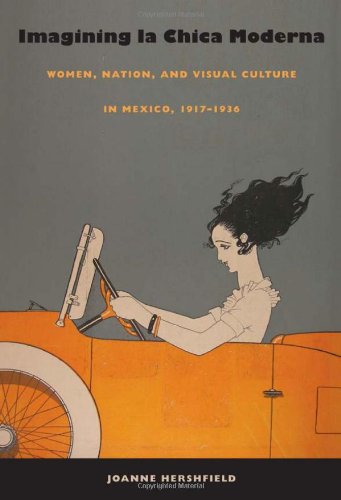
Imagining la Chica Moderna: Women, Nation, and Visual Culture in...
Authors:
Joanne Hershfield
Publisher:
Duke University Press Books
Publication Date:
Not available
ISBN:
0822342383
In the years following the Mexican Revolution, visual images of la chica moderna, the modern woman, au courant in appearance and attitude, popped up in... mass media across the country. Some of the images were addressed directly to women through advertisements, as illustrations accompanying articles in women’s magazines, and on the “women’s pages” in daily newspapers. Others illustrated domestic and international news stories, promoted tourism, or publicized the latest Mexican and Hollywood films. In Imagining la Chica Moderna, Joanne Hershfield examines these images, exploring how the modern woman was envisioned in Mexican popular culture and how she figured into postrevolutionary contestations over Mexican national identity.Through her detailed interpretations of visual representations of la chica moderna, Hershfield demonstrates how the images embodied popular ideas and anxieties about sexuality, work, motherhood, and feminine beauty, as well as class and ethnicity. Her analysis takes into account the influence of mexicanidad, the vision of Mexican national identity promoted by successive postrevolutionary administrations, and the fashions that arrived in Mexico from abroad, particularly from Paris, New York, and Hollywood. She considers how ideals of the modern housewife were promoted to Mexican women through visual culture; how working women were represented in illustrated periodicals and in the Mexican cinema; and how images of traditional “types” of Mexican women, such as la china poblana (the rural woman), came to define a “domestic exotic” form of modern femininity. Scrutinizing photographs of Mexican women that accompanied articles in the Mexican press during the 1920s and 1930s, Hershfield reflects on the ways that the real and the imagined came together in the production of la chica moderna.
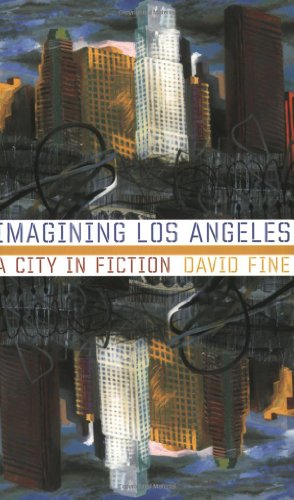
Imagining Los Angeles: A City In Fiction (Western Literature Series)
Authors:
David Fine
Publisher:
University of Nevada Press
Publication Date:
Not available
ISBN:
0874176034
The history of a major city is examined through the work of the authors who defined it in our imaginations. The literary image of Los Angeles has... evolved since the 1880s from promotional literature that hyped the region as a New Eden to contemporary visions of the city as a perplexing, sometimes corrupt, even apocalyptic place that foreshadows and reflects all that is wrong with America. In Imagining Los Angeles, the first literary history of the city in more than fifty years, critic David Fine traces the history and mood of the place through the work of writers as diverse as Helen Hunt Jackson, Mary Austin, Norman Mailer, Raymond Chandler, Joan Didion, Carolyn See, and many others. His lively and engaging text focuses on the way these writers saw Los Angeles and used the image of the city as an element in their work, and on how that image has changed as the city itself became ever larger, more complex, and more socially and ethnically diverse. Fine begins with the mythifiers Helen Hunt Jackson, author of the quintessentially romantic Ramona (1884) and Mary Austin, whose 1917 novel The Ford was the first fictionalization of the theft of water from the Owens Valley that became famous sixty years later in the movie Chinatown. He devotes chapters to both early and later Hollywood novels, to crime and detective novels, and to immigrant, ethnic, and apocalyptic fiction, paying detailed attention to the fiction of Upton Sinclair, James M. Cain, Raymond Chandler, Ross Macdonald, John Fante, Nathanael West, Aldous Huxley, Budd Schulberg, Christopher Isherwood, Alison Lurie, Norman Mailer, Joan Didion, Thomas Pynchon, Walter Mosley, James Ellroy, Kate Braverman, and Carolyn See. The city’s history, its architecture, even its disasters are all part of the story. First published in 2000, Imagining Los Angeles is available now for the first time in paperback. This is essential reading for anyone interested in the literature and changing image of Southern California.
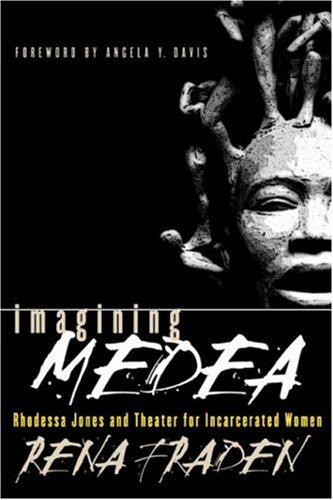
Imagining Medea: Rhodessa Jones and Theater for Incarcerated Women
Authors:
Rena Fraden
Publisher:
The University of North Carolina Press
Publication Date:
Not available
ISBN:
0807849847
This ain't no Dreamgirls, Rhodessa Jones warns participants in the Medea Project, the theater program for incarcerated women that she founded and... directs. Her expectations are grounded in reality, tempered, for example, by the fact that women are the fastest growing population in U.S. prisons. Still, Jones believes that by engaging incarcerated women in the process of developing and staging dramatic works based on their own stories, she can push them toward tapping into their own creativity, confronting the problems that landed them in prison, and taking control of their lives. Rena Fraden chronicles the collaborative process of transforming incarcerated women's stories into productions that incorporate Greek mythology, hip-hop music, dance, and autobiography. She captures a diverse array of voices, including those of Jones and other artists, the sheriff and prison guards, and, most vividly, the women themselves. Through compelling narrative and thoughtful commentary, Fraden investigates the Medea Project's blend of art and activism and considers its limits and possibilities for enacting social change. Rhodessa Jones is co-artistic director of the San Francisco-based performance company Cultural Odyssey and founder of the Medea Project: Theater for Incarcerated Women. An award-winning performer, she has taught at the Yale School of Drama and the New College of California.
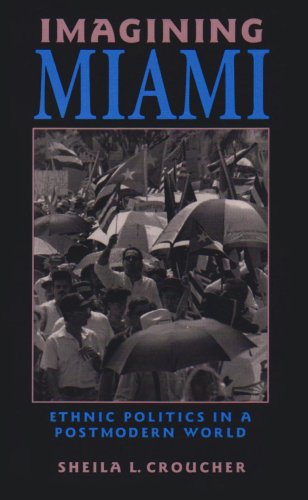
Imagining Miami: Ethnic Politics in a Postmodern World (Race and...
Authors:
Sheila L. Croucher
Publisher:
University of Virginia Press
Publication Date:
Not available
ISBN:
0813917050
Miami has long captured the world's attention in provocative ways. During the 1980s, a series of violent racial disturbances focused national and... international attention there as analysts and observers scrambled to explain the demise of the "Magic City." What has emerged is a popular image of Miami as an urban area in which three distinct ethnic groups- Hispanics, Blacks, and Anglos- are pitted against one another in a battle for limited political, economic, and social resources.Sheila L. Croucher uses Miami as a laboratory in which to explore the social and political construction of ethnic identities and ethnic group conflict. Incorporating interviews with community leaders, politicians, journalists, and business people, as well as periodical and popular literature on Miami, this book examines how social constructs emerge and become accepted, as well as how these definitions reflect the pull of vested interests locally, nationally, and even internationally.
Imagining Minds: The Neuro-Aesthetics of Austen, Eliot, and Hardy...
Authors:
KAY YOUNG
Publisher:
Ohio State University Press
Publication Date:
Not available
ISBN:
0814251749
Jane Austen, George Eliot, and Thomas Hardy—three great masters of the English novel—are three remarkable imagining minds. As readers of their... novels, we feel ourselves to be in contact with their authorial minds and conjure the minds they create spread across the pages of their narrative worlds. In the way that we believe in and hold in mind the idea that other human beings have minds of their own do we as readers of the novel believe we are in the presence of these other minds. But how? Imagining Minds explores how the novels of Austen, Eliot, and Hardy create the felt-quality of their authoring minds and of the minds they author by bringing their writing in relation to cognitive neuroscience accounts of the mind-brain, especially of William James and Antonio Damasio. It is in that relational space between the novels and theories of mind-brain that Kay Young works through her fundamental claim: the novel writes about the nature of mind, narrates it at work, and stimulates us to know deepened experiences of consciousness in its touching of our reading minds. While, in addition to James and Damasio, Young draws on a range of theories of mind-brain generated by current research in philosophy, neuroscience, cognitive science, psychology, psychiatry, and psychoanalysis to help her understand the novel’s imagining of mind, her claim is that those disciplines cannot themselves perform the more fully integrated because embodied and emotionally stimulating mind work of the novel—mind work that prompts us as their readers to better know our own minds.
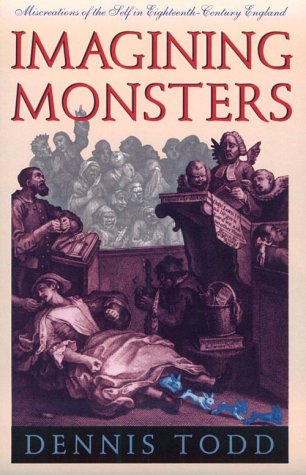
Imagining Monsters: Miscreations of the Self in Eighteenth-Century...
Authors:
Dennis Todd
Publisher:
University Of Chicago Press
Publication Date:
Not available
ISBN:
0226805565
In 1726, an illiterate woman from Surrey named Mary Toft announced that she had given birth to seventeen rabbits. Deceiving respected physicians and... citizens alike, she created a hoax that held England spellbound for months. In Imagining Monsters, Dennis Todd tells the story of this bizarre incident and shows how it illuminates eighteenth-century beliefs about the power of imagination and the problems of personal identity.Mary Toft's outrageous claim was accepted because of a common belief that the imagination of a pregnant woman could deform her fetus, creating a monster within her. Drawing on largely unexamined material from medicine, embryology, philosophy, and popular "monster" exhibitions, Todd shows that such ideas about monstrous births expressed a fear central to scientific, literary, and philosophical thinking: that the imagination could transgress the barrier between mind and body.In his analysis of the Toft case, Todd exposes deep anxieties about the threat this transgressive imagination posed to the idea of the self as stable, coherent, and autonomous. Major works of Pope and Swift reveal that they, too, were concerned with these issues, and Imagining Monsters provides detailed discussions of Gulliver's Travels and The Dunciad illustrating how these writers used images of monstrosity to explore the problematic nature of human identity. It also includes a provocative analysis of Pope's later work that takes into account his physical deformity and his need to defend himself in a society that linked a deformed body with a deformed character.
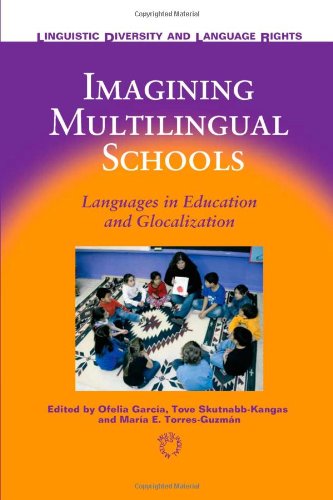
Imagining Multilingual Schools: Language in Education and...
Authors:
Maria E. Torres-Guzman
Publisher:
Multilingual Matters
Publication Date:
Not available
ISBN:
1853598941
This book brings together visions and realities of multilingual schools throughout the world in order to examine the pedagogical, socio educational, and... socio political issues that impact on their development and success. The book considers issues of multilingual schooling in different countries and for diverse populations and groups, while taking into account the global pressures of the 21st century.
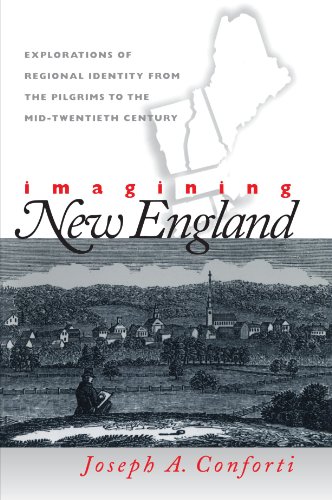
Imagining New England: Explorations of Regional Identity from the...
Authors:
Joseph A. Conforti
Publisher:
The University of North Carolina Press
Publication Date:
Not available
ISBN:
0807849375
Say "New England" and you likely conjure up an image in the mind of your listener: the snowy woods or stone wall of a Robert Frost poem, perhaps, or... that quintessential icon of the region--the idyllic white village. Such images remind us that, as Joseph Conforti notes, a region is not just a territory on the ground. It is also a place in the imagination. This ambitious work investigates New England as a cultural invention, tracing the region's changing identity across more than three centuries. Incorporating insights from history, literature, art, material culture, and geography, it shows how succeeding generations of New Englanders created and broadcast a powerful collective identity for their region through narratives about its past. Whether these stories were told in the writings of Frost or Harriet Beecher Stowe, enacted in historical pageants or at colonial revival museums, or conveyed in the pages of a geography textbook or Yankee magazine, New Englanders used them to sustain their identity, revising them as needed to respond to the shifting regional landscape.
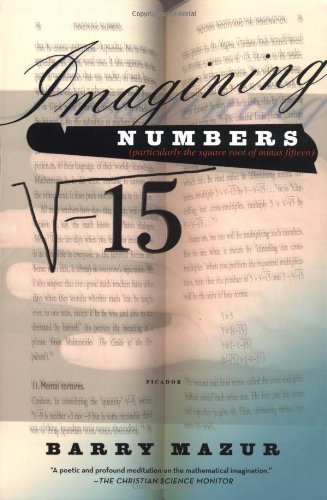
Imagining Numbers: (particularly the square root of minus fifteen)
Authors:
Barry Mazur
Publisher:
Picador
Publication Date:
Not available
ISBN:
0312421877
Barry Mazur invites lovers of poetry to make a leap into mathematics. Through discussions of the role of the imagination and imagery in both poetry and... mathematics, Mazur reviews the writings of the early mathematical explorers and reveals the early bafflement of these Renaissance thinkers faced with imaginary numbers. Then he shows us, step-by-step, how to begin imagining these strange mathematical objects ourselves.
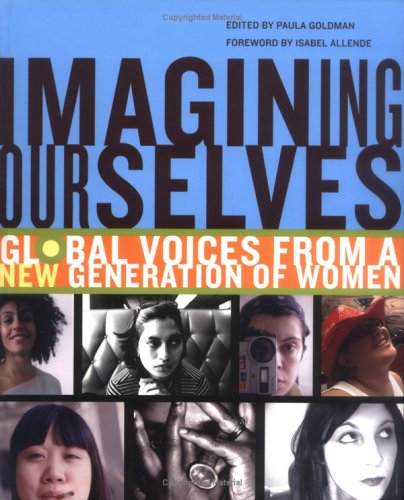
Imagining Ourselves: Global Voices from a New Generation of Women
Authors:
Not Available
Publisher:
New World Library
Publication Date:
Not available
ISBN:
1577315243
Presenting the photography, paintings, poetry, fiction, songs, and essays of 105 young women from fifty-seven countries, Imagining Ourselves captures... the energy of the first global generation of women. From Nasra Abubakar, a Somalian camel-farmer’s daughter who is the first in her family to go to college to Anita Khemka, who reflects on the generation gap between yesterday’s and today’s teenage women in urban India, the young women in this book will inspire and encourage you to take action to transform your own life and the world around you.Enlightening, uplifting, challenging, and funny, Imagining Ourselves demonstrates the power of each individual life and the collective power of today’s generation of women as a whole.
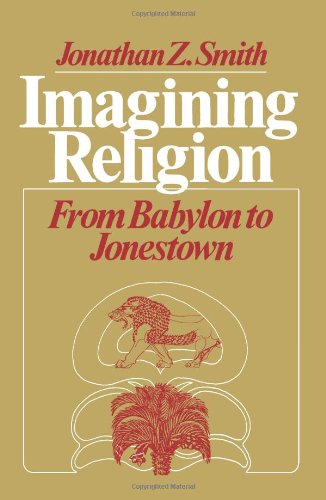
Imagining Religion: From Babylon to Jonestown (Chicago Studies in...
Authors:
Jonathan Z. Smith
Publisher:
University Of Chicago Press
Publication Date:
Not available
ISBN:
0226763609
With this influential book of essays, Jonathan Z. Smith has pointed the academic study of religion in a new theoretical direction, one neither... theological nor willfully ideological.Making use of examples as apparently diverse and exotic as the Maori cults in nineteenth-century New Zealand and the events of Jonestown, Smith shows that religion must be construed as conventional, anthropological, historical, and as an exercise of imagination. In his analyses, religion emerges as the product of historically and geographically situated human ingenuity, cognition, and curiosity—simply put, as the result of human labor, one of the decisive but wholly ordinary ways human beings create the worlds in which they live and make sense of them."These seven essays . . . display the critical intelligence, creativity, and sheer common sense that make Smith one of the most methodologically sophisticated and suggestive historians of religion writing today. . . . Smith scrutinizes the fundamental problems of taxonomy and comparison in religious studies, suggestively redescribes such basic categories as canon and ritual, and shows how frequently studied myths may more likely reflect situational incongruities than vaunted mimetic congruities. His final essay, on Jonestown, demonstrates the interpretive power of the historian of religion to render intelligible that in our own day which seems most bizarre."—Richard S. Sarason, Religious Studies Review

Imagining Serengeti: A History of Landscape Memory in Tanzania from...
Authors:
Jan Bender Shetler
Publisher:
Ohio University Press
Publication Date:
Not available
ISBN:
0821417509
Long before the creation of the Serengeti National Park in Tanzania, the people of the western Serengeti had established settlements and interacted with... the environment in ways that created a landscape we now misconstrue as natural. Western Serengeti peoples imagine the environment not as a pristine wilderness, but as a differentiated social landscape that embodies their history and identity. Conservationist literature has ignored these now-displaced peoples and relegated them to the margins of modern society. Their oral traditions, however, provide the means for seeing the landscape from a new perspective. Imagining Serengeti allows us to see the Serengeti landscape as a book of memory that preserves the ways in which western Serengeti peoples have actively transformed their environment and their societies. Moreover, it strengthens the case for involving local communities in conservation efforts that will preserve African environments for the future. Using a new methodology to analyze precolonial oral traditions, Jan Shetler identifies core spatial images, which are then recontextualized into historical time periods through the use of archaeological, linguistic, ethnographic, ecological, and archival evidence. Imagining Serengeti reconstructs a socioenvironmental history of landscape memory of the western Serengeti spanning the last eighteen hundred years.
 '





