production
/viewbook/list/all/?page=5869
/
/static/
None
Incidents in the Life of a Slave Girl (An African American Heritage...
Authors:
Linda Brent
Publisher:
Wilder Publications
Publication Date:
Not available
ISBN:
1604592052
Here is one of the few slave narratives written by a women. Slavery is a terrible thing, but it is far more terrible and harrowing for women than for... men. Harriet Jacobs was owned by a brutal master who beat his slaves regularly and subjected them to indignations that were far worse. Jacobs eventually escaped her master and moved to a northern state. Though she was unable to take her children with her at the time they were later reunited. Read her powerful and compelling story.
Incidents in the Life of a Slave Girl (Barnes & Noble Classics...
Authors:
Harriet Jacobs
Publisher:
Barnes & Noble Classics
Publication Date:
Not available
ISBN:
1593082835
Incidents in the Life of a Slave Girl, by Harriet Jacobs, is part of the Barnes & Noble Classics series, which offers quality editions at... affordable prices to the student and the general reader, including new scholarship, thoughtful design, and pages of carefully crafted extras. Here are some of the remarkable features of Barnes & Noble Classics: All editions are beautifully designed and are printed to superior specifications; some include illustrations of historical interest. Barnes & Noble Classics pulls together a constellation of influencesbiographical, historical, and literaryto enrich each reader's understanding of these enduring works. In what has become a landmark of American history and literature, Incidents in the Life of a Slave Girl recounts the incredible but true story of Harriet Jacobs, born a slave in North Carolina in 1813. Her tale gains its importance from her descriptions, in great and painful detail, of the sexual exploitation that daily haunted her lifeand the life of every other black female slave.As a child, Harriet Jacobs remained blissfully unaware that she was a slave until the deaths of both her mother and a benevolent mistress exposed her to a sexually predatory master, Dr. Flint. Determined to escape, she spends seven years hidden away in a garret in her grandmother’s house, three feet high at its tallest point, with almost no air or light, and with only glimpses of her children to sustain her courage. In the face of seemingly insurmountable odds, she finally wins her battle for freedom by escaping to the North in 1842.A powerful, unflinching portrayal of the brutality of slave life, Incidents in the Life of a Slave Girl stands alongside Frederick Douglass’s classic autobiographies as one of the most significant slave narratives ever written.Farah Jasmine Griffin is Professor of English and Comparative Literature and African American Studies at Columbia University in New York City.
Incidents in the Life of a Slave Girl (Dover Thrift Editions)
Authors:
Harriet Jacobs
Publisher:
Dover Publications
Publication Date:
Not available
ISBN:
0486419312
This autobiographical account by a former slave is one of the few extant narratives written by a woman. Written and published in 1861, it delivers a... powerful portrayal of the brutality of slave life. Jacobs speaks frankly of her master's abuse and her eventual escape, in a tale of dauntless spirit and faith.
Incidents in the Life of a Slave Girl (Enriched Classics (Simon...
Authors:
Harriet Jacobs
Publisher:
Simon & Schuster
Publication Date:
Not available
ISBN:
1416599649
Published in 1861, “Incidents in the Life of a Slave Girl” was one of the first personal narratives by a slave and one of the few written by a... woman. Jacobs (1813-97) was a slave in North Carolina and suffered terribly, along with her family, at the hands of a ruthless owner. She made several failed attempts to escape before successfully making her way North, though it took years of hiding and slow progress. Eventually, she was reunited with her children. For all biography and history collections. "Slavery is terrible for men, but it is far more terrible for women," Harriet Jacobs wrote in 1861. At that time she was an escaped slave living in the north, but the Fugitive Slave Law of 1850 meant that she could no longer consider being in the northern states a guarantee of freedom or safety. Her book is an eloquent recital of the suffering that is slavery. Families broken apart; promises of freedom made but never kept; whippings, beatings, and burnings; masters selling their own children - all are recounted with precise detail and a blazing indignation. Harriet Jacobs' master started pursuing her when she was fifteen; in disgust she continually refused and avoided him. Her first attempt at revenge and escape failed: she became the lover of a local unmarried white man and had several children, but even then her master refused to sell her. Finally, in desperation, she ran away and hid in an uninsulated garret, three feet high at its tallest point with almost no air or light. She stayed there for seven years, enduring cold, heat, and a crippling lack of movement, always hoping to catch a glimpse of her children through a crack in the walls as they walked by on the road below her. At last she had a chance to escape to the North. Her story is a remarkable testimony to her strength and courage, and an unrelenting attack upon the institution of slavery.
Incidents in the Life of a Slave Girl - Literary Touchstone Classic
Authors:
Harriet Jacobs
Publisher:
Prestwick House, Inc.
Publication Date:
Not available
ISBN:
158049336X
This Prestwick House Literary Touchstone Classic includes a glossary and reader's notes to help the modern reader appreciate Jacobs' perspectives and... language. DRIVEN BY THE HORRORS of slavery and fear of a predatory master, Harriet Jacobs, a young black woman, makes the fateful, life-altering decision to escape. Long thought to be the work of a white writer, Incidents in the Life of a Slave Girl is the captivating and terrifying story of Jacobs' daily life on a plantation in North Carolina, her seven years of hiding, and her ultimate triumph. Jacobs wrote her autobiography in 1861, under a pseudonym to protect the lives of the friends and family she left behind, and the work had been essentially lost until the mid-twentieth century. Now recognized as a classic, unflinching portrait of slave life, Incidents exposes slavery on a level comparable only to that of Narrative of the Life of Frederick Douglass.
Incidents in the Life of a Slave Girl (Norton Critical Editions)
Authors:
Harriet Jacobs
Publisher:
W. W. Norton & Company
Publication Date:
Not available
ISBN:
0393976378
Incidents in the Life of a Slave Girl is the first full-length narrative written by a former woman slave in America.The text is that of the 1861 first... edition. Contexts includes contemporary responses to Incidents, selections from Jacobs's other published writings, and extracts from her correspondence. Criticism includes eleven important assessments of the narrative, contributed by Jean Fagan Yellin, Ann Taves, Valerie Smith, Nellie Y. McKay, Harryette Mullen, Michelle Burnham, Nell Irvin Painter, Frances Smith Foster, Sandra Gunning, Elizabeth V. Spelman, and Christine Accomando. A Chronology and Selected Bibliography are included.
Incidents in the Life of a Slave Girl (Penguin Classics)
Authors:
Harriet Jacobs
Publisher:
Penguin Classics
Publication Date:
Not available
ISBN:
0140437959
A haunting, evocative recounting of her life as a slave in North Carolina and of her final escape and emancipation, Harriet Jacobs's classic narrative,... written between 1853 and 1858 and published pseduonymously in 1861, tells firsthand of the horrors inflicted on slaves. In writing this extraordinary memoir, which culminates in the seven years she spent hiding in a crawl space in her grandmother's attic, Jacobs skillfully used the literary genres of her time, presenting a thoroughly feminist narrative that portrays the evils and traumas of slavery, particularly for women and children.
Incidents in the Life of a Slave Girl : restored version complete...
Authors:
Harriet Jacobs
Publisher:
CreateSpace Independent Publishing Platform
Publication Date:
Not available
ISBN:
1438299583
Harriet Ann Jacobs was an American writer, escaped slave, abolitionist speaker and reformer. Jacobs' single work, Incidents in the Life of a Slave Girl,... published in 1861 under the pseudonym "Linda Brent", was one of the first autobiographical narratives about the struggle for freedom by female slaves and an account of the sexual abuse they endured. While on one level it chronicles the experiences of Harriet Jacobs as a slave, and the various humiliations she had to endure in that unhappy state, it also deals with the particular tortures visited on women at her station. Often in the book, she will point to a particular punishment that a male slave will endure at the hands of slave holders, and comment that, although she finds the punishment brutal in the extreme, it cannot compare to the abuse that a young woman must face while still on the cusp of girlhood.
Incidents in the Life of a Slave Girl (Schomburg Library of...
Authors:
Harriet Jacobs
Publisher:
Oxford University Press, USA
Publication Date:
Not available
ISBN:
0195066707
Not only one of the last of over one hundred slave narratives published separately before the Civil War, Incidents in the Life of a Slave Girl (1861) is... also one of the few existing narratives written by a woman. It offers a unique perspective on the complex plight of the black woman as slave and as writer. In a story that merges the conventions of the slave narrative with the techniques of the sentimental novel, Harriet Jacobs describes her efforts to fight off the advances of her master, her eventual liaison with another white man (the father of two of her children), and her ultimately successful struggle for freedom. Jacobs' account of her experiences, and her search for her own voice, prefigure the literary and ideological concerns of generations of African-American women writers to come.
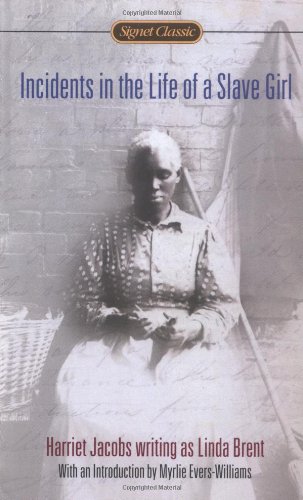
Incidents in the Life of a Slave Girl (Signet Classics)
Authors:
Harriet Jacobs
Publisher:
Signet Classics
Publication Date:
Not available
ISBN:
0451527526
In one of the most significant slave narratives ever written, Harriet Jacobs, born a slave to mulatto parents in 1813 North Carolina, recounts her... remarkable story. From her sale to an abusive master, to her bid for freedom as the lover of a white man, to her ultimate and harrowing emancipation, this work is an outstanding example of a woman's extraordinary courage--and one of the most provocative first-person accounts of slavery in American history. Afterword by Myrlie Evers-Williams"One of the major autobiographies of the Afro-American tradition."-- Henry Louis Gates, Jr.
Incidents in the Life of a Slave Girl Written by Herself
Authors:
Harriet Ann Jacobs
Publisher:
Simon & Brown
Publication Date:
Not available
ISBN:
1613822928

Incidents in the Life of a Slave Girl, Written by Herself
Authors:
Harriet A. Jacobs
Publisher:
Harvard University Press
Publication Date:
Not available
ISBN:
0674002784
THIS EDITION HAS BEEN REPLACED BY A NEWER EDITION. This enlarged edition of the most significant and celebrated slave narrative now completes the... Jacobs family saga, surely one of the most memorable in all of American history. John Jacobs's short slave narrative, A True Tale of Slavery, published in London in 1861, adds a brother's perspective to Harriet Jacobs's own autobiography. It is an exciting addition to this now classic work, as John Jacobs presents additional historical information about family life so well described already by his sister. Importantly, it presents the people, places, and events Harriet Jacobs wrote about from the different perspective of a male narrator. Once more, Jean Yellin, who discovered this long-lost document, supplies annotation and authentication. She has also brought her Introduction up to date.
Incidents in the Life of a Slave Girl: Written by Herself
Authors:
Harriet Ann Jacobs
Publisher:
BiblioBazaar
Publication Date:
Not available
ISBN:
1434603806
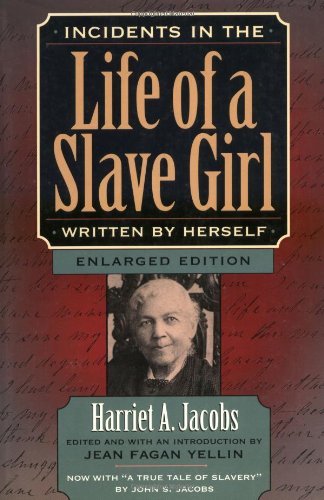
Incidents in the Life of a Slave Girl Written by Herself Enlarged...
Authors:
Harriet A. Jacobs
Publisher:
Harvard University Press
Publication Date:
Not available
ISBN:
0674002717
THIS EDITION HAS BEEN REPLACED BY A NEWER EDITION. This enlarged edition of the most significant and celebrated slave narrative now completes the... Jacobs family saga, surely one of the most memorable in all of American history. John Jacobs's short slave narrative, A True Tale of Slavery, published in London in 1861, adds a brother's perspective to Harriet Jacobs's own autobiography. It is an exciting addition to this now classic work, as John Jacobs presents additional historical information about family life so well described already by his sister. Importantly, it presents the people, places, and events Harriet Jacobs wrote about from the different perspective of a male narrator. Once more, Jean Yellin, who discovered this long-lost document, supplies annotation and authentication. She has also brought her Introduction up to date.
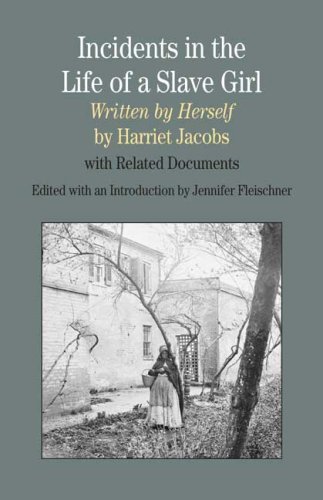
Incidents in the Life of A Slave Girl, Written by Herself: With...
Authors:
Harriet Jacobs
Publisher:
Bedford/St. Martin's
Publication Date:
Not available
ISBN:
0312442661
Much of what is known about the experience of slavery comes from first-person accounts written by formerly enslaved men. In this volume, Jennifer... Fleischner examines the first- and best-known female account of life under, and escape from, slavery — Harriet Jacobs’ autobiography. In her introduction, Fleischner shows how Jacobs used the written word to liberate herself and promote the end of slavery by carefully discussing her sexual exploitation as a slave in ways that would inspire sympathy in — and not offend — her Victorian white, middle-class, female audience. The rich collection of related documents that accompany Jacobs’ complete narrative — including a selection of Jacobs’ letters and her brother’s account of some of the same incidents Jacobs describes — illuminate Jacobs’ life, her thoughts about writing, and her relationships with white women abolitionists. Document headnotes, a chronology, questions for consideration, a selected bibliography, and a chart of the pseudonyms Jacobs used for her real-life characters further enrich this important contribution to the history of slavery in America.
 '





