production
/viewbook/list/all/?page=5888
/
/static/
None

Indian Roots of American Democracy
Authors:
Not Available
Publisher:
Akwe Kon Pr
Publication Date:
Not available
ISBN:
1881178005
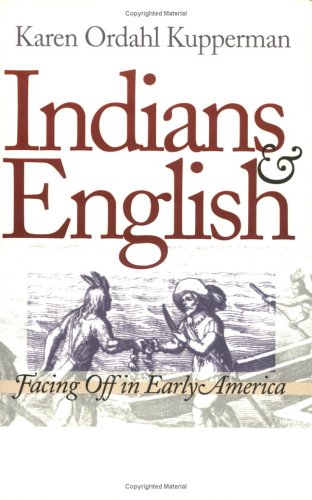
Indians and English: Facing Off in Early America
Authors:
Karen Ordahl Kupperman
Publisher:
Cornell University Press
Publication Date:
Not available
ISBN:
0801482828
In this vividly written book, prize-winning author Karen Ordahl Kupperman refocuses our understanding of encounters between English venturers and... Algonquians all along the East Coast of North America in the early years of contact and settlement. All parties in these dramas were uncertain-hopeful and fearful-about the opportunity and challenge presented by new realities. Indians and English both believed they could control the developing relationship. Each group was curious about the other, and interpreted through their own standards and traditions. At the same time both came from societies in the process of unsettling change and hoped to derive important lessons by studying a profoundly different culture.These meetings and early relationships are recorded in a wide variety of sources. Native people maintained oral traditions about the encounters, and these were written down by English recorders at the time of contact and since; many are maintained to this day. English venturers, desperate to make readers at home understand how difficult and potentially rewarding their enterprise was, wrote constantly of their own experiences and observations and transmitted native lore. Kupperman analyzes all these sources in order to understand the true nature of these early years, when English venturers were so fearful and dependent on native aid and the shape of the future was uncertain.Building on the research in her highly regarded book Settling with the Indians, Kupperman argues convincingly that we must see both Indians and English as active participants in this unfolding drama.

Indians and Leftists in the Making of Ecuador's Modern Indigenous...
Authors:
Marc Becker
Publisher:
Duke University Press Books
Publication Date:
Not available
ISBN:
0822342790
In June 1990, Indigenous peoples shocked Ecuadorian elites with a powerful uprising that paralyzed the country for a week. Militants insisted that the... government address Indigenous demands for land ownership, education, and economic development. This uprising was a milestone in the history of Ecuador’s social justice movements, and it inspired popular organizing efforts across Latin America. While the insurrection seemed to come out of nowhere, Marc Becker demonstrates that it emerged out of years of organizing and developing strategies to advance Indigenous rights. In this richly documented account, he chronicles a long history of Indigenous political activism in Ecuador, from the creation of the first local agricultural syndicates in the 1920s through the galvanizing protests of 1990. In so doing, he reveals the central role of women in Indigenous movements and the history of productive collaborations between rural Indigenous activists and urban leftist intellectuals.Becker explains how rural laborers and urban activists worked together in Ecuador, merging ethnic and class-based struggles for social justice. Socialists were often the first to defend Indigenous languages, cultures, and social organizations. They introduced rural activists to new tactics, including demonstrations and strikes. Drawing on leftist influences, Indigenous peoples became adept at reacting to immediate, local forms of exploitation while at the same time addressing broader underlying structural inequities. Through an examination of strike activity in the 1930s, the establishment of a national-level Ecuadorian Federation of Indians in 1944, and agitation for agrarian reform in the 1960s, Becker shows that the history of Indigenous mobilizations in Ecuador is longer and deeper than many contemporary observers have recognized.
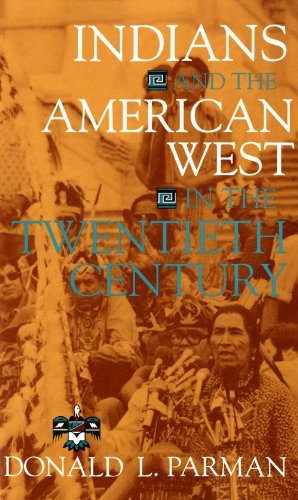
Indians and the American West in the Twentieth Century
Authors:
Parman
Publisher:
Indiana University Press
Publication Date:
Not available
ISBN:
0253208920
"Parman brings fresh life to some well-worked topics, while illuminating lesser-known developments of the postwar period and contextualizing Indian... concerns within broader governmental and social dynamics. Both specialists and general readers will appreciate his succinct, informed treatment of 'the Indian problem' in the United States." —Gateway Heritage"Parman's accomplishment lies in his ability to synthesize the saga of the numerous interactions among those seeking dominance.... Parman's balanced and comprehensive overview provides a handy guide to the subject for upper-division undergraduate and graduate collections." —Choice"ÂIndians and the American West in the Twentieth Century is an important contribution to understanding the development of the West and provides a clear and impressive analysis of evolving government policy and programs that impacted directly on the resident Indian people." —American Indian Culture and Research Journal"This is an impressive effort that provides the reader with a balanced view of a subject that tends to become polemic." —Books of the Southwest"The well-written and analytical narrative is backed with thirty-nine pages of notes and bibliography, which provide an enormous complement and establish a firm foundation of scholarship." —Nebraska History"This book is an important contribution that manages to give the reader a bird's-eye view of the regularities of twentieth-century Indian history, while at the same time conveying the local twists, complexities, and ironies of that history and of any generalizations we would make about it.... should be read by all scholars in Native American studies and American minority history." —Journal of American History"Parman's thoughtful book will be of interest to students, scholars, and anyone remotely interested in Indian-white relations during the twentieth century." —Pacific Historical Review"An appraisal that is both clear and balanced." —Margaret Connell Szasz, The University of New Mexico"Parman delivers on his promise to present a 'balanced' and 'objective' summary, and his synthesis is clearly written and enjoyable to read. The book holds important lessons for westerners and midwesterners." —The Annals of Iowa"Parman has written a concise overview that synthesizes the development of the twentieth-century West and how that development impacted Indian nations." —North Dakota HistoryA balanced and accessible overview of the last hundred years of Indian history in the American West. This even-handed and insightful account includes an assessment of the status of Native Americans in the West as the century comes to a close.
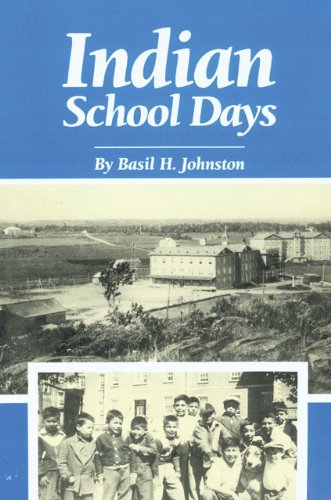
Indian School Days
Authors:
Basil H. Johnston
Publisher:
University of Oklahoma Press
Publication Date:
Not available
ISBN:
0806126108
This book is the humorous, bitter-sweet autobiography of a Canadian Ojibwa who was taken from his family at age ten and placed in Jesuit boarding school... in northern Ontario. It was 1939 when the feared Indian agent visited Basil Johnston’s family and removed him and his four-year-old sister to St. Peter Claver’s school, run by the priests in a community known as Spanish, 75 miles from Sudbury.Spanish! It was a word synonymous with residential school, penitentiary, reformatory, exile, dungeon, whippings, kicks, slaps, all rolled into one,” Johnston recalls. But despite the aching loneliness, the deprivation, the culture shock and the numbing routine, his story is engaging and compassionate. Johnston creates marvelous portraits of the young Indian boys who struggled to adapt to strange ways and unthinking, unfeeling discipline. Even the Jesuit teachers, whose flashes of humor occasionally broke through their stern demeanor, are portrayed with an understanding born of hindsight.
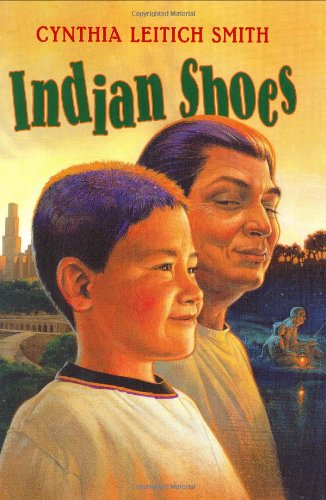
Indian Shoes
Authors:
Cynthia Leitich Smith
Publisher:
HarperCollins
Publication Date:
Not available
ISBN:
0060295317
What do Indian shoes look like, anyway? Like beautiful beaded moccasins...or hightops with bright orange shoelaces?Ray Halfmoon prefers hightops, but he... gladly trades them for a nice pair of moccasins for his Grampa. After all, it's Grampa Halfmoon who's always there to help Ray get in and out of scrapes -- like the time they are forced to get creative after a homemade haircut makes Ray's head look like a lawn-mowing accident.This collection of interrelated stories is heartwarming and laugh-out-loud funny. Cynthia Leitich Smith writes with wit and candor about what it's like to grow up as a Seminole-Cherokee boy who is just as happy pounding the pavement in windy Chicago as rowing on a take in rural Oklahoma.
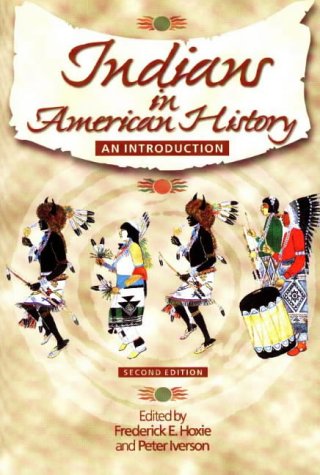
Indians in American History: An Introduction
Authors:
Not Available
Publisher:
Wiley-Blackwell
Publication Date:
Not available
ISBN:
0882959395
Like its highly popular and distinctive predecessor, this new edition of Indians in American History strives to fully integrate Indians into the... conventional U.S. history narrative. Meticulously reedited throughout, this beautifully illustrated book features fourteen essays by fifteen authors who speak from a variety of disciplines and perspectives.

Indians in Eden: Wabanakis and Rusticators on Maine's Mt. Desert...
Authors:
Bunny McBride
Publisher:
Down East Books
Publication Date:
Not available
ISBN:
0892728043
When the Wabanaki were moved to reservations, they proved their resourcefulness by catering to the burgeoning tourist market during the 19th and early... 20th centuries, when Bar Harbor was called Eden. This engaging, richly illustrated, and meticulously researched book chronicles the intersecting lives of the Wabanaki and wealthy summer rusticators on Mount Desert Island. While the rich built sumptuous summer homes, the Wabanaki sold them Native crafts, offered guide services, and produced Indian shows.
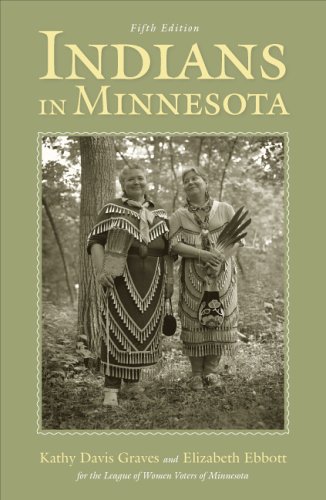
Indians in Minnesota
Authors:
Kathy Davis Graves
Publisher:
Univ Of Minnesota Press
Publication Date:
Not available
ISBN:
0816627339
In Minnesota, the legacy of the American Indian people is reflected in many ways. Twenty-seven of the state’s counties have names of Indian origin.... The cities of Wabasha, Red Wing, and Shakopee are named for important Mdewakanton Dakota tribal leaders. With more than fifty-four thousand Indians currently living in Minnesota, their culture and values are well represented throughout the state. Characterized by a balanced perspective and a comprehensive approach, Indians in Minnesota provides a historical and contemporary account of Ojibwe and Dakota Indians living in both reservation and urban settings. Compiled from hundreds of enlightening interviews with tribal members, as well as data from the 2000 Minnesota Census and federal and state reports, the fifth edition of this well-known resource examines the significant changes and continuing needs of Indians in the twenty-first century. Exploring Indians’ relationships with federal, state, and local governmentsincluding the expansion of gaming and growing tribal sovereigntythis book includes extensive coverage of the status of Indian culture, natural resources, economic development, employment, education, social services, health, housing, and criminal justice issues. The authors also focus on central concerns facing Indians today, including widespread efforts to preserve sovereignty, culture, language, and reservations, and to build brighter futures for Indian men, women, and children. The only resource of its kind, Indians in Minnesota offers statistics as well as insight into American Indian spiritual, cultural, and economic views to promote a better understanding of Indian communities and to create an invaluable tool for social change. Kathy Davis Graves is the author of several research reports for the League of Women Voters, including a groundbreaking study on violence prevention. Elizabeth Ebbott was the author of the fourth edition of Indians in Minnesota and contributed to the revision of the fifth edition prior to her death in 1998.
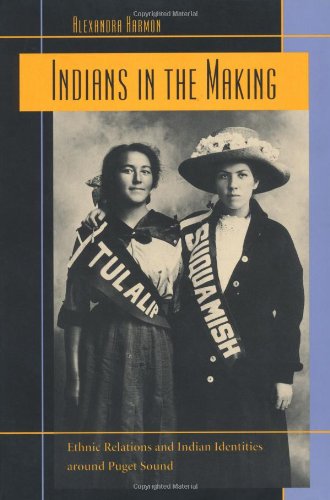
Indians in the Making: Ethnic Relations and Indian Identities...
Authors:
Alexandra Harmon
Publisher:
University of California Press
Publication Date:
Not available
ISBN:
0520226852
In the Puget Sound region of Washington state, indigenous peoples and their descendants have a long history of interaction with settlers and their... descendants. Indians in the Making offers the first comprehensive account of these interactions, from contact with traders of the 1820s to the Indian fishing rights activism of the 1970s. In this thoroughly researched history, Alexandra Harmon also provides a theoretically sophisticated analysis that charts shifting notions of Indian identity, both in native and in nonnative communities.During the period under consideration, each major shift in demographic, economic, and political conditions precipitated new deliberations about how to distinguish Indians from non-Indians and from each other. By chronicling such dialogues over 150 years, this groundbreaking study reveals that Indian identity has a complex history. Examining relations in various spheres of life--labor, public ceremony, marriage and kinship, politics and law--Harmon shows how Indians have continually redefined themselves. Her focus on the negotiations that have given rise to modern Indian identity makes a significant contribution to the discourse of contemporary multiculturalism and ethnic studies.
Indians in unexpected places
Authors:
Philip J. Deloria
Publisher:
Not available
Publication Date:
Not available
ISBN:
0700614591
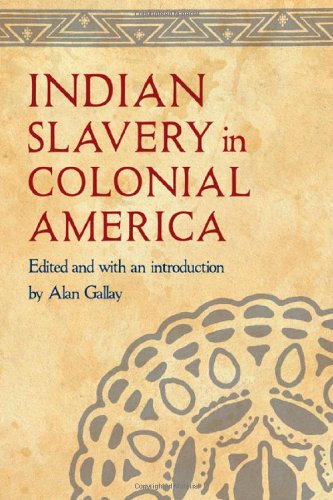
Indian Slavery in Colonial America
Authors:
Not Available
Publisher:
University of Nebraska Press
Publication Date:
Not available
ISBN:
0803222009
European enslavement of American Indians began with Christopher Columbus’s arrival in the New World. The slave trade expanded with European colonies,... and though African slave labor filled many needs, huge numbers of America’s indigenous peoples continued to be captured and forced to work as slaves. Although central to the process of colony-building in what became the United States, this phenomena has received scant attention from historians. Indian Slavery in Colonial America, edited by Alan Gallay, examines the complicated dynamics of Indian enslavement. How and why Indians became both slaves of the Europeans and suppliers of slavery’s victims is the subject of this book. The essays in this collection use Indian slavery as a lens through which to explore both Indian and European societies and their interactions, as well as relations between and among Native groups.
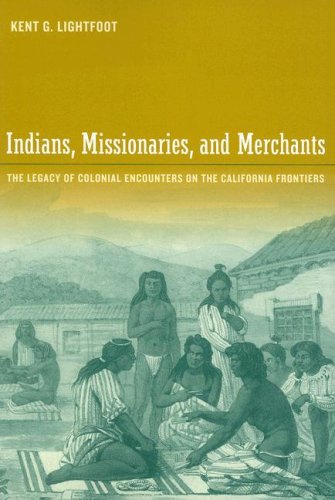
Indians, Missionaries, and Merchants: The Legacy of Colonial...
Authors:
Kent G. Lightfoot
Publisher:
University of California Press
Publication Date:
Not available
ISBN:
0520249984
California's earliest European colonists--Russian merchants and Spanish missionaries--depended heavily on Native Americans for labor to build and... maintain their colonies, but they did so in very different ways. This richly detailed book brings together disparate skeins of the past--including little-known oral histories, native texts, ethnohistory, and archaeological excavations--to present a vivid new view of how native cultures fared under these two colonial systems. Kent Lightfoot's innovative work, which incorporates the holistic methods of historical anthropology, explores the surprising ramifications of these long-ago encounters for the present-day political status of native people in California.Lightfoot weaves the results of his own significant archaeological research at Fort Ross, a major Russian mercantile colony, into a cross-cultural comparison, showing how these two colonial ventures--one primarily mercantile and one primarily religious--contributed to the development of new kinds of native identities, social forms, and tribal relationships. His lively account includes personal anecdotes from the field and a provocative discussion of the role played by early ethnographers, such as Alfred Kroeber, in influencing which tribes would eventually receive federal recognition. Indians, Missionaries, and Merchants takes a fascinating, yet troubling, look at California's past and its role in shaping the state today.
Indian Society and the Making of the British Empire (The New...
Authors:
C. A. Bayly
Publisher:
Cambridge University Press
Publication Date:
Not available
ISBN:
0521386500
This volume provides a synthesis of some of the most important themes to emerge from the recent proliferation of specialized scholarship on the period... of India's transition to colonialism and seeks to reassess the role of Indians in the politics and economics of early colonialism. It discusses new views of the "decline of the Mughals" and the role of the Indian capitalists in the expansion of the English East India Company's trade and urban settlements. It considers the reasons for the inability of indigenous states to withstand the British, but also highlights the relative failure of the Company to transform India into a quiescent and profitable colony. Finally it deals with changes in India's ecology, social organization, and ideologies in the early nineteenth century, and the nature of Indian resistance to colonialism, including the Rebellion of 1857.
Indian Society and the Making of the British Empire (The New...
Authors:
C. A. Bayly
Publisher:
Cambridge University Press
Publication Date:
Not available
ISBN:
0521250927
This volume provides a synthesis of some of the most important themes to emerge from the recent proliferation of specialized scholarship on the period... of India's transition to colonialism and seeks to reassess the role of Indians in the politics and economics of early colonialism. It discusses new views of the "decline of the Mughals" and the role of the Indian capitalists in the expansion of the English East India Company's trade and urban settlements. It considers the reasons for the inability of indigenous states to withstand the British, but also highlights the relative failure of the Company to transform India into a quiescent and profitable colony. Finally it deals with changes in India's ecology, social organization, and ideologies in the early nineteenth century, and the nature of Indian resistance to colonialism, including the Rebellion of 1857.
 '





