production
/viewbook/list/all/?page=5891
/
/static/
None
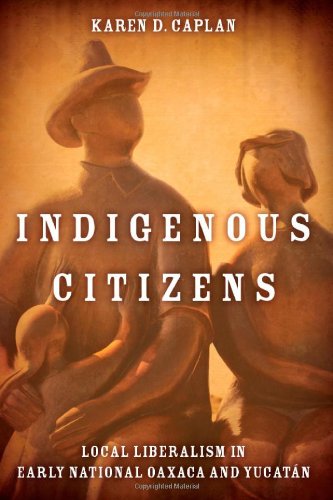
Indigenous Citizens: Local Liberalism in Early National Oaxaca and...
Authors:
Karen Caplan
Publisher:
Stanford University Press
Publication Date:
Not available
ISBN:
080475764X
Indigenous Citizens challenges the commonly held assumption that early nineteenth-century Mexican state-building was a failure of liberalism. By... comparing the experiences of two Mexican states, Oaxaca and Yucatán, Caplan shows how the institutions and ideas associated with liberalism became deeply entrenched in Mexico's regions, but only on locally acceptable terms.Faced with the common challenge of incorporating new institutions into political life, Mexicans—be they indigenous villagers, government officials, or local elites—negotiated ways to make those institutions compatible with a range of local interests. Although Oaxaca and Yucatán both had large indigenous majorities, the local liberalisms they constructed incorporated indigenous people differently as citizens. As a result, Oaxaca experienced relative social peace throughout this era, while Yucatán exploded with indigenous rebellion beginning in 1847.This book puts the interaction between local and national liberalisms at the center of the narrative of Mexico's nineteenth century. It suggests that "liberalism" must be understood not as an overarching system imposed on the Mexican nation but rather as a set of guiding assumptions and institutions that Mexicans put to use in locally specific ways.
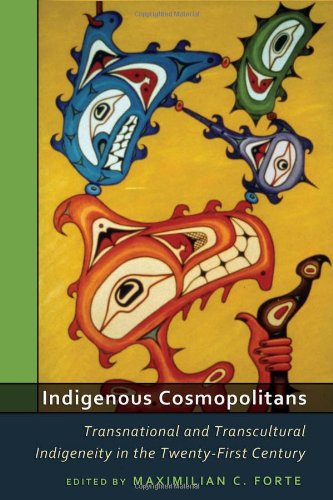
Indigenous Cosmopolitans
Authors:
Maximilian C. Forte
Publisher:
Peter Lang Publishing
Publication Date:
Not available
ISBN:
1433101025
What happens to indigenous culture and identity when being rooted in a fixed cultural setting is no longer necessaryor even possible? Does cultural... displacement mean that indigeneity vanishes? How is being and becoming indigenous (i.e., indigeneity) experienced and practiced along translocal pathways? How are new philosophies and politics of indigenous identification (indigenism) constructed in new, translocal settings? The essays in this collection develop our understandings of cosmopolitanism and transnationalism, and related processes and experiences of social and cultural globalization, showing us that these do not spell the end of ways of being and becoming indigenous. Instead, indigeneity is reengaged in wider fields, finding alternative ways of being established and projected, or bolstering older ways of doing so, while reaching out to other cultures.
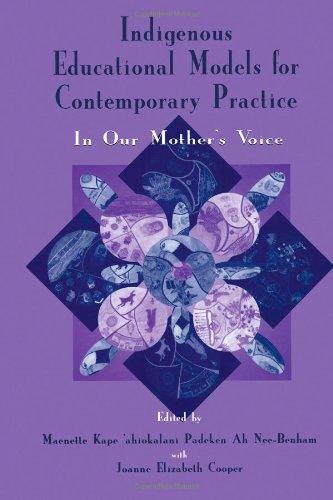
Indigenous Educational Models for Contemporary Practice: In Our...
Authors:
Not Available
Publisher:
Routledge
Publication Date:
Not available
ISBN:
0805834621
What is the philosophy that should drive native education policy and practice? In July 1997 a group of native educational leaders from the United States... (including Alaska and Hawai'i), Canada, Australia, and New Zealand gathered to define a potential solution to this question. This book passes on the individual educational philosophies of the participants and captures the essence of each in a dynamic, transformational, and holistic model--"Go to the Source"--which forwards a collective vision for a native language- and culture-based educational philosophy that native educational leaders and teachers, policymakers, and curriculum developers can use to ground their work. For more information visit http://ed-web2.educ.msu.edu/voice/
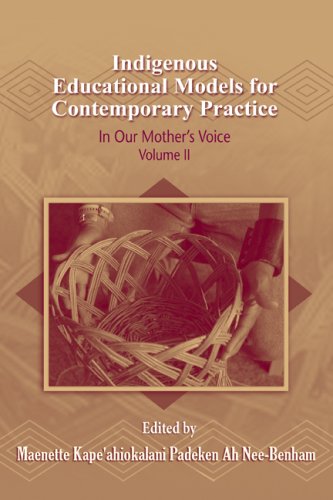
Indigenous Educational Models for Contemporary Practice: In Our...
Authors:
Not Available
Publisher:
Routledge
Publication Date:
Not available
ISBN:
0805864032
The book challenges teachers, researchers, educational leaders, and community stakeholders to build dynamic learning environments through which... indigenous learners can be "Boldly Indigenous in a Global World!" Three days of focused dialogue at the 2005 World Indigenous Peoples Conference on Education (WIPCE) led to the charge to create Volume II of Indigenous Educational Models for Contemporary Practice: In Our Mother’s Voice. Building on the first volume, Volume II examines these topics: Regenerating and transforming language and culture pedagogy that reminds us that what is "Contemporary is Native" Living indigenous leadership that engages and ensures the presence, readiness, and civic work of our next generation of leaders Indigenizing assessment and accountability that makes certain that native values and strengths lead this important work Highlighting the power of partnerships that begin with the child-elder, which is then nurtured in community and institutions to cross boundaries of cultural difference, physical geography, native and non-native institutions and communities Indigenous Educational Models for Contemporary Practice: In Our Mother’s Voice, Volume II honors the wisdom of our ancestors, highlights the diversity of our indigenous stories, and illuminates the passion of forward-looking scholars.
Indigenous Education and Empowerment: International Perspectives...
Authors:
Not Available
Publisher:
AltaMira Press
Publication Date:
Not available
ISBN:
0759108951
Indigenous people have often been confronted with education systems that ignore their cultural and historical perspectives. Largely unsuccessful... projects of assimilation have been the predominant outcome of indigenous communities' encounters with state schools, as many indigenous students fail to conform to mainstream cultural norms. This insightful volume is an important contribution to our understanding of indigenous empowerment through education. The contributors to this volume work in the fields of education, social development and community empowerment among indigenous communities around the world. Their essays create a new foundation for implementing specialized indigenous/minority education worldwide, and engage the simultaneous projects of cultural preservation and social integration. This work will be vital for scholars in Native American studies, ethnic studies, and education.
Indigenous Knowledge And Education: Sites of Struggle, Strength,...
Authors:
Not Available
Publisher:
Harvard Educational Pub Group
Publication Date:
Not available
ISBN:
0916690482
Teaching American Indian Students is the most comprehensive resource book available for educators of American Indians. The promise of this book is that... Indian students can improve their academic performance through educational approaches that do not force students to choose between the culture of their home and the culture of their school. This multidisciplinary volume summarizes the latest research on Indian education, provides practical suggestions for teachers, and offers a vast selection of resources available to teachers of Indian students.Included are chapters on bilingual and multicultural education; the history of U.S. Indian education; teacher-parent relationships; language and literacy development, with particular discussion of English as a second language and American Indian literature; and teaching in the content areas of social science, science, mathematics, and physical education.
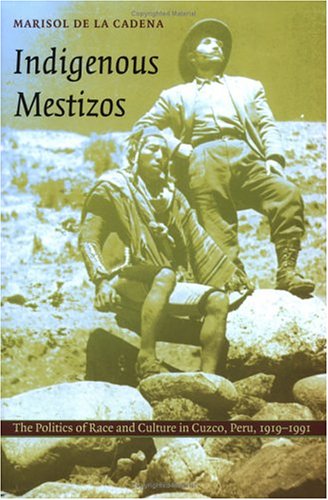
Indigenous Mestizos: The Politics of Race and Culture in Cuzco,...
Authors:
Marisol de la Cadena
Publisher:
Duke University Press Books
Publication Date:
Not available
ISBN:
0822324202
In the early twentieth century, Peruvian intellectuals, unlike their European counterparts, rejected biological categories of race as a basis for... discrimination. But this did not eliminate social hierarchies; instead, it redefined racial categories as cultural differences, such as differences in education or manners. In Indigenous Mestizos Marisol de la Cadena traces the history of the notion of race from this turn-of-the-century definition to a hegemony of racism in Peru.De la Cadena’s ethnographically and historically rich study examines how indigenous citizens of the city of Cuzco have been conceived by others as well as how they have viewed themselves and places these conceptions within the struggle for political identity and representation. Demonstrating that the terms Indian and mestizo are complex, ambivalent, and influenced by social, legal, and political changes, she provides close readings of everyday concepts such as marketplace identity, religious ritual, grassroots dance, and popular culture, as well as of such common terms as respect, decency, and education. She shows how Indian has come to mean an indigenous person without economic and educational means—one who is illiterate, impoverished, and rural. Mestizo, on the other hand, has come to refer to an urban, usually literate, and economically successful person claiming indigenous heritage and participating in indigenous cultural practices. De la Cadena argues that this version of de-Indianization—which, rather than assimilation, is a complex political negotiation for a dignified identity—does not cancel the economic and political equalities of racism in Peru, although it has made room for some people to reclaim a decolonized Andean cultural heritage.This highly original synthesis of diverse theoretical arguments brought to bear on a series of case studies will be of interest to scholars of cultural anthropology, postcolonialism, race and ethnicity, gender studies, and history, in addition to Latin Americanists.
Indigenous Methodologies: Characteristics, Conversations, and Contexts
Authors:
Margaret Elizabeth Kovach
Publisher:
University of Toronto Press, Scholarly Publishing Division
Publication Date:
Not available
ISBN:
1442612118
What are Indigenous research methodologies, and how do they unfold? Indigenous methodologies flow from tribal knowledge, and while they are allied with... several western qualitative approaches, they remain distinct. These are the focal considerations of Margaret Kovach's study,which offers guidance to those conducting research in the academy using Indigenous methodologies.Kovach includes topics such as Indigenous epistemologies, decolonizing theory, story as method, situating self and culture, Indigenous methods, protocol, meaning-making, and ethics. In exploring these elements, the book interweaves perspectives from six Indigenous researchers who share their stories, and also includes excerpts from the author's own journey into Indigenous methodologies. Indigenous Methodologies is an innovative and important contribution to the emergent discourse on Indigenous research approaches and will be of use to graduate students, professors, and community-based researchers of all backgrounds - both within the academy and beyond.
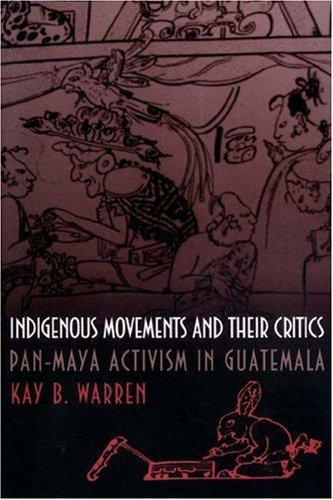
Indigenous Movements and Their Critics
Authors:
Kay B. Warren
Publisher:
Princeton University Press
Publication Date:
Not available
ISBN:
0691058822
In this first book-length treatment of Maya intellectuals in national and community affairs in Guatemala, Kay Warren presents an ethnographic account of... Pan-Maya cultural activism through the voices, writings, and actions of its participants. Challenging the belief that indigenous movements emerge as isolated, politically unified fronts, she shows that Pan-Mayanism reflects diverse local, national, and international influences. She explores the movement's attempts to interweave these varied strands into political programs to promote human and cultural rights for Guatemala's indigenous majority and also examines the movement's many domestic and foreign critics.The book focuses on the years of Guatemala's peace process (1987--1996). After the previous ten years of national war and state repression, the Maya movement reemerged into public view to press for institutional reform in the schools and courts and for the officialization of a "multicultural, ethnically plural, and multilingual" national culture. In particular, Warren examines a group of well-known Mayanist antiracism activists--among them, Demetrio Cojt!, Mart!n Chacach, Enrique Sam Colop, Victor Montejo, members of Oxlajuuj Keej Maya' Ajtz'iib', and grassroots intellectuals in the community of San Andr s--to show what is at stake for them personally and how they have worked to promote the revitalization of Maya language and culture. Pan-Mayanism's critics question its tactics, see it as threatening their own achievements, or even as dangerously polarizing national society. This book highlights the crucial role that Mayanist intellectuals have come to play in charting paths to multicultural democracy in Guatemala and in creating a new parallel middle class.
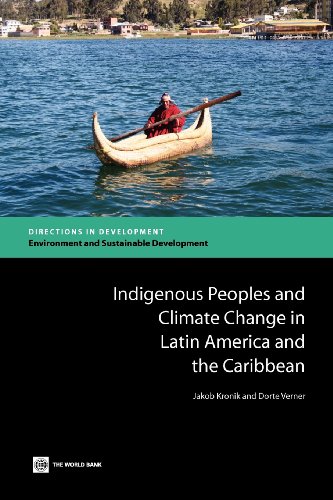
Indigenous Peoples and Climate Change in Latin America and the...
Authors:
Jakob Kronik
Publisher:
World Bank Publications
Publication Date:
Not available
ISBN:
0821382373
This book addresses the social implications of climate change and climatic variability on indigenous peoples and communities living in the highlands,... lowlands, and coastal areas of Latin America and the Caribbean. Across the region, indigenous people already perceive and experience negative effects of climate change and variability. Many indigenous communities find it difficult to adapt in a culturally sustainable manner. In fact, indigenous peoples often blame themselves for the changes they observe in nature, despite their limited emission of green house gasses. Not only is the viability of their livelihoods threatened, resulting in food insecurity and poor health, but also their cultural integrity is being challenged, eroding the confidence in solutions provided by traditional institutions and authorities. The book is based on field research among indigenous communities in three major eco-geographical regions: the Amazon; the Andes and Sub-Andes; and the Caribbean and Mesoamerica. It finds major inter-regional differences in the impacts observed between areas prone to rapid- and slow-onset natural hazards. In Mesoamerican and the Caribbean, increasingly severe storms and hurricanes damage infrastructure and property, and even cause loss of land, reducing access to livelihood resources. In the Columbian Amazon, changes in precipitation and seasonality have direct immediate effects on livelihoods and health, as crops often fail and the reproduction of fish stock is threatened by changes in the river ebb and flow. In the Andean region, water scarcity for crops and livestock, erosion of ecosystems and changes in biodiversity threatens food security, both within indigenous villages and among populations who depend on indigenous agriculture, causing widespread migration to already crowded urban areas. The study aims to increase understanding on the complexity of how indigenous communities are impacted by climate change and the options for improving their resilience and adaptability to these phenomena. The goal is to improve indigenous peoples’ rights and opportunities in climate change adaptation, and guide efforts to design effective and sustainable adaptation initiatives.
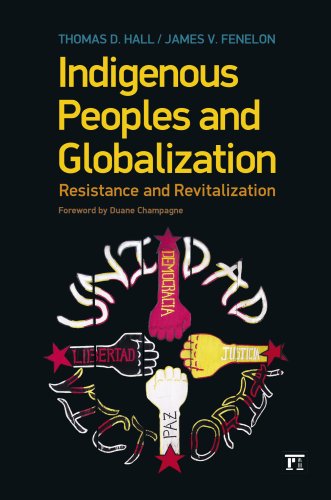
Indigenous Peoples and Globalization: Resistance and Revitalization
Authors:
Thomas D. Hall
Publisher:
Paradigm Publishers
Publication Date:
Not available
ISBN:
1594516588
The issues native peoples face intensify with globalization. Through case studies from around the world, Hall and Fenelon demonstrate how indigenous... peoples? movements can only be understood by linking highly localized processes with larger global and historical forces. The authors show that indigenous peoples have been resisting and adapting to encounters with states for millennia. Unlike other antiglobalization activists, indigenous peoples primarily seek autonomy and the right to determine their own processes of adaptation and change, especially in relationship to their origin lands and community. The authors link their analyses to current understandings of the evolution of globalization.
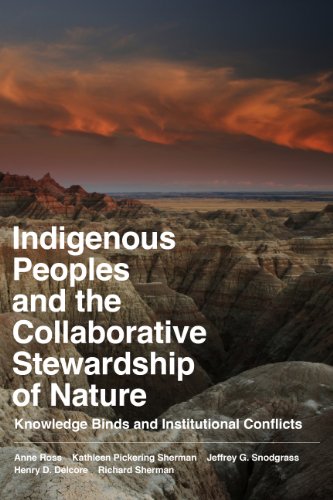
Indigenous Peoples and the Collaborative Stewardship of Nature:...
Authors:
Anne Ross
Publisher:
Left Coast Press
Publication Date:
Not available
ISBN:
1598745786
Involving Indigenous peoples and traditional knowledge into natural resource management produces more equitable and successful outcomes. Unfortunately,... argue Anne Ross and co-authors, even many “progressive” methods fail to produce truly equal partnerships. This book offers a comprehensive and global overview of the theoretical, methodological, and practical dimensions of co-management. The authors critically evaluate the range of management options that claim to have integrated Indigenous peoples and knowledge, and then outline an innovative, alternative model of co-management, the Indigenous Stewardship Model. They provide detailed case studies and concrete details for application in a variety of contexts. Broad in coverage and uniting robust theoretical insights with applied detail, this book is ideal for scholars and students as well as for professionals in resource management and policy.
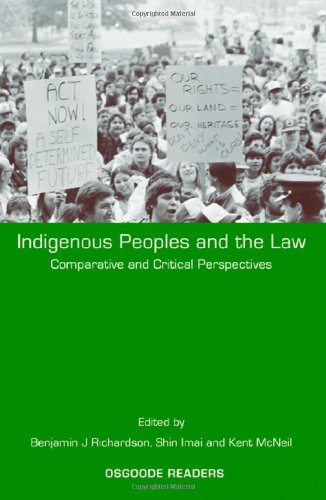
Indigenous Peoples and the Law: Comparative and Critical Perspectives
Authors:
Not Available
Publisher:
Hart Publishing
Publication Date:
Not available
ISBN:
1841137952
Indigenous Peoples and the Law provides an historical, comparative, and contextual analysis of various legal and policy issues affecting Indigenous... peoples. It focuses on the common law jurisdictions of the US, Australia, Canada, and New Zealand, as well as relevant international law developments. This collection of essays features 13 contributors, including many Indigenous scholars, drawn from around the world. The book enables readers to appreciate the seminal issues, precedents, and international legal trends of most concern to Indigenous peoples. The first half of Indigenous Peoples and the Law takes an historical perspective of the principal jurisdictions, canvassing, in particular, themes of Indigenous sovereignty, status, and identity, and the movement for Indigenous self-determination. It also examines these issues in an international context, including the Inter-American human rights regime and the 2007 UN Declaration on the Rights of Indigenous Peoples. The second part of the book covers contemporary issues and claims of Indigenous peoples, including land rights, mobility rights, community self-governance, environmental governance, alternative dispute resolution processes, the legal status of Aboriginal women, and the place of Indigenous legal traditions and legal theory.
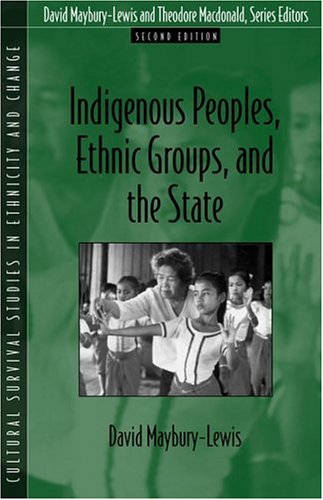
Indigenous Peoples, Ethnic Groups, and the State (2nd Edition)
Authors:
David Maybury-Lewis
Publisher:
Pearson
Publication Date:
Not available
ISBN:
0205337465
Indigenous Peoples, Ethnic Groups, and the State provides a concise introduction to the process of modernization and its effect on tribalism and ethnic... parochialism. Part of the Cultural Survival Studies in Ethnicity and Change series, this text focuses on key issues affecting indigenous and ethnic groups worldwide. Ethnic conflicts proliferate throughout the world as indigenous peoples are becoming increasingly vocal in demanding their rights, including the right to be different. Readers are invited to reexamine their ideas about the state, the role of ethnicity in it, and the peculiar situation of indigenous peoples, who are ethnic minorities alien to the states in which they live.
Indigenous Peoples in International Law
Authors:
S. James Anaya
Publisher:
Oxford University Press, USA
Publication Date:
Not available
ISBN:
0195173503
In this thoroughly revised and updated edition of the first book-length treatment of the subject, S. James Anaya incorporates references to all the... latest treaties and recent developments in the international law of indigenous peoples. Anaya demonstrates that, while historical trends in international law largely facilitated colonization of indigenous peoples and their lands, modern international law's human rights program has been modestly responsive to indigenous peoples' aspirations to survive as distinct communities in control of their own destinies.This book provides a theoretically grounded and practically oriented synthesis of the historical, contemporary and emerging international law related to indigenous peoples. It will be of great interest to scholars and lawyers in international law and human rights, as well as to those interested in the dynamics of indigenous and ethnic identity.
 '





