production
/viewbook/list/all/?page=5900
/
/static/
None
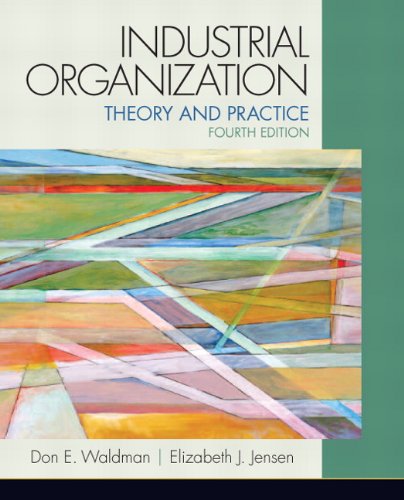
Industrial Organization: Theory and Practice
Authors:
Don E. Waldman
Publisher:
Prentice Hall
Publication Date:
Not available
ISBN:
0132770989
Industrial Organization: Theory and Practice–which features early coverage of Antitrust–punctuates its modern introduction to industrial... organization with relevant empirical data and case studies to show readers how to apply theoretical tools.
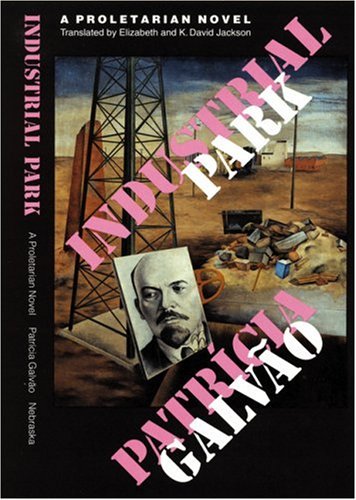
Industrial Park (Latin American Women Writers)
Authors:
Patricia Galvao (Pagu)
Publisher:
University of Nebraska Press
Publication Date:
Not available
ISBN:
0803270410
A member of Brazil's avant-garde in its heyday. Patrícia Galvão (or to use her nickname, Pagu) was extraordinary. Not only was her work among the most... exciting and innovative published in the 1930s, it was unique in portraying an avant-garde woman's view of women in Sao Paulo during that audacious period. Industrial Park, first published in 1933, is Galvão's most notable literary achieve-ment. Like Döblin's portrayal of Berlin in Alexanderplatz or Biely's St Petersburg, it is a book about the voices, clashes, and traffic of a city in the middle of rapid change. It includes fragments of public documents as well as dialogue and narration, giving a panorama of the city in a sequence of colorful slices. The novel dramatizes the problems of exploitation, poverty, racial prejudice, prostitution, state repression, and neocolonialism, but it is by no means a doctrinaire tract. Galvão's ironic wit pervades the novel, aspiring not only to describe the teeming city but also to put art and politics in each other's service. Like many of her contemporaries Galvão was a member of the Brazilian Communist Party. She attracted Party criticism for her unorthodox behavior and outspokenness. A visit to Moscow in 1934 disenchanted her with the communist state, but she continued to militate for change upon returning to Brazil. She was imprisoned and tortured under the Vargas dictatorship between 1935 and 1940. In the 1940s she returned to the public through her journalism and literary activities. She died in 1962.

INDUSTRIAL PLANNING
Authors:
Not Available
Publisher:
Not available
Publication Date:
Not available
ISBN:
Not available

Industrial Plastics: Theory and Applications
Authors:
Erik Lokensgard
Publisher:
Delmar Cengage Learning
Publication Date:
Not available
ISBN:
1428360700
Now in its 5th edition, Industrial Plastics: Theory and Applications is back, with the extensive, detailed graphics and practical lab exercises that... made previous editions so popular. In this latest edition, these trademark features accompany updated coverage of the plastics industry, offering the very latest information on state-of-the art equipment, with a special emphasis on processing techniques. Coverage includes plastics recycling, ISO and ASTM testing specifications, current health and safety standards, as well as examinations of current environmental issues like recycling, pollution, and incineration. With such broad coverage alongside hands-on activities to provide a clear link between theory and practice, Industrial Plastics continues to be an invaluable resource for students and professionals alike.

Industrial Pneumatic Technology Bulletin 0275-B1
Authors:
Parker Hannifin Corporation
Publisher:
Parker Hannifin Corp
Publication Date:
Not available
ISBN:
1557690154
Why did Hitler believe that it was necessary to destroy the Jewish race? What was the purpose and meaning of this extraordinary project that the Nazis... called "The Final Solution?" In this pathbreaking book, Richard Koenigsberg shows how genocide grew out of the logic of warfare. Hitler reasoned that if he had the right to sacrifice his soldiers, he also had the right to send Jews to their deaths. Hitler embraced his role as military leader, stating in the mid-thirties that if millions of Germans had to die in the next war, he would not shrink from this sacrifice. Based on a meticulous reading of Hitler's speeches and Mein Kampf, Koenigsberg shows how Hitler's thinking about warfare led to his decision to exterminate the Jews. Hitler reflected that if he had no compunctions about sending the "best" people to die in battle--German soldiers--why would he not also have the right to send the "worst" people--mortal enemies of Germany--to their deaths? Nations Have the Right to Kill focuses on World War I and the Holocaust as two instances of societal mass-slaughter. Hitler fought in the First World War, witnessed the death of hundreds of his comrades, and knew that two million German soldiers had perished. He understood that soldiers are required to go into battle when their nations ask them to do so. But if nations can ask their healthiest and best people to die, why can they not also ask their least healthy and worst people to die? Koenigsberg shows how both the euthanasia program and Holocaust grew out of this line of thought. Nazi ideology revolved around the idea that everyone was required to die for Germany. Just as German soldiers gave their bodies over to the nation-state--became obedient unto death--so Jews would be compelled to do so. The Final Solution sought to convey the message: "Do not imagine that anyone is exempt from the obligation to suffer and to die for Germany!"
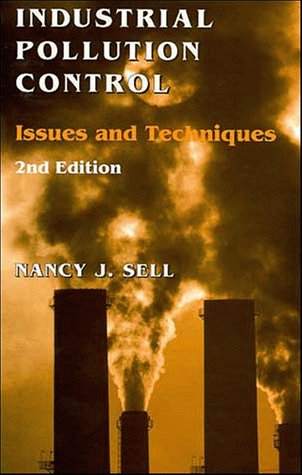
Industrial Pollution Control: Issues and Techniques, 2nd Edition
Authors:
Nancy J. Sell
Publisher:
Wiley
Publication Date:
Not available
ISBN:
047128419X
Industrial Pollution Control: Issues and Techniques Second Edition Nancy J. Sell This revised guide incorporates all the important information on... pollution sources, control methods, and pollution regulations generated since publication of the previous edition in 1981. This edition surveys the impacts of every type of pollution on health, plants, materials, and weather. It discusses how different types of pollution are produced, laws governing specific emissions, and both existing and emerging air, water, and solid waste control techniques. Detailed sections zero in on processing methods, pollution production, and control methods in specific industries, including chemical, physical, and economic factors that inhibit better pollution control. Case studies offer insights into processes that directly minimize emissions or indirectly reduce them by decreasing energy needs. Pollution issues of iron and steel manufacturing, foundry operations, metals finishing, cement manufacture, glass manufacture, paper and pulp, food processing, brewing, tanning, and chemical industries are probed in depth. Among the new pollution control strategies covered are:* Regulations, treatment techniques, and disposal methods for hazardous wastes* Direct steelmaking processes that reduce pollution* Modified glassmaking furnaces that decrease pollution* Non-chlorine pulp bleaching sequences that curtail production of toxic substances such as dioxin* Secondary fiber utilization and reduction of PCB emissions* Resource recovery from sludges and ashes* Chemical spill containment and cleanup* Uses of degradation and recycling to reduce plastics wasteCoverage of the impact of U.S. regulations, status of the U.S. environment, continuing problems, economic costs, and cost-benefit issues further increases the value of this source to environmental engineers and scientists working for the EPA, state regulatory agencies, or consulting engineering firms. This guide is also a vital reference for environmentalists working with advocacy groups, and environmental or process engineers in industry.
INDUSTRIAL RELATIONS
Authors:
Not Available
Publisher:
Not available
Publication Date:
Not available
ISBN:
Not available
INDUSTRIAL RELATIONS 4TH CDN ED
Authors:
Not Available
Publisher:
Not available
Publication Date:
Not available
ISBN:
Not available
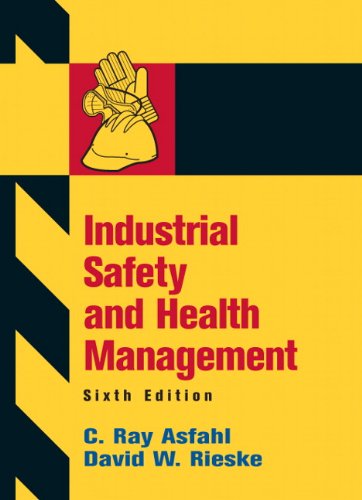
Industrial Safety and Health Management (6th Edition)
Authors:
C. Ray Asfahl
Publisher:
Prentice Hall
Publication Date:
Not available
ISBN:
0132368714
Industrial Safety And Health Management is ideal for senior/graduate-level courses in Industrial Safety, Industrial Engineering, Industrial... Technology, and Operations Management. It is useful f or industrial engineers. Unique in approach, Industrial Safety and Health Management, 6th Edition combines — in one volume — an exploration of the time-tested concepts and techniques of safety and health management, a modern perspective on compliance with mandatory standards for workplace safety and health, and a variety of solved problems, case studies, and exercises. It provides reasons, explanations, and illustrations of the hazard mechanisms that form the underlying basis for the volumes of detailed standards for workplace safety and health. The new edition focuses on more of the real issues future safety and health practitioners will encounter, such as dealing with enforcement, protecting workers from ergonomic hazards, and accommodating the latest advances in process technology.
Industrial Valley (Literature of American Labor)
Authors:
Ruth McKenney
Publisher:
ILR Press
Publication Date:
Not available
ISBN:
0875461832
Ruth McKenney's compelling novel of class and industrial conflict in Akron, Ohio, first appeared in 1939 and was widely acclaimed. McKenney was a... capable journalist who had spent a year and a half in Akron, the heart of the tire industry, a city that she said "smells like a rubber band smoldering in an ashtray."Industrial Valley vividly portrays an industrial city crippled by the country's economic failures and also provides a stirring example of fiction predicated on social and political principles. It will intrigue readers for its contemporary as well as its historical implications. The images McKenney evokes of workers confused and enraged by a moribund economy seem startlingly relevant today.
Industrial Ventilation: A Manual of Recommended Practice for...
Authors:
Not Available
Publisher:
Amer Conf of Governmental
Publication Date:
Not available
ISBN:
1607260131
Industrial Violence and the Legal Origins of Child Labor (Cambridge...
Authors:
James D. Schmidt
Publisher:
Cambridge University Press
Publication Date:
Not available
ISBN:
0521155053
Industrial Violence and the Legal Origins of Child Labor challenges existing understandings of child labor by tracing how law altered the meanings of... work for young people in the United States between the Revolution and the Great Depression. Rather than locating these shifts in statutory reform or economic development, it finds the origin in litigations that occurred in the wake of industrial accidents incurred by young workers. Drawing on archival case records from the Appalachian South between the 1880s and the 1920s, the book argues that young workers and their families envisioned an industrial childhood that rested on negotiating safe workplaces, a vision at odds with child labor reform. Local court battles over industrial violence confronted working people with a legal language of childhood incapacity and slowly moved them to accept the lexicon of child labor. In this way, the law fashioned the broad social relations of modern industrial childhood.
Industrial Wastewater Management, Treatment, and Disposal, 3e MOP...
Authors:
Water Environment Federation
Publisher:
McGraw-Hill Professional
Publication Date:
Not available
ISBN:
0071592385
The Latest Tactics and Strategies for Treating Every Kind of Industrial Wastewater Industrial Wastewater Management offers proven methods to... help you treat toxic, concentrated, and polluted water. Complete with illustrations and tables throughout, this authoritative guide contains information on the newest chemicals, significant treatment studies, efficient control processes, and the latest instrumentation. Industrial Wastewater Management equips you with the know-how for treating and removing heavy metals, arsenic, selenium, and mercury by providing detailed descriptions of pretreatment processes, design criteria, and process performance. Features include: Characteristic, sampling, and treatment studies The latest techniques and materials for heavy-metal removal Arsenic, selenium, and mercury treatment processes Applications for biological treatment Instrumentation and control procedures Design and construction procurement services SI as primary units and U.S. as secondary Pros and cons of processes in specific applications Inside: • Discharge and Disposal Regulations • Sampling and Analysis • Wastewater Survey and Characterization • Chemical and Physical Treatability Assessments • Pollution Prevention • Waste Minimization • Flow and Load Equalization • Solids Separation and Handling • Fat, Oil, and Grease Removal • pH Control • Inorganic Constituent Removal • Organic Constituent Treatment • Process Instrumentation and Control • Project Procurement Services
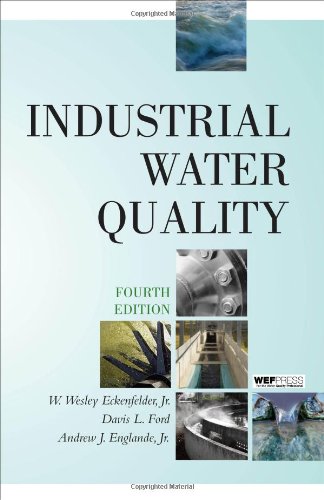
Industrial Water Quality
Authors:
Jr., W. Eckenfelder
Publisher:
McGraw-Hill Professional
Publication Date:
Not available
ISBN:
0071548661
The classic guide to controlling industrial water pollution–updated with the latest regulations and new technologies Turn to the Fourth... Edition of Industrial Water Quality for guidance on state-of-the-art methods for optimizing or upgrading existing wastewater treatment systems, as well as selecting the best treatment options to solve specific wastewater problems. This hands-on tool reflects today’s more stringent water-quality regulations and the new technologies developed to meet them. Filled with examples and case studies from a variety of industries, the book covers reverse osmosis or alternative membrane processes and discusses Biological Nutrient Removal (BNR) processes.
INDUST.ROBOTS+ROBOT SYSTEM SFTY(R15.06)
Authors:
Not Available
Publisher:
Not available
Publication Date:
Not available
ISBN:
Not available
 '





