production
/viewbook/list/all/?page=5926
/
/static/
None
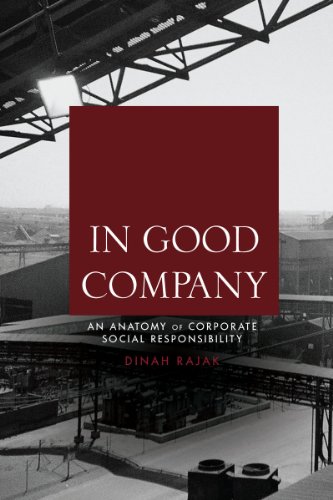
In Good Company: An Anatomy of Corporate Social Responsibility
Authors:
Dinah Rajak
Publisher:
Stanford University Press
Publication Date:
Not available
ISBN:
0804776105
Under the banner of corporate social responsibility (CSR), corporations have become increasingly important players in international development. These... days, CSR's union of economics and ethics is virtually unquestioned as an antidote to harsh neoliberal reforms and the delinquency of the state, but nothing is straightforward about this apparently win-win formula. Chronicling transnational mining corporation Anglo American's pursuit of CSR, In Good Company explores what lies behind the movement's marriage of moral imperative and market discipline.From the company's global headquarters to its mineshafts in South Africa, Rajak reveals how CSR enables the corporation to accumulate and exercise power. Interested in CSR's vision of social improvement, Rajak highlights the dependency that the practice generates. This close examination of Africa's largest private sector employer not only brings critical attention to the dangers of corporate dominance, but also provides a lens through which to reflect on the wider global CSR movement.

In Good Company: The Fast Track from the Corporate World to...
Authors:
James, S.J. Martin
Publisher:
Sheed & Ward
Publication Date:
Not available
ISBN:
1580512364
The story of one young man's remarkable journey from corporate America to the Society of Jesus. James Martin leads you from his Catholic childhood... through his success and ultimate dissatisfaction with the business world, to his novitiate and profession of vows as a Jesuit. Fast-paced, compelling, and often humorous, his story offers a fresh, inside look at corporate America, the Jesuit vocation, and the human quest for a life well-lived.

In Good Company: The Fast Track from the Corporate World to...
Authors:
James Martin S.J.
Publisher:
Sheed & Ward
Publication Date:
Not available
ISBN:
1580510817
The story of one young man's remarkable journey from corporate America to the Society of Jesus. James Martin leads you from his Catholic childhood... through his success and ultimate dissatisfaction with the business world, to his novitiate and profession of vows as a Jesuit.

In Griot Time
Authors:
Banning Eyre
Publisher:
Temple University Press
Publication Date:
Not available
ISBN:
1566397596
Djelimady Tounkara is only one of the memorable people you will meet in this dramatic narrative of life among the griot musicians of Mali. Born into... families where music and the tradition of griot story-telling is a heritage and a privilege, Djelimady and his fellow griots -- both men and women -- live their lives at the intersection of ancient traditions and the modern entertainment industry. During the seven months he spent living and studying with Djelimady, Banning Eyre immersed himself in a world that will fascinate you as it did him.Eyre creates a range of unforgettable portraits. Some of the people who stride through his pages are internationally known, musicians like Salif Keita, Oumou Sangare, and Grammy winner Ali Farka Toure. But the lesser-known characters are equally fascinating: Adama Kouyate, Djelimady's dynamic wife; Moussa Kouyate, the Tounkara family's own griot; Yayi Kanoute, the flamboyant jelimuso (female griot) who failed to take America by storm; Foutanga Babani Sissoko, the mysterious millionaire who rebuilt an entire town and whose patronage is much sought after by the griots of Bamako.But the picture Eyre draws is not just a series of portraits. Out of their interactions comes a perceptive panorama of life in Mali in the late twentieth century. The narrative gives us a street-level view of the transformation of musical taste and social customs, the impact of technology and the pressures of poverty, at a crucial time in Mali's history. In individual after individual, family after family, we see the subtle conflicts of heritage and change. Even the complications of democracy -- with democracy, mango vendors think they can charge anything they want,Djelimady points out -- are woven into an unforgettable saga of one man, his family, his profession, and the world of Malian music.
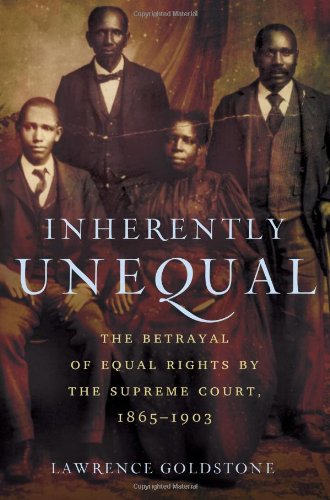
Inherently Unequal: The Betrayal of Equal Rights by the Supreme...
Authors:
Lawrence Goldstone
Publisher:
Walker & Company
Publication Date:
Not available
ISBN:
0802717926
A potent and original examination of how the Supreme Court subverted justice and empowered the Jim Crow era.In the following years following the Civil... War, the 13th Amendment abolished slavery; the 14th conferred citizenship and equal protection under the law to white and black; and the 15th gave black American males the right to vote. In 1875, the most comprehensive civil rights legislation in the nation's history granted all Americans "the full and equal enjoyment" of public accomodations. Just eight years later, the Supreme Court, by an 8-1 vote, overturned the Civil Rights Act as unconstitutional and, in the process, disemboweled the equal protection provisions of the 14th Amendment. Using court records and accounts of the period, Lawrence Goldstone chronicles how "by the dawn of the 20th century the U.S. had become the nation of Jim Crow laws, quasi-slavery, and precisely the same two-tiered system of justice that had existed in the slave era."The very human story of how and why this happened make Inherently Unequal as important as it is provocative. Examining both celebrated decisions like Plessy v. Ferguson and those often overlooked, Goldstone demonstrates how the Supreme Court turned a blind eye to the obvious reality of racism, defending instead the business establishment and status quo--thereby legalizing the brutal prejudice that came to definite the Jim Crow era.

Inherent Vice
Authors:
Thomas Pynchon
Publisher:
Penguin Press HC, The
Publication Date:
Not available
ISBN:
1594202249
Part noir, part psychedelic romp, all Thomas Pynchon— private eye Doc Sportello comes, occasionally, out of a marijuana haze to watch the end of an... era as free love slips away and paranoia creeps in with the L.A. fog It's been awhile since Doc Sportello has seen his ex-girlfriend. Suddenly out of nowhere she shows up with a story about a plot to kidnap a billionaire land developer whom she just happens to be in love with. Easy for her to say. It's the tail end of the psychedelic sixties in L.A., and Doc knows that "love" is another of those words going around at the moment, like "trip" or "groovy," except that this one usually leads to trouble. Despite which he soon finds himself drawn into a bizarre tangle of motives and passions whose cast of characters includes surfers, hustlers, dopers and rockers, a murderous loan shark, a tenor sax player working undercover, an ex-con with a swastika tattoo and a fondness for Ethel Merman, and a mysterious entity known as the Golden Fang, which may only be a tax dodge set up by some dentists. In this lively yarn, Thomas Pynchon, working in an unaccustomed genre, provides a classic illustration of the principle that if you can remember the sixties, you weren't there . . . or . . . if you were there, then you . . . or, wait, is it . . .

Inherent Vice: A Novel
Authors:
Thomas Pynchon
Publisher:
Penguin Books
Publication Date:
Not available
ISBN:
0143117564
Watch a video Part noir, part psychedelic romp, all Thomas Pynchon- private eye Doc Sportello surfaces, occasionally,... out of a marijuana haze to watch the end of an era In this lively yarn, Thomas Pynchon, working in an unaccustomed genre that is at once exciting and accessible, provides a classic illustration of the principle that if you can remember the sixties, you weren't there. It's been a while since Doc Sportello has seen his ex- girlfriend. Suddenly she shows up with a story about a plot to kidnap a billionaire land developer whom she just happens to be in love with. It's the tail end of the psychedelic sixties in L.A., and Doc knows that "love" is another of those words going around at the moment, like "trip" or "groovy," except that this one usually leads to trouble. Undeniably one of the most influential writers at work today, Pynchon has penned another unforgettable book.
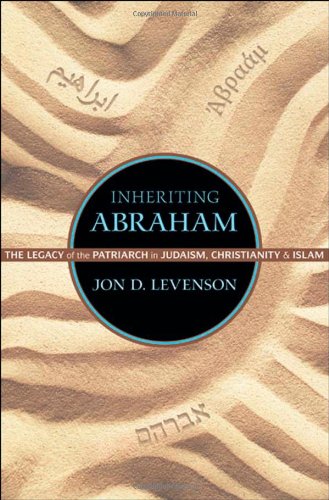
Inheriting Abraham: The Legacy of the Patriarch in Judaism,...
Authors:
Jon D. Levenson
Publisher:
Princeton University Press
Publication Date:
Not available
ISBN:
0691155690
Jews, Christians, and Muslims supposedly share a common religious heritage in the patriarch Abraham, and the idea that he should serve only as a source... of unity among the three traditions has become widespread in both scholarly and popular circles. Inheriting Abraham boldly challenges this view, demonstrating Abraham's distinctive role in each tradition, while delineating the points of connection as well. In this sweeping and provocative book, Jon Levenson subjects the powerful story in Genesis of Abraham's calling, his experience in Canaan and Egypt, and his near-sacrifice of his beloved son Isaac to a careful literary and theological analysis. But Levenson also explores how Judaism, Christianity, and Islam have given unique distinctive interpretations to these narratives, often reimagining Abraham and his life in mutually exclusive ways. Historically, the three traditions have differed sharply over what Abraham's life foreshadows, how the Abrahamic community is constituted and sustained, and what practices the patriarch's example authorizes. In these disputes, Levenson finds illuminating signs of profound and enduring theological divergences alongside the commonalities. A stunning achievement that is certain to provoke debate, Inheriting Abraham traces how each community has come to revere Abraham as an exemplar of its own distinctive spiritual teachings and practices. This probing and compelling book also reveals how the increasingly conventional notion of the three equally "Abrahamic" religions derives from a dangerous misunderstanding of key biblical and Qur'anic texts, fails to do full justice to any of the traditions, and is often biased against Judaism in subtle and pernicious ways.
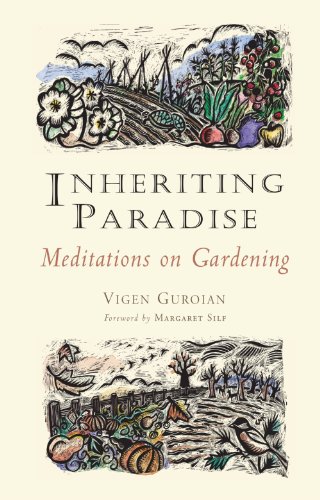
Inheriting Paradise: Meditations on Gardening
Authors:
Vigen Guroian
Publisher:
Wm. B. Eerdmans Publishing Co.
Publication Date:
Not available
ISBN:
0802845886
The garden is a personal place of retreat and delight and labor for many people. Gardening helps us collect ourselves, much as praying does. For ... rich and poor -- it makes no difference -- a garden is a place where body and soul are in harmony. In Inheriting Paradise Vigen Guroian offers an abundant vision of the spiritual life found in the cultivation of God's good creation. Capturing the earthiness and sacramental character of the Christian faith, these uplifting meditations bring together the experience of space and time through the cycle of the seasons in the garden and relate this fundamental human experience to the cycle of the church year and the Christian seasons of grace. The tilling of fresh earth; the sowing of seeds; the harvesting of rhubarb and roses, dillweed and daffodils --Guroian finds in the garden our most concrete connection with life and God's gracious giving. His personal reflections on this connection, complemented here by delicate woodcut illustrations, offer a compelling entry into Christian spirituality.
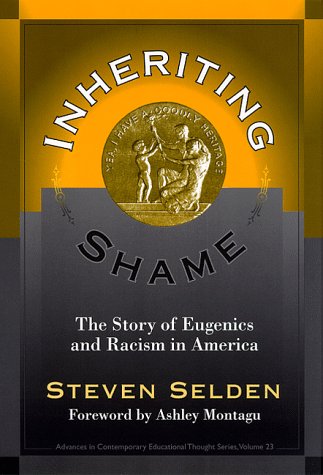
Inheriting Shame: The Story of Eugenics and Racism in America...
Authors:
Steven Selden
Publisher:
Teachers College Press
Publication Date:
Not available
ISBN:
0807738123
How could so many of America's educational, political and intellectual leaders have advocated such things as institutionalization, segregation and even... sterilization of those with "inferior blood"? How could the racist notion of selective breeding and racial betterment have become an integral part of high school and college biology textbooks? In this work Stephen Selden tells the story of the eugenics movement in America during the early decades of the 20th century. Complete with archival photographs, "Inheriting Shame" provides a powerful historical account and refutation of biological determinist ideas. Selden discusses the role played by America's foremost socialists and scientists, popular media, and most importantly, the school textbook, in shaping public consciousness regarding the "truth" of biological determinism. Much more than simply an historical overview, "Inheriting Shame" concludes with a trenchant analysis of contemporary research evidence of the role that inheritance plays in complex human behaviour - including traits ranging from Down Syndrome to violent behaviour and homosexuality.
Inheriting the City: The Children of Immigrants Come of Age
Authors:
Philip Kasinitz
Publisher:
Harvard University Press
Publication Date:
Not available
ISBN:
0674028031
Behind the contentious politics of immigration lies the question of how well new immigrants are becoming part of American society. To address this... question, Inheriting the City draws on the results of a ground-breaking study of young adults of immigrant parents in metropolitan New York to provide a comprehensive look at their social, economic, cultural, and political lives. Inheriting the City examines five immigrant groups to disentangle the complicated question of how they are faring relative to native-born groups, and how achievement differs between and within these groups. While some experts worry that these young adults would not do as well as previous waves of immigrants due to lack of high-paying manufacturing jobs, poor public schools, and an entrenched racial divide, Inheriting the City finds that the second generation is rapidly moving into the mainstream—speaking English, working in jobs that resemble those held by native New Yorkers their age, and creatively combining their ethnic cultures and norms with American ones. Far from descending into an urban underclass, the children of immigrants are using immigrant advantages to avoid some of the obstacles that native minority groups cannot.
Inheriting the City: The Children of Immigrants Come of Age
Authors:
Philip Kasinitz
Publisher:
Russell Sage Foundation Publications
Publication Date:
Not available
ISBN:
0871544784
Behind the contentious politics of immigration lies the question of how well new immigrants are becoming part of American society. To address this... question, Inheriting the City draws on the results of a ground-breaking study of young adults of immigrant parents in metropolitan New York to provide a comprehensive look at their social, economic, cultural, and political lives. Inheriting the City examines five immigrant groups to disentangle the complicated question of how they are faring relative to native-born groups, and how achievement differs between and within these groups. While some experts worry that these young adults would not do as well as previous waves of immigrants due to lack of high-paying manufacturing jobs, poor public schools, and an entrenched racial divide, Inheriting the City finds that the second generation is rapidly moving into the mainstream—speaking English, working in jobs that resemble those held by native New Yorkers their age, and creatively combining their ethnic cultures and norms with American ones. Far from descending into an urban underclass, the children of immigrants are using immigrant advantages to avoid some of the obstacles that native minority groups cannot.
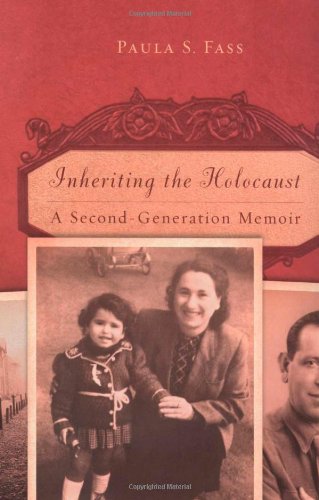
Inheriting the Holocaust: A Second-generation Memoir
Authors:
Paula S. Fass
Publisher:
Rutgers University Press
Publication Date:
Not available
ISBN:
0813544580
In Inheriting the Holocaust, Paula S. Fass explores her own past as the daughter of Holocaust survivors to reflect on the nature of history and memory.... Through her parents' experiences and the stories they recounted, Fass defined her engagement as a historian and used these skills to better understand her parents lives.Fass begins her journey through time and relationships when she travels to Poland and locates birth certificates of the murdered siblings she never knew. That journey to recover her family's story provides her with ever more evidence for the perplexing reliability of memory and its winding path toward historical reconstruction. In the end, Fass recovers parts of her family's history only to discover that Poland is rapidly re-imagining the role Jews played in the nation's past.
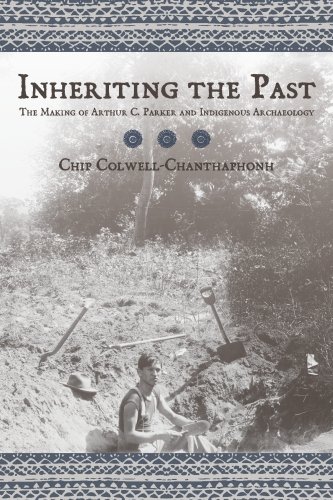
Inheriting the Past: The Making of Arthur C. Parker and Indigenous...
Authors:
Chip Colwell-Chanthaphonh
Publisher:
University of Arizona Press
Publication Date:
Not available
ISBN:
0816526567
In recent years, archaeologists and Native American communities have struggled to find common ground even though more than a century ago a man of Seneca... descent raised on New York’s Cattaraugus Reservation, Arthur C. Parker, joined the ranks of professional archaeology. Until now, Parker’s life and legacy as the first Native American archaeologist have been neither closely studied nor widely recognized. At a time when heated debates about the control of Native American heritage have come to dominate archaeology, Parker’s experiences form a singular lens to view the field’s tangled history and current predicaments with Indigenous peoples. In Inheriting the Past, Chip Colwell-Chanthaphonh examines Parker’s winding career path and asks why it has taken generations for Native peoples to follow in his footsteps. Closely tracing Parker’s life through extensive archival research, Colwell-Chanthaphonh explores how Parker crafted a professional identity and negotiated dilemmas arising from questions of privilege, ownership, authorship, and public participation. How Parker, as well as the discipline more broadly, chose to address the conflict between Native American rights and the pursuit of scientific discovery ultimately helped form archaeology’s moral community. Parker’s rise in archaeology just as the field was taking shape demonstrates that Native Americans could have found a place in the scholarly pursuit of the past years ago and altered its trajectory. Instead, it has taken more than a century to articulate the promise of an Indigenous archaeologyan archaeological practice carried out by, for, and with Native peoples. As the current generation of researchers explores new possibilities of inclusiveness, Parker’s struggles and successes serve as a singular reference point to reflect on archaeology’s history and its future.

Inheriting the Revolution: The First Generation of Americans
Authors:
Joyce Appleby
Publisher:
Belknap Press of Harvard University Press
Publication Date:
Not available
ISBN:
0674006631
Born after the Revolution, the first generation of Americans inherited a truly new world--and, with it, the task of working out the terms of... Independence. Anyone who started a business, marketed a new invention, ran for office, formed an association, or wrote for publication was helping to fashion the world's first liberal society. These are the people we encounter in Inheriting the Revolution, a vibrant tapestry of the lives, callings, decisions, desires, and reflections of those Americans who turned the new abstractions of democracy, the nation, and free enterprise into contested realities. Through data gathered on thousands of people, as well as hundreds of memoirs and autobiographies, Joyce Appleby tells myriad intersecting stories of how Americans born between 1776 and 1830 reinvented themselves and their society in politics, economics, reform, religion, and culture. They also had to grapple with the new distinction of free and slave labor, with all its divisive social entailments; the rout of Enlightenment rationality by the warm passions of religious awakening; the explosion of small business opportunities for young people eager to break out of their parents' colonial cocoon. Few in the nation escaped the transforming intrusiveness of these changes. Working these experiences into a vivid picture of American cultural renovation, Appleby crafts an extraordinary--and deeply affecting--account of how the first generation established its own culture, its own nation, its own identity. The passage of social responsibility from one generation to another is always a fascinating interplay of the inherited and the novel; this book shows how, in the early nineteenth century, the very idea of generations resonated with new meaning in the United States.
 '





