production
/viewbook/list/all/?page=6001
/
/static/
None
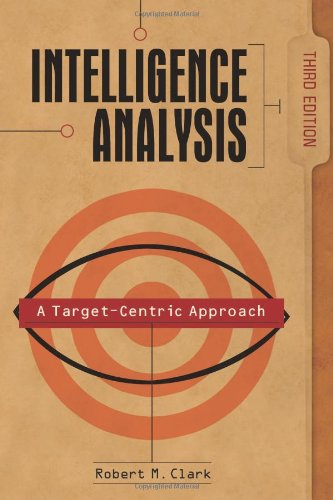
Intelligence Analysis: A Target-Centric Approach
Authors:
Robert Clark
Publisher:
CQ Press
Publication Date:
Not available
ISBN:
1604265434
As Americas enemies have changed and evolved, the American intelligence community has been forced to find more effective methods of managing... intelligence analysis. Old hierarchical models of collection and analysis must give way to horizontal, networked solutions. In Intelligence Analysis, Robert M. Clark explains that a collaborative, target-centric approach allows for more effective analysis, while better meeting customer needs. The new third edition has been comprehensively revised to reflect changes in the constantly shifting landscape of intelligence. With new examples throughout, Intelligence Analysis now includes discussions of framing effects, human terrain models, cyber collection, computer network exploitation, and more. Further, a new section on the defense analysis challenge clarifies the relationship between the analyst and the customer. Once again, Clark has updated the practical information and day-to-day details as only an experienced hand could, bringing essential clarity and insight to this must-have resource.
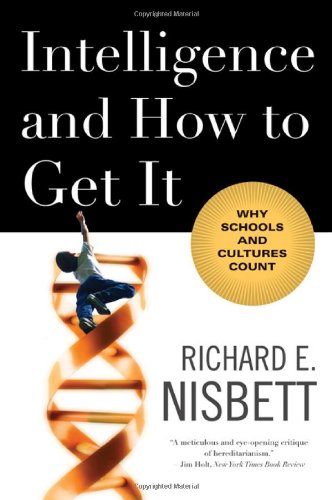
Intelligence and How to Get It: Why Schools and Cultures Count
Authors:
Richard E. Nisbett
Publisher:
W. W. Norton & Company
Publication Date:
Not available
ISBN:
0393065057
A bold refutation of the belief that genes determine intelligence.Who are smarter, Asians or Westerners? Are there genetic... explanations for racial differences in test scores? What makes some nationalities excel in engineering and others in music? Will math and science remain a largely male preserve. From the damning research of The Bell Curve to the more recent controversy surrounding geneticist James Watson's statements, one factor has been consistently left out of the equation: culture. In the tradition of The Mismeasure of Man by Stephen Jay Gould, world-class social psychologist Richard E. Nisbett takes on the idea of intelligence as something that is biologically determined and impervious to culture--with vast implications for the role of education as it relates to social and economic development. Intelligence and How to Get It asserts that intellect is not primarily genetic but is principally determined by societal influences. Nisbett's commanding argument, superb marshaling of evidence, and fearless discussions of the controversial carve out new and exciting terrain in this hotly debated field.
Intelligence and How to Get It: Why Schools and Cultures Count
Authors:
Richard E. Nisbett
Publisher:
W. W. Norton & Company
Publication Date:
Not available
ISBN:
0393337693
“[Nisbett] weighs in forcefully and articulately . . . [using] a thoroughly appealing style to engage . . . throughout.”—Publishers WeeklyWho are... smarter, Asians or Westerners? Are there genetic explanations for group differences in test scores? From the damning research of The Bell Curve to the more recent controversy surrounding geneticist James Watson’s statements, one factor has been consistently left out of the equation: culture. In the tradition of Stephen Jay Gould’s The Mismeasure of Man, world-class social psychologist Richard E. Nisbett takes on the idea of intelligence as biologically determined and impervious to culture with vast implications for the role of education as it relates to social and economic development. Intelligence and How to Get It asserts that intellect is not primarily genetic but is principally determined by societal influences.
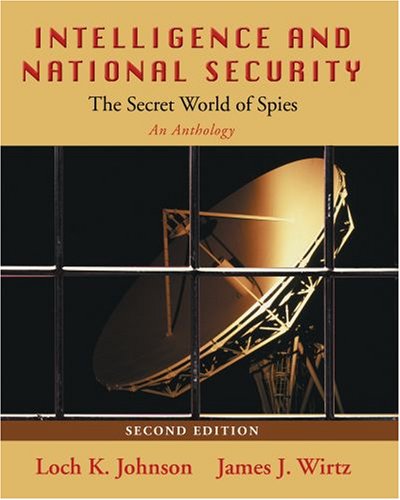
Intelligence and National Security: The Secret World of Spies: An...
Authors:
James J. Wirtz
Publisher:
Oxford University Press, USA
Publication Date:
Not available
ISBN:
0195332474
The second edition of Johnson and Wirtz's anthology provides a comprehensive set of readings in the field of intelligence studies. The book spans a wide... range of topics, from how the United States gathers and interprets information collected around the world to comparisons of the American intelligence system with the secret agencies of other nations. The text addresses a wide range of material including: (1) the meaning of strategic intelligence; (2) methods of intelligence collection; (3) intelligence analysis; (4) the danger of intelligence politicization; (5) relationships between intelligence officers and the policymakers they serve; (6) covert action; (7) counterintelligence; (8) accountability and civil liberties; (9) the implications of the major intelligence failures in 2001 and 2002 regarding, respectively, the terrorist attacks against the United States and the faulty estimates about weapons of mass destruction in Iraq; and (10) intelligence as practiced in other nations. New to this edition: * A review of the state of intelligence research literature * An interview with former CIA director Richard Helms * The early development of U.S. satellite surveillance * The role of intelligence leaks in the federal government * Improving relations between the producers and consumers of intelligence * The Senate investigation of the Ames spying scandal in the CIA * NSA warrantless wiretaps * Intelligence mistakes leading up to the 9/11 attack * Intelligence failures in the faulty predictions of WMDs in Iraq * Institutional conflicts that contributed to 9/11 failures * The British intelligence failures regarding WMDs in Iraq
Intelligence and the National Security Strategist: Enduring Issues...
Authors:
Roger Z. George
Publisher:
Rowman & Littlefield Publishers
Publication Date:
Not available
ISBN:
0742540391
Intelligence and the National Security Strategist: Enduring Issues and Challenges presents students with a useful anthology of published articles from... diverse sources as well as original contributions to the study of intelligence. The collection includes classic perspectives from the history of warfare, views on the evolution of U.S. intelligence, and studies on the delicate balance between the need for information-gathering and the values of democratic societies. It also includes succinct discussions of complex issues facing the Intelligence Community, such as the challenges of technical and clandestine collection, the proliferation of open sources, the problems of deception and denial operations, and the interaction between the Intelligence Community and the military. Several timely chapters examine the role of the intelligence analyst in support of the national security policymaker. Rounding out the volume are appendices on the legislative underpinnings of our national intelligence apparatus.
Intelligence and U.S. Foreign Policy: Iraq, 9/11, and Misguided Reform
Authors:
Paul R. Pillar
Publisher:
Columbia University Press
Publication Date:
Not available
ISBN:
0231157924
A career of nearly three decades with the CIA and the National Intelligence Council showed Paul R. Pillar that intelligence reforms, especially measures... enacted since 9/11, can be deeply misguided. They often miss the sources that underwrite failed policy and misperceive our ability to read outside influences. They also misconceive the intelligence-policy relationship and promote changes that weaken intelligence-gathering operations.In this book, Pillar confronts the intelligence myths Americans have come to rely on to explain national tragedies, including the belief that intelligence drives major national security decisions and can be fixed to avoid future failures. Pillar believes these assumptions waste critical resources and create harmful policies, diverting attention away from smarter reform, and they keep Americans from recognizing the limits of obtainable knowledge.Pillar revisits U.S. foreign policy during the Cold War and highlights the small role intelligence played in those decisions, and he demonstrates the negligible effect that America's most notorious intelligence failures had on U.S. policy and interests. He then reviews in detail the events of 9/11 and the 2003 invasion of Iraq, condemning the 9/11 commission and the George W. Bush administration for their portrayals of the role of intelligence. Pillar offers an original approach to better informing U.S. policy, which involves insulating intelligence management from politicization and reducing the politically appointed layer in the executive branch to combat slanted perceptions of foreign threats. Pillar concludes with principles for adapting foreign policy to inevitable uncertainties.
Intelligence: A Very Short Introduction
Authors:
Ian J. Deary
Publisher:
Oxford University Press
Publication Date:
Not available
ISBN:
0192893211
For people with little or no knowledge of the science of human intelligence, this volume takes readers to a stage where they are able to make judgments... for themselves about the key questions of human mental ability. Each chapter addresses a central scientific issue but does so in a way that is lively and completely accessible. Issues discussed include whether there are several different types of intelligence, whether intelligence differences are caused by genes or the environment, the biological basis of intelligence levels, and whether intelligence declines as we grow older.
Intelligence: From Secrets to Policy
Authors:
Mark M Lowenthal
Publisher:
CQ Press
Publication Date:
Not available
ISBN:
0872896005
Intelligence veteran Mark M. Lowenthal details how the intelligence community's history, structure, procedures, and functions affect policy decisions.... With his friendly prose, he demystifies a complicated and complex process. Rich with examples and anecdotes, Intelligence also includes bolded key terms, an acronym list, suggested readings and websites, and a list of major intelligence reviews or proposals. This new, fully-updated fourth edition highlights many crucial recent developments in reforms, ethics, and transnational issues, including: -the actual implementation of the Director of National Intelligence (DNI) reforms and their successes and strains; -the ongoing legal, operational, and ethical issues raised by the war against terrorism; -the growth of transnational issues, such as WMD; -fresh coverage of analytic standards and analytic transformation; -more in-depth explanation of geospatial, signal, and human intelligence; -a new discussion of the lessons of 9/11; - and, the growing politicization of intelligence in the United States, specifically through the declassified use of National Intelligence Estimates (NIEs).
Intelligence: From Secrets to Policy
Authors:
Mark M. Lowenthal
Publisher:
CQ Press College
Publication Date:
Not available
ISBN:
1608716759
Intelligence veteran Mark M. Lowenthal details how the intelligence community's history, structure, procedures, and functions affect policy decisions.... With straightforward and friendly prose, the book demystifies a complex process. The fifth edition highlights crucial developments and new challenges in the intelligence community, including: changes in the management of U.S. intelligence and the fourth DNI in five years; Obama administration policies; developments in collection and analysis; the killing of Bin Laden, Wikileaks, and updates on Russia, North Korea, China, and the Middle East; the ability to handle the shift from large-scale attacks to smaller, individual attempts; and, expanded coverage of foreign intelligence services and new coverage of intelligence in authoritarian regimes.

Intelligence in Nature
Authors:
Jeremy Narby
Publisher:
Tarcher
Publication Date:
Not available
ISBN:
1585424617
Continuing the journey begun in his acclaimed book The Cosmic Serpent, the noted anthropologist ventures firsthand into both traditional cultures and... the most up-todate discoveries of contemporary science to determine nature's secret ways of knowing. Anthropologist Jeremy Narby has altered how we understand the Shamanic cultures and traditions that have undergone a worldwide revival in recent years. Now, in one of his most extraordinary journeys, Narby travels the globe-from the Amazon Basin to the Far East-to probe what traditional healers and pioneering researchers understand about the intelligence present in all forms of life. Intelligence in Nature presents overwhelming illustrative evidence that independent intelligence is not unique to humanity alone. Indeed, bacteria, plants, animals, and other forms of nonhuman life display an uncanny penchant for self-deterministic decisions, patterns, and actions. Narby presents the first in-depth anthropological study of this concept in the West. He not only uncovers a mysterious thread of intelligent behavior within the natural world but also probes the question of what humanity can learn from nature's economy and knowingness in its own search for a saner and more sustainable way of life.
Intelligence in War: The value--and limitations--of what the...
Authors:
John Keegan
Publisher:
Vintage
Publication Date:
Not available
ISBN:
0375700463
John Keegan, whose many books, including classic histories of the two world wars, have confirmed him as the premier miltary historian of our time, here... presents a masterly look at the value and limitations of intelligence in the conduct of war.Intelligence gathering is an immensely complicated and vulnerable endeavor. And it often fails. Until the invention of the telegraph and radio, information often traveled no faster than a horse could ride, yet intelligence helped defeat Napoleon. In the twentieth century, photo analysts didn’t recognize Germany’s V-2 rockets for what they were; on the other hand, intelligence helped lead to victory over the Japanese at Midway. In Intelligence in War, John Keegan illustrates that only when paired with force has military intelligence been an effective tool, as it may one day be in besting al-Qaeda.
Intelligence-led Policing
Authors:
Jerry H. Ratcliffe
Publisher:
Willan
Publication Date:
Not available
ISBN:
1843923394
What is intelligence-led policing? Who came up with the idea? Where did it come from? How does it relate to other policing paradigms? What distinguishes... an intelligence-led approach to crime reduction? How is it designed to have an impact on crime? Does it prevent crime? What is crime disruption? Is intelligence-led policing just for the police? These are questions asked by many police professionals, including senior officers, analysts and operational staff. Similar questions are also posed by students of policing who have witnessed the rapid emergence of intelligence-led policing from its British origins to worldwide movement. These questions are also relevant to crime prevention practitioners and policy-makers seeking long-term crime benefits. The answers to these questions are the subject of this book. This book brings the concepts, processes and practice of intelligence-led policing into focus, so that students, practitioners and scholars of policing, criminal intelligence and crime analysis can better understand the evolving theoretical and empirical dynamics of this rapidly growing paradigm. The first book of its kind, enhanced by viewpoint contributions from intelligence experts and case studies of police operations, provides a much-needed and timely in-depth synopsis of this emerging movement in a practical and accessible style.
Intelligence: Multiple Perspectives
Authors:
Howard Gardner
Publisher:
Wadsworth Publishing
Publication Date:
Not available
ISBN:
0030726298
A supplemental text for courses in cognition, educational psychology, and general psychology, this text brings together all major intelligence... perspectives and provides coverage of new theories. Written in an engaging style, Intelligence uses examples from history and contemporary life and provides frequent summaries. Features: * Provides a broad definition of intelligence by bringing together all the major perspectives. * Includes full descriptions of new theories of intelligence proposed by Michael Anderson, Stephen Ceci, Howard Gardner and Robert Sternberg. * Additional coverage of intelligence concerning the workplace, schooling and multi- and crosscultural perspectives.
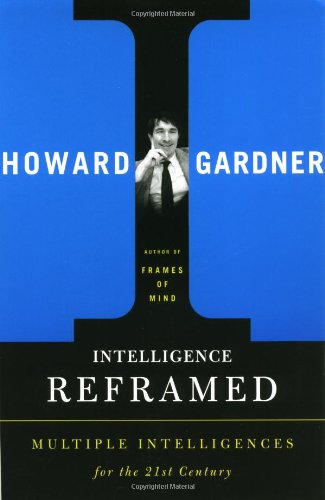
Intelligence Reframed: Multiple Intelligences for the 21st Century
Authors:
Howard Gardner
Publisher:
Basic Books
Publication Date:
Not available
ISBN:
0465026117
Harvard psychologist Howard Gardner has been acclaimed as the most influential educational theorist since John Dewey. His ideas about intelligence and... creativity - explicated in such bestselling books as Frames of Mind and Multiple Intelligences (over 200,000 copies in print combined) - have revolutionized our thinking.In his groundbreaking 1983 book Frames of Mind, Howard Gardner first introduced the theory of multiple intelligences, which posits that intelligence is more than a single property of the human mind. That theory has become widely accepted as one of the seminal ideas of the twentieth century and continues to attract attention all over the world.Now in Intelligence Reframed, Gardner provides a much-needed report on the theory, its evolution and revisions. He offers practical guidance on the educational uses of the theory and responds to the critiques leveled against him. He also introduces two new intelligences (existential intelligence and naturalist intelligence) and argues that the concept of intelligence should be broadened, but not so absurdly that it includes every human virtue and value. Ultimately, argues Gardner, possessing a basic set of seven or eight intelligences is not only a unique trademark of the human species, but also perhaps even a working definition of the species. Gardner also offers provocative ideas about creativity, leadership, and moral excellence, and speculates about the relationship between multiple intelligences and the world of work in the future.
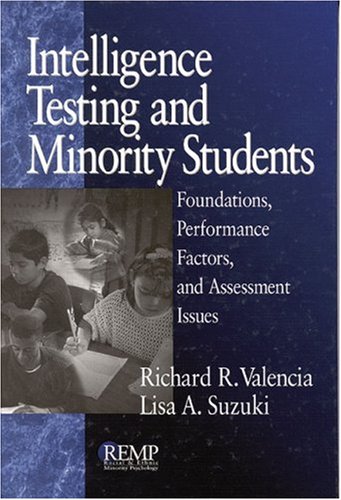
Intelligence Testing and Minority Students: Foundations,...
Authors:
Richard R. Valencia
Publisher:
Sage Publications, Inc
Publication Date:
Not available
ISBN:
0761912304
Intelligence Testing and Minority Students offers the reader a fresh opportunity to re-learn and re-consider the implications of intelligence testing.... Richard R. Valencia and Lisa A. Suzuki discuss the strengths and limitations of IQ testing relative to the factors which may contribute to biased results. They review the history of the adaptation and adoption of intelligence testing; evaluate the heredity-environment debate; discuss the specific performance factors which apply to IQ testing of those in minority ethnic groups. This practical book offers the practitioner a good sense of what can be done to make testing and education serve the needs of all students fairly and validly, whatever their background.
 '





