production
/viewbook/list/all/?page=6126
/
/static/
None

In the Shadow of the General: Modern France and the Myth of De Gaulle
Authors:
Sudhir Hazareesingh
Publisher:
Oxford University Press, USA
Publication Date:
Not available
ISBN:
0195308883
Charles De Gaulle's leadership of the French while in exile during World War II cemented his place in history. In contemporary France, he is the stuff... of legend, consistently acclaimed as the nation's pre-eminent historical figure. But paradoxes abound. For one thing, his personal popularity sits oddly with his social origins and professional background. Neither the Army nor the Catholic Church is particularly well-regarded in France today, as they are seen to represent antiquated traditions and values. So why, then, do the French nonetheless identify with, celebrate, and even revere this austere and devout Catholic, who remained closely wedded to military values throughout his life? The Shadow of the General resolves this mystery and explains how de Gaulle has come to occupy such a privileged position in the French imagination. Sudhir Hazareesingh's story of how an individual life was transformed into national myth also tells a great deal about the French collective self in the twenty-first century: its fractured memory, its aspirations to greatness, and its manifold anxieties. Indeed, alongside the tale of de Gaulle's legacy, the author unfolds a much broader narrative: the story of modern France.

In the Shadow of the Mexican Revolution: Contemporary Mexican...
Authors:
Héctor Aguilar Camín
Publisher:
University of Texas Press
Publication Date:
Not available
ISBN:
0292704518
Héctor Aguilar Camín and Lorenzo Meyer, two of Mexico's leading intellectuals, set out to fill a void in the literature on Mexican history: the lack... of a single text to cover the history of contemporary Mexico during the twentieth century. A la sombra de la Revolución Mexicana, now available in English as In the Shadow of the Mexican Revolution, covers the Mexican Revolution itself, the gradual consolidation of institutions, the Cárdenas regime, the "Mexican economic miracle" and its subsequent collapse, and the recent transition toward a new historical period. The authors offer a comprehensive and authoritative study of Mexico's turbulent recent history, a history that increasingly intertwines with that of the United States. Given the level of interest in Mexico--likely to increase still more as a result of the recent liberalization of trade policies--this volume will be useful in affording U.S. readers an intelligent, comprehensive, and accessible study of their neighbor to the south.

In the Shadow of the Oval Office: Profiles of the National Security...
Authors:
Ivo H. Daalder
Publisher:
Simon & Schuster
Publication Date:
Not available
ISBN:
1416553193
The most solemn obligation of any president is to safeguard the nation's security. But the president cannot do this alone. He needs help. In the past... half century, presidents have relied on their national security advisers to provide that help.Who are these people, the powerful officials who operate in the shadow of the Oval Office, often out of public view and accountable only to the presidents who put them there? Some remain obscure even to this day. But quite a number have names that resonate far beyond the foreign policy elite: McGeorge Bundy, Henry Kissinger, Zbigniew Brzezinski, Colin Powell, Condoleezza Rice.Ivo Daalder and Mac Destler provide the first inside look at how presidents from John F. Kennedy to George W. Bush have used their national security advisers to manage America's engagements with the outside world. They paint vivid portraits of the fourteen men and one woman who have occupied the coveted office in the West Wing, detailing their very different personalities, their relations with their presidents, and their policy successes and failures.It all started with Kennedy and Bundy, the brilliant young Harvard dean who became the nation's first modern national security adviser. While Bundy served Kennedy well, he had difficulty with his successor. Lyndon Johnson needed reassurance more than advice, and Bundy wasn't always willing to give him that. Thus the basic lesson -- the president sets the tone and his aides must respond to that reality.The man who learned the lesson best was someone who operated mainly in the shadows. Brent Scowcroft was the only adviser to serve two presidents, Gerald Ford and George H. W. Bush. Learning from others' failures, he found the winning formula: gain the trust of colleagues, build a collaborative policy process, and stay close to the president. This formula became the gold standard -- all four national security advisers who came after him aspired to be "like Brent."The next president and national security adviser can learn not only from success, but also from failure. Rice stayed close to George W. Bush -- closer perhaps than any adviser before or since. But her closeness did not translate into running an effective policy process, as the disastrous decision to invade Iraq without a plan underscored. It would take years, and another national security aide, to persuade Bush that his Iraq policy was failing and to engineer a policy review that produced the "surge."The national security adviser has one tough job. There are ways to do it well and ways to do it badly. Daalder and Destler provide plenty of examples of both. This book is a fascinating look at the personalities and processes that shape policy and an indispensable guide to those who want to understand how to operate successfully in the shadow of the Oval Office.

In the Shadow of the Oval Office: Profiles of the National Security...
Authors:
Ivo H. Daalder
Publisher:
Simon & Schuster
Publication Date:
Not available
ISBN:
1416553207
The most solemn obligation of any president is to safeguard the nation's security. But the president cannot do this alone. He needs help. In the past... half century, presidents have relied on their national security advisers to provide that help. Who are these people, the powerful officials who operate in the shadow of the Oval Office, often out of public view and accountable only to the presidents who put them there? Some remain obscure even to this day. But quite a number have names that resonate far beyond the foreign policy elite: McGeorge Bundy, Henry Kissinger, Zbigniew Brzezinski, Colin Powell, Condoleezza Rice. Ivo Daalder and Mac Destler provide the first inside look at how presidents from John F. Kennedy to George W. Bush have used their national security advisers to manage America's engagements with the outside world. They paint vivid portraits of the fourteen men and one woman who have occupied the coveted office in the West Wing, detailing their very different personalities, their relations with their presidents, and their policy successes and failures. It all started with Kennedy and Bundy, the brilliant young Harvard dean who became the nation's first modern national security adviser. While Bundy served Kennedy well, he had difficulty with his successor. Lyndon Johnson needed reassurance more than advice, and Bundy wasn't always willing to give him that. Thus the basic lesson -- the president sets the tone and his aides must respond to that reality. The man who learned the lesson best was someone who operated mainly in the shadows. Brent Scowcroft was the only adviser to serve two presidents, Gerald Ford and George H. W. Bush. Learning from others' failures, he found the winning formula: gain the trust of colleagues, build a collaborative policy process, and stay close to the president. This formula became the gold standard -- all four national security advisers who came after him aspired to be "like Brent." The next president and national security adviser can learn not only from success, but also from failure. Rice stayed close to George W. Bush -- closer perhaps than any adviser before or since. But her closeness did not translate into running an effective policy process, as the disastrous decision to invade Iraq without a plan underscored. It would take years, and another national security aide, to persuade Bush that his Iraq policy was failing and to engineer a policy review that produced the "surge." The national security adviser has one tough job. There are ways to do it well and ways to do it badly. Daalder and Destler provide plenty of examples of both. This book is a fascinating look at the personalities and processes that shape policy and an indispensable guide to those who want to understand how to operate successfully in the shadow of the Oval Office.

In the Shadow Of the Poorhouse: A Social History Of Welfare In...
Authors:
Michael B. Katz
Publisher:
Basic Books
Publication Date:
Not available
ISBN:
0465032109
With welfare reform a burning political issue, this special anniversary edition of the classic history of welfare in America has been revised and... updated to include the latest bipartisan debates on how to end welfare as we know it.”In the Shadow of the Poorhouse examines the origins of social welfare, both public and private, from the days of the colonial poorhouse through the current tragedy of the homeless. The book explains why such a highly criticized system persists. Katz explores the relationship between welfare and municipal reform; the role of welfare capitalism, eugenics, and social insurance in the reorganization of the labor market; the critical connection between poverty and politics in the rise of the New Deal welfare state; and how the War on Poverty of the ’60s became the war on welfare of the ’80s.

In the Shadow of the Sacred Grove
Authors:
Carol Spindel
Publisher:
Vintage
Publication Date:
Not available
ISBN:
0679722149
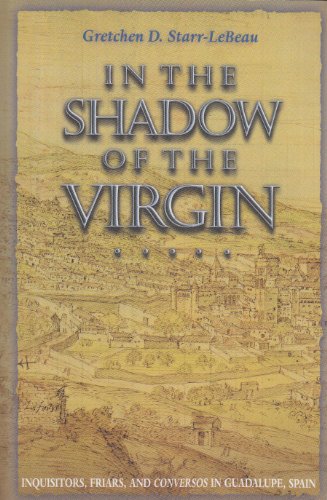
In the Shadow of the Virgin: Inquisitors, Friars, and "Conversos"...
Authors:
Gretchen D. Starr-LeBeau
Publisher:
Princeton University Press
Publication Date:
Not available
ISBN:
0691139385
On June 11, 1485, in the pilgrimage town of Guadalupe, the Holy Office of the Inquisition executed Alonso de Paredes--a converted Jew who posed an... economic and political threat to the town's powerful friars--as a heretic. Wedding engrossing narratives of Paredes and other figures with astute historical analysis, this finely wrought study reconsiders the relationship between religious identity and political authority in late-Medieval and early-modern Spain.Gretchen Starr-LeBeau concentrates on the Inquisition's handling of conversos (converted Jews and their descendants) in Guadalupe, taking religious identity to be a complex phenomenon that was constantly re-imagined and reconstructed in light of changing personal circumstances and larger events. She demonstrates that the Inquisition reified the ambiguous religious identities of conversos by defining them as devout or (more often) heretical. And she argues that political figures used this definitional power of the Inquisition to control local populations and to increase their own authority.In the Shadow of the Virgin is unique in pointing out that the power of the Inquisition came from the collective participation of witnesses, accusers, and even sometimes its victims. For the first time, it draws the connection between the malleability of religious identity and the increase in early modern political authority. It shows that, from the earliest days of the modern Spanish Inquisition, the Inquisition reflected the political struggles and collective religious and cultural anxieties of those who were drawn into participating in it.

In the Shadow of War: The United States since the 1930s
Authors:
Professor Michael S. Sherry
Publisher:
Yale University Press
Publication Date:
Not available
ISBN:
0300072635
In this magisterial book, a prize-winning historian shows how war has defined modern America. Michael Sherry argues that America's intense preoccupation... with war emerged on the eve of World War II, marking a turning point as important as the Revolution, the end of the frontier, and other watersheds in American history. In the sixty years since the war, says Sherry, militarization has reshaped every facet of American life: its politics, economics, culture, social relations, and place in the world. According to Sherry, America's militarization began partly in response to threatening forces and changes abroad, but its internal sources and consequences in the long run proved more telling. War--as threat, necessity, or model of unified action--persistently justified the state's growing size, power, and activism. But as national government waged "war on poverty," war on AIDS," and "war on drugs," it fostered expectations of "victory" that it could not fulfill, aggravating the very distrust of federal authority that leaders sought to overcome and encouraging Americans to conceive of war as something they waged against each other rather than against enemies abroad. The paradigm of war thereby corroded Americans' faith in national government and embittered their conflicts over class, race, gender, religion, and the nation's very meaning. Sherry concludes by speculating on the possibility of ending America's long attachment to war.

In the Shadow of Yalta: Art and the Avant-garde in Eastern Europe,...
Authors:
Piotr Piotrowski
Publisher:
Reaktion Books
Publication Date:
Not available
ISBN:
1861898630
In this comprehensive study of the artistic culture of the region between the Iron Curtain and the former Soviet Union, Piotr Piotrowski chronicles... the relationship between avant-garde art production and post–World War II politics in such Iron Curtain nations as Bulgaria, the Czech Republic, East Germany, Hungary, Poland, Romania, and the former Yugoslavia. Featuring more than 200 images, most by artists largely unfamiliar to an English-speaking audience, In the Shadow of Yalta is a fascinating portrait of the inspiring art made in a region—and at a time—of critical importance in modern Europe.

In the Shadows of State and Capital: The United Fruit Company,...
Authors:
Steve Striffler
Publisher:
Duke University Press Books
Publication Date:
Not available
ISBN:
0822328631
Winner of the 2001 President’s Award of the Social Science History AssociationIn the Shadows of State and Capital tells the story of how Ecuadorian... peasants gained, and then lost, control of the banana industry. Providing an ethnographic history of the emergence of subcontracting within Latin American agriculture and of the central role played by class conflict in this process, Steve Striffler looks at the quintessential form of twentieth-century U.S. imperialism in the region—the banana industry and, in particular, the United Fruit Company (Chiquita). He argues that, even within this highly stratified industry, popular struggle has contributed greatly to processes of capitalist transformation and historical change. Striffler traces the entrance of United Fruit into Ecuador during the 1930s, its worker-induced departure in the 1960s, the troubled process through which contract farming emerged during the last half of the twentieth century, and the continuing struggles of those involved. To explore the influence of both peasant activism and state power on the withdrawal of multinational corporations from banana production, Striffler draws on state and popular archives, United Fruit documents, and extensive oral testimony from workers, peasants, political activists, plantation owners, United Fruit administrators, and state bureaucrats. Through an innovative melding of history and anthropology, he demonstrates that, although peasant-workers helped dismantle the foreign-owned plantation, they were unable to determine the broad contours through which the subsequent system of production—contract farming—emerged and transformed agrarian landscapes throughout Latin America. By revealing the banana industry’s impact on processes of state formation in Latin America, In the Shadows of State and Capital will interest historians, anthropologists, and political scientists, as well as scholars of globalization and agrarian studies.

In the Shadows of the State: Indigenous Politics, Environmentalism,...
Authors:
Alpa Shah
Publisher:
Duke University Press Books
Publication Date:
Not available
ISBN:
0822347652
In the Shadows of the State suggests that well-meaning indigenous rights and development claims and interventions may misrepresent and hurt the very... people they intend to help. It is a powerful critique based on extensive ethnographic research in Jharkhand, a state in eastern India officially created in 2000. While the realization of an independent Jharkhand was the culmination of many years of local, regional, and transnational activism for the rights of the region’s culturally autonomous indigenous people, Alpa Shah argues that the activism unintentionally further marginalized the region’s poorest people. Drawing on a decade of ethnographic research in Jharkhand, she follows the everyday lives of some of the poorest villagers as they chase away protected wild elephants, try to cut down the forests they allegedly live in harmony with, maintain a healthy skepticism about the revival of the indigenous governance system, and seek to avoid the initial spread of an armed revolution of Maoist guerrillas who claim to represent them. Juxtaposing these experiences with the accounts of the village elites and the rhetoric of the urban indigenous-rights activists, Shah reveals a class dimension to the indigenous-rights movement, one easily lost in the cultural-based identity politics that the movement produces. In the Shadows of the State brings together ethnographic and theoretical analyses to show that the local use of global discourses of indigeneity often reinforces a class system that harms the poorest people.

In the Skin of a Lion
Authors:
Michael Ondaatje
Publisher:
Knopf Canada
Publication Date:
Not available
ISBN:
0394281829

In the Skin of a Lion
Authors:
Michael Ondaatje
Publisher:
Vintage
Publication Date:
Not available
ISBN:
0679772669
Bristling with intelligence and shimmering with romance, this novel tests the boundary between history and myth. Patrick Lewis arrives in Toronto in the... 1920s and earns his living searching for a vanished millionaire and tunneling beneath Lake Ontario. In the course of his adventures, Patrick's life intersects with those of characters who reappear in Ondaatje's Booker Prize-winning The English Patient. 256 pp.

In The Slick Of the Cricket
Authors:
Russell Drumm
Publisher:
BookSurge Publishing
Publication Date:
Not available
ISBN:
1439206899
Who can forget the scene in Jaws when Quint, the weathered, steely-eyed captain scrapes his fingernails down the blackboard and announces to the... quibbling town elders that they're dealing with a great white shahk? In all his hard-nosed glory, Quint might seem like a creation of Hollywood, but in fact he was based on a real fishing captain out of Montauk, Long Island--Frank Mundus, captain of the Cricket II. Mundus never got his due from the movie or from Peter Benchley, the author of the novel Jaws, and that irks him. Russell Drumm, a Montauk reporter, quickly learns this and a lot more during an adventure at sea with the famous shark hunter. Also aboard is the single charter, a big-game fisherman from Hawaii who has yet to grapple with the ultimate trophy: a great white shark. In the five days that follow, the three are tossed by storms during their pursuit of what has been called nature's perfect killing machine, and Mundus relives for the reporter his 40 years on the high seas. In the Slick of the Cricket is an engaging portrait of a driven man and his unusual occupation.

In the Small, Small Pond
Authors:
Denise Fleming
Publisher:
Henry Holt and Co. (BYR)
Publication Date:
Not available
ISBN:
0805059830
Denise Fleming's book gives young readers a frog's-eye view of life in a pond throughout the seasons. In the Small, Small Pond is a 1994 Caldecott... Honor Book.
 '