production
/viewbook/list/all/?page=6150
/
/static/
None

Introducing Religion: Readings from the Classic Theorists
Authors:
Daniel L. Pals
Publisher:
Oxford University Press, USA
Publication Date:
Not available
ISBN:
0195181492
What is religion? How is it to be explained? Why do human beings believe in divinities? Why do the beliefs and behaviors we typically describe as... religious so deeply affect the human personality and so subtly weave their way through human society?Introducing Religion: Readings from the Classic Theorists presents eleven key texts from influential theorists who played a pivotal role in the modern enterprise of explaining the phenomenon of religion. These writings seek to account for the origin, function, and enduring human appeal of religion by drawing on methods of scientific scholarship unconstrained by theological creeds or confessional commitments. An ideal companion to author Daniel L. Pals' textbook, Eight Theories of Religion, Second Edition, or other beginning texts, Introducing Religion opens with selections from the works of Edward Burnett Tylor and James Frazer--Victorian pioneers in anthropology and the comparative study of religion. It then offers entry into the provocative analyses of Sigmund Freud, Emile Durkheim, and Karl Marx, whose aggressive reductionist approaches framed the explanatory debate for much of the century to follow. Responses to reductionist theories--and new directions in explanation--claim a place in selections from the works of philosopher-psychologist William James, theologian Rudolf Otto, sociologist Max Weber, and comparativist Mircea Eliade. The volume ends with discussions drawn from the celebrated field studies of British anthropologist E. E. Evans-Pritchard and the interpretive anthropology of American theorist Clifford Geertz, whose fieldwork took him to both Asia and the Middle East. Brief career portraits of the theorists at the outset of each chapter give context to the readings, and a general introduction features guiding questions designed to help students assess and compare the different theories. Offering an illuminating overview of this controversial and engaging subject, Introducing Religion: Readings from the Classic Theorists is ideal for introductory courses in religion as well as courses in method and theory of religion, world religions, and sociology, psychology, or anthropology of religion.

Introducing Research Methodology: A Beginner's Guide to Doing a...
Authors:
Uwe Flick
Publisher:
Sage Publications Ltd
Publication Date:
Not available
ISBN:
184920781X
In this new book, specifically written for first time researchers, Uwe Flick, author of the highly successful text Introduction to Qualitative Research,... focuses on the process of producing an undergraduate research project. He gives readers the fundamental data collection and analysis skills that they need for their first project, as well as a good understanding of the research process as a whole. The book covers both quantitative and qualitative methods, and contains real life examples from the author's own research. Topics include reading and reviewing the literature, research design, writing up and research ethics.As well as practical research techniques, Flick provides a basic explanation of methodological issues such as epistemology, the quantitative/qualitative debate and the wider social role of research, linking these to real world issue and the actual task of researching and writing a project.
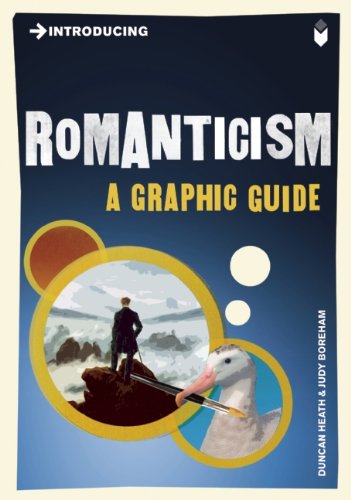
Introducing Romanticism: A Graphic Guide
Authors:
Duncan Heath
Publisher:
Icon Books
Publication Date:
Not available
ISBN:
1848311788
Covering the transformative power of Romanticism on art, philosophy, literature, music, and politics, Introducing Romanticism provides an accessible... overview of its many interlocking—and often contradictory—strands. It is the ideal introduction for both students and general readers.
Introducing Routing and Switching in the Enterprise, CCNA Discovery...
Authors:
Allan Reid
Publisher:
Cisco Press
Publication Date:
Not available
ISBN:
1587132117
Introducing Routing and Switching in the Enterprise, CCNA Discovery Learning Guide is the official supplemental textbook for the Introducing Routing... and Switching in the Enterprise course in the Cisco® Networking Academy® CCNA® Discovery curriculum version 4. The course, the third of four in the new curriculum, familiarizes you with the equipment applications and protocols installed in enterprise networks, with a focus on switched networks, IP Telephony requirements, and security. It also introduces advanced routing protocols such as Enhanced Interior Gateway Routing Protocol (EIGRP) and Open Shortest Path First (OSPF) Protocol. Hands-on exercises include configuration, installation, and troubleshooting. The Learning Guide, written and edited by instructors, is designed as a portable desk reference to use anytime, anywhere to reinforce the material from the course and organize your time. The Learning Guide’s features help you focus on important concepts to succeed in this course: Chapter Objectives–Review core concepts by answering the focus questions listed at the beginning of each chapter. Key Terms–Refer to the lists of networking vocabulary introduced and highlighted in context in each chapter. The Glossary defines each key term. Summary of Activities and Labs–Maximize your study time with this complete list of all associated exercises at the end of each chapter. Check Your Understanding–Evaluate your readiness with the end-of-chapter questions that match the style of questions you see in the online course quizzes. The answer key explains each answer. Challenge Questions and Activities–Apply a deeper understanding of the concepts with these challenging end-of-chapter questions and activities. The answer key explains each answer. Hands-on Labs– Master the practical, hands-on skills of the course by performing all the tasks in the course labs and additional challenge labs included in Part II of the Learning Guide. How To–Look for this icon to study the steps you need to learn to perform certain tasks. Interactive Activities–Reinforce your understanding of topics with more than 60 different exercises from the online course identified through-out the book with this icon. The files for these activities are on the accompanying CD-ROM. Packet Tracer Activities– Explore and visualize networking concepts using Packet Tracer exercises interspersed throughout some chapters. The files for these activities are on the accompanying CD-ROM. Packet Tracer v4.1 software developed by Cisco is available separately. Hands-on Labs–Work through all 44 course labs and 4 additional challenge labs included in Part II of the book. The labs are an integral part of the CCNA Discovery curriculum; review the core text and the lab material to prepare for all your exams. Companion CD-ROM The CD-ROM includes Interactive Activities Packet Tracer Activity files IT Career Information Taking Notes Lifelong Learning This book is part of the Cisco Networking Academy Series from Cisco Press®. Books in this series support and complement the Cisco Networking Academy curriculum.
Introducing Science Communication: A Practical Guide
Authors:
Mark L. Brake
Publisher:
Palgrave Macmillan
Publication Date:
Not available
ISBN:
023057386X
From climate change to stem cell research, this book shows how to communicate complex scientific issues to the masses. Each chapter explains key methods... and issues, providing the reader with practical and theoretical understanding of science communication. This is an essential text for students learning how to communicate science in today’s media.

Introducing Second Language Acquisition
Authors:
Professor Muriel Saville-Troike
Publisher:
Cambridge University Press
Publication Date:
Not available
ISBN:
1107648238
Written for students encountering the topic for the first time, this is a clear and practical introduction to second language acquisition (SLA). Using... non-technical language, it explains how a second language is acquired; what the learner of a second language needs to know; and why some learners are more successful than others. This new edition of Muriel Saville-Troike's bestselling textbook introduces in a step-by-step fashion a range of fundamental concepts, such as SLA in adults and children, in formal and informal learning contexts and in diverse socio-cultural settings. Taking an interdisciplinary approach, it encourages students to consider SLA from linguistic, psychological and social perspectives. Providing a solid foundation in SLA, this book has become the leading introduction to the field for students of linguistics, psychology and education, and trainee language teachers.

Introducing Second Language Acquisition (Cambridge Introductions to...
Authors:
Muriel Saville-Troike
Publisher:
Cambridge University Press
Publication Date:
Not available
ISBN:
0521794072
Written for students encountering the topic for the first time, this introduction explains in non-technical language how a second language is acquired;... what the second language learner needs to know; and why some learners are more successful than others. The textbook logically introduces a range of fundamental concepts--such as SLA in adults and children, formal and informal learning contexts, and diverse socio-cultural settings. It takes an interdisciplinary approach, encouraging students to consider SLA from linguistic, psychological and social perspectives.
Introducing Semantics (Cambridge Introductions to Language and...
Authors:
Nick Riemer
Publisher:
Cambridge University Press
Publication Date:
Not available
ISBN:
0521617413
Semantics is the study of meaning in language. This clear and comprehensive textbook is the most up-to-date introduction to the subject available for... undergraduate students. It not only equips students with the concepts they need in order to understand the main aspects of semantics, it also introduces the styles of reasoning and argument which characterise the field. It contains more than 200 exercises and discussion questions designed to test and deepen readers' understanding. More inclusive than other textbooks, it clearly explains and contrasts different theoretical approaches, summarises current debates, and provides helpful suggestions for further reading. Examples are drawn both from major world languages, such as Mandarin Chinese, Japanese, Arabic, Spanish and English, and from minority ones. The book also highlights the connections between semantics and the wider study of human language in psychology, anthropology, and linguistics itself.

Introducing Shakespeare
Authors:
Nick Groom
Publisher:
Totem Books
Publication Date:
Not available
ISBN:
1840462620
William Shakespeare's absolute pre-eminence in contemporary Western culture and society is simply unparalleled. His plays pack theatres and provide... Hollywood blockbusters with scripts; his works are considered fundamental to the teaching of English literature. He has given us many of our words, and defined much of how we think. How did this happen? Who decided that Shakespeare deserved such adoration? Can an Elizabethan playwright really be so relevant today, or are there other forces at work? Introducing Shakespeare looks at how 'The Bard' has been worshipped at different times and in different places, demonstrating to what cultural and political ends Shakespeare has been put, and explaining the intensity of current critical disputes. After centuries Shakespeare still remains the battlefield on which our very comprehension of humanity is fought out.

Introducing Social Theory
Authors:
Pip Jones
Publisher:
Polity
Publication Date:
Not available
ISBN:
0745635237
This revised edition of Pip Jones's extremely popular introduction to social theory, now benefiting from the collaboration of Shaun Le Boutillier and... Liz Bradbury, has been carefully and thoroughly updated with the latest developments in this continually changing field. Written in a refreshingly lucid and engaging style, Introducing Social Theory provides readers with a wide-ranging, well organized and thematic introduction to all the major thinkers, issues and debates in classical and contemporary social theory.Introducing Social Theory traces the development of social theorizing from the classical ideas about modernity of Durkheim, Marx and Weber, right up to a uniquely accessible review of contemporary theoretical controversies in sociology surrounding post-modernity and reflexive sociology. With great clarity, the authors explain the ideas of seminal thinkers such as Foucault, Bauman, Habermas, Beck, Bourdieu and Giddens, as well as paying increased attention to other important contributions from theorists such as Margaret Archer, Fredric Jameson and George Ritzer.Introducing Social Theory is the ideal textbook for students at all levels taking courses in sociology, from A-level students to undergraduates, who are looking to engage with social theory. Remarkably easy to follow and understand, the new edition lives up to its predecessor's goal that students need never be intimidated by social theory again.
Introducing Sociolinguistics
Authors:
Miriam Meyerhoff
Publisher:
Routledge
Publication Date:
Not available
ISBN:
041555005X
This second edition of Miriam Meyerhoff’s highly successful textbook is supported by the Routledge Sociolinguistics Reader and online resources common... to both books. It provides a solid, up-to-date appreciation of the interdisciplinary nature of the field covering foundation issues, recent advances and current debates. It presents familiar or classic data in new ways, and supplements the familiar with fresh examples from a wide range of languages and social settings. It clearly explains the patterns and systems that underlie language variation in use, as well as the ways in which alternations between different language varieties index personal style, social power and national identity. New features of the second edition: a wider range of approaches to politeness theory incorporating an international range of research expanded sections on multi-lingualism and code-switching, social class, dialect contact and tracking change over time linkage to the new Routledge Sociolinguistics Reader which can be used alongside this textbook, allowing students to supplement and build on material covered in the textbook. a shared website serving both Reader and Textbook which includes web- and video-links, interactive exercises and an expanded online glossary at: www.routledge.com/textbooks/meyerhoff a refreshed text design to assist navigation through textbook and reader. Each chapter includes exercises that enable readers to engage critically with the text, break-out boxes making connections between sociolinguistics and linguistic or social theory, and brief, lively add-ons guaranteed to make the book a memorable and enjoyable read. With a full glossary of terms and suggestions for further reading, this text gives students all the tools they need for an excellent command of sociolinguistics.
Introducing Sociolinguistics
Authors:
Rajend Mesthrie
Publisher:
John Benjamins Pub Co
Publication Date:
Not available
ISBN:
9027232652
Sociolinguistics is one of the central branches of modern linguistics and deals with the place of language in human societies. This second edition of... Introducing Sociolinguistics expertly synthesises the main approaches to the subject. The book covers areas such as multilingualism, code-choice, language variation, dialectology, interactional studies, gender, language contact, language and inequality, and language and power. At the same time it provides an integrated perspective on these themes by examining sociological theories of human interaction. In this regard power and inequality are particularly significant. The book also contains two chapters on the applications of sociolinguistics (in education and in language policy and planning) and a concluding chapter on the sociolinguistics of sign language. New topics covered include speaking style and stylisation, while current debates in areas like creolisation, globalisation and language death, language planning, and gender are reflected. Written collaboratively by teachers and scholars with first hand experience of sociolinguistic developments on four continents, this book provides the broadest introduction currently available to the central topics in sociolinguistics. Features: * Provides a solid foundation in all aspects of sociolinguistics and explores important themes such as power and inequality, sign language, gender and the internet * Well illustrated with maps, diagrams, inset boxes, drawings and cartoons * Accessibly written with the beginner in mind * Uses numerous examples from multilingual settings * Explains basic concepts, supported by a glossary * Further Reading lists, a full bibliography, and a section on 'next steps' provide valuable guidance.
Introducing Sociology
Authors:
Richard Osborne
Publisher:
Icon Books
Publication Date:
Not available
ISBN:
1848310854
With innovative graphics, "Introducing Sociology" traces the discipline's history, and explains the intricacies of its major thinkers from Comte and... Marx to Baudrillard and beyond.

Introducing the Apocrypha: Message, Context, and Significance
Authors:
David A. deSilva
Publisher:
Baker Academic
Publication Date:
Not available
ISBN:
0801031036
The status of the apocryphal (or deuterocanonical) books has been one of the longstanding areas of disagreement among various Christian traditions.... David deSilva suggests, however, that whether one views these books as Scripture (Catholic and Eastern Orthodox Christians) or not (Protestant Christians), these books should be read and studied for their inherent value.The books of the Apocrypha are a witness to faith, specifically the faith of Jewish people living from 200 B.C.E. to 100 C.E. Contemporary Christian readers find these books to be surprisingly relevant. In addition, they provide essential historical background for understanding the Judaism of Jesus¹ day and the Jewish matrix of early Christianity. After explaining the value of studying the Apocrypha and surveying the historical context from which these writings emerged, deSilva proceeds through each book of the Apocrypha (as found in the NRSV). Using all the tools of a skilled interpreter, he provides the necessary background details (date, circumstances of writing, etc.) before surveying the content and message of each book. Along the way, readers are introduced to connections between the Apocrypha and the Old and New Testaments and are encouraged to embark upon their own exploration of these fascinating books. Especially suitable for classroom settings, this substantive, up-to-date, and well-written volume is accessible to and will be enjoyed by clergy and laity as well. Now in paperback."DeSilva does a fine job of placing the Apocrypha within the historical context of the Jewish world in which early Christianity was forged."--Publishers Weekly

Introducing Theatre Workbook (Newly Revised)
Authors:
Joy H. Reilly
Publisher:
Pearson Custom
Publication Date:
Not available
ISBN:
0555036502
 '