production
/viewbook/list/all/?page=716
/
/static/
None

ANA'S FOUNDATIONS OF NURSE PKG FNDN2010
Authors:
Not Available
Publisher:
Not available
Publication Date:
Not available
ISBN:
Not available
ANA'S FOUNDATIONS OF NURSING (FNDN2010)
Authors:
Not Available
Publisher:
Not available
Publication Date:
Not available
ISBN:
Not available

An Asperger Marriage
Authors:
Chris Slater-Walker
Publisher:
Jessica Kingsley Pub
Publication Date:
Not available
ISBN:
1843100177
Four years ago, Chris Slater-Walker was diagnosed with Asperger Syndrome. For him this was an explanation of why he has always regarded himself as... 'socially handicapped,' but for his wife Gisela it meant coming to terms with a marriage in which there would never be any intuitive understanding, despite Chris's good intentions. This book is an open and honest account of a long and still unfinished process of learning to live with a disability that some regard as incompatible with marriage. It is a story whose wider implications will be of compelling interest to anyone who has encountered autism spectrum conditions.

An Assumption of Sovereignty: Social and Political Transformation...
Authors:
Harry A. Kersey Jr.
Publisher:
University of Nebraska Press
Publication Date:
Not available
ISBN:
0803222491
In the early 1950s the very existence of the Florida Seminoles was in jeopardy. Mired in poverty, poorly educated, underemployed, and without a tribal... government, they also faced the possibility that the U.S. Congress would terminate services to them. Fortunately, loss of reservation lands was averted and the situation began to improve. When the federal government approved a charter and constitution for the tribe in 1957, it marked both the official resumption of tribal sovereignty after more than a century and the first agreement that did not force removal of the Seminoles from the reservation.An Assumption of Sovereignty continues Harry A. Kersey Jr.’s examination of Seminole history. He studies the effects of shifting governmental attitudes and policies on the Florida Indians during the past quarter-century. He also charts the social, economic, and political experiences of the tribe during these volatile decades. By the end of the account, readers understand that the Seminole tribe has become organized, functioning, and sovereign, with a stable economic base. The author has made extensive use of oral history from tribal elders as well as the memoirs and records of Florida congressional leaders.
ANA'S UPGRADED FOUND. OF NURSING PRACT.
Authors:
Not Available
Publisher:
Not available
Publication Date:
Not available
ISBN:
Not available
ANAT-A550 READER FL12 ]CUSTOM[
Authors:
Not Available
Publisher:
Not available
Publication Date:
Not available
ISBN:
Not available
ANAT-A560 LAB MANUAL FL12 ]CUSTOM[
Authors:
Not Available
Publisher:
Not available
Publication Date:
Not available
ISBN:
Not available
ANAT-A560 LECTURE NOTES F12 ]CUSTOM[
Authors:
Not Available
Publisher:
Not available
Publication Date:
Not available
ISBN:
Not available
Anat& Phy with Ip10&wkbk&pal3.0&physioex9.0
Authors:
Not Available
Publisher:
Benjamin-Cummings Publishing Company
Publication Date:
Not available
ISBN:
0321806875
ANATAMY & PHYSIOLOGY CUSTOM LAB MANUAL FALL
Authors:
Not Available
Publisher:
Not available
Publication Date:
Not available
ISBN:
Not available
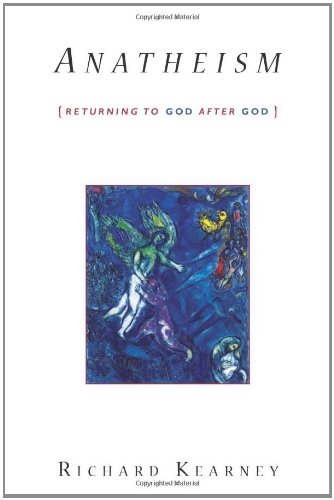
Anatheism: Returning to God After God (Insurrections: Critical...
Authors:
Richard Kearney
Publisher:
Columbia University Press
Publication Date:
Not available
ISBN:
0231147899
Has the passing of the old God paved the way for a new kind of religious project, a more responsible way to seek, sound, and love the things we call... divine? Has the suspension of dogmatic certainties and presumptions opened a space in which we can encounter religious wonder anew? Situated at the split between theism and atheism, we now have the opportunity to respond in deeper, freer ways to things we cannot fathom or prove. Distinguished philosopher Richard Kearney calls this condition ana-theos, or God after God-a moment of creative "not knowing" that signifies a break with former sureties and invites us to forge new meanings from the most ancient of wisdoms. Anatheism refers to an inaugural event that lies at the heart of every great religion, a wager between hospitality and hostility to the stranger, the other—the sense of something "more." By analyzing the roots of our own anatheistic moment, Kearney shows not only how a return to God is possible for those who seek it but also how a more liberating faith can be born. Kearney begins by locating a turn toward sacred secularity in contemporary philosophy, focusing on Maurice Merleau-Ponty and Paul Ricoeur. He then marks "epiphanies" in the modernist masterpieces of James Joyce, Marcel Proust, and Virginia Woolf. Kearney concludes with a discussion of the role of theism and atheism in conflict and peace, confronting the distinction between sacramental and sacrificial belief or the God who gives life and the God who takes it away. Accepting that we can never be sure about God, he argues, is the only way to rediscover a hidden holiness in life and to reclaim an everyday divinity.

A National Crime: The Canadian Government and the Residential...
Authors:
John S. Milloy
Publisher:
University of Manitoba Press
Publication Date:
Not available
ISBN:
0887556469
For over 100 years, thousands of Aboriginal children passed through the Canadian residential school system. Begun in the 1870s, it was intended, in the... words of government officials, to bring these children into the “circle of civilization,” the results, however, were far different. More often, the schools provided an inferior education in an atmosphere of neglect, disease, and often abuse. Using previously unreleased government documents, historian John S. Milloy provides a full picture of the history and reality of the residential school system. He begins by tracing the ideological roots of the system, and follows the paper trail of internal memoranda, reports from field inspectors, and letters of complaint. In the early decades, the system grew without planning or restraint. Despite numerous critical commissions and reports, it persisted into the 1970s, when it transformed itself into a social welfare system without improving conditions for its thousands of wards. A National Crime shows that the residential system was chronically underfunded and often mismanaged, and documents in detail and how this affected the health, education, and well-being of entire generations of Aboriginal children.

A Nation Among Nations: America's Place in World History
Authors:
Thomas Bender
Publisher:
Hill and Wang
Publication Date:
Not available
ISBN:
0809072351
"An original, ambitious, and consistently provocative book that should change the way we study and teach American history." --Eric Foner, Columbia... University In this major book, Thomas Bender recasts the developments central to American history by setting them in a global context, and showing both the importance and ordinariness of America's international entanglements over five centuries.Bender focuses on five major themes, beginning with 1492 and "the age of discovery," when people everywhere first felt the transforming effects of oceanic trade. He asks us to see our Revolution as one of several similar rebellions around the globe, and the Civil War as part of a larger history associating the new meaning of nationhood with freedom. He also examines the American commitment to empire from Jefferson's presidency to our own time, and makes it clear that America's responses to capitalist industrialization and urbanization were part of a worldwide conversation.

A Nation by Design: Immigration Policy in the Fashioning of America
Authors:
Aristide R. Zolberg
Publisher:
Harvard University Press
Publication Date:
Not available
ISBN:
0674030745
According to the national mythology, the United States has long opened its doors to people from across the globe, providing a port in a storm and... opportunity for any who seek it. Yet the history of immigration to the United States is far different. Even before the xenophobic reaction against European and Asian immigrants in the late nineteenth century, social and economic interest groups worked to manipulate immigration policy to serve their needs. In A Nation by Design, Aristide Zolberg explores American immigration policy from the colonial period to the present, discussing how it has been used as a tool of nation building. A Nation by Design argues that the engineering of immigration policy has been prevalent since early American history. However, it has gone largely unnoticed since it took place primarily on the local and state levels, owing to constitutional limits on federal power during the slavery era. Zolberg profiles the vacillating currents of opinion on immigration throughout American history, examining separately the roles played by business interests, labor unions, ethnic lobbies, and nativist ideologues in shaping policy. He then examines how three different types of migration--legal migration, illegal migration to fill low-wage jobs, and asylum-seeking--are shaping contemporary arguments over immigration to the United States. A Nation by Design is a thorough, authoritative account of American immigration history and the political and social factors that brought it about. With rich detail and impeccable scholarship, Zolberg's book shows how America has struggled to shape the immigration process to construct the kind of population it desires.
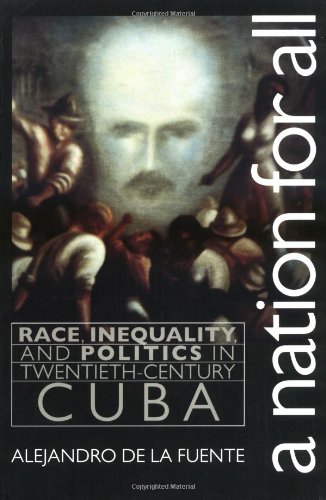
A Nation for All: Race, Inequality, and Politics in...
Authors:
Alejandro de la Fuente
Publisher:
The University of North Carolina Press
Publication Date:
Not available
ISBN:
0807849227
After thirty years of anticolonial struggle against Spain and four years of military occupation by the United States, Cuba formally became an... independent republic in 1902. The nationalist coalition that fought for Cuba's freedom, a movement in which blacks and mulattoes were well represented, had envisioned an egalitarian and inclusive country--a nation for all, as Jos© Mart described it. But did the Cuban republic, and later the Cuban revolution, live up to these expectations? Tracing the formation and reformulation of nationalist ideologies, government policies, and different forms of social and political mobilization in republican and postrevolutionary Cuba, Alejandro de la Fuente explores the opportunities and limitations that Afro-Cubans experienced in such areas as job access, education, and political representation. Challenging assumptions of both underlying racism and racial democracy, he contends that racism and antiracism coexisted within Cuban nationalism and, in turn, Cuban society. This coexistence has persisted to this day, despite significant efforts by the revolutionary government to improve the lot of the poor and build a nation that was truly for all.
 '
'