production
/viewbook/list/all/?page=757
/
/static/
None
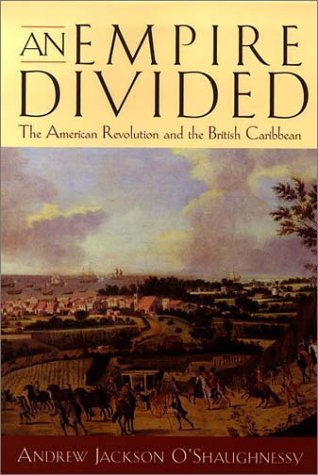
An Empire Divided: The American Revolution and the British...
Authors:
Andrew Jackson O'Shaughnessy
Publisher:
University of Pennsylvania Press
Publication Date:
Not available
ISBN:
0812217322
There were 26—not 13—British colonies in America in 1776. Of these, the six colonies in the Caribbean—Jamaica, Barbados, the Leeward Islands,... Grenada and Tobago, St. Vincent; and Dominica—were among the wealthiest. These island colonies were closely related to the mainland by social ties and tightly connected by trade. In a period when most British colonists in North America lived less than 200 miles inland and the major cities were all situated along the coast, the ocean often acted as a highway between islands and mainland rather than a barrier.The plantation system of the islands was so similar to that of the southern mainland colonies that these regions had more in common with each other, some historians argue, than either had with New England. Political developments in all the colonies moved along parallel tracks, with elected assemblies in the Caribbean, like their mainland counterparts, seeking to increase their authority at the expense of colonial executives. Yet when revolution came, the majority of the white island colonists did not side with their compatriots on the mainland.A major contribution to the history of the American Revolution, An Empire Divided traces a split in the politics of the mainland and island colonies after the Stamp Act Crisis of 1765-66, when the colonists on the islands chose not to emulate the resistance of the patriots on the mainland. Once war came, it was increasingly unpopular in the British Caribbean; nonetheless, the white colonists cooperated with the British in defense of their islands. O'Shaughnessy decisively refutes the widespread belief that there was broad backing among the Caribbean colonists for the American Revolution and deftly reconstructs the history of how the island colonies followed an increasingly divergent course from the former colonies to the north.
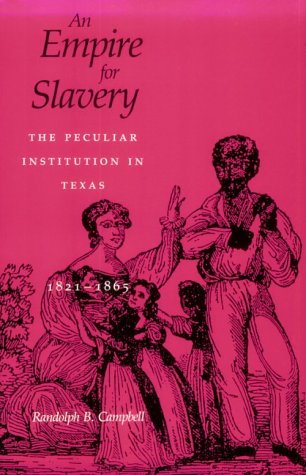
An Empire for Slavery: The Peculiar Institution in Texas, 1821-1865
Authors:
Randolph B. Campbell
Publisher:
Louisiana State University Press
Publication Date:
Not available
ISBN:
0807117234
How well do we know our country? Whom do we include when we use the word "American"? These are not just contemporary issues but recurring and seemingly... permanent questions Americans have asked themselves throughout their history-and questions that were addressed when, in 1935, the Roosevelt administration created the Federal Writers' Project (FWP) under the aegis of the Works Progress Administration. Although the immediate context of the FWP was work relief, national FWP officials developed programs that spoke to much larger and longer-standing debates over the nature of American identity and culture and the very definition of who was an American. Hirsch reviews the founding of the FWP and the significance of its American Guide series, considering the choices made by administrators who wanted to celebrate diversity as a positive aspect of American cultural identity. In his exploration of the FWP's other writings, Hirsch discusses the project's pioneering use of oral history in interviews with ordinary southerners, ex-slaves, ethnic minorities, and industrial workers. He also examines congressional critics of the FWP vision; the occasional opposition of local Federal Writers, especially in the South; and how the FWP's vision changed in response to the challenge of World War II. In the course of this study, Hirsch raises thought-provoking questions about the relationship between diversity and unity, government and culture, and, ultimately, culture and democracy.
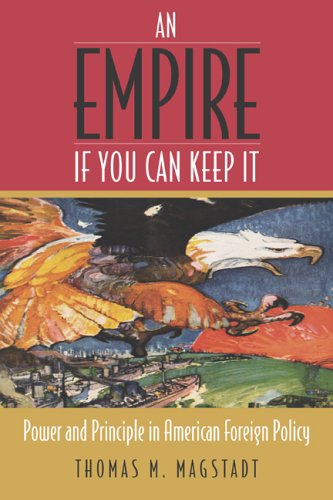
An Empire If You Can Keep It: Power and Principle in American...
Authors:
Thomas Magstadt
Publisher:
CQ Press
Publication Date:
Not available
ISBN:
1568028792
Drawing on the Bush administration's foreign policy maneuvering and the realities of a post-9/11 world, Thomas M. Magstadt goes beyond a mere recitation... of events in U.S. diplomatic history. He instead paints a vivid portrayal of the tension between the pursuit of power and the adherence to principle deeply embedded in the nation's political culture. Magstadt traces the country's move from vulnerable upstart in 1789 to great power by 1898 to unrivaled dominance at the turn of the twenty-first century. The United States started off relatively weak in the international balance of power system, giving rise to isolationism and a rhetorical flourish grounded in moral principles. But now, as the world's only superpower, considerations of security and self-interest compete head-to-head with the moral imperative for global leadership and the promotion of democratic ideals. The dynamics of process also matter in this struggle. This brief text illuminates the complexities of both policy- and decision-making in a way that balances coverage more compactly and more analytically than core texts do, thereby improving readability and student critical thinking. An Empire If You Can Keep It avoids polemics but does not shy away from the controversy raging in intellectual and policy circles over the Bush Doctrine. Magstadt places recent foreign policy developments in the context of America's historic sense of purpose, stressing the search for a new consensus and a new balance between power and principle, between hard and soft power.

An Empire of Indifference: American War and the Financial Logic of...
Authors:
Randy Martin
Publisher:
Duke University Press Books
Publication Date:
Not available
ISBN:
082233996X
In this significant Marxist critique of contemporary American imperialism, the cultural theorist Randy Martin argues that a finance-based logic of risk... control has come to dominate Americans’ everyday lives as well as U.S. foreign and domestic policy. Risk management—the ability to adjust for risk and to leverage it for financial gain—is the key to personal finance as well as the defining element of the massive global market in financial derivatives. The United States wages its amorphous war on terror by leveraging particular interventions (such as Iraq) to much larger ends (winning the war on terror) and by deploying small numbers of troops and targeted weaponry to achieve broad effects. Both in global financial markets and on far-flung battlegrounds, the multiplier effects are difficult to foresee or control.Drawing on theorists including Michel Foucault, Giorgio Agamben, Michael Hardt, Antonio Negri, and Achille Mbembe, Martin illuminates a frightening financial logic that must be understood in order to be countered. Martin maintains that finance divides the world between those able to avail themselves of wealth opportunities through risk taking (investors) and those who cannot do so, who are considered “at risk.” He contends that modern-day American imperialism differs from previous models of imperialism, in which the occupiers engaged with the occupied to “civilize” them, siphon off wealth, or both. American imperialism, by contrast, is an empire of indifference: a massive flight from engagement. The United States urges an embrace of risk and self-management on the occupied and then ignores or dispossesses those who cannot make the grade.
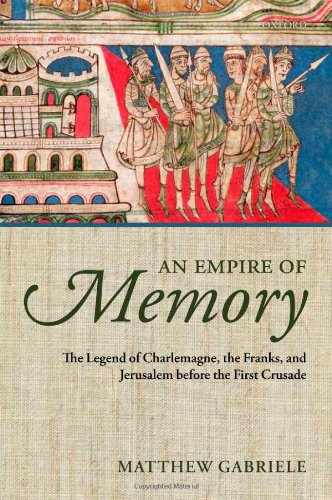
An Empire of Memory: The Legend of Charlemagne, the Franks, and...
Authors:
Matthew Gabriele
Publisher:
Oxford University Press, USA
Publication Date:
Not available
ISBN:
019959144X
Beginning shortly after Charlemagne's death in 814, the inhabitants of his historical empire looked back upon his reign and saw in it an exemplar of... Christian universality - Christendom. They mapped contemporary Christendom onto the past and so, during the ninth, tenth, and eleventh centuries, the borders of his empire grew with each retelling, almost always including the Christian East. Although the pull of Jerusalem on the West seems to have been strong during the eleventh century, it had a more limited effect on the Charlemagne legend. Instead, the legend grew during this period because of a peculiar fusion of ideas, carried forward from the ninth century but filtered through the social, cultural, and intellectual developments of the intervening years. Paradoxically, Charlemagne became less important to the Charlemagne legend. The legend became a story about the Frankish people, who believed they had held God's favour under Charlemagne and held out hope that they could one day reclaim their special place in sacred history. Indeed, popular versions of the Last Emperor legend, which spoke of a great ruler who would reunite Christendom in preparation for the last battle between good and evil, promised just this to the Franks. Ideas of empire, identity, and Christian religious violence were potent reagents. The mixture of these ideas could remind men of their Frankishness and move them, for example, to take up arms, march to the East, and reclaim their place as defenders of the faith during the First Crusade. An Empire of Memory uses the legend of Charlemagne, an often-overlooked current in early medieval thought, to look at how the contours of the relationship between East and West moved across centuries, particularly in the period leading up to the First Crusade.
An Empire of Regions: A Brief History of Colonial British America
Authors:
Eric Nellis
Publisher:
University of Toronto Press, Higher Education Division
Publication Date:
Not available
ISBN:
144260140X
An Empire of Regions is a refreshing interpretation of British American history that demonstrates how the thirteen British mainland colonies grew to... function as self-governing entities in distinct regional clusters. In lucid prose, Eric Nellis invites readers to explore the circumstances leading to the colonies' collective defense of their individual interests, and to reevaluate the founding principles of the United States. There is considerable discussion of social conditions and of the British background to the colonies' development. Extensive treatment of slavery, the slave trade, and native populations is provided, while detailed maps illustrate colony boundaries, settlement growth, and the impact of the Proclamation Line. This absorbing and compelling narrative will captivate both newcomers to and enthusiasts of American history.
An Empire of Their Own: How the Jews Invented Hollywood
Authors:
Neal Gabler
Publisher:
Anchor
Publication Date:
Not available
ISBN:
0385265573
Winner of the Los Angeles Times Book Award for history, this "wonderful history of the golden age of the movie moguls" (Chicago Tribune ) is a... provocative, original, and richly entertaining group biography of the Jewish immigrants who were the moving forces behind the creation of America's motion picture industry.
An Empire on Display: English, Indian, and Australian Exhibitions...
Authors:
Peter H. Hoffenberg
Publisher:
University of California Press
Publication Date:
Not available
ISBN:
0520218914
The grand exhibitions of the Victorian and Edwardian eras are the lens through which Peter Hoffenberg examines the economic, cultural, and social forces... that helped define Britain and the British Empire. He focuses on major exhibitions in England, Australia, and India between the Great Exhibition of 1851 and the Festival of Empire sixty years later, taking special interest in the interactive nature of the exhibition experience, the long-term consequences for the participants and host societies, and the ways in which such popular gatherings revealed dissent as well as celebration.Hoffenberg shows how exhibitions shaped culture and society within and across borders in the transnational working of the British Empire. The exhibitions were central to establishing and developing a participatory imperial world, and each polity in that world provided distinctive information, visitors, and exhibits. Among the displays were commercial goods, working machines, and ethnographic scenes. Exhibits were intended to promote external commonwealth and internal nationalism. The imperial overlay did not erase significant differences but explained and used them in economic and cultural terms.The exhibitions in cities such as London, Sydney, and Calcutta were living and active public inventories of the Empire and its national political communities. The process of building and consuming such inventories persists today in the cultural bureaucracies, museums, and festivals of modern nation-states, the appeal to tradition and social order, and the actions of transnational bodies.

An Empire on Trial: Race, Murder, and Justice under British Rule,...
Authors:
Martin J. Wiener
Publisher:
Cambridge University Press
Publication Date:
Not available
ISBN:
0521735076
An Empire on Trial is the first book to explore the issue of interracial homicide in the British Empire during its height - examining these incidents... and the prosecution of such cases in each of seven colonies scattered throughout the world. It uncovers and analyzes the tensions of empire that underlay British rule and delves into how the problem of maintaining a liberal empire manifested itself in the late nineteenth and early twentieth centuries. The work demonstrates the importance of the processes of criminal justice to the history of the empire and the advantage of a trans-territorial approach to understanding the complexities and nuances of its workings. An Empire on Trial is of interest to those concerned with race, empire, or criminal justice, and to historians of modern Britain or of colonial Australia, India, Kenya, or the Caribbean. Political and postcolonial theorists writing on liberalism and empire, or race and empire, will also find this book invaluable.
An Empire Wilderness: Travels into America's Future
Authors:
Robert D. Kaplan
Publisher:
Vintage
Publication Date:
Not available
ISBN:
0679776877
"Full of surprises and unusual revelations . . . an informed and disturbing portrait of the new American badlands."--Chicago Tribune"[Kaplan is]... tireless, curious, and smart. . . . I cannot imagine anyone will concoct a more convincing scenario for the American future." --Thurston Clarke, The New York TimesWith the same prescience and eye for telling detail that distinguished his bestselling Balkan Ghosts, Robert Kaplan now explores his native country, the United States of America. His starting point: the conviction that America is a country not in decline but in transition, slowly but inexorably shedding its identity as a monolithic nation-state and assuming a radically new one. Everywhere Kaplan travels--from St. Louis, Missouri, to Portland, Oregon, from the forty-ninth parallel to the banks of the Rio Grande--he finds an America ever more fragmented along lines of race, class, education, and geography. An America whose wealthy communities become wealthier and more fortress-like as they become more closely linked to the world's business capitals than to the desolate ghettoes next door. An America where the political boundaries between the states--and between the U.S. and Canada and Mexico--are becoming increasingly blurred, betokening a vast open zone for trade, commerce, and cultural interaction, the nexus of tomorrow's transnational world. Never nostalgic or falsely optimistic, bracingly unafraid of change and its consequences, Kaplan paints a startling portrait of post-Cold War America--a great nation entering the final, most uncertain phase of its history. Here is travel writing with the force of prophecy."Lively . . . Kaplan has a sharp eye for social truth, and his encounters with a chorus of eloquent citizens of the West keeps the narrative humming." --Outside
An Empirical Study of the Social Correlates of Job Satisfaction...
Authors:
Kebba Darboe
Publisher:
University Press Of America
Publication Date:
Not available
ISBN:
0761824863
The main focus of this book is to empirically examine the social correlates of job satisfaction among plant science graduates who work in agriculture.... Victor H. Vroom's (1964) expectancy theory guides the study. The theory views motivation as a complex process involving multiple perceptions because human beings are constantly changing, growing, thereby making it difficult to manage. Employers and managers must recognize these human realities and try to provide their employees with the kind of rewards (intrinsic or extrinsic) that ultimately lead to their satisfaction. Job satisfaction's link to performance, productivity, and personal growth makes it the most studied job attitude in social organizations. Additionally, the study blends theory and application rarely found in other textbooks, which makes An Empirical Study of the Social Correlates of Job Satisfaction among Plant Science Graduates of a Mid-Western University useful to students of Sociology, Social Psychology, Plant Science and Business Management.
An Empowering Approach to Managing Social Service Organizations...
Authors:
Donna Hardina PhD
Publisher:
Springer Publishing Company
Publication Date:
Not available
ISBN:
0826138152
Presenting an empowerment-oriented management approach, this ground-breaking how-to guide covers the most recent innovations and current theories you... need to create a successful social service organization. This all-in-one guide to service organization management best practices will help you gain the skills you need to effectively lead and empower your staff. Expert authors provide a comprehensive approach and tackle every important issue related to this complex management field including: Values and ethics Organizational structure Diverse clientele and access to services Barriers to service delivery Cultural competency Fight for social justice Financial resource management Evaluating program outcomes Control of the external environment A must-have reference, An Empowering Approach to Managing Social Service Organizations will help practicing professionals and students on the cusp of leadership improve service delivery to clients, make improvements in workplace conditions, acquire critical resources and retain the leadership power needed to survive in a turbulent social, political and economic environment.

An Enchanted Modern: Gender and Public Piety in Shi'i Lebanon...
Authors:
Lara Deeb
Publisher:
Princeton University Press
Publication Date:
Not available
ISBN:
0691124213
Based on two years of ethnographic research in the southern suburbs of Beirut, An Enchanted Modern demonstrates that Islam and modernity are not merely... compatible, but actually go hand-in-hand. This eloquent ethnographic portrayal of an Islamic community articulates how an alternative modernity, and specifically an enchanted modernity, may be constructed by Shi'I Muslims who consider themselves simultaneously deeply modern, cosmopolitan, and pious. In this depiction of a Shi'I Muslim community in Beirut, Deeb examines the ways that individual and collective expressions and understandings of piety have been debated, contested, and reformulated. Women take center stage in this process, a result of their visibility both within the community, and in relation to Western ideas that link the status of women to modernity. By emphasizing the ways notions of modernity and piety are lived, debated, and shaped by "everyday Islamists," this book underscores the inseparability of piety and politics in the lives of pious Muslims.
An Enchanting Darkness: The American Vision of Africa in the...
Authors:
Dennis Hickey
Publisher:
Michigan State University Press
Publication Date:
Not available
ISBN:
0870133217
This ambitious and stimulating study, couched in terms accessible to general readers while firmly rooted in scholarship, surveys twentieth-century... American images of and attitudes toward Africa. . . . It is not possible. . . to do justice to the diversity of voices and range of viewpoints considered, simple exposure to which is quite enough to recommend the volume highly.-Jay Spaulding, Kean College The International Journal of African Historical Studies
An End to Poverty?: A Historical Debate
Authors:
Gareth Stedman Jones
Publisher:
Columbia University Press
Publication Date:
Not available
ISBN:
0231137834
In the 1790s, for the first time, reformers proposed bringing poverty to an end. Inspired by scientific progress, the promise of an international... economy, and the revolutions in France and the United States, political thinkers such as Thomas Paine and Antoine-Nicolas Condorcet argued that all citizens could be protected against the hazards of economic insecurity. In An End to Poverty? Gareth Stedman Jones revisits this founding moment in the history of social democracy and examines how it was derailed by conservative as well as leftist thinkers. By tracing the historical evolution of debates concerning poverty, Stedman Jones revives an important, but forgotten strain of progressive thought. He also demonstrates that current discussions about economic issues -- downsizing, globalization, and financial regulation -- were shaped by the ideological conflicts of the late eighteenth and early nineteenth centuries.Paine and Condorcet believed that republicanism combined with universal pensions, grants to support education, and other social programs could alleviate poverty. In tracing the inspiration for their beliefs, Stedman Jones locates an unlikely source-Adam Smith. Paine and Condorcet believed that Smith's vision of a dynamic commercial society laid the groundwork for creating economic security and a more equal society. But these early visions of social democracy were deemed too threatening to a Europe still reeling from the traumatic aftermath of the French Revolution and increasingly anxious about a changing global economy. Paine and Condorcet were demonized by Christian and conservative thinkers such as Burke and Malthus, who used Smith's ideas to support a harsher vision of society based on individualism and laissez-faire economics. Meanwhile, as the nineteenth century wore on, thinkers on the left developed more firmly anticapitalist views and criticized Paine and Condorcet for being too "bourgeois" in their thinking. Stedman Jones however, argues that contemporary social democracy should take up the mantle of these earlier thinkers, and he suggests that the elimination of poverty need not be a utopian dream but may once again be profitably made the subject of practical, political, and social-policy debates.
 '
'