production
/viewbook/list/all/?page=869
/
/static/
None
Anthropology: What Does It Mean to Be Human?
Authors:
Robert H. Lavenda
Publisher:
Oxford University Press, USA
Publication Date:
Not available
ISBN:
0195392876
A unique alternative to more traditional, encyclopedic introductory texts, Anthropology: What Does It Mean to Be Human?, Second Edition, takes a... question-oriented approach that incorporates cutting-edge theory and new ways of looking at important contemporary issues such as power, human rights, and inequality. With a total of fifteen chapters, this engaging, full-color text is an ideal one-semester overview that delves deep into anthropology without overwhelming students. New to this Edition:- New discussions of gender and archaeology, domestication, social organization, nutritional anthropology, and aboriginality, and significantly updated discussions of genetics and race and human origins- Discussion of economic and political relations now appear in separate chapters-"Anthropology in Everyday Life" boxes now appear throughout the book to continually show students the applicability of anthropology -New "In Their Own Words" commentaries throughout -New module on the components of language.-In addition to the running glossary, a glossary now appears at the end of the text-"For Review" sections now appear at the end of each chapter.
Anthropology: What Does It Mean to Be Human?
Authors:
Robert H. Lavenda
Publisher:
Oxford University Press, USA
Publication Date:
Not available
ISBN:
0195189760
A unique alternative to more traditional, encyclopedic introductory texts, Anthropology: What Does It Mean to Be Human? takes a question-oriented... approach that illuminates major concepts for students. Structuring each chapter around an important question, the authors explore what it means to be human, incorporating answers from all four subfields of anthropology--cultural anthropology, biological anthropology, linguistic anthropology, and archaeology--and offering a more balanced perspective than other texts. They address central issues of the discipline, highlighting the controversies and commitments that are shaping contemporary anthropology. FEATURES: * Covers the material in fifteen concise chapters--an ideal text for a one-semester course * Addresses issues of power and inequality in the contemporary world--including racism, ethnic discrimination, nationalism, caste, and class * Incorporates cutting-edge theory and gender and feminist anthropology throughout * Takes an explicitly global approach, discussing ways in which the spread of capitalism has drastically reshaped how people everywhere live their lives * Presents new voices and alternative perspectives from nonanthropologists and indigenous peoples through "In Their Own Words" commentaries * Provides ethnographic summaries--with maps--of each society discussed at length in the text in "EthnoProfile" boxes * Integrates additional helpful pedagogical aids including key terms, a running glossary, chapter summaries, maps, and annotated suggestions for further reading * Supplemented by an Instructor's Manual and Computerized Test Bank Course Management Systems are available from your Oxford representative.

ANTHROPOLOGY (WPU CUSTOM)
Authors:
Not Available
Publisher:
Pearson
Publication Date:
Not available
ISBN:
1256197602

Anti-Abortionist At Large: How To Argue Abortion Intelligently And...
Authors:
Raymond Dennehy
Publisher:
Trafford Publishing
Publication Date:
Not available
ISBN:
1553693809
Anti-Abortionist At Large: How To Argue Abortion Intelligently And Live To Tell About It is my autobiographical account of almost four decades of... publicly speaking against, and debating on, induced abortion before radio and television audiences as well as community groups and on college campuses. Because much of this narrative unfolds in the context of my association with pro-life groups, the book is unavoidably also an anecdotal history of the pro-life movement in America, a movement that parallels in importance the anti-slavery movement of the 19th century. The book is equally a manual for debating against abortion. This, too, was an inevitable consequence of telling his story. My purpose in writing it, in the first place, was to share my experiences of speaking out on what has to be the most controversial topic of the past few decades. I've arranged the chapters the following way: Chapter One, "Nobody's Ever Accused Me of Being Brilliant," offers three vignettes of my entry into the public debate on abortion, the first, a lecture before a class of troubled teenagers, the second, a guest appearance on a popular radio talk show in the San Francisco Bay Area, and the third, a debate on the University of San Francisco campus against a nationally prominent feminist philosopher. It would be a massive understatement to characterize the three events as "a learning experience". Chapter Two, "Fighting Smog With a Crowbar," tells the story of the beginning of the national debate on abortion, as I saw it from my perch in the San Francisco Bay Area. Community groups and high school classes increasingly invited me, then a young assistant professor fresh out of graduate school, to address them on the topic of legalized abortion. As the debate progessed, we formed pro-life groups, like United For Life in San Francisco, to provide a register of scientists, philosophers, and lawyers who would be available to speak in public to counter the arguments pro-abortion groups like NOW and NARAL. The chapter gives an insight into the creation of California's first liberal abortion law, the "Therapeutic Abortion Act," in 1968 and tells of the demoralization the pro-life supporters suffered with the U.S. Supreme Court's Roe v. Wade decision in 1973. Chapter Three, "The Man Who Wouldn't Have An Abortion," discusses my conversations with women who have had abortions and points to the "sexual revolution" as the reason for large number of legal abortions performed yearly in the United States. Chapter Four, "Bad Companions," evaluates the charge that the pro-life movement encourages violence against abortionists and their staff. The chapter leads into the evaluation with a discussion of the "boors and jerks" I"ve met in the pro-life organizations. Also discussed is the selective attitude society displays towards violence when large organizations and prominent figures see no inconsistency in condemning the death penalty or sending our troops to fight in Viet Nam, but, at the same time, turning a blind eye toward the wholesale killing of the unborn. My conclusion is that the violence that pro-lifers commit against pro-abortionists is verifiably miniscule, though unjustifiable. What is not miniscule and is equally unspeakable is the legacy of Roe v. Wade. Chapter Five, "The Hidden Child," starts the "how-to" part of the book. There I present my experiences on the debate podium, mostly before students in a class of 700 at the University of California in Berkley. The directors of the program that sponsors the course have invited me to debate abortion every semester for 15 years now. "The Hidden Child" refers to my persistent experience of debate opponents who dodge questions like, "Is the fetus a human being?" and "Does induced abortion kill a human being?," as if these questions were fatal communicable diseases. I've seen my task in debate as that of staying doggedly on those questions despite all the distractions and dodges that my opponents and members of the audience use. In the course of showing the readers this dodge, I exemplify by actual experiences what I've learned are the do's and don't's of debating a hot-button topic like abortion. These rules-of-the-road extend from avoiding too much logic to attending to the way you dress for the occasion. Chapter Six, "Rescuing the Hidden Child," presents the acutal argument I use in debate against abortion and my responses to objections that are leveled against it. It's an argument that I've sharpened over the past thirty-six years. Rather than trying to prove that the fetus is a human being or person from the moment of conception, I take the weaker position and argue that all the evidence mandates the conclusion that the fetus is probably a human being. Therefore the diliberate killing of unborn implies a willingness to kill an innocent human being. I then proceed to argue that legalized induced abortion violates the right to life and thus strikes at the very heart of the democratic charter. Chapter Seven, "He's Not a Physician?," is a continuation of the claim I make in Chapter Five that pro-abortionists dodge the question of the status of the fetus. The chapter's title comes from the strident response an opponent from Planned Parenthood made about me when I accepted a request from a student in the audience to explain what "parial-birth abortion" is. I unfold the procedure, step by step, to show just how grisly the procedure is, pointing out that the acceptance of induced abortion, even at the early stages of gestation -- especially with such justifications as "Having the baby will ruin the girl's life," implies that it is all right deliberately to kill innocent human beings at any stage of life. Partial-birth abortion may repel the pro-abortionists as it does us. Why then, don't they condemn it? I believe their silence comes from the realization that, since human life is a continuum from conception until death, making abortion illegal during its later stages could lead to making it illegal at its earlier stages. I end the book with Chapter Eight, "The Kiss of the Vampire." Its speculative character sets it apart from the earlier autobiographical chapters. It interprets the abortion culture as a manifestation of the vampire myth: just as the vampire sustains his or her life by draining the victim of life, so one consequence of the abortion culture - fetal tissue tranplants, embryo stem-cells for cloning, etc. - invite the destruction of unborn to improve the health and vitality of adults.
Anti-Bias Education for Young Children and Ourselves
Authors:
Julie Olsen Edwards Louise Derman-Sparks
Publisher:
NAEYC
Publication Date:
Not available
ISBN:
1928896677
The eagerly awaited successor to the influential Anti-Bias Curriculum! Become a skilled anti-bias teacher with this volume's practical guidance to... confronting and eliminating barriers of prejudice, misinformation, and bias about specific aspects of personal and social identity; most importantly, find tips for helping staff and children respect each other, themselves, and all people.
Antibiotic Basics for Clinicians: The ABCs of Choosing the Right...
Authors:
Alan R. Hauser
Publisher:
Lippincott Williams & Wilkins
Publication Date:
Not available
ISBN:
1451112211
Easy-to-apply set of principles for selecting the right antibioticAntibiotic Basics for Clinicians, Second Edition, shows you how to apply your... knowledge of pharmacology and microbiology in order to select the appropriate antibiotic. Rather than rely on rote memorization, you’ll learn the underlying rationale for treatment of common infectious diseases and pathogens. The text focuses on antibacterial agents, examining individual antibiotics and antibiotic classes as well as definitive and empiric therapies—providing a framework for prescription and clinical preparation for students training to be physicians, nurse practitioners, physician assistants, pharmacologists, or medical technologists. Clinicians also rely on Antibiotic Basics for quick reference or review.The Second Edition includes current research and new approaches to emerging resistant organisms such as community-acquired, methicillin-resistant Staphylococcus aureus and Klebsiella pneumoniae carbapenemase-producing bacteria. In addition, the book has been updated to reflect changes in treatment guidelines, including new guidelines for Clostridium difficile colitis and urinary tract infections. Special features help you “think like a clinician”: Illustrations help you understand how antibiotics fight against bacterial infections. Mnemonics throughout the text make it easier to remember which antibiotics are prescribed for specific pathogens. Searchable online version of the text takes you to the content you need from any web-enabled device. Case studies demonstrate how the principles set forth in the text are applied in clinical practice. Questions and answers improve your ability to choose the right antibacterial agent. Appendices include dosing for adults and children, use of antibacterial agents in pregnancy, and treatment of bioterrorism agents.
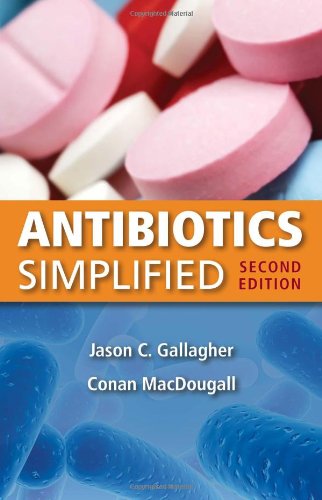
Antibiotics Simplified, Second Edition
Authors:
Jason C. Gallagher
Publisher:
Jones & Bartlett Learning
Publication Date:
Not available
ISBN:
1449614590
Antibiotics Simplified, Second Edition is a succinct guide designed to bridge knowledge gained in basic sciences courses with clinical practice in... infectious diseases. This practical text reviews basic microbiology and how to approach the pharmacotherapy of a patient with a presumed infection. It also contains concise Drug Class Reviews with an explanation of the characteristics of various classes of antibacterial drugs and antifungal drugs. New to the Second Edition Expanded coverage of drug classes; Antiviral agents (antiretrovirals for HIV, anti-mycobacterial, and anti-parasitic agents); New appendix including empiric regimens for common infections; 17 new chapters in total. Each Drug Class Review Includes: Agents Belonging to Each Class; Drugs Used Most Commonly in Practice; Spectrum of Activity; Adverse Effects; Dosing Issues; Important Points; Useful Indications. Antibiotics Simplified, Second Edition simplifies learning infectious disease pharmacotherapy and condenses the many facts that are taught about antibiotics into one quick reference guide. This guide will help students learn the characteristics of antibiotics and why an antibiotic is useful for an indication. With an understanding of the characteristics of the antibiotics, students will be able to make a logical choice to treat an infection more easily. With helpful figures and flow charts, Drug Class Reviews, a Spectra of Activity chart, and an index for reference, this is an ideal handbook for students as well as practicing pharmacists, physicians, and other clinicians!
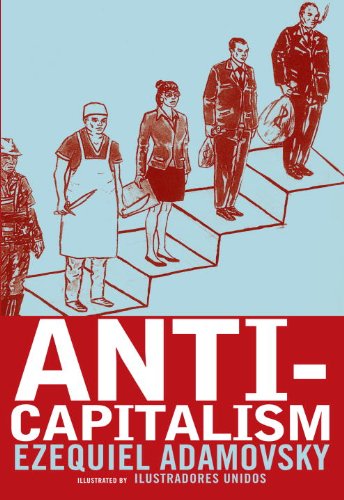
Anti-Capitalism
Authors:
Ezequiel Adamovsky
Publisher:
Seven Stories Press
Publication Date:
Not available
ISBN:
1609800877
In Anti-Capitalism, activist and scholar Ezequiel Adamovsky tells the story of the long-standing effort to build a better world, one without an abusive... system at its heart. Backed up by arresting, lucid images from the radical artist group United Illustrators, Adamovsky details the struggle against rising corporate power, as that struggle unfolds in the halls of academia, in the pages of radical newspapers, and in the jungles and the streets. From Marx through the Battle of Seattle and beyond, Adamovsky traces the beliefs and politics of the major figures in the anticapitalist tradition and explores modern experiments in building different ways of living, in the process providing an indispensible primer for anyone interested in finding alternatives to the so-called "best system we have"—and anyone interested in joining the fight.

Anticapitalism: A Beginner's Guide (Beginner's Guides)
Authors:
Simon Tormey
Publisher:
Oneworld
Publication Date:
Not available
ISBN:
1851683429
Simon Tormey's accessible guide looks at anticapitalism from all angles. He also looks closely at how the movement actually works and its reliance on... high technology to thwart the workings of organizations such as the International Monetary Fund and the World Bank--providing the reader with a one-stop to understanding this truly global phenomenon.
Anticipating Surprise: Analysis for Strategic Warning
Authors:
Cynthia M. Grabo
Publisher:
Not available
Publication Date:
Not available
ISBN:
0761829520
Anticipating Surprise, originally written as a manual for training intelligence analysts during the Cold War, has been declassified and condensed to... provide wider audiences with an inside look at intelligence gathering and analysis for strategic warning. Cynthia Grabo defines the essential steps in the warning process, examines distinctive ingredients of the analytic method of intelligence gathering, and discusses the guidelines for assessing the meaning of gathered information. Since the September 11, 2001 terrorist attacks on America, intelligence collection and analysis has been hotly debated. In this book, Grabo suggests ways of improving warning assessments that better convey warnings to policymakers and military commanders who are responsible for taking appropriate action to avert disaster.
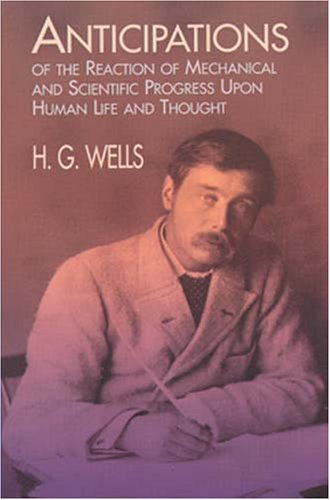
Anticipations of the Reaction of Mechanical and Scientific...
Authors:
H. G. Wells
Publisher:
Dover Publications
Publication Date:
Not available
ISBN:
0486406733
In 1901, the great writer and social critic attempted to predict the future in this book, a fascinating mix of accurate forecasts — development of... cars, buses and trucks, use of flying machines in combat, decline of permanent marriage — and wild misses, including the prediction that submarines will suffocate their crews and founder at sea.
Anticlaudianus The Good and Perfect Man
Authors:
Allan of Lille
Publisher:
Pontifical Institute of Mediaeval Studies
Publication Date:
Not available
ISBN:
0888442637
What does it mean to be human and to be made in the image of God? What does it mean to be a 'person'? What constitutes a human person? What does it mean... to affirm that humans are free beings? And, what is gender? Marc Cortez guides the reader through the most challenging issues that face anyone attempting to deal with the subject of theological anthropology. Consequently, it addresses complexities surrounding such questions as: Each chapter explains first both why the question under consideration is important for theological anthropology and why it is also a contentious issue within the field. After this, each chapter surveys and concisely explains the main options that have been generated for resolving that particular question. Finally the author presents to the reader one way of working through the complexity. These closing sections are presented as case studies in how to work through the problems and arrive at a conclusion than as definitive answers. Nonetheless, they offer a convincing way of answering the questions raised by each chapter.

Anticoagulation Therapy: A Point-of-care Guide (Point-of-Care Guide...
Authors:
Not Available
Publisher:
American Society for Health-System Pharmacist
Publication Date:
Not available
ISBN:
1585282405
In the setting where anticoagulation therapy is necessary, clinicians are faced with the challenge of utilizing agents that inherently have a small... therapeutic window and the ability for medication mishaps when not used appropriately. This risk is balanced against the need to prevent against or treat thrombosis, which can also have life altering consequences. This is an excellent resource for any pharmacist who wants to build expertise in caring for inpatients on anticoagulants. It also serves as a resource for a pharmacist who is tasked with teaching other pharmacists the clinical knowledge they need to manage patients on anticoagulants.
Anticommunism and the African American Freedom Movement: "Another...
Authors:
Not Available
Publisher:
Palgrave Macmillan
Publication Date:
Not available
ISBN:
0230113745
The original essays in this book highlight the destructive impact of McCarthyism on the African American Freedom Movement. Recovering little-known... stories of black radical activism, they challenge the idea that the Cold War was, on balance, beneficial to the movement. The book emphasizes what was lost when anticommunism forced the movement to submerge broader issues of economic justice, labor rights, feminism, and peace. The authors illustrate the often neglected or understated human costs of the Red Scare, focusing on local and individual stories that offer insight into larger national and international trends.

Anti-Foreignism and Western Learning in Early Modern Japan: The New...
Authors:
Bob Wakabayashi
Publisher:
Harvard University Asia Center
Publication Date:
Not available
ISBN:
0674040376
This study analyzes New Theses (Shinron), by Aizawa Seishisai (1781—1863), and its contribution to Japanese political thought and policy during the... early–modern era. New Theses is found to be indispensable to our understanding of Japan's transformation from a feudal to a modern state. Focusing on Aizawa, Wakabayashi traces the development of xenophobia during the Tokugawa period and examines the basis of anti–Western sentiment. He shows how knowledge of Christianity inspired Aizawa to develop the potent concept of kokutai (“what is essential to a nation”). His analysis explains why the Edobakufu's policies of national isolation (sakoku) and armed expulsion of Westerners (jõi) gained widespread support in the late Tokugawa. Wakabayashi also describes how information on Western affairs and world conditions decisively altered Tokugawa Confucian conceptions of civilization and barbarism, and how this in turn enabled the Japanese to redefine their nation's relationship to China and the West. Rather than place Aizawa and his New Theses of 1825 at the beginning of a process leading up to the Meiji Restoration, Wakabayashi discusses New Theses in conjunction with the bakufu's Expulsion Edict issued in the same year. He concludes that the convergence of the two events in 1825 marks the emergence of modern nationalism in Japan, and therefore should perhaps be seen as more epoch–making than the 1868 Restoration itself. The study also presents a complete translation of New Theses.
 '
'