production
/viewbook/list/all/?page=895
/
/static/
None

A Pilgrim in a Pilgrim Church: Memoirs of a Catholic Archbishop
Authors:
O.S.B., Rembert G. Weakland
Publisher:
Wm. B. Eerdmans Publishing Co.
Publication Date:
Not available
ISBN:
0802863825
For many people, the name of Archbishop Rembert Weakland brings to mind only connotations of scandal — the titillating tale of a prominent priest... disgraced. But that whiff of dishonor barely begins to tell the whole story. / In these pages Archbishop Weakland recounts his life from his childhood in rural Pennsylvania to his retirement from the archbishopric in 2002 at the age of 75, all in the context of the Church that he long served. Weakland takes readers with him to Rome, where he discovered the splendor of a whole new intellectual world, and then to New York for his extensive musical study at Julliard and Columbia University. From his early days in the priesthood to his struggles with pontiffs, Weakland details how he learned to become a leader and minister to his people and how his famously liberal beliefs affected his ministry. While he presents an honest account of the scandal he is so often recognized for, the complete picture beyond rumor and accusation may come as a surprise to many readers. / Throughout his memoir Weakland describes with poignant honesty his psychological, spiritual, and sexual growth. Candid and engaging, A Pilgrim in a Pilgrim Church offers a fascinating inside look at both Pope Paul VI and Pope John Paul II even as it tells the story of a life fully lived.
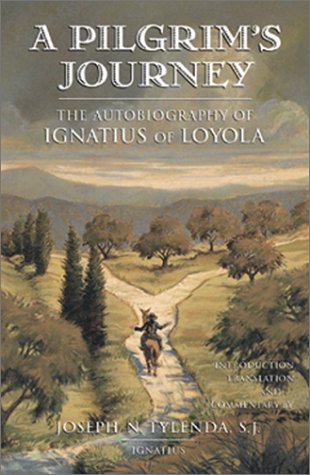
A Pilgrim's Journey: The Autobiography of St. Ignatius of Loyola
Authors:
Ignatius of Loyola (Saint)
Publisher:
Ignatius Press
Publication Date:
Not available
ISBN:
0898708109
Saint Ignatius of Loyola was a man who saw above and beyond his century, a man of vision and calm hope, who could step comfortably into our era and the... Church of our time and show us how to draw closer to Christ. Ignatius' autobiography spans eighteen very important years of this saint's 65-year life...from his wounding at Pamplona (1521) through his conversion, his university studies and his journey to Rome in order to place his followers and himself at the disposal of the Pope. These critical years reveal the incredible transformation and spiritual growth in the soul of a great saint and the events that helped to bring about that change in his life. This classic work merits a long life. Apart from providing a splendid translation of the saint's original text, Father Tylenda has included an informative commentary which enables the modern reader to grasp various allusions in the text-and to gain a better view of a saintly man baring his soul.
A Pima Past
Authors:
Anna Moore Shaw
Publisher:
University of Arizona Press
Publication Date:
Not available
ISBN:
0816504261
"In simple, unaffected prose, Mrs. Shaw constructs a moving saga of Native Americans caught between their tribal past and a Europeanized present. . . .... Some of the most interesting passages deal with the wrenching realities of Indian life on the reservation in the years around the turn of the century, when the Indian male as a warrior found himself bereft of his very reason for being and forced to endeavor to become a farmer." —Journal of Arizona History "A most interesting book. . . . Her account of how the Pima Indians lived, their family structure, how they reared their children, courtship and marriage, how they treated their elders, their religious practices before the coming of a Christian missionary in 1870, and their accommodation with death are related in language that can be easily understood by the layman and, yet, provide information which can be used by the sociologist and anthropologist." —Journal of the West "The current trend in books written by American Indians is to idealize the Indian past while condemning white culture. This volume is a notable exception because its author is old enough to remember the past and because she has been successful in adapting those elements of white culture which she found useful without sacrificing this essential heritage. . . . The style is simple and straightforward, that of a good storyteller which reaches all adult levels." —Choice "Simple and charming reminiscences of the old Pima ways at the turn of the century when they still prevailed and of the changes which recent decades have brought about in the lives of the desert people." —Books of the Southwest "Throughout her account a special kind of humor, sensitivity and pride is revealed when discussing her peoples and her own personal experiences." —The Masterkey
A Pima Remembers
Authors:
George Webb
Publisher:
University of Arizona Press
Publication Date:
Not available
ISBN:
0816507864
"A flavorsome re-creation of things past in the life of a generous, friendly people." —New York Times Book Review "George Webb's gentle... recollections of his childhood and Pima Indian lifeways will doubtless endure forever. This deeply moving autobiography is the perfect introduction for younger Pimas to their culture and history." —Arizona Highways

A Pirate of Exquisite Mind: The Life of William Dampier: Explorer,...
Authors:
Diana Preston
Publisher:
Berkley Trade
Publication Date:
Not available
ISBN:
042520037X
The pirate genius who inspired Darwin, Defoe, and Cook. Seventeenth-century pirate genius William Dampier sailed around the world three times when... crossing the Pacific was a major feat, was the first explorer to visit all five continents, and reached Australia eighty years before Captain Cook. His exploits created a sensation in Europe. Swift and Defoe used his experiences in writing Gulliver's Travels and Robinson Crusoe. Darwin incorporated his concept of "sub-species" into the theory of evolution. Dampier's description of breadfruit was the impetus for Captain Bligh's voyage on the Bounty. He was so influential that today he has more than one thousand entries in the Oxford English Dictionary, including such words as chopsticks, barbecue, and kumquat. Anthropologists still use his work.

A&P LAB MAN W/ WILEY PLUS ACCESS(CUSTOM
Authors:
Not Available
Publisher:
Not available
Publication Date:
Not available
ISBN:
Not available
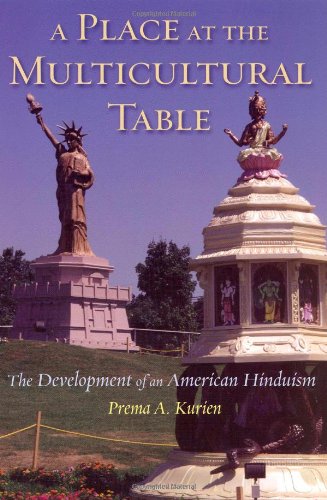
A Place at the Multicultural Table: The Development of an American...
Authors:
Prema A. Kurien
Publisher:
Rutgers University Press
Publication Date:
Not available
ISBN:
0813540569
Multiculturalism in the United States is commonly lauded as a positive social ideal celebrating the diversity of our nation. But, in reality,... immigrants often feel pressured to create a singular formulation of their identity that does not reflect the diversity of cultures that exist in their homeland. Hindu Americans have faced this challenge over the last fifteen years, as the number of Indians that have immigrated to this country has more than doubled. In A Place at the Multicultural Table, Prema A. Kurien shows how various Hindu American organizations--religious, cultural, and political--are attempting to answer the puzzling questions of identity outside their homeland. Drawing on the experiences of both immigrant and American-born Hindu Americans, Kurien demonstrates how religious ideas and practices are being imported, exported, and reshaped in the process. The result of this transnational movement is an American Hinduism--an organized, politicized, and standardized version of that which is found in India. This first in-depth look at Hinduism in the United States and the Hindu Indian American community helps readers to understand the private devotions, practices, and beliefs of Hindu Indian Americans as well as their political mobilization and activism. It explains the differences between immigrant and American-born Hindu Americans, how both understand their religion and their identity, and it emphasizes the importance of the social and cultural context of the United States in influencing the development of an American Hinduism.
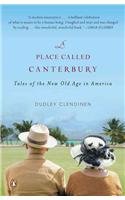
A Place Called Canterbury: Tales of the New Old Age in America
Authors:
Dudley Clendinen
Publisher:
Penguin Group
Publication Date:
Not available
ISBN:
0143115308
An "affectionate, touchingly empathetic" (Janet Maslin, The New York Times) look at old age in America today Welcome to Canterbury Tower , an apartment... building in Florida, where the residents are busy with friendships, love, sex, money, and gossip-and the average age is eightysix. Journalist Dudley Clendinen's mother moved to Canterbury in 1994, planning-like most the inhabitants-to spend her final years there. But life was not over yet for the feisty southern matron. There, she and her eccentric new friends lived out a soap opera of dignity, nerve, and humor otherwise known as the New Old Age. A Place Called Canterbury is both a journalist's account of the last years of the Greatest Generation and a son's rueful memoir of his mother. Entertaining and unsparing, it is essential reading for anyone with aging parents, and those wondering what their own old age might look like.
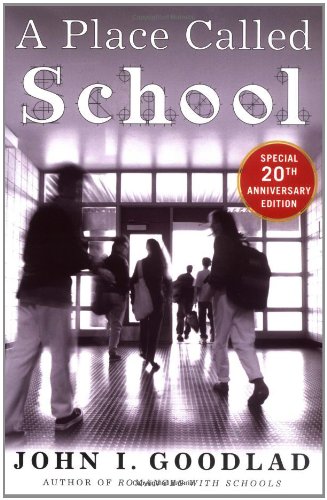
A Place Called School : Twentieth Anniversary Edition
Authors:
John Goodlad
Publisher:
McGraw-Hill
Publication Date:
Not available
ISBN:
0071435905
First published 20 years ago, A Place Called School is the revolutionary account of the largest on-scene study of U.S. schools ever conducted. Carried... on over four years, trained investigators entered more than 1,000 classrooms nationwide to talk to teachers, students, administrators, parents, and other community members. The result is this report. Written by one of the nation's most astute and experienced educators, Goodlad's message of optimism and his agenda for improvement have only grown in importance since the book's original publication.
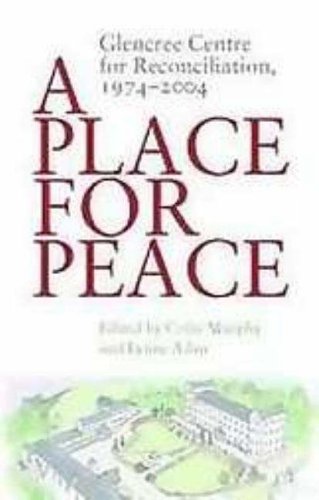
A Place for Peace: Glencree Centre for Reconciliation, 1974-2004
Authors:
Colin Murphy
Publisher:
Liffey Pr
Publication Date:
Not available
ISBN:
1904148565
Features over 70 contributors - including politicians from Ireland, Northern Ireland and the UK, ex-paramilitaries, victims of ""the troubles, "" church... leaders, Glencree staff, and volunteers and others - who describe the remarkable impact the Glencree Centre for Reconciliation has had on them personally and on the peace process in Northern Ireland more generally. Glencree defines its mission as being to ""Provide services and facilities which are expressly devoted to the building of peace and reconciliation within and between communities throughout Ireland, Britain and beyond."" It does this through political dialogue workshops, Victims/Survivors Programme (L.I.V.E.), Ex-Combatants Programme, Alternative Dispute Resolution, Schools and Youth Programmes, Conflict Studies Programmes, Summer Schools, and workshops.

A Place for Wonder: Reading and Writing Nonfiction in the Primary...
Authors:
Georgia Heard
Publisher:
Stenhouse Publishers
Publication Date:
Not available
ISBN:
1571104321
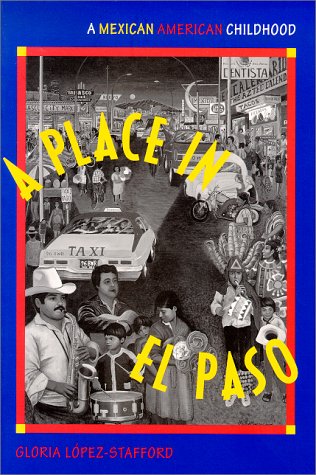
A Place in El Paso: A Mexican-American Childhood
Authors:
Gloria López-Stafford
Publisher:
University of New Mexico Press
Publication Date:
Not available
ISBN:
082631709X
This memoir of growing up in El Paso in the 1940s and 1950s creates an entire city: the way a barrio awakens in the early morning sun, the thrill of a... rare desert snow, the taste of fruit-flavored raspadas on summer afternoons, the "money boys" who beg from commuters passing back and forth to Juárez, and the mischief of children entertaining themselves in the streets. López-Stafford shows readers El Paso through the eyes of Yoya--short for Gloria--the high-spirited narrator, who is five years old when the book begins.Yoya is a survivor. Her young mother has died, leaving her in the care of her much older father, who tries to provide for his family by selling used clothing. Her brother Carlos, Padre Luna, and a community of children and women assume responsibility for Yoya, but like the inexplicable loss of her mother, unexpected changes separate her from her beloved barrio. The search for su lugar, her place, becomes a search for identity as Gloria seeks to understand her various homes and families.
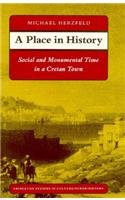
A Place in History
Authors:
Michael Herzfeld
Publisher:
Princeton University Press
Publication Date:
Not available
ISBN:
0691028559
Michael Herzfeld describes what happens when a bureaucracy charged with historic conservation clashes with a local populace hostile to the state and... suspicious of tourism. Focusing on the Cretan town of Rethemnos, once a center of learning under Venetian rule and later inhabited by the Turks, he examines major questions confronting conservators and citizens as they negotiate the "ownership" of history: Who defines the past? To whom does the past belong? What is "traditional" and how is this determined? Exploring the meanings of the built environment for Rethemnos's inhabitants, Herzfeld finds that their interest in it has more to do with personal histories and the immediate social context than with the formal history that attracts the conservators. He also investigates the inhabitants' social practices from the standpoints of household and kin group, political association, neighborhood, gender ideology, and the effects of these on attitudes toward home ownership. In the face of modernity, where tradition is an object of both reverence and commercialism, Rethemnos emerges as an important ethnographic window onto the ambiguous cultural fortunes of Greece.

A Place in Politics: São Paulo, Brazil, from Seigneurial...
Authors:
James Woodard
Publisher:
Duke University Press Books
Publication Date:
Not available
ISBN:
0822343290
A Place in Politics is a thorough reinterpretation of the politics and political culture of the Brazilian state of São Paulo between the 1890s and the... 1930s. The world’s foremost coffee-producing region from the outset of this period and home to more than six million people by 1930, São Paulo was an economic and demographic giant. In an era marked by political conflict and dramatic social and cultural change in Brazil, nowhere were the conflicts as intense or changes more dramatic than in São Paulo. The southeastern state was the site of the country’s most important political developments, from the contested presidential campaign of 1909–10 to the massive military revolt of 1924. Drawing on a wide array of source materials, James P. Woodard analyzes these events and the republican political culture that informed them.Woodard’s fine-grained political history proceeds chronologically from the final years of the nineteenth century, when São Paulo’s leaders enjoyed political preeminence within the federal system codified by the Constitution of 1891, through the mass mobilization of 1931–32, in which São Paulo’s people marched, rioted, and eventually took up arms against the national government in what was to be Brazil’s last great regionalist revolt. In taking to the streets in the name of their state, constitutionalism, and the “civilization” that they identified with both, the people of São Paulo were at once expressing their allegiance to elements of a regionally distinct political culture and converging on a broader, more participatory public sphere that had arisen amid the political conflicts of the preceding decades.
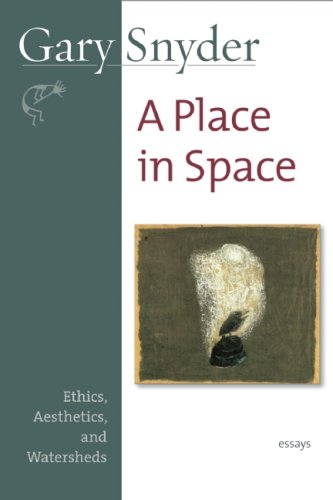
A Place in Space: Ethics, Aesthetics, and Watersheds
Authors:
Gary Snyder
Publisher:
Counterpoint
Publication Date:
Not available
ISBN:
1582434123
In this classic collection of 29 pieces that span half a century, Gary Snyder explores humans’ complex, ever-evolving attitudes toward the... environment. He argues that nature is not separate from humanity, but intrinsic to it, and that since societies are natural constructs, it’s imperative to go beyond racial, ethnic, and religious identities to find a shared concern for acts that benefit humans and nonhumans alike. Included in the collection is his 1971 environmental manifesto Four Changes,” which, as he writes in a postscript, is unfortunately truer than ever. In this new edition, Snyder sends out a call-to-action that challenges all beings to take moral responsibility, a call that resounds with readers discovering the book for the first time or those returning to an old favorite.
 '
'