production
/viewbook/list/all/?page=909
/
/static/
None

A Postmodern Psychology of Asian Americans: Creating Knowledge of a...
Authors:
Laura Uba
Publisher:
State University of New York Press
Publication Date:
Not available
ISBN:
0791452964
A Postmodern Reader
Authors:
Not Available
Publisher:
State University of New York Press
Publication Date:
Not available
ISBN:
0791416380
Apostolic Fathers in English, The
Authors:
Not Available
Publisher:
Baker Academic
Publication Date:
Not available
ISBN:
0801031087
The Apostolic Fathers is an important collection of writings revered by early Christians but not included in the final canon of the New Testament. Here... a leading expert on these texts offers an authoritative contemporary translation, in the tradition of the magisterial Lightfoot version but thoroughly up-to-date. The third edition features numerous changes, including carefully revised translations and a new, more user-friendly design. The introduction, notes, and bibliographies have been freshly revised as well.
Apostolic Fathers: Volume II. Epistle of Barnabas. Papias and...
Authors:
Not Available
Publisher:
Loeb Classical Library
Publication Date:
Not available
ISBN:
0674996089
The writings of the Apostolic Fathers give a rich and diverse picture of Christian life and thought in the period immediately after New Testament... times. Some of them were accorded almost Scriptural authority in the early Church. This new Loeb edition of these essential texts reflects current idiom and the latest scholarship. Here are the Letters of Ignatius, bishop of Antioch, among the most famous documents of early Christianity; these letters, addressing core theological questions, were written to a half dozen different congregations while Ignatius was en route to Rome as a prisoner, condemned to die in the wild-beast arena. Also in this collection is a letter to the Philippian church by Polycarp, bishop of Smyrna and friend of Ignatius, as well as an account of Polycarp's martyrdom. There are several kinds of texts in the Apostolic Fathers collection, representing different religious outlooks. The manual called the Didache sets forth precepts for religious instruction, worship, and ministry. The Epistle of Barnabas searches the Old Testament, the Jewish Bible, for testimony in support of Christianity and against Judaism. Probably the most widely read in the early Christian centuries was The Shepherd of Hermas, a book of revelations that develops a doctrine of repentance.

apostrophe/parenthesis: Journal of Experimental Fiction 33
Authors:
Frederick Mark Kramer
Publisher:
JEF Books
Publication Date:
Not available
ISBN:
1884097022
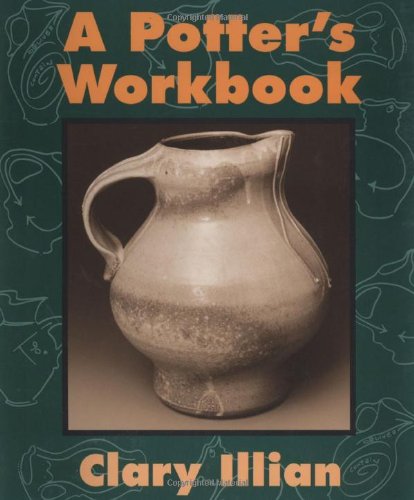
A Potter's Workbook
Authors:
Clary Illian
Publisher:
University Of Iowa Press
Publication Date:
Not available
ISBN:
0877456712
In A Potter's Workbook, renowned studio potter and teacher Clary Illian presents a textbook for the hand and the mind. Her aim is to provide a way to... see, to make, and to think about the forms of wheel-thrown vessels; her information and inspiration explain both the mechanics of throwing and finishing pots made simply on the wheel and the principles of truth and beauty arising from that traditional method.Each chapter begins with a series of exercises that introduce the principles of good form and good forming for pitchers, bowls, cylinders, lids, handles, and every other conceivable functional shape. Focusing on utilitarian pottery created on the wheel, Illian explores sound, lively, and economically produced pottery forms that combine an invitation to mindful appreciation with ease of use. Charles Metzger's striking photographs, taken under ideal studio conditions, perfectly complement her vigorous text.

A&P OUTLINES & WILEYPLUS ACCESS
Authors:
Not Available
Publisher:
Not available
Publication Date:
Not available
ISBN:
Not available
A Poverty of Rights: Citizenship and Inequality in...
Authors:
Brodwyn Fischer
Publisher:
Stanford University Press
Publication Date:
Not available
ISBN:
0804776601
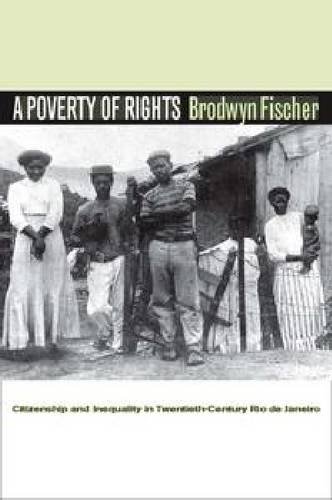
A Poverty of Rights is an investigation of the knotty ties between citizenship and inequality during the years when the legal and institutional bases... for modern Brazilian citizenship originated. Between 1930 and 1964, Brazilian law dramatically extended its range and power, and citizenship began to signify real political, economic, and civil rights for common people. And yet, even in Rio de Janeiro—Brazil's national capital until 1960—this process did not include everyone. Rio's poorest residents sought with hope, imagination, and will to claim myriad forms of citizenship as their own. Yet, blocked by bureaucratic obstacles or ignored by unrealistic laws, they found that their poverty remained one of rights as well as resources. At the end of a period most notable for citizenship's expansion, Rio's poor still found themselves akin to illegal immigrants in their own land, negotiating important components of their lives outside of the boundaries and protections of laws and rights, their vulnerability increasingly critical to important networks of profit and political power. In exploring this process, Brodwyn Fischer offers a critical re-interpretation not only of Brazil's Vargas regime, but also of Rio's twentieth-century urban history and of the broader significance of law, rights, and informality in the lives of the very poor.
A Power Governments Cannot Suppress
Authors:
Howard Zinn
Publisher:
City Lights Publishers
Publication Date:
Not available
ISBN:
0872864758
"Thank you, Howard Zinn. Thank you for telling us what none of our leaders are willing to: The truth. And you tell it with such brilliance, such... humanity. It is a personal honor to be able to say I am a better citizen because of you." -- Michael Moore, director of the film Fahrenheit 9/11, and author of the New York Times bestseller, Stupid White Men ...and Other Sorry Excuses for the State of the Nation!"This strong, incisive book by Howard Zinn provides us with a penetrating critique of current U.S. policies and embraces the sweep of history. Zinn's inspired voice sets him apart … which is why so many of us look to Howard as a modern-day Thoreau. As always with Zinn's work, A Power Governments Cannot Suppress leaves us with the faith that citizens have what it takes to confront power and to reverse the dangerous and unjust acts of our government." -- Jonathan Kozol, author of The Shame of The Nation: The Restoration of Apartheid Schooling in America"Find here the voice of the well-educated and honorable and capable and human United States of America, which might have existed if only absolute power had not corrupted its third-rate leaders so absolutely." -- Kurt Vonnegut, author of A Man Without a Country"Howard Zinn is a unique voice of sanity, clarity and wisdom who reads history not only to understand the present but to shape the future. …Profoundly insightful… A Power Governments Cannot Suppress should be read by every American, over and over again."-- Michael Lerner, editor of Tikkun Magazine, author of The Left Hand of God: Taking Back our Country from the Religious Right“This brilliant new book—like Howard Zinn’s presence, and his whole life, is the best possible antidote to political despair. Read it, and rejoin the struggle for a human world and a foreign policy that’s good for children.” —Daniel Ellsberg released the Pentagon Papers in 1971 and is author of Secrets: A Memoir of Vietnam and the Pentagon PapersA Power Governments Cannot Suppress, is a major new collection of essays on American history, class, immigration, justice, and ordinary citizens who have made a difference. Zinn addresses America's current political/ethical crisis using lessons learned from our nation’s history. Zinn brings a profoundly human, yet uniquely American perspective to each subject he writes about, whether it’s the abolition of war, terrorism, the Founding Fathers, the Holocaust, defending the rights of immigrants, or personal liberties. Written in an accessible, personal tone, Zinn approaches the telling of U.S. history from an active, engaged point of view. "America's future is linked to how we understand our past,” writes Zinn; "For this reason, writing about history, for me, is never a neutral act."Zinn frames the book with an opening essay titled "If History is to be Creative," a reflection on the role and responsibility of the historian. "To think that history-writing must aim simply to recapitulate the failures that dominate the past," writes Zinn, "is to make historians collaborators in an endless cycle of defeat." "If history is to be creative, to anticipate a possible future without denying the past, it should, I believe, emphasize new possibilities by disclosing those hidden episodes of the past when, even if in brief flashes, people showed their ability to resist, to join together, and occasionally win. I am supposing, or perhaps only hoping, that our future may be found in the past’s fugitive moments of compassion rather than in its solid centuries of warfare."Buzzing with stories and ideas, Zinn draws upon fascinating, little-known historical anecdotes spanning from the Declaration of Independence to the USA PATRIOT Act to comment on the most controversial issues facing us today: government dishonesty, how to respond to terrorism, the wars in Iraq and Afghanistan, the loss of our liberties, immigration, and the responsibility of the citizen to confront power for the common good.Considered a "modern-day Thoreau" by Jonathon Kozol, Zinn's inspired writings address the reader as an active participant in history making. "We live in a beautiful country,” writes Zinn, in the book’s opening chapter. “But people who have no respect for human life, freedom, or justice have taken it over. It is now up to all of us to take it back."Featuring essays penned over an eight-year period, A Power Governments Cannot Suppress is Howard Zinn’s first writerly work in several years, an invaluable post-9/11-era addition to the themes that run through his bestselling classic, A People’s History Of the United States.Howard Zinn is a veteran of World War II and author of many books and plays, including the million-selling classic, A People’s History of the United States. For more information about Howard and his speaking schedule see www.citylights.com
Appalachia
Authors:
Charles Wright
Publisher:
Farrar, Straus and Giroux
Publication Date:
Not available
ISBN:
0374526249
Almost thirty years ago, Charles Wright (who teaches at the University of Virginia in Charlottesville and has won both the Pulitzer Prize and the... National Book Award for Poetry) began a poetic project of astonishing scope--a series of three trilogies. The first trilogy was collected in Country Music, the second in The World of the Ten Thousand Things, and the third began with Chickamauga and continued with Black Zodiac. Appalachia is the last book in the final trilogy of this pathbreaking and majestic series.If Country Music traced "Wright's journey from the soil to the stars" and The World of the Ten Thousand Things "lovingly detailed" our world and made "a visionary map of the world beyond" (James Longenbach, The Nation), this final book in Wright's great work reveals a master's confrontation with his own mortality and his stunning ability to discover transcendence in the most beautifully ordinary of landscapes.
Appalachia: A History
Authors:
John Alexander Williams
Publisher:
The University of North Carolina Press
Publication Date:
Not available
ISBN:
0807853682
Interweaving social, political, environmental, economic, and popular history, John Alexander Williams chronicles four and a half centuries of the... Appalachian past. Along the way, he explores Appalachia's long-contested boundaries and the numerous, often contradictory images that have shaped perceptions of the region as both the essence of America and a place apart. Williams begins his story in the colonial era and describes the half-century of bloody warfare as migrants from Europe and their American-born offspring fought and eventually displaced Appalachia's Native American inhabitants. He depicts the evolution of a backwoods farm-and-forest society, its divided and unhappy fate during the Civil War, and the emergence of a new industrial order as railroads, towns, and extractive industries penetrated deeper and deeper into the mountains. Finally, he considers Appalachia's fate in the twentieth century, when it became the first American region to suffer widespread deindustrialization, and examines the partial renewal created by federal intervention and a small but significant wave of in-migration. Throughout the book, a wide range of Appalachian voices enlivens the analysis and reminds us of the importance of storytelling in the ways the people of Appalachia define themselves and their region.
Appalachia Inside Out
Authors:
Not Available
Publisher:
University of Tennessee Press
Publication Date:
Not available
ISBN:
0870498754

Appalachia Inside Out: A Sequel to Voices from the Hills Volume 1:...
Authors:
Not Available
Publisher:
University of Tennessee Press
Publication Date:
Not available
ISBN:
0870498738
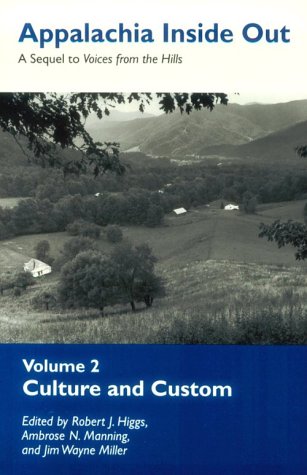
Appalachia Inside Out V2: Culture Custom (Vol. 2, Culture and Custom)
Authors:
Robert J. Higgs
Publisher:
Univ Tennessee Press
Publication Date:
Not available
ISBN:
0870498762
Edited by Robert J. Higgs, Ambrose N. Manning, and Jim Wayne MillerThese two volumes constitute the most comprehensive anthology of writings on... Appalachia ever assembled. Representing the work of approximately two hundred authors—fiction writers, poets, scholars in disciplines such as history, literary criticism, and sociology—Appalachia Inside Out reveals the fascinating diversity of the region and lays to rest many of the reductive stereotypes long associated with it.Intended as a sequel to the widely respected collection Voices of the Hills, edited by Robert Higgs and Ambrose Manning and published twenty years ago, these volumes reflect the recent proliferation of imaginative and critical writing about Appalachia—a proliferation that suggests nothing less than a renaissance of collective self-assessment. The selections are organized around a variety of themes (including "War and Revolution," "Feuds and Violence," "Nature and Progress," "Dialect and Language," "Exile, Return, and Sense of Place," and "Majority and Minority") and reveal both the radical changes the region has undergone as well as the persistence of certain defining features.The title Appalachia Inside Out refers in part to the fact that Appalachia has never existed in timeless isolation from the rest of country and the world; rather, it has both absorbed outside influences and exerted influence of its own. The title also indicates the editors' effort to look not only at the visible Appalachia but at the forces that underlie its history and culture. What emerges in these pages is an Appalachia both familiar and strange: a mirror of lived life on the one hand and, on the other, a haunted realm of unimaginable loss and bewitching possibility.The Editors: Robert J. Higgs is professor of English, emeritus, at East Tennessee State University and the author of Laurel and Thorn: The Athlete in American Literature.Ambrose N. Manning is professor of English, emeritus, at East Tennessee State University and a noted collector of folk songs and folklore.Jim Wayne Miller, a poet, novelist, and essayist, is a professor in the Department of Modern Languages and Intercultural Studies at Western Kentucky University.
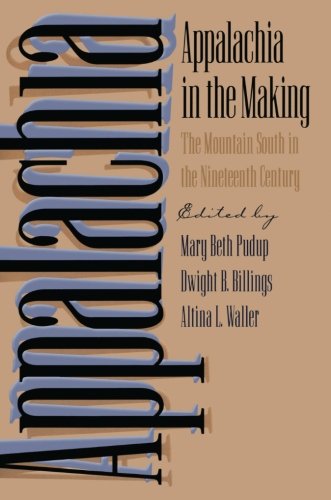
Appalachia in the Making: The Mountain South in the Nineteenth Century
Authors:
Not Available
Publisher:
The University of North Carolina Press
Publication Date:
Not available
ISBN:
0807845345
Appalachia first entered the American consciousness as a distinct region in the decades following the Civil War. The place and its people have long been... seen as backwards and 'other' because of their perceived geographical, social, and economic isolation. These essays, by fourteen eminent historians and social scientists, illuminate important dimensions of early social life in diverse sections of the Appalachian mountains. The contributors seek to place the study of Appalachia within the context of comparative regional studies of the United States, maintaining that processes and patterns thought to make the region exceptional were not necessarily unique to the mountain South.The contributors are Mary K. Anglin, Alan Banks, Dwight B. Billings, Kathleen M. Blee, Wilma A. Dunaway, John R. Finger, John C. Inscoe, Ronald L. Lewis, Ralph Mann, Gordon B. McKinney, Mary Beth Pudup, Paul Salstrom, Altina L. Waller, and John Alexander Williams
 '
'